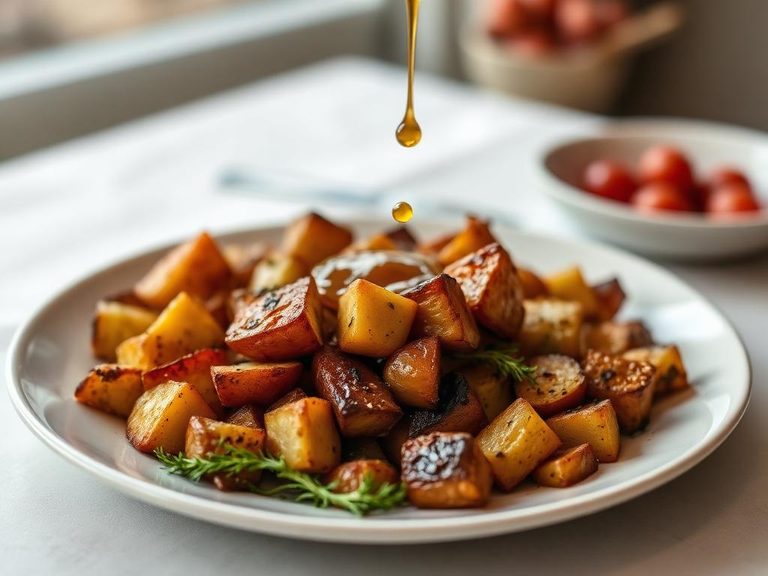
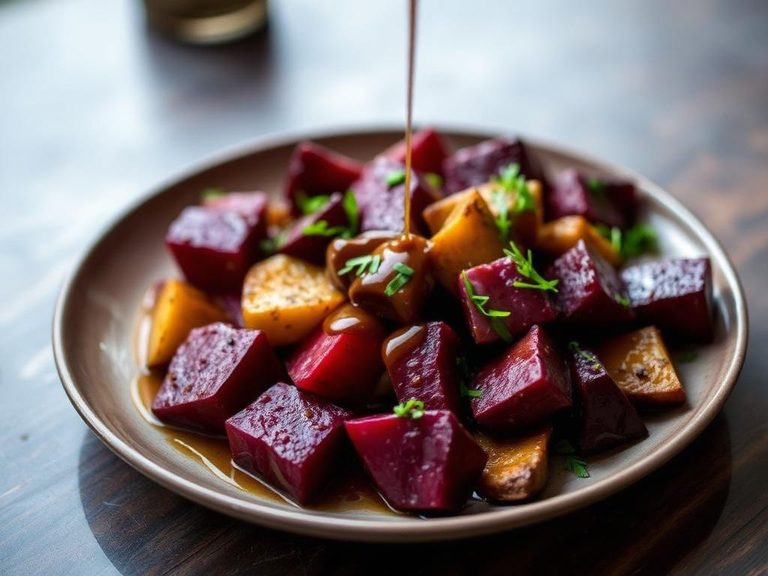
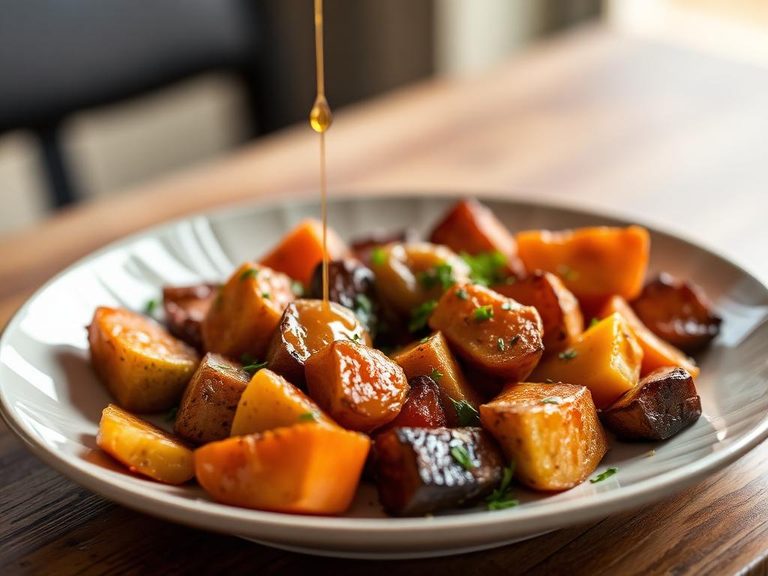
Drizzled over fresh salads
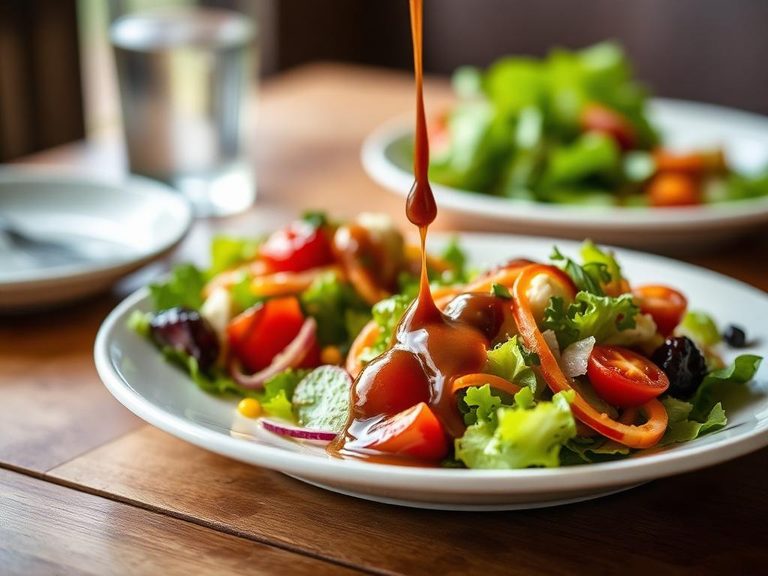
Drizzled over fresh salads is not a specific dish itself, but a universal culinary technique where a flavorful liquid, typically a vinaigrette or dressing, is poured over a base of raw or lightly cooked vegetables. The core components are the salad base (like lettuce, tomatoes, cucumbers) and the drizzle, which is commonly an emulsion of oil, acid (like vinegar or lemon juice), and seasonings. This method is fundamental to salad preparation worldwide.
🍽️ Nutrition at a glance
The nutritional profile is highly variable, depending entirely on the type and amount of dressing used. A simple oil-and-vinegar drizzle makes the dish a significant source of healthy fats and fat-soluble vitamins from the oil, while a creamy dressing would add more saturated fat and calories. A typical serving with a standard vinaigrette provides a good mix of fats, some carbohydrates from the vegetables, and very little protein.
Nutrition breakdown
| Calories | 120 kcal |
| Protein | 1 g |
| Carbs | 4 g |
| Fat | 11 g |
| Fiber | 2 g |
| Sugar | 1 g |
| Sodium | 200 mg |
| Vitamin K | 70 mcg |
| Vitamin A | 5000 IU |
| Vitamin C | 15 mg |
| Vitamin E | 2 mg |
| Potassium | 250 mg |
| Magnesium | 20 mg |
| Folate | 60 mcg |
| Manganese | 0.3 mg |
Per 1 mixed green salad with 2 tablespoons (30 g) of classic red wine vinaigrette · estimated, varies by recipe
💡 What's interesting
The technique of 'drizzling' is nutritionally strategic, as the fat in the dressing helps the body absorb fat-soluble vitamins (A, D, E, K) and antioxidants (like lycopene from tomatoes) present in the salad vegetables. Culturally, the choice of drizzle—from Italian balsamic glaze to Japanese ponzu—defines the salad's regional identity.