

Oats, raw
Common food

Photo: Wikipedia
Raw oats are the minimally processed, hulled kernels of the oat grain, offering a chewy, nutty texture and a mild, earthy flavor that becomes creamy when cooked. Packed with soluble fiber and a solid 13.15g of protein per 100g, they are a powerhouse of sustained energy and digestive health. Their versatility makes them a staple for everything from hearty porridge to no-bake energy bites.
Calorie split: 14% protein · 71% carbs · 15% fat
↓ Full nutrition💚 Why it's loved
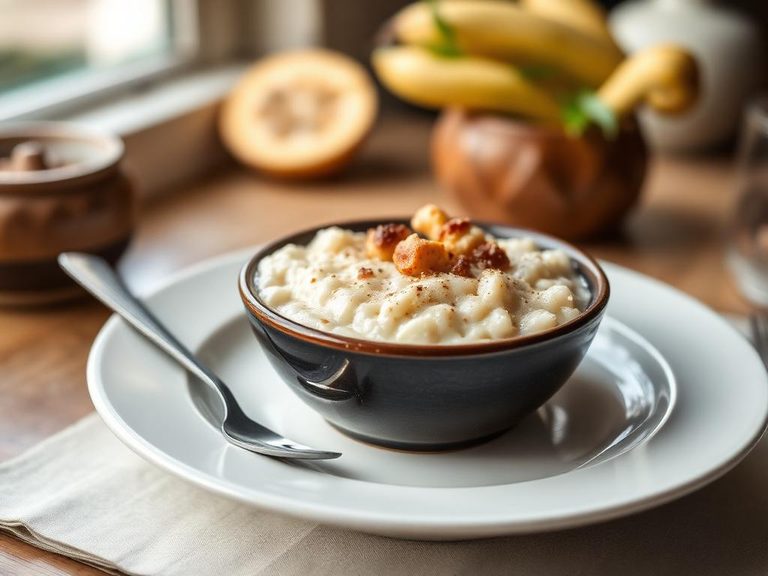
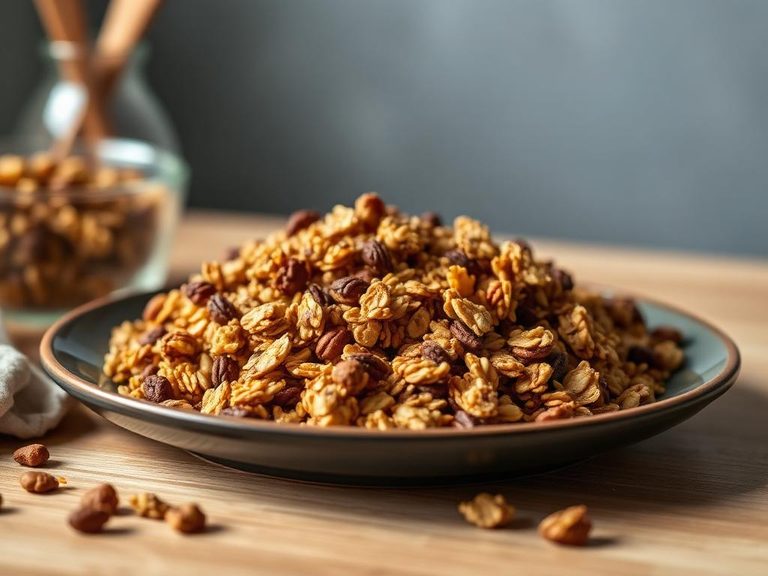
People love raw oats for their incredible versatility—they can be transformed into creamy porridge, crunchy granola, or blended into smoothies. Their mild, nutty flavor pairs beautifully with both sweet and savory ingredients, making them a beloved, comforting staple in cultures worldwide.
⚠️ Watch-outs & how to enjoy it better
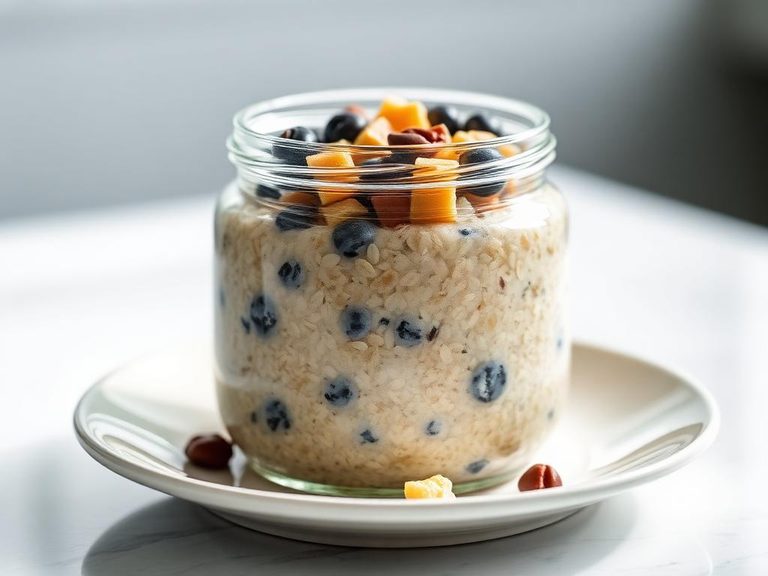
Raw oats contain phytic acid, which can inhibit mineral absorption, and some may experience digestive discomfort due to their high fiber content. To counteract this, soak oats overnight (overnight oats) or cook them thoroughly to reduce phytic acid and improve digestibility, and pair with vitamin C-rich foods to enhance iron absorption.
Key benefits
- Rich in beta-glucan soluble fiber, which supports heart health and cholesterol management
- High in plant-based protein for muscle repair and satiety
- Low in sugar (0.99g) and high in fiber (10.1g), promoting steady blood sugar levels
- Excellent source of manganese, phosphorus, and magnesium for bone and metabolic health
- Contains antioxidants like avenanthramides, which may reduce inflammation
🍽️ Popular dishes


🌍 Where it's eaten
💡 Did you know?
Oats are one of the few grains that can be eaten raw without cooking, as they are typically heat-treated (steamed) during processing to make them safe and digestible.
Full nutrition (USDA data · scales with serving)
| Water | 10.8 g |
| Energy | 379 kcal |
| Protein | 13.2 g |
| Total lipid (fat) | 6.5 g |
| Carbohydrate, by difference | 67.7 g |
| Fiber, total dietary | 10.1 g |
| Total Sugars | 0.99 g |
| Calcium, Ca | 52.0 mg |
| Iron, Fe | 4.3 mg |
| Magnesium, Mg | 138 mg |
| Phosphorus, P | 410 mg |
| Potassium, K | 362 mg |
| Sodium, Na | 6.0 mg |
| Zinc, Zn | 3.6 mg |
| Copper, Cu | 0.39 mg |
| Selenium, Se | 28.9 ug |
| Vitamin C, total ascorbic acid | 0.00 mg |
| Thiamin | 0.46 mg |
| Riboflavin | 0.15 mg |
| Niacin | 1.1 mg |
| Vitamin B-6 | 0.10 mg |
| Folate, total | 32.0 ug |
| Folic acid | 0.00 ug |
| Folate, food | 32.0 ug |
| Folate, DFE | 32.0 ug |
| Choline, total | 40.4 mg |
| Vitamin B-12 | 0.00 ug |
| Vitamin B-12, added | 0.00 ug |
| Vitamin A, RAE | 0.00 ug |
| Retinol | 0.00 ug |
| Carotene, beta | 0.00 ug |
| Carotene, alpha | 0.00 ug |
| Cryptoxanthin, beta | 0.00 ug |
| Lycopene | 0.00 ug |
| Lutein + zeaxanthin | 180 ug |
| Vitamin E (alpha-tocopherol) | 0.42 mg |
| Vitamin E, added | 0.00 mg |
| Vitamin D (D2 + D3) | 0.00 ug |
| Vitamin K (phylloquinone) | 2.0 ug |
| Alcohol, ethyl | 0.00 g |
| Caffeine | 0.00 mg |
| Theobromine | 0.00 mg |
Fat & fatty acid profile (per 100g)
| Fatty acids, total saturated | 1.1 g |
| SFA 4:0 | 0.00 g |
| SFA 6:0 | 0.00 g |
| SFA 8:0 | 0.00 g |
| SFA 10:0 | 0.00 g |
| SFA 12:0 | 0.02 g |
| SFA 14:0 | 0.01 g |
| SFA 16:0 | 0.94 g |
| SFA 18:0 | 0.06 g |
| Fatty acids, total monounsaturated | 2.0 g |
| MUFA 16:1 | 0.01 g |
| MUFA 18:1 | 2.0 g |
| MUFA 20:1 | 0.00 g |
| MUFA 22:1 | 0.00 g |
| Fatty acids, total polyunsaturated | 2.3 g |
| PUFA 18:2 | 2.2 g |
| PUFA 18:3 | 0.10 g |
| PUFA 18:4 | 0.00 g |
| PUFA 20:4 | 0.00 g |
| PUFA 20:5 n-3 (EPA) | 0.00 g |
| PUFA 22:5 n-3 (DPA) | 0.00 g |
| PUFA 22:6 n-3 (DHA) | 0.00 g |
| Cholesterol | 0.00 mg |
Amino acid profile (per 100g)
Estimated from Cereals, oats, regular and quick, unenriched, cooked with water (includes boiling and microwaving), without salt — USDA does not publish this profile for Oats.
| Tryptophan | 0.04 g |
| Threonine | 0.10 g |
| Isoleucine | 0.12 g |
| Leucine | 0.22 g |
| Lysine | 0.14 g |
| Methionine | 0.05 g |
| Cystine | 0.10 g |
| Phenylalanine | 0.14 g |
| Tyrosine | 0.10 g |
| Valine | 0.16 g |
| Arginine | 0.17 g |
| Histidine | 0.05 g |
| Alanine | 0.12 g |
| Aspartic acid | 0.30 g |
| Glutamic acid | 0.62 g |
| Glycine | 0.15 g |
| Proline | 0.10 g |
| Serine | 0.15 g |
FAQ
Are raw oats safe to eat without cooking?
Yes, most commercial oats are steamed during processing, making them safe to eat raw (e.g., in overnight oats or smoothies). However, cooking improves digestibility and reduces phytic acid.
How do oats differ from oatmeal?
Oats refer to the whole grain kernels, while oatmeal typically refers to oats that have been rolled, cut, or ground into a porridge-like consistency. Raw oats are the unprocessed form.
Can oats help with weight management?
Yes, their high fiber and protein content promote satiety, helping you feel full longer. However, portion control is key, as oats are calorie-dense (379 kcal per 100g).
Nutrient density (calculated · NRF9.3)
Nutrient Rich Foods index: beneficial nutrients (protein, fiber, vitamins, minerals) minus saturated fat, added sugar & sodium, per 100 kcal.
NRF9.3 index — Fulgoni, Keast & Drewnowski, 2009. Computed from USDA nutrients.
Weight-loss friendliness (composite index)
Energy density 3.79 kcal/g · 14% calories from protein · 10.1 g fiber · 1.0 g sugar per 100 g.
Composite of energy density (Rolls et al., 1999), protein & fiber satiety, minus sugar. A calculated heuristic — ranks satiety-per-calorie, not a clinical measure.
Dietary load (calculated from USDA values)
Potential renal acid load. Positive = acid-forming, negative = alkaline-forming.
Sodium-to-potassium ratio: 0.02 (lower is better — aim for ≤ 1)
Sodium:potassium per WHO potassium guidance. Computed from USDA nutrients.