

Oats (Includes foods for USDA's Food Distribution Program)
Whole food · Cereal Grains and Pasta
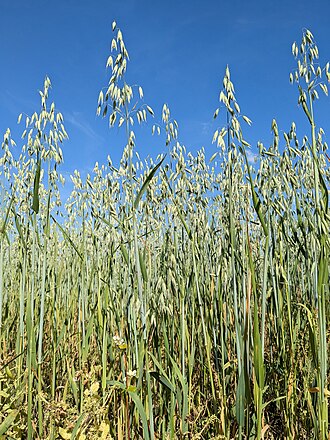
Photo: Wikipedia
Oats are a hearty, whole-grain cereal with a mild, nutty flavor and a chewy, comforting texture when cooked. They are a nutritional powerhouse, packed with soluble fiber, particularly beta-glucan, which supports heart health and provides lasting energy. Their neutral taste makes them a perfect canvas for both sweet and savory dishes.
Calorie split: 17% protein · 67% carbs · 16% fat
↓ Full nutrition💚 Why it's loved
People love oats for their incredible versatility and comforting, wholesome nature. They are the foundation of a warm bowl of porridge, a key ingredient in baking, and a reliable staple for a quick, nutritious meal.
⚠️ Watch-outs & how to enjoy it better
The high fiber content can cause digestive discomfort like bloating for some, especially when introduced suddenly. To counteract this, increase intake gradually and ensure adequate water intake. Additionally, while naturally gluten-free, oats are often processed in facilities with wheat; those with celiac disease should seek certified gluten-free oats.
Key benefits
- Rich in beta-glucan soluble fiber, linked to improved cholesterol levels.
- High in plant-based protein (16.89g per 100g dry) for sustained fullness.
- Provides complex carbohydrates and dietary fiber for steady energy release.
- A good source of essential minerals like manganese, phosphorus, and magnesium.
- Naturally gluten-free, though cross-contamination is common; certified GF versions exist.
🍽️ Popular dishes
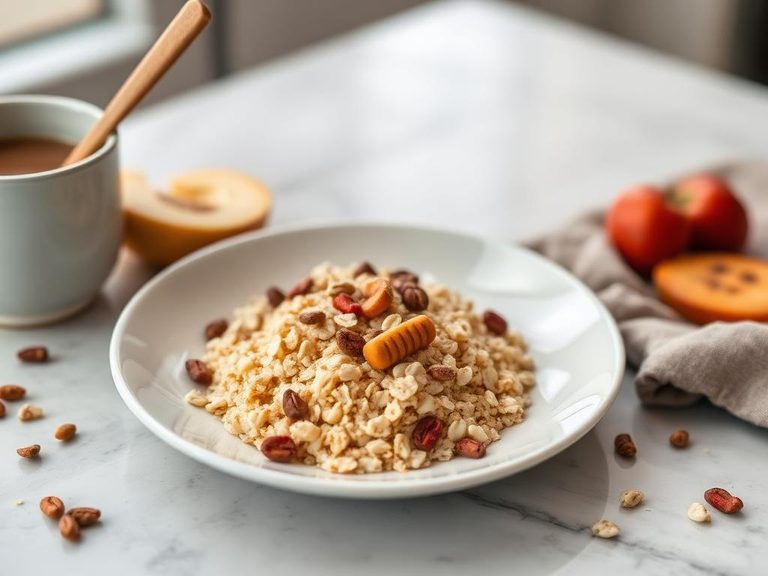
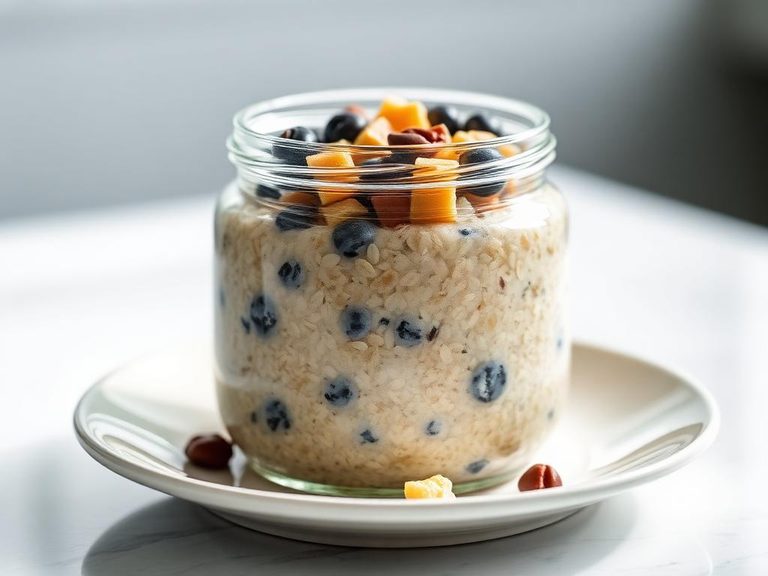
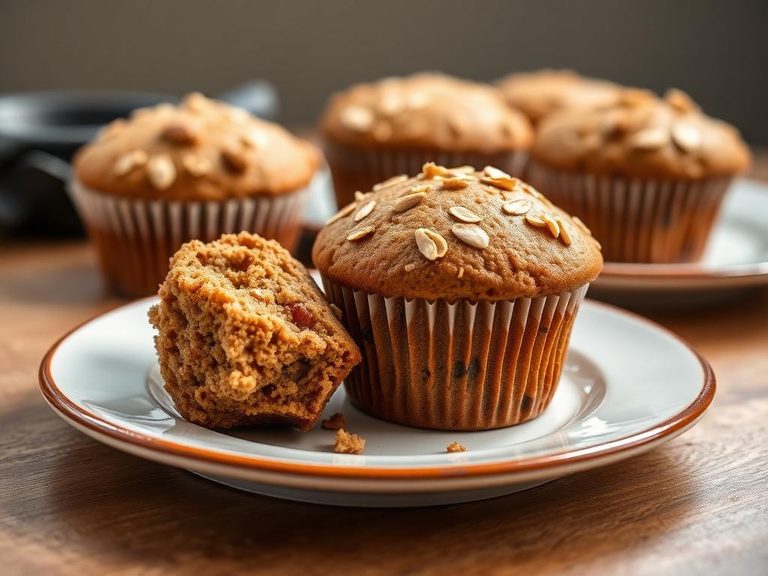
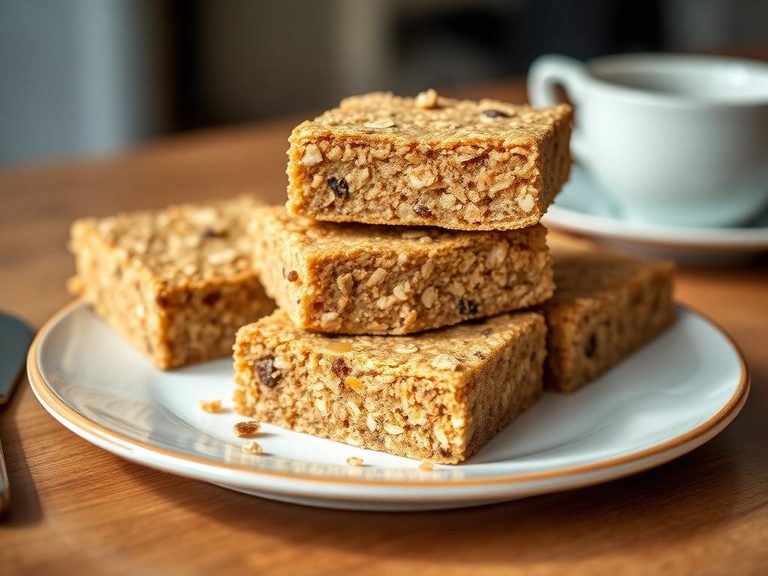
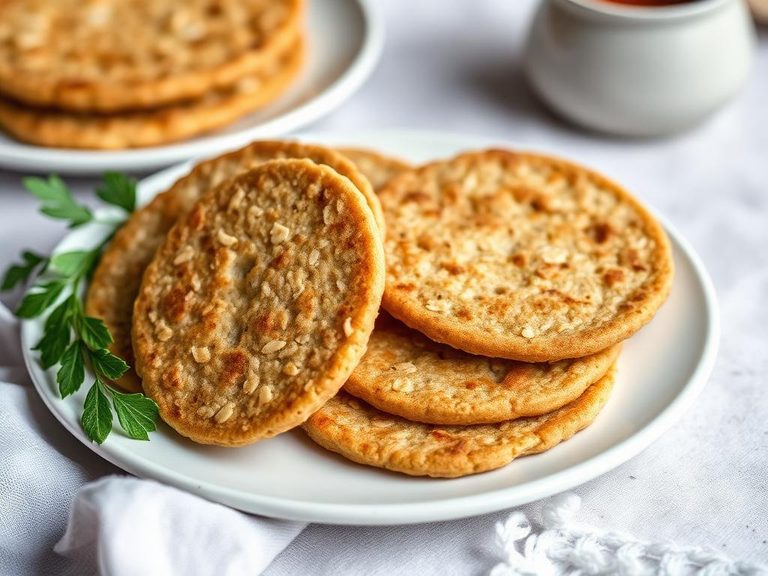
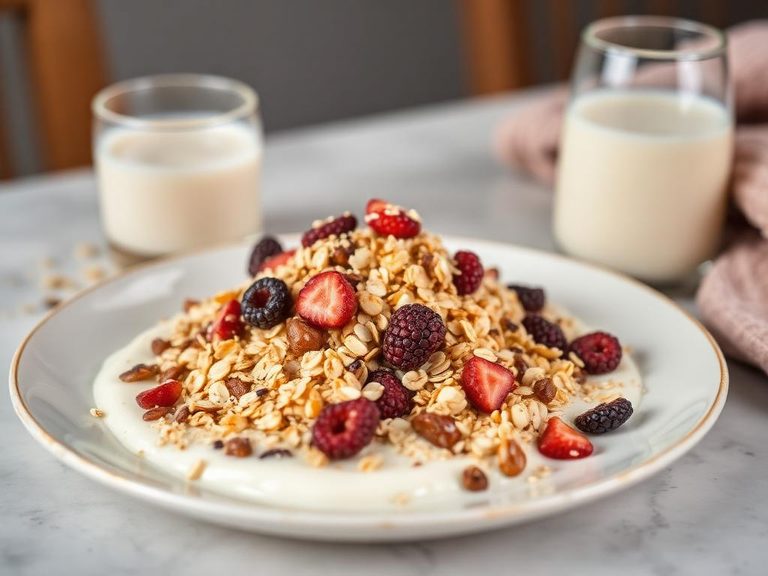
🌍 Where it's eaten
💡 Did you know?
The beta-glucan fiber in oats forms a gel-like substance when cooked, which is what gives porridge its characteristic creamy, viscous texture.
Full nutrition (USDA data · scales with serving)
| Water | 8.2 g |
| Energy | 389 kcal |
| Energy | 1628 kj |
| Protein | 16.9 g |
| Total lipid (fat) | 6.9 g |
| Ash | 1.7 g |
| Carbohydrate, by difference | 66.3 g |
| Fiber, total dietary | 10.6 g |
| Calcium, Ca | 54.0 mg |
| Iron, Fe | 4.7 mg |
| Magnesium, Mg | 177 mg |
| Phosphorus, P | 523 mg |
| Potassium, K | 429 mg |
| Sodium, Na | 2.0 mg |
| Zinc, Zn | 4.0 mg |
| Copper, Cu | 0.63 mg |
| Manganese, Mn | 4.9 mg |
| Vitamin C, total ascorbic acid | 0.00 mg |
| Thiamin | 0.76 mg |
| Riboflavin | 0.14 mg |
| Niacin | 0.96 mg |
| Pantothenic acid | 1.3 mg |
| Vitamin B-6 | 0.12 mg |
| Folate, total | 56.0 ug |
| Folic acid | 0.00 ug |
| Folate, food | 56.0 ug |
| Folate, DFE | 56.0 ug |
| Vitamin B-12 | 0.00 ug |
| Vitamin B-12, added | 0.00 ug |
| Vitamin A, RAE | 0.00 ug |
| Retinol | 0.00 ug |
| Vitamin A, IU | 0.00 iu |
| Vitamin D (D2 + D3), International Units | 0.00 iu |
| Vitamin D (D2 + D3) | 0.00 ug |
| Alcohol, ethyl | 0.00 g |
Fat & fatty acid profile (per 100g)
| Fatty acids, total saturated | 1.2 g |
| SFA 12:0 | 0.02 g |
| SFA 14:0 | 0.01 g |
| SFA 16:0 | 1.0 g |
| SFA 18:0 | 0.07 g |
| Fatty acids, total monounsaturated | 2.2 g |
| MUFA 16:1 | 0.01 g |
| MUFA 18:1 | 2.2 g |
| Fatty acids, total polyunsaturated | 2.5 g |
| PUFA 18:2 | 2.4 g |
| PUFA 18:3 | 0.11 g |
| Cholesterol | 0.00 mg |
Amino acid profile (per 100g)
| Tryptophan | 0.23 g |
| Threonine | 0.57 g |
| Isoleucine | 0.69 g |
| Leucine | 1.3 g |
| Lysine | 0.70 g |
| Methionine | 0.31 g |
| Cystine | 0.41 g |
| Phenylalanine | 0.90 g |
| Tyrosine | 0.57 g |
| Valine | 0.94 g |
| Arginine | 1.2 g |
| Histidine | 0.41 g |
| Alanine | 0.88 g |
| Aspartic acid | 1.4 g |
| Glutamic acid | 3.7 g |
| Glycine | 0.84 g |
| Proline | 0.93 g |
| Serine | 0.75 g |
FAQ
What's the difference between steel-cut, rolled, and instant oats?
Steel-cut oats are whole groats chopped into pieces, offering a chewy texture and longer cook time. Rolled oats are steamed and flattened, cooking faster with a creamier texture. Instant oats are pre-cooked and rolled very thin for the quickest preparation but can be mushier.
Are oats gluten-free?
Pure oats are naturally gluten-free. However, they are frequently contaminated with wheat, barley, or rye during growing or processing. Individuals with celiac disease or gluten sensitivity should only consume oats labeled 'certified gluten-free'.
Can I eat oats raw?
Yes, but it's not common. Raw oats are very hard and difficult to digest. They are most often consumed after being soaked (as in overnight oats) or cooked. Adding raw oats to smoothies or baking is a popular way to use them without traditional cooking.
Nutrient density (calculated · NRF9.3)
Nutrient Rich Foods index: beneficial nutrients (protein, fiber, vitamins, minerals) minus saturated fat, added sugar & sodium, per 100 kcal.
NRF9.3 index — Fulgoni, Keast & Drewnowski, 2009. Computed from USDA nutrients.
Weight-loss friendliness (composite index)
Energy density 3.89 kcal/g · 17% calories from protein · 10.6 g fiber · 0.0 g sugar per 100 g.
Composite of energy density (Rolls et al., 1999), protein & fiber satiety, minus sugar. A calculated heuristic — ranks satiety-per-calorie, not a clinical measure.
Dietary load (calculated from USDA values)
Potential renal acid load. Positive = acid-forming, negative = alkaline-forming.
Sodium-to-potassium ratio: 0.00 (lower is better — aim for ≤ 1)
Sodium:potassium per WHO potassium guidance. Computed from USDA nutrients.