

Mustard greens, raw
Whole food · Vegetables and Vegetable Products

Photo: Wikipedia
Mustard greens are the peppery, vibrant leaves of the mustard plant, offering a crisp, slightly coarse texture when raw. Their flavor is a bold, horseradish-like kick that mellows with cooking. Nutritionally, they are a powerhouse, delivering over 3 grams of fiber and a host of vitamins in a low-calorie package.
Calorie split: 34% protein · 55% carbs · 11% fat
↓ Full nutrition💚 Why it's loved
People love mustard greens for their assertive, spicy flavor that adds a lively punch to salads and stir-fries. They are a beloved staple in many cuisines, valued for their ability to stand up to bold seasonings and long cooking times.
⚠️ Watch-outs & how to enjoy it better
Their strong, peppery bite can be overwhelming for some palates, and they contain oxalates, which can be a concern for individuals prone to certain kidney stones. To mitigate this, pair them with calcium-rich foods like tofu or cheese, which can bind oxalates, or cook them thoroughly, as boiling can reduce oxalate content.
Key benefits
- Excellent source of vitamins K, A, and C
- High in dietary fiber for digestive health
- Rich in glucosinolates, compounds studied for their antioxidant properties
- Very low in calories and fat
- Good plant-based source of calcium and iron
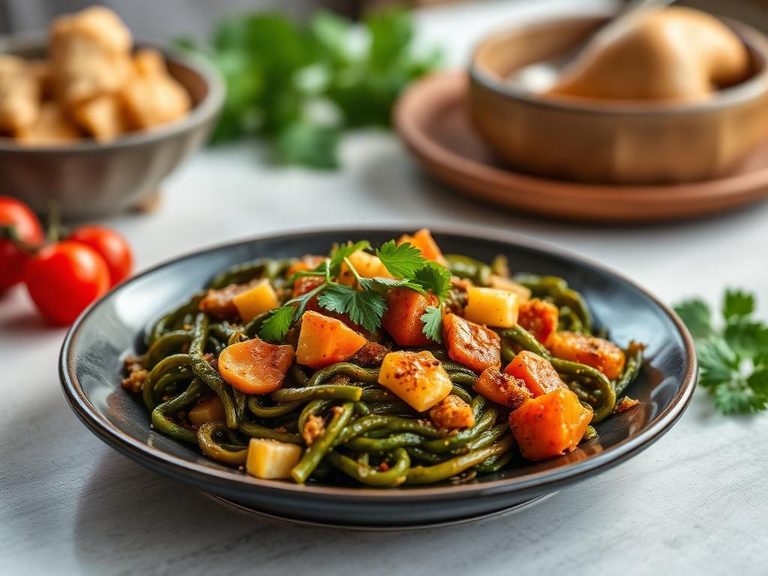
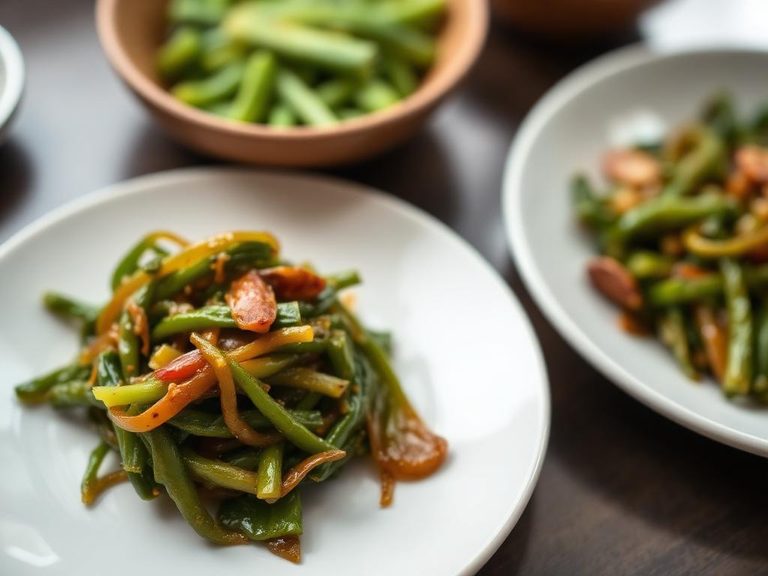
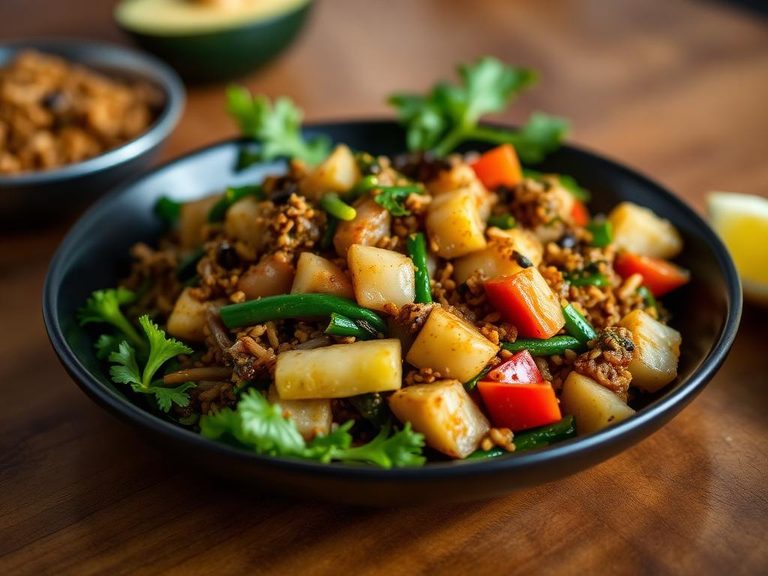
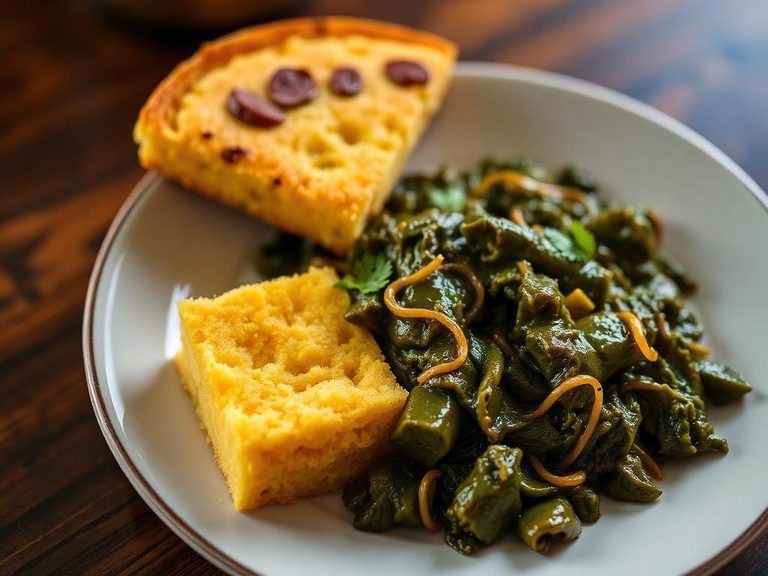
🍽️ Popular dishes
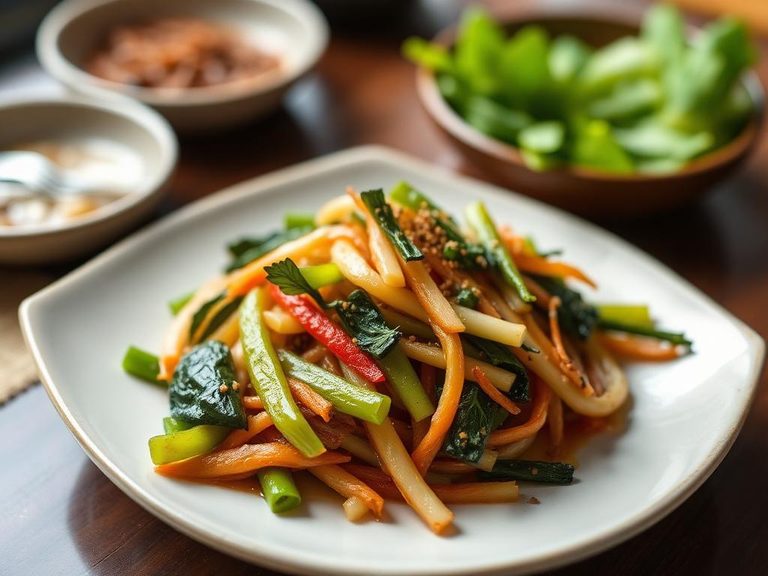
🌍 Where it's eaten
💡 Did you know?
The same plant family that gives us mustard seeds for condiments also provides these leafy greens, meaning you're essentially eating the leafy precursor to the yellow paste.
Full nutrition (USDA data · scales with serving)
| Water | 90.7 g |
| Energy | 27.0 kcal |
| Energy | 114 kj |
| Protein | 2.9 g |
| Total lipid (fat) | 0.42 g |
| Ash | 1.4 g |
| Carbohydrate, by difference | 4.7 g |
| Fiber, total dietary | 3.2 g |
| Total Sugars | 1.3 g |
| Calcium, Ca | 115 mg |
| Iron, Fe | 1.6 mg |
| Magnesium, Mg | 32.0 mg |
| Phosphorus, P | 58.0 mg |
| Potassium, K | 384 mg |
| Sodium, Na | 20.0 mg |
| Zinc, Zn | 0.25 mg |
| Copper, Cu | 0.17 mg |
| Selenium, Se | 0.90 ug |
| Vitamin C, total ascorbic acid | 70.0 mg |
| Thiamin | 0.08 mg |
| Riboflavin | 0.11 mg |
| Niacin | 0.80 mg |
| Pantothenic acid | 0.21 mg |
| Vitamin B-6 | 0.18 mg |
| Folate, total | 12.0 ug |
| Folic acid | 0.00 ug |
| Folate, food | 12.0 ug |
| Folate, DFE | 12.0 ug |
| Choline, total | 0.50 mg |
| Vitamin B-12 | 0.00 ug |
| Vitamin B-12, added | 0.00 ug |
| Vitamin A, RAE | 151 ug |
| Retinol | 0.00 ug |
| Carotene, beta | 1790 ug |
| Carotene, alpha | 10.0 ug |
| Cryptoxanthin, beta | 40.0 ug |
| Vitamin A, IU | 3024 iu |
| Lycopene | 0.00 ug |
| Lutein + zeaxanthin | 3730 ug |
| Vitamin E (alpha-tocopherol) | 2.0 mg |
| Vitamin E, added | 0.00 mg |
| Vitamin D (D2 + D3), International Units | 0.00 iu |
| Vitamin D (D2 + D3) | 0.00 ug |
| Vitamin K (phylloquinone) | 258 ug |
| Alcohol, ethyl | 0.00 g |
| Caffeine | 0.00 mg |
| Theobromine | 0.00 mg |
Fat & fatty acid profile (per 100g)
| Fatty acids, total saturated | 0.01 g |
| SFA 4:0 | 0.00 g |
| SFA 6:0 | 0.00 g |
| SFA 8:0 | 0.00 g |
| SFA 10:0 | 0.00 g |
| SFA 12:0 | 0.00 g |
| SFA 14:0 | 0.00 g |
| SFA 16:0 | 0.01 g |
| SFA 18:0 | 0.00 g |
| Fatty acids, total monounsaturated | 0.09 g |
| MUFA 16:1 | 0.00 g |
| MUFA 18:1 | 0.01 g |
| MUFA 20:1 | 0.02 g |
| MUFA 22:1 | 0.06 g |
| Fatty acids, total polyunsaturated | 0.04 g |
| PUFA 18:2 | 0.02 g |
| PUFA 18:3 | 0.02 g |
| PUFA 18:4 | 0.00 g |
| PUFA 20:4 | 0.00 g |
| PUFA 20:5 n-3 (EPA) | 0.00 g |
| PUFA 22:5 n-3 (DPA) | 0.00 g |
| PUFA 22:6 n-3 (DHA) | 0.00 g |
| Fatty acids, total trans | 0.00 g |
| Cholesterol | 0.00 mg |
Amino acid profile (per 100g)
Estimated from Mustard greens, frozen, unprepared — USDA does not publish this profile for Mustard greens.
| Tryptophan | 0.03 g |
| Threonine | 0.07 g |
| Isoleucine | 0.09 g |
| Leucine | 0.08 g |
| Lysine | 0.11 g |
| Methionine | 0.02 g |
| Cystine | 0.04 g |
| Phenylalanine | 0.07 g |
| Tyrosine | 0.13 g |
| Valine | 0.10 g |
| Arginine | 0.18 g |
| Histidine | 0.04 g |
FAQ
How do I reduce the strong flavor of raw mustard greens?
Massage the leaves with a little salt or an acidic dressing (like lemon juice) for a few minutes. This breaks down the cell walls, softening the texture and mellowing the sharp, peppery bite.
Are mustard greens the same as kale or collard greens?
No, they are different plants, though all are in the Brassica family. Mustard greens have a distinct, spicy kick not found in kale or collards, which are milder and often have a tougher texture.
What's the best way to store raw mustard greens?
Wrap the unwashed greens loosely in a paper towel, place them in a plastic bag or container, and store in the crisper drawer of your refrigerator. They should last for 3-5 days.
Nutrient density (calculated · NRF9.3)
Nutrient Rich Foods index: beneficial nutrients (protein, fiber, vitamins, minerals) minus saturated fat, added sugar & sodium, per 100 kcal.
NRF9.3 index — Fulgoni, Keast & Drewnowski, 2009. Computed from USDA nutrients.
Weight-loss friendliness (composite index)
Energy density 0.27 kcal/g · 42% calories from protein · 3.2 g fiber · 1.3 g sugar per 100 g.
Composite of energy density (Rolls et al., 1999), protein & fiber satiety, minus sugar. A calculated heuristic — ranks satiety-per-calorie, not a clinical measure.
Dietary load (calculated from USDA values)
Potential renal acid load. Positive = acid-forming, negative = alkaline-forming.
Sodium-to-potassium ratio: 0.05 (lower is better — aim for ≤ 1)
Sodium:potassium per WHO potassium guidance. Computed from USDA nutrients.