Namul
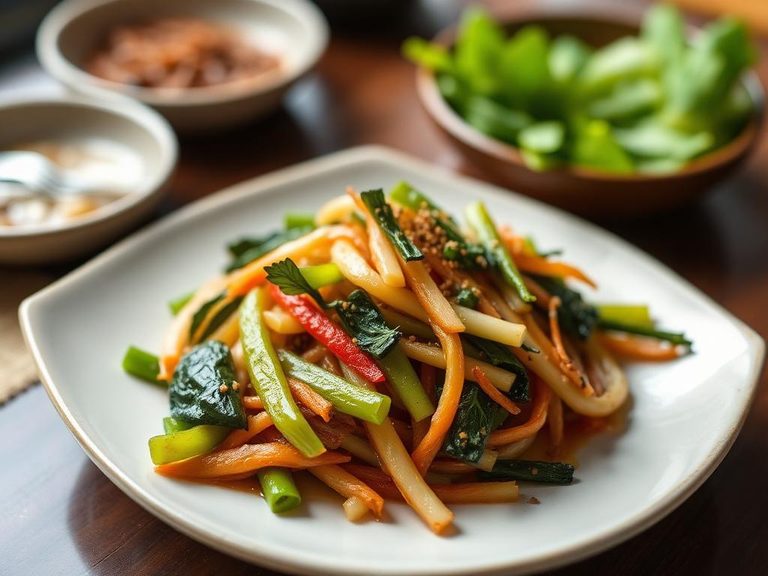
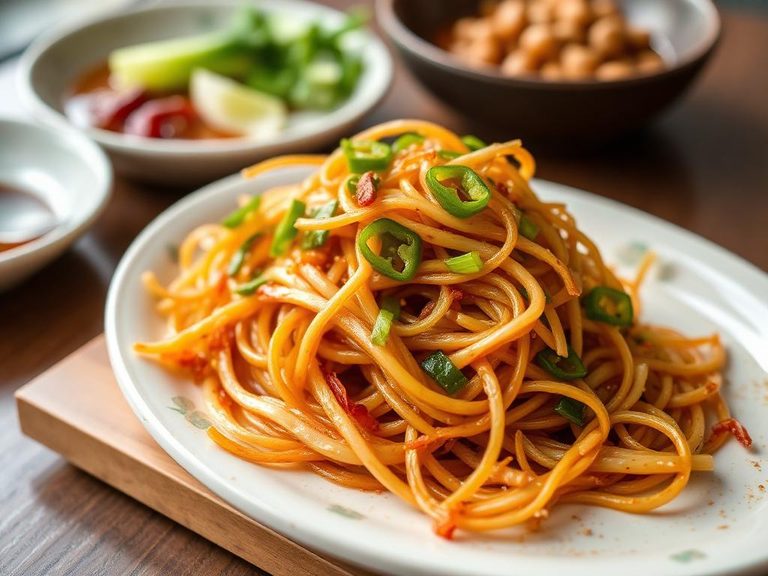
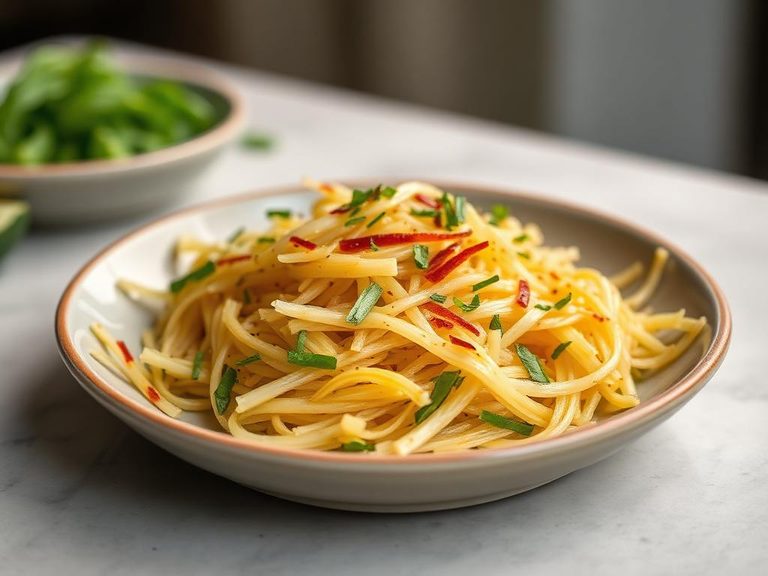
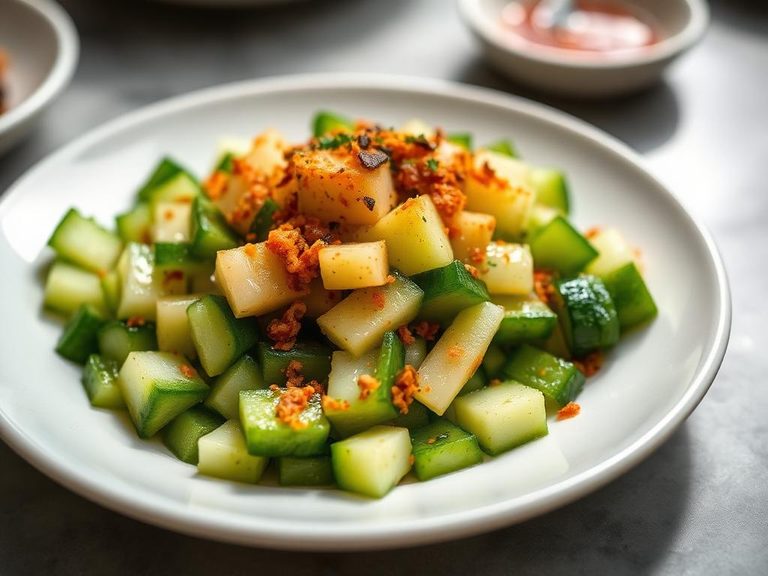
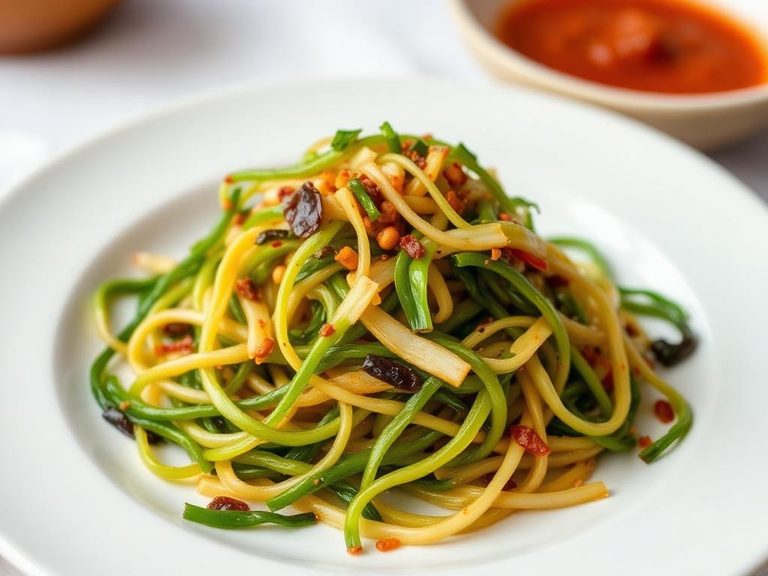
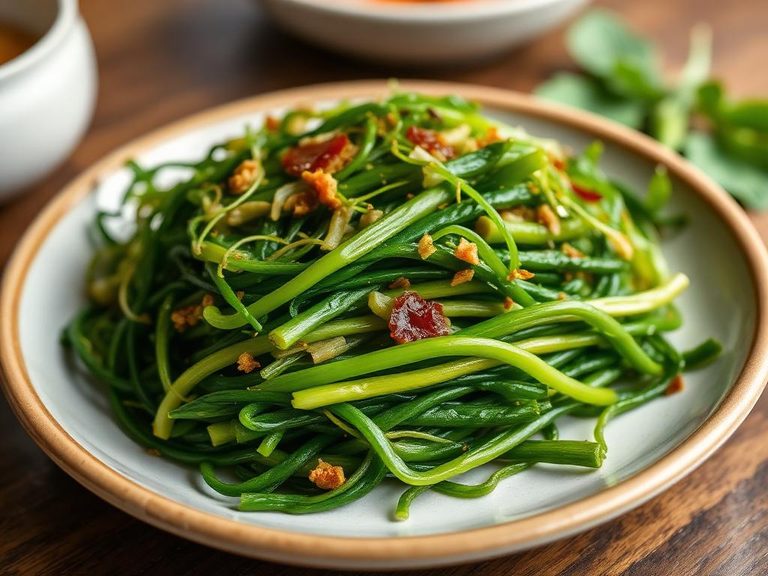
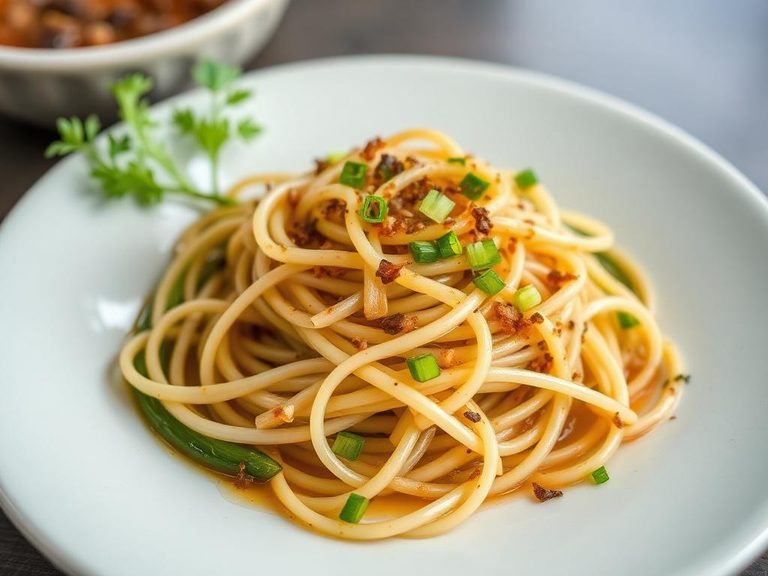
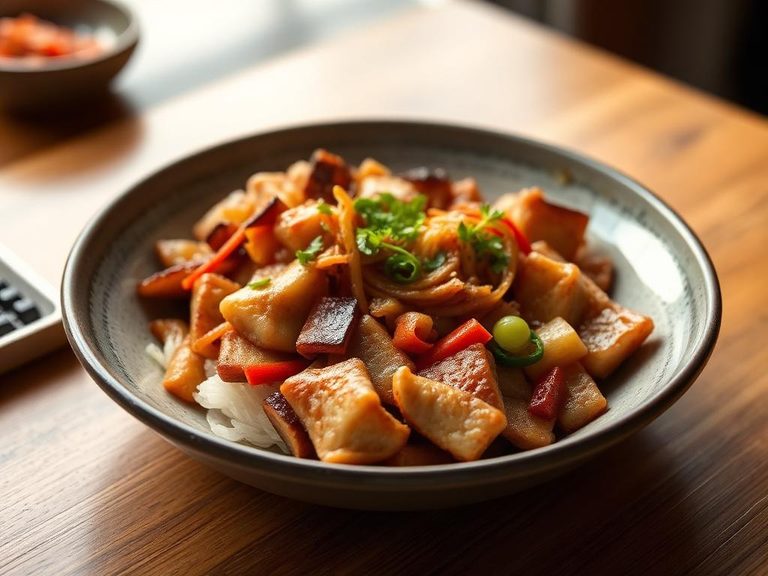
Namul is a category of Korean seasoned vegetable side dishes, typically made by blanching, steaming, or sautéing vegetables like spinach, bean sprouts, or fernbrake, then seasoning them with sesame oil, garlic, salt, and sometimes soy sauce or vinegar. It is a staple in Korean cuisine, often served as part of a banchan spread alongside rice and main dishes.
🍽️ Nutrition at a glance
Namul is generally low in calories, fat, and carbohydrates, while providing fiber, vitamins (like A, C, and K), and minerals such as iron and calcium. A typical serving ranges from 30-80 calories, depending on the vegetable and seasoning used.
Nutrition breakdown
| Calories | 45 kcal |
| Protein | 2.5 g |
| Carbs | 6 g |
| Fat | 1.5 g |
| Fiber | 3 g |
| Sugar | 2 g |
| Sodium | 380 mg |
| Vitamin A | 300 mcg RAE |
| Vitamin C | 15 mg |
| Vitamin K | 90 mcg |
| Potassium | 350 mg |
| Calcium | 80 mg |
| Iron | 1.5 mg |
| Magnesium | 25 mg |
| Folate | 50 mcg |
Per 1 cup (150 g) · estimated, varies by recipe
💡 What's interesting
Namul is culturally significant in Korean cuisine for its role in balancing meals with fresh, plant-based flavors, and it reflects the Korean emphasis on seasonal and fermented ingredients. Nutritionally, it's unique for being a light, nutrient-dense dish that supports digestive health and can be easily customized for dietary needs.