

Mustard greens, cooked, boiled, drained, without salt
Whole food · Vegetables and Vegetable Products

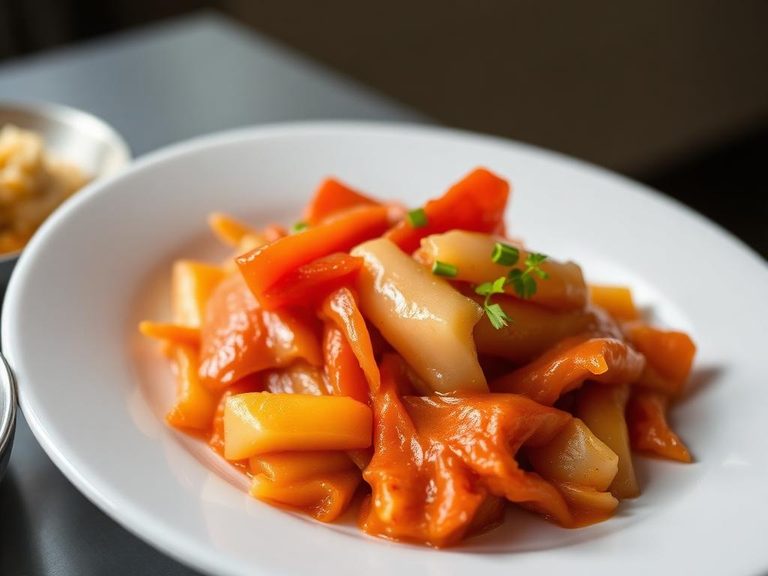
Photo: Wikipedia
Cooked mustard greens are tender, dark leafy greens with a distinctive, pleasantly peppery and slightly bitter flavor that mellows with boiling. Their texture is silky yet substantial, holding up well in soups and stir-fries. Nutritionally, they are a standout source of vitamins A, C, and K, offering significant antioxidant and bone-health benefits for very few calories.
Calorie split: 31% protein · 55% carbs · 13% fat
↓ Full nutrition💚 Why it's loved
People love them for their bold, peppery kick that adds depth to dishes without heaviness. They are a versatile staple in many cuisines, easily transformed by simmering with aromatics or pairing with rich meats.
⚠️ Watch-outs & how to enjoy it better
The natural bitterness and sulfurous notes from boiling can be off-putting to some. Those sensitive to oxalates or on blood-thinning medication (due to high vitamin K) should be mindful of portion size. To counteract bitterness, cook with a splash of acid (like vinegar or lemon) or a savory fat (like bacon drippings or olive oil), which also helps with nutrient absorption.
Key benefits
- Excellent source of vitamin K for bone health and blood clotting.
- Rich in vitamins A and C, supporting immune function and skin health.
- Provides dietary fiber for digestive health.
- Very low in calories and fat, aiding in weight management.
- Contains glucosinolates, compounds studied for their potential protective effects.
🍽️ Popular dishes
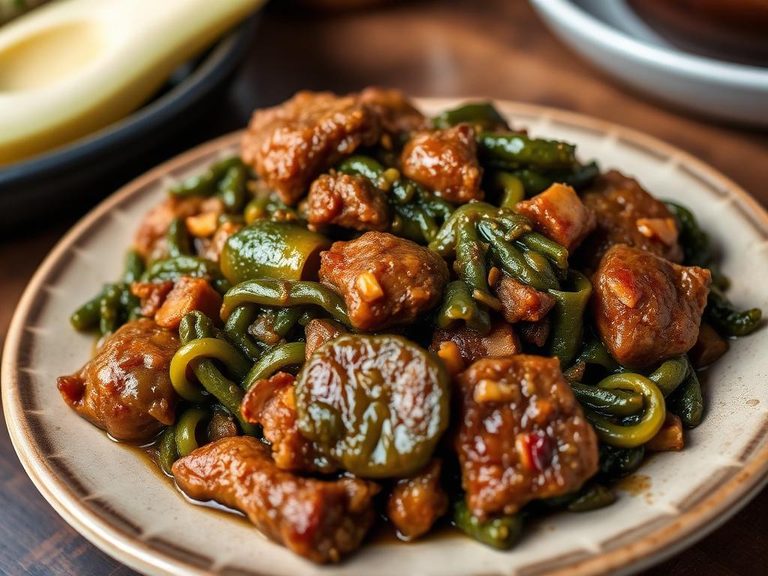
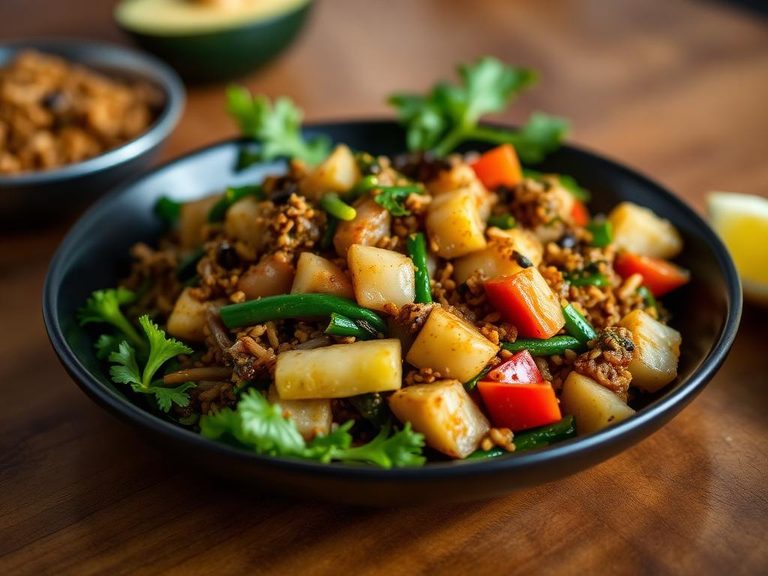
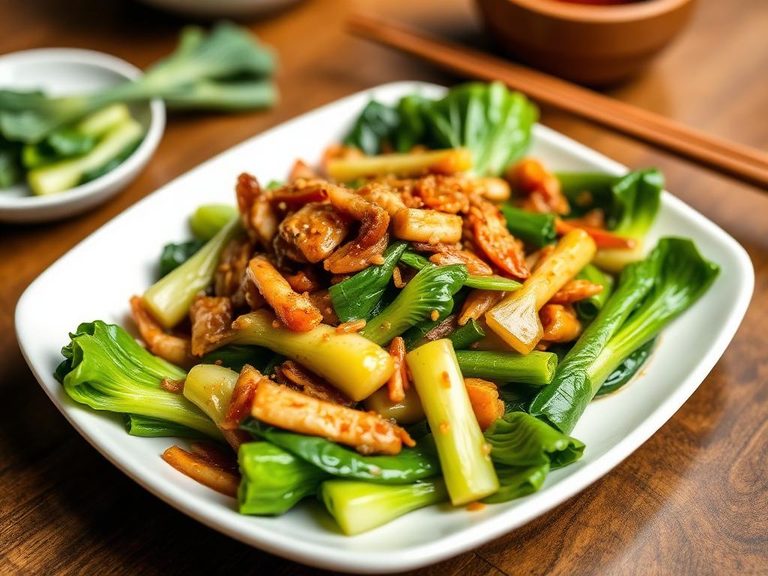
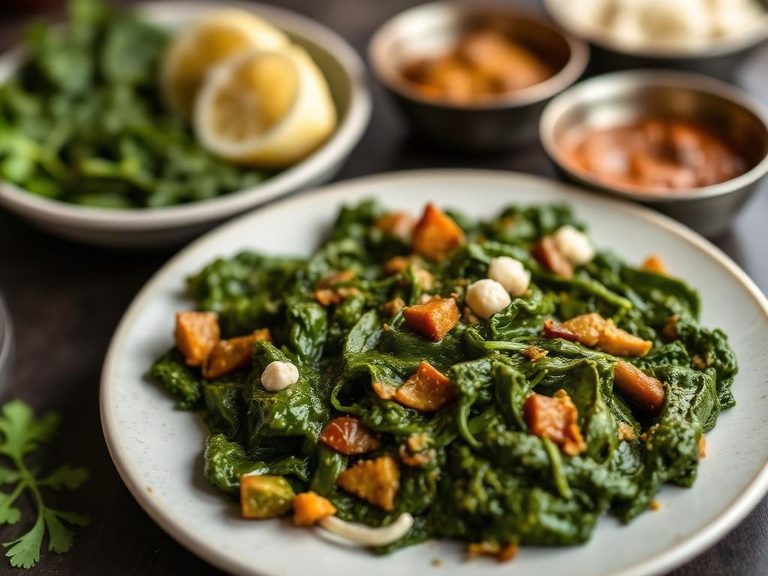
🌍 Where it's eaten
💡 Did you know?
Mustard greens are the same plant that produces mustard seeds; the leaves, stems, and seeds all share that characteristic pungent compound, allyl isothiocyanate.
Full nutrition (USDA data · scales with serving)
| Water | 91.8 g |
| Energy | 26.0 kcal |
| Energy | 110 kj |
| Protein | 2.6 g |
| Total lipid (fat) | 0.47 g |
| Ash | 0.69 g |
| Carbohydrate, by difference | 4.5 g |
| Fiber, total dietary | 2.0 g |
| Total Sugars | 1.4 g |
| Calcium, Ca | 118 mg |
| Iron, Fe | 0.87 mg |
| Magnesium, Mg | 13.0 mg |
| Phosphorus, P | 42.0 mg |
| Potassium, K | 162 mg |
| Sodium, Na | 9.0 mg |
| Zinc, Zn | 0.22 mg |
| Copper, Cu | 0.15 mg |
| Selenium, Se | 0.60 ug |
| Vitamin C, total ascorbic acid | 25.3 mg |
| Thiamin | 0.04 mg |
| Riboflavin | 0.06 mg |
| Niacin | 0.43 mg |
| Pantothenic acid | 0.12 mg |
| Vitamin B-6 | 0.10 mg |
| Folate, total | 9.0 ug |
| Folic acid | 0.00 ug |
| Folate, food | 9.0 ug |
| Folate, DFE | 9.0 ug |
| Choline, total | 0.40 mg |
| Betaine | 0.20 mg |
| Vitamin B-12 | 0.00 ug |
| Vitamin B-12, added | 0.00 ug |
| Vitamin A, RAE | 618 ug |
| Retinol | 0.00 ug |
| Carotene, beta | 7400 ug |
| Carotene, alpha | 9.0 ug |
| Cryptoxanthin, beta | 35.0 ug |
| Vitamin A, IU | 12370 iu |
| Lycopene | 0.00 ug |
| Lutein + zeaxanthin | 10400 ug |
| Vitamin E (alpha-tocopherol) | 1.8 mg |
| Vitamin E, added | 0.00 mg |
| Vitamin D (D2 + D3), International Units | 0.00 iu |
| Vitamin D (D2 + D3) | 0.00 ug |
| Vitamin K (phylloquinone) | 593 ug |
| Alcohol, ethyl | 0.00 g |
| Caffeine | 0.00 mg |
| Theobromine | 0.00 mg |
Fat & fatty acid profile (per 100g)
| Fatty acids, total saturated | 0.01 g |
| SFA 4:0 | 0.00 g |
| SFA 6:0 | 0.00 g |
| SFA 8:0 | 0.00 g |
| SFA 10:0 | 0.00 g |
| SFA 12:0 | 0.00 g |
| SFA 14:0 | 0.00 g |
| SFA 16:0 | 0.01 g |
| SFA 18:0 | 0.00 g |
| Fatty acids, total monounsaturated | 0.11 g |
| MUFA 16:1 | 0.00 g |
| MUFA 18:1 | 0.02 g |
| MUFA 20:1 | 0.02 g |
| MUFA 22:1 | 0.07 g |
| Fatty acids, total polyunsaturated | 0.05 g |
| PUFA 18:2 | 0.02 g |
| PUFA 18:3 | 0.02 g |
| PUFA 18:4 | 0.00 g |
| PUFA 20:4 | 0.00 g |
| PUFA 20:5 n-3 (EPA) | 0.00 g |
| PUFA 22:5 n-3 (DPA) | 0.00 g |
| PUFA 22:6 n-3 (DHA) | 0.00 g |
| Fatty acids, total trans | 0.00 g |
| Cholesterol | 0.00 mg |
Amino acid profile (per 100g)
Estimated from Mustard greens, frozen, unprepared — USDA does not publish this profile for Mustard greens.
| Tryptophan | 0.03 g |
| Threonine | 0.07 g |
| Isoleucine | 0.09 g |
| Leucine | 0.08 g |
| Lysine | 0.11 g |
| Methionine | 0.02 g |
| Cystine | 0.04 g |
| Phenylalanine | 0.07 g |
| Tyrosine | 0.13 g |
| Valine | 0.10 g |
| Arginine | 0.18 g |
| Histidine | 0.04 g |
FAQ
How do I reduce the bitterness when cooking mustard greens?
Blanching them first in boiling water for 1-2 minutes, then shocking in ice water, can mellow the flavor. Alternatively, cooking them longer with a sweet or fatty component (like onions, ham hock, or a pinch of sugar) helps balance the bitterness.
Are cooked mustard greens high in sodium?
The plain, boiled greens themselves contain negligible sodium. However, they are often cooked with added salt or salty broths. To control sodium, cook them unsalted and season to taste at the table.
Can I eat the stems of mustard greens?
Yes, the stems are edible and nutritious. For a more uniform texture, you can separate the leaves and stems, and add the stems to the pot a few minutes before the leaves, as they take slightly longer to cook.
Nutrient density (calculated · NRF9.3)
Nutrient Rich Foods index: beneficial nutrients (protein, fiber, vitamins, minerals) minus saturated fat, added sugar & sodium, per 100 kcal.
NRF9.3 index — Fulgoni, Keast & Drewnowski, 2009. Computed from USDA nutrients.
Weight-loss friendliness (composite index)
Energy density 0.26 kcal/g · 39% calories from protein · 2.0 g fiber · 1.4 g sugar per 100 g.
Composite of energy density (Rolls et al., 1999), protein & fiber satiety, minus sugar. A calculated heuristic — ranks satiety-per-calorie, not a clinical measure.
Dietary load (calculated from USDA values)
Potential renal acid load. Positive = acid-forming, negative = alkaline-forming.
Sodium-to-potassium ratio: 0.06 (lower is better — aim for ≤ 1)
Sodium:potassium per WHO potassium guidance. Computed from USDA nutrients.