

Margarine-like, vegetable oil spread, fat-free, tub
Whole food · Fats and Oils

Photo: Wikipedia
This is a light, whipped vegetable oil spread designed as a lower-fat alternative to butter or traditional margarine. It has a smooth, creamy texture that spreads easily from the fridge and a mild, slightly salty flavor. Nutritionally, it's very low in calories and fat, with most of its small carbohydrate content coming from added starches or thickeners.
Calorie split: 1% protein · 38% carbs · 61% fat
↓ Full nutrition💚 Why it's loved
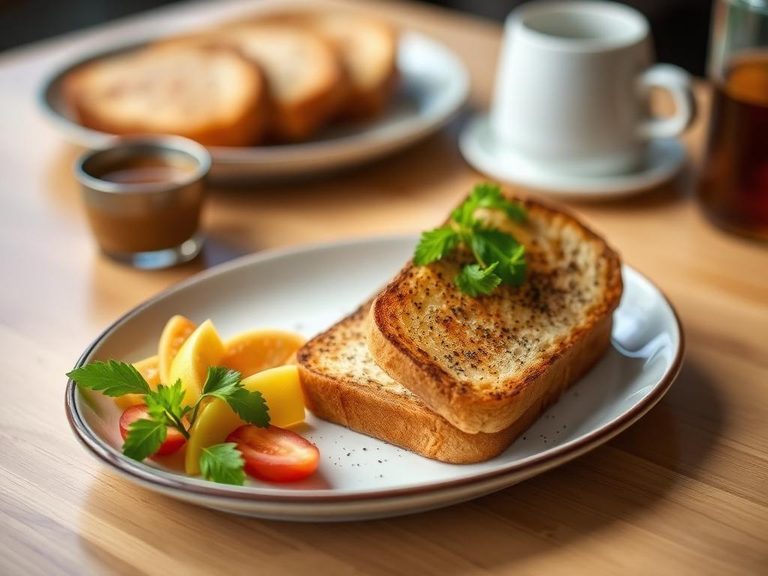
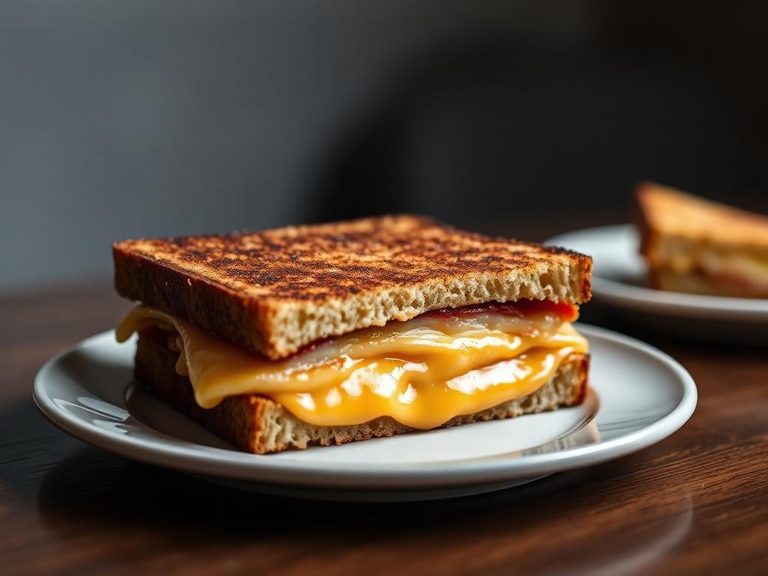
People appreciate it as a practical, everyday spread for toast and sandwiches, offering a buttery experience with a fraction of the fat and calories. Its neutral flavor and soft texture make it a versatile base for both sweet and savory dishes.
⚠️ Watch-outs & how to enjoy it better
The primary concern is that it's a highly processed food, often containing refined carbohydrates and additives like emulsifiers and stabilizers. Some brands may have higher sodium levels. To counteract this, use it in moderation, check labels for lower-sodium options, and pair it with whole-food toppings like avocado or nut butter to add fiber, protein, and healthy fats.
Key benefits
- Very low in calories per serving
- Contains no cholesterol
- Provides a source of essential fatty acids
- Spreads easily even when cold
- Useful for reducing total fat intake in recipes
🍽️ Popular dishes
🌍 Where it's eaten
💡 Did you know?
The 'fat-free' or 'low-fat' tub spreads of the 1990s were often made by replacing fat with a gel of water and modified food starch, which could give them a uniquely slippery, melt-in-the-mouth texture.
Full nutrition (USDA data · scales with serving)
| Water | 90.7 g |
| Energy | 44.0 kcal |
| Energy | 184 kj |
| Protein | 0.10 g |
| Total lipid (fat) | 3.0 g |
| Ash | 1.8 g |
| Carbohydrate, by difference | 4.3 g |
| Fiber, total dietary | 0.00 g |
| Total Sugars | 0.00 g |
| Calcium, Ca | 8.0 mg |
| Iron, Fe | 0.08 mg |
| Magnesium, Mg | 1.0 mg |
| Phosphorus, P | 2.0 mg |
| Potassium, K | 36.0 mg |
| Sodium, Na | 580 mg |
| Zinc, Zn | 0.07 mg |
| Copper, Cu | 0.00 mg |
| Manganese, Mn | 0.00 mg |
| Selenium, Se | 0.00 ug |
| Vitamin C, total ascorbic acid | 0.00 mg |
| Thiamin | 1.0 mg |
| Riboflavin | 0.00 mg |
| Niacin | 0.88 mg |
| Pantothenic acid | 0.27 mg |
| Vitamin B-6 | 0.00 mg |
| Folate, total | 0.00 ug |
| Folic acid | 0.00 ug |
| Folate, food | 0.00 ug |
| Folate, DFE | 0.00 ug |
| Choline, total | 8.3 mg |
| Vitamin B-12 | 0.00 ug |
| Vitamin B-12, added | 0.00 ug |
| Vitamin A, RAE | 993 ug |
| Retinol | 993 ug |
| Carotene, beta | 0.00 ug |
| Carotene, alpha | 0.00 ug |
| Cryptoxanthin, beta | 0.00 ug |
| Vitamin A, IU | 3307 iu |
| Lycopene | 0.00 ug |
| Lutein + zeaxanthin | 0.00 ug |
| Vitamin E (alpha-tocopherol) | 0.52 mg |
| Vitamin E, added | 0.00 mg |
| Vitamin D (D2 + D3), International Units | 0.00 iu |
| Vitamin D (D2 + D3) | 0.00 ug |
| Vitamin K (phylloquinone) | 0.10 ug |
| Vitamin K (Dihydrophylloquinone) | 0.30 ug |
| Alcohol, ethyl | 0.00 g |
| Caffeine | 0.00 mg |
| Theobromine | 0.00 mg |
Fat & fatty acid profile (per 100g)
| Fatty acids, total saturated | 2.1 g |
| SFA 4:0 | 0.00 g |
| SFA 6:0 | 0.00 g |
| SFA 8:0 | 0.00 g |
| SFA 10:0 | 0.00 g |
| SFA 12:0 | 0.01 g |
| SFA 14:0 | 0.03 g |
| SFA 16:0 | 0.95 g |
| SFA 18:0 | 1.1 g |
| SFA 20:0 | 0.01 g |
| Fatty acids, total monounsaturated | 0.36 g |
| MUFA 16:1 | 0.00 g |
| MUFA 18:1 | 0.18 g |
| MUFA 18:1 c | 0.01 g |
| MUFA 20:1 | 0.00 g |
| MUFA 22:1 | 0.00 g |
| Fatty acids, total polyunsaturated | 0.42 g |
| PUFA 18:2 | 0.38 g |
| PUFA 18:2 n-6 c,c | 0.38 g |
| PUFA 18:3 | 0.05 g |
| PUFA 18:3 n-3 c,c,c (ALA) | 0.05 g |
| PUFA 18:4 | 0.00 g |
| PUFA 20:4 | 0.00 g |
| PUFA 20:5 n-3 (EPA) | 0.00 g |
| PUFA 22:5 n-3 (DPA) | 0.00 g |
| PUFA 22:6 n-3 (DHA) | 0.00 g |
| Fatty acids, total trans | 0.17 g |
| Fatty acids, total trans-monoenoic | 0.17 g |
| TFA 18:1 t | 0.17 g |
| Cholesterol | 0.00 mg |
| Stigmasterol | 1.0 mg |
| Campesterol | 1.0 mg |
| Beta-sitosterol | 2.0 mg |
FAQ
Is this the same as butter?
No. Butter is a dairy product made from churned cream, while this is a processed vegetable oil-based spread. They differ significantly in taste, texture, and nutritional profile.
Can I use it for baking?
It can be used in some baking recipes where a neutral flavor is desired, but it may not provide the same structure, flavor, or browning as butter due to its higher water content and different fat composition.
Why does it have carbohydrates if it's a fat spread?
The carbohydrates typically come from added ingredients like modified food starches, gums, or thickeners used to create the spread's texture and stability in the absence of a high fat content.
Nutrient density (calculated · NRF9.3)
Nutrient Rich Foods index: beneficial nutrients (protein, fiber, vitamins, minerals) minus saturated fat, added sugar & sodium, per 100 kcal.
NRF9.3 index — Fulgoni, Keast & Drewnowski, 2009. Computed from USDA nutrients.
Weight-loss friendliness (composite index)
Energy density 0.44 kcal/g · 1% calories from protein · 0.0 g fiber · 0.0 g sugar per 100 g.
Composite of energy density (Rolls et al., 1999), protein & fiber satiety, minus sugar. A calculated heuristic — ranks satiety-per-calorie, not a clinical measure.
Dietary load (calculated from USDA values)
Potential renal acid load. Positive = acid-forming, negative = alkaline-forming.
Sodium-to-potassium ratio: 16.11 (lower is better — aim for ≤ 1)
Sodium:potassium per WHO potassium guidance. Computed from USDA nutrients.