

Baked potatoes
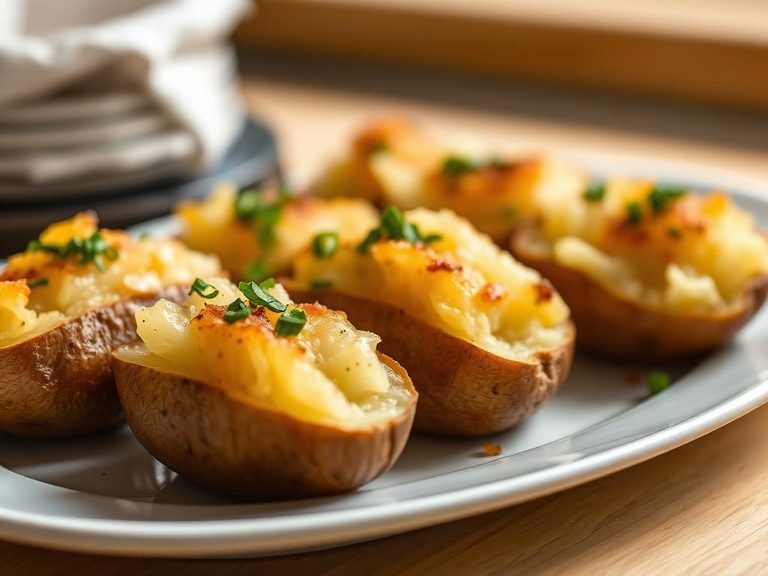
Baked potatoes are a simple, comforting dish made by cooking whole potatoes in an oven until their skins are crisp and their insides are fluffy. They are typically made with starchy potato varieties like Russets and are often served with toppings like butter, sour cream, cheese, or chives. This method of preparation is believed to have originated in Europe, particularly in the UK and Ireland, where potatoes became a staple crop.
🍳 View the full Baked potatoes recipe →
🍽️ Nutrition at a glance
A medium-sized baked potato is primarily a source of complex carbohydrates and provides a good amount of dietary fiber, especially when the skin is eaten. It is also rich in potassium and vitamin C, with a plain, medium potato containing roughly 160-170 calories.
Nutrition breakdown
| Calories | 161 kcal |
| Protein | 4.3 g |
| Carbs | 37 g |
| Fat | 0.2 g |
| Fiber | 3.8 g |
| Sugar | 2.5 g |
| Sodium | 17 mg |
| Potassium | 926 mg |
| Vitamin C | 28 mg |
| Vitamin B6 | 0.5 mg |
| Magnesium | 50 mg |
| Phosphorus | 121 mg |
| Folate | 48 mcg |
| Niacin (B3) | 2.6 mg |
| Iron | 1.9 mg |
Per 1 medium baked potato (173 g) · estimated, varies by recipe
💡 What's interesting
The baked potato is a global culinary chameleon, serving as a blank canvas that adapts to countless local flavors, from a classic British 'jacket potato' to loaded American versions. Nutritionally, its skin is a powerhouse, containing a significant portion of its fiber and nutrients, making eating the skin a key part of its health profile.
🍽️ Related dishes

AI estimate may be inaccurate · Terms