

Mango, raw
Common food
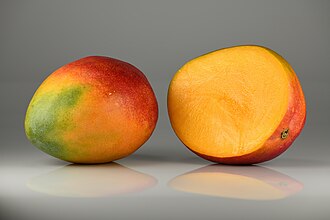
Photo: Wikipedia
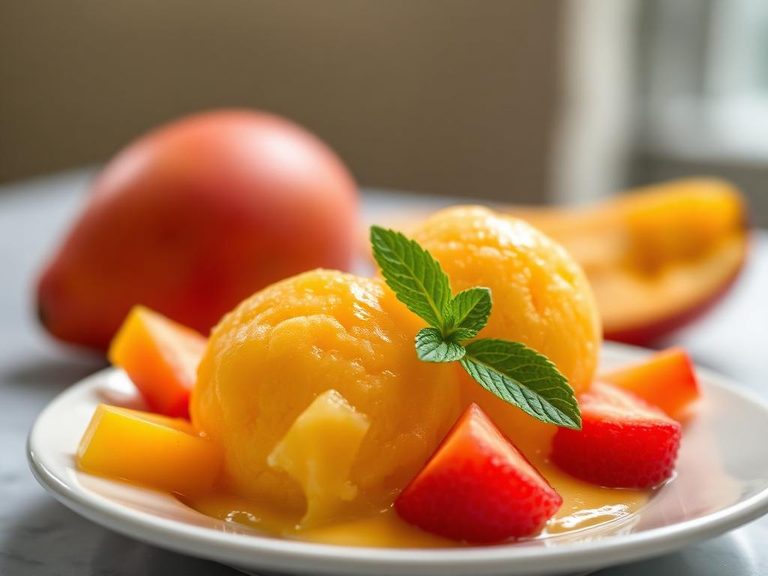
The raw mango is a tropical stone fruit celebrated for its vibrant golden flesh and a flavor profile that masterfully balances intense sweetness with a subtle, tangy undertone. Its texture is luxuriously smooth and juicy, melting in the mouth like a creamy custard. Nutritionally, it is a powerhouse of vitamin C and vitamin A, providing a significant boost for immune function and skin health in a low-calorie package.
Calorie split: 5% protein · 90% carbs · 5% fat
↓ Full nutrition💚 Why it's loved
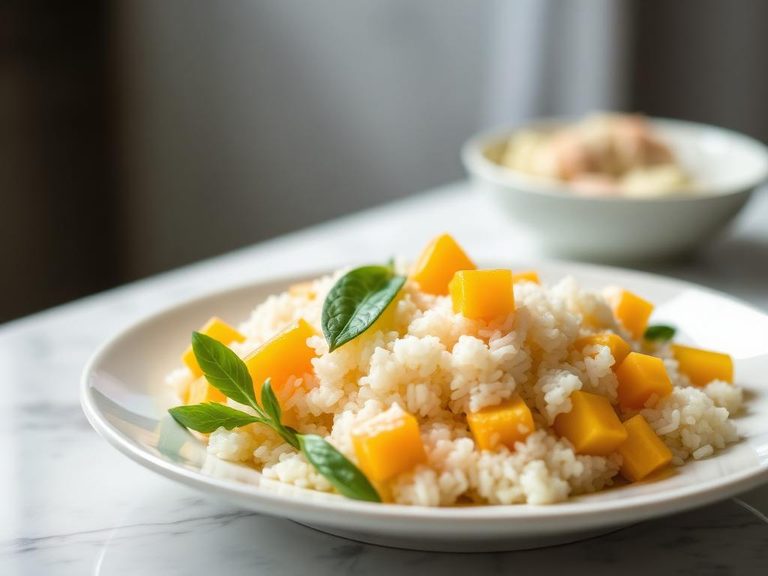
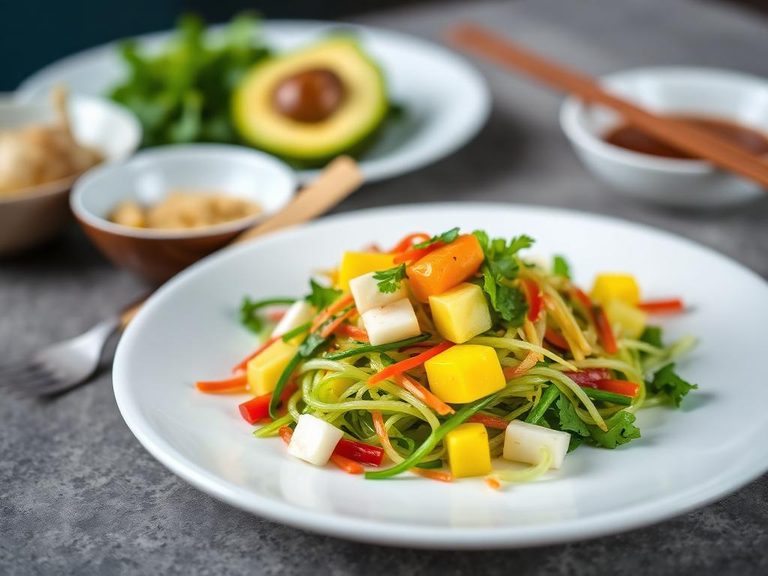
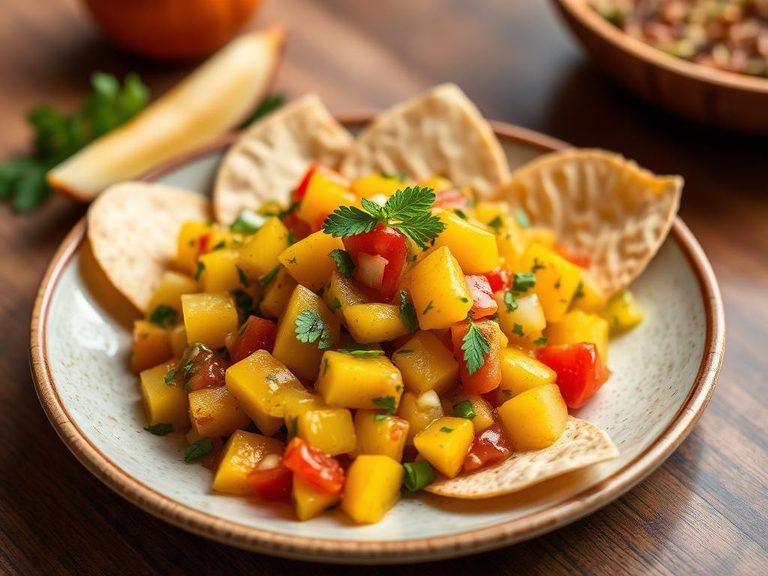
People adore the mango for its intoxicating, perfume-like aroma and the perfect harmony of sweet and tangy flavors that define summer. Its incredible versatility allows it to shine in everything from fresh salsas and salads to rich curries, frozen desserts, and spicy street food snacks.
⚠️ Watch-outs & how to enjoy it better
The high natural sugar content can cause rapid blood-sugar spikes, so individuals managing diabetes should practice strict portion control. To counteract this, pair mango with a source of protein (like Greek yogurt) or healthy fat (like nuts) to slow sugar absorption. Additionally, the skin contains urushiol (the same compound in poison ivy), which can cause contact dermatitis in sensitive individuals; always peel the fruit and wash hands afterward.
Key benefits
- Excellent source of immune-boosting vitamin C
- Rich in eye-healthy vitamin A (as beta-carotene)
- Contains digestive enzymes like amylases
- Provides antioxidants such as mangiferin
- Low in calories and naturally fat-free
🍽️ Popular dishes


🌍 Where it's eaten
💡 Did you know?
Mangoes are members of the cashew family (Anacardiaceae), making them a botanical relative of pistachos and cashews.
Full nutrition (USDA data · scales with serving)
| Water | 83.5 g |
| Energy | 60.0 kcal |
| Protein | 0.82 g |
| Total lipid (fat) | 0.38 g |
| Carbohydrate, by difference | 15.0 g |
| Fiber, total dietary | 1.6 g |
| Total Sugars | 13.7 g |
| Calcium, Ca | 11.0 mg |
| Iron, Fe | 0.16 mg |
| Magnesium, Mg | 10.0 mg |
| Phosphorus, P | 14.0 mg |
| Potassium, K | 168 mg |
| Sodium, Na | 1.0 mg |
| Zinc, Zn | 0.09 mg |
| Copper, Cu | 0.11 mg |
| Selenium, Se | 0.60 ug |
| Vitamin C, total ascorbic acid | 36.4 mg |
| Thiamin | 0.03 mg |
| Riboflavin | 0.04 mg |
| Niacin | 0.67 mg |
| Vitamin B-6 | 0.12 mg |
| Folate, total | 43.0 ug |
| Folic acid | 0.00 ug |
| Folate, food | 43.0 ug |
| Folate, DFE | 43.0 ug |
| Choline, total | 7.6 mg |
| Vitamin B-12 | 0.00 ug |
| Vitamin B-12, added | 0.00 ug |
| Vitamin A, RAE | 54.0 ug |
| Retinol | 0.00 ug |
| Carotene, beta | 640 ug |
| Carotene, alpha | 9.0 ug |
| Cryptoxanthin, beta | 10.0 ug |
| Lycopene | 3.0 ug |
| Lutein + zeaxanthin | 23.0 ug |
| Vitamin E (alpha-tocopherol) | 0.90 mg |
| Vitamin E, added | 0.00 mg |
| Vitamin D (D2 + D3) | 0.00 ug |
| Vitamin K (phylloquinone) | 4.2 ug |
| Alcohol, ethyl | 0.00 g |
| Caffeine | 0.00 mg |
| Theobromine | 0.00 mg |
Fat & fatty acid profile (per 100g)
| Fatty acids, total saturated | 0.09 g |
| SFA 4:0 | 0.00 g |
| SFA 6:0 | 0.00 g |
| SFA 8:0 | 0.00 g |
| SFA 10:0 | 0.00 g |
| SFA 12:0 | 0.00 g |
| SFA 14:0 | 0.01 g |
| SFA 16:0 | 0.07 g |
| SFA 18:0 | 0.00 g |
| Fatty acids, total monounsaturated | 0.14 g |
| MUFA 16:1 | 0.07 g |
| MUFA 18:1 | 0.07 g |
| MUFA 20:1 | 0.00 g |
| MUFA 22:1 | 0.00 g |
| Fatty acids, total polyunsaturated | 0.07 g |
| PUFA 18:2 | 0.02 g |
| PUFA 18:3 | 0.05 g |
| PUFA 18:4 | 0.00 g |
| PUFA 20:4 | 0.00 g |
| PUFA 20:5 n-3 (EPA) | 0.00 g |
| PUFA 22:5 n-3 (DPA) | 0.00 g |
| PUFA 22:6 n-3 (DHA) | 0.00 g |
| Cholesterol | 0.00 mg |
Amino acid profile (per 100g)
Estimated from Mangos, raw — USDA does not publish this profile for Mango.
| Tryptophan | 0.01 g |
| Threonine | 0.03 g |
| Isoleucine | 0.03 g |
| Leucine | 0.05 g |
| Lysine | 0.07 g |
| Methionine | 0.01 g |
| Phenylalanine | 0.03 g |
| Tyrosine | 0.02 g |
| Valine | 0.04 g |
| Arginine | 0.03 g |
| Histidine | 0.02 g |
| Alanine | 0.08 g |
| Aspartic acid | 0.07 g |
| Glutamic acid | 0.10 g |
| Glycine | 0.03 g |
| Proline | 0.03 g |
| Serine | 0.04 g |
FAQ
How do I ripen a hard, green mango quickly?
Place the mango in a brown paper bag with an apple or banana at room temperature for 1-2 days. The ethylene gas released by the other fruit accelerates ripening.
Why does my fresh mango sometimes taste bitter or soapy?
This is often due to the presence of sap (urushiol) near the stem. To avoid it, cut the mango away from the pit rather than peeling it first, and discard the flesh immediately adjacent to the stem.
Is the skin of a mango edible?
While technically edible, the skin is tough, bitter, and contains urushiol, which can irritate the skin and mouth. It is strongly recommended to peel mangoes before eating.
Nutrient density (calculated · NRF9.3)
Nutrient Rich Foods index: beneficial nutrients (protein, fiber, vitamins, minerals) minus saturated fat, added sugar & sodium, per 100 kcal.
NRF9.3 index — Fulgoni, Keast & Drewnowski, 2009. Computed from USDA nutrients.
Weight-loss friendliness (composite index)
Energy density 0.60 kcal/g · 5% calories from protein · 1.6 g fiber · 13.7 g sugar per 100 g.
Composite of energy density (Rolls et al., 1999), protein & fiber satiety, minus sugar. A calculated heuristic — ranks satiety-per-calorie, not a clinical measure.
Dietary load (calculated from USDA values)
Potential renal acid load. Positive = acid-forming, negative = alkaline-forming.
Sodium-to-potassium ratio: 0.01 (lower is better — aim for ≤ 1)
Sodium:potassium per WHO potassium guidance. Computed from USDA nutrients.