

Mango, Ataulfo, peeled, raw
Whole food · Fruits and Fruit Juices
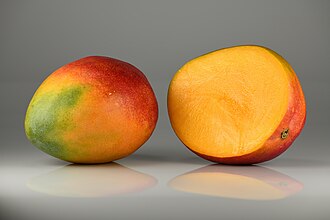
Photo: Wikipedia
The Ataulfo mango, also known as the honey or champagne mango, is a small, golden-yellow fruit prized for its exceptionally creamy, buttery texture and rich, sweet flavor with hints of peach and pineapple. Unlike fibrous varieties, its flesh is nearly fiberless, melting on the tongue like a tropical custard. Nutritionally, it's a low-calorie, high-carb snack that delivers a quick energy boost along with a notable dose of vitamin C and vitamin A precursors.
Calorie split: 4% protein · 89% carbs · 8% fat
↓ Full nutrition💚 Why it's loved
People adore the Ataulfo for its unmatched, silky-smooth texture and intense, honeyed sweetness that lacks the stringy fibers of other mangoes. It's a beloved seasonal treat in many cultures, often eaten simply with a spoon right from the peel, celebrating pure, unadulterated tropical flavor.
⚠️ Watch-outs & how to enjoy it better
Its high natural sugar content can cause blood-sugar spikes, making it a concern for those managing diabetes or insulin resistance. To counteract this, pair it with a source of protein or healthy fat (like Greek yogurt, nuts, or cheese) to slow sugar absorption, and practice portion control by sticking to a single serving. Additionally, some individuals may experience oral allergy syndrome (itching in the mouth) due to cross-reactivity with pollen; cooking the mango or choosing a different fruit can help.
Key benefits
- Excellent source of vitamin C, supporting immune function and skin health.
- Rich in beta-carotene (vitamin A precursor), beneficial for eye health.
- Provides quick, natural energy from its carbohydrate content.
- Contains digestive enzymes like amylases that help break down food.
- Low in fat and a good source of dietary fiber for gut health.
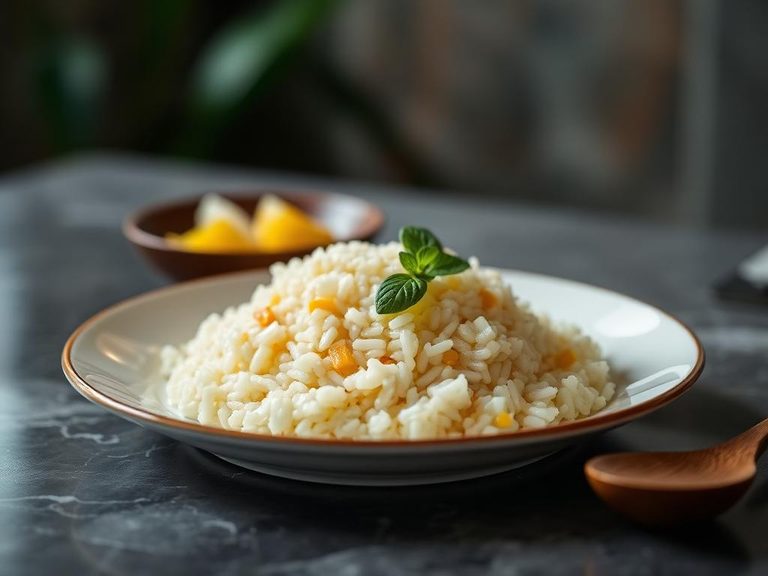
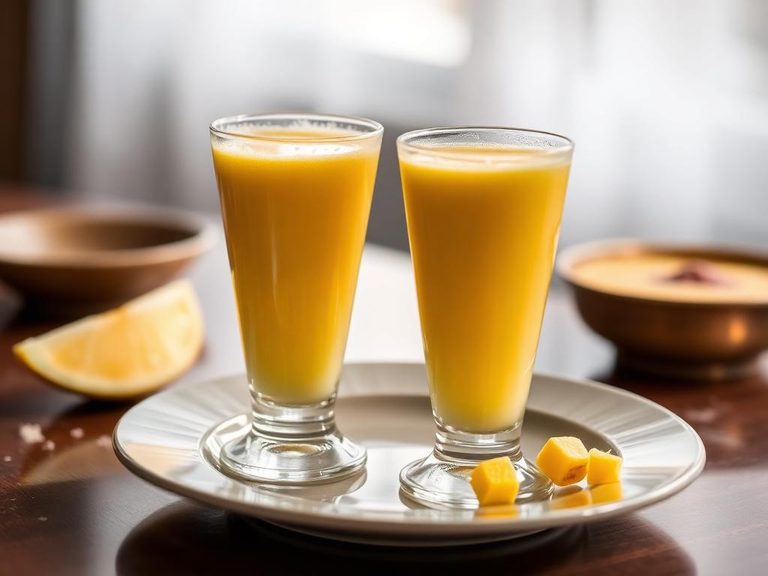
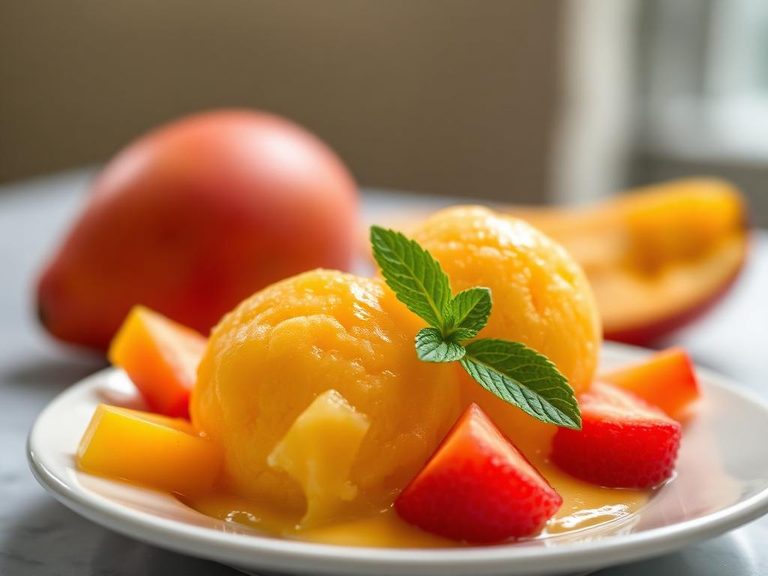
🍽️ Popular dishes
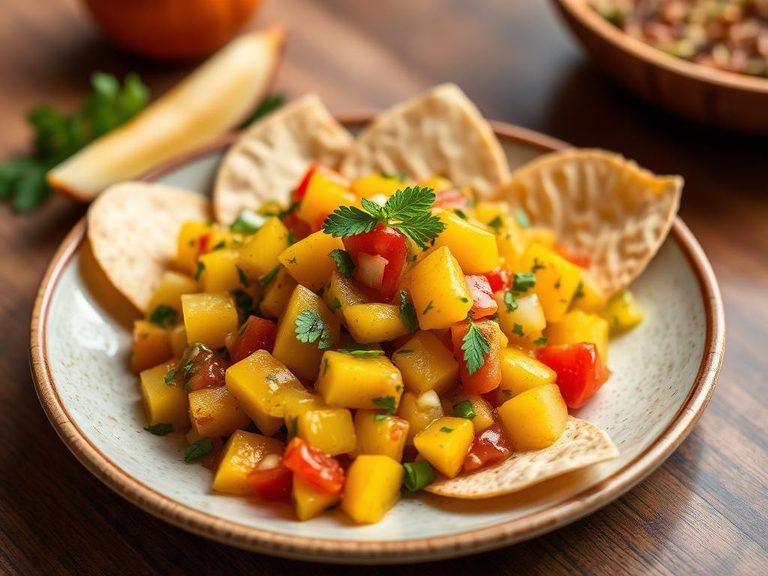
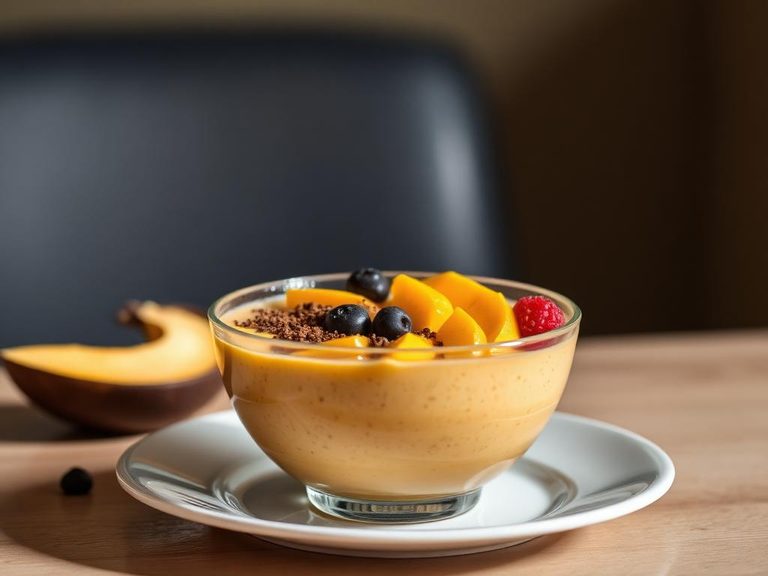
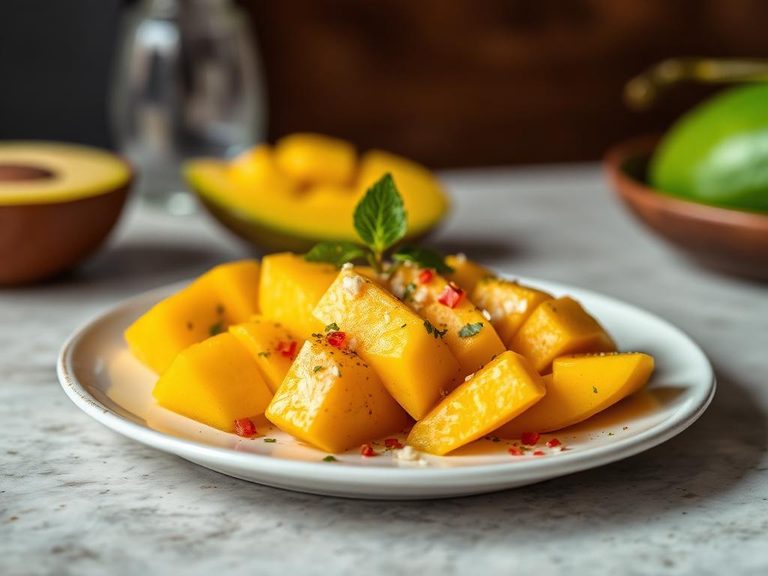
🌍 Where it's eaten
💡 Did you know?
The Ataulfo mango is named after a Mexican grower, Ataulfo Ortega, and is often called the 'honey mango' because its flesh has a distinct honey-like sweetness and a deep golden color that intensifies as it ripens.
Full nutrition (USDA data · scales with serving)
| Water | 80.8 g |
| Energy (Atwater General Factors) | 78.5 kcal |
| Energy (Atwater Specific Factors) | 70.6 kcal |
| Nitrogen | 0.11 g |
| Protein | 0.69 g |
| Total lipid (fat) | 0.68 g |
| Ash | 0.45 g |
| Carbohydrate, by difference | 17.4 g |
| Fiber, total dietary | 1.3 g |
| Sugars, Total | 11.1 g |
| Sucrose | 6.2 g |
| Glucose | 1.8 g |
| Fructose | 3.1 g |
| Lactose | 0.00 g |
| Maltose | 0.00 g |
| Calcium, Ca | 10.0 mg |
| Iron, Fe | 0.00 mg |
| Magnesium, Mg | 10.6 mg |
| Phosphorus, P | 17.7 mg |
| Potassium, K | 204 mg |
| Sodium, Na | 0.00 mg |
| Zinc, Zn | 0.10 mg |
| Copper, Cu | 0.10 mg |
| Manganese, Mn | 0.10 mg |
| Vitamin C, total ascorbic acid | 168 mg |
| Vitamin B-6 | 0.11 mg |
| Biotin | 0.56 ug |
Fat & fatty acid profile (per 100g)
Estimated from Mangos, raw — USDA does not publish this profile for Mango.
| Fatty acids, total saturated | 0.09 g |
| SFA 4:0 | 0.00 g |
| SFA 6:0 | 0.00 g |
| SFA 8:0 | 0.00 g |
| SFA 10:0 | 0.00 g |
| SFA 12:0 | 0.00 g |
| SFA 14:0 | 0.01 g |
| SFA 16:0 | 0.07 g |
| SFA 18:0 | 0.00 g |
| Fatty acids, total monounsaturated | 0.14 g |
| MUFA 16:1 | 0.07 g |
| MUFA 18:1 | 0.07 g |
| MUFA 20:1 | 0.00 g |
| MUFA 22:1 | 0.00 g |
| Fatty acids, total polyunsaturated | 0.07 g |
| PUFA 18:2 | 0.02 g |
| PUFA 18:3 | 0.05 g |
| PUFA 18:4 | 0.00 g |
| PUFA 20:4 | 0.00 g |
| PUFA 20:5 n-3 (EPA) | 0.00 g |
| PUFA 22:5 n-3 (DPA) | 0.00 g |
| PUFA 22:6 n-3 (DHA) | 0.00 g |
| Fatty acids, total trans | 0.00 g |
| Cholesterol | 0.00 mg |
Amino acid profile (per 100g)
Estimated from Mangos, raw — USDA does not publish this profile for Mango.
| Tryptophan | 0.01 g |
| Threonine | 0.03 g |
| Isoleucine | 0.03 g |
| Leucine | 0.05 g |
| Lysine | 0.07 g |
| Methionine | 0.01 g |
| Phenylalanine | 0.03 g |
| Tyrosine | 0.02 g |
| Valine | 0.04 g |
| Arginine | 0.03 g |
| Histidine | 0.02 g |
| Alanine | 0.08 g |
| Aspartic acid | 0.07 g |
| Glutamic acid | 0.10 g |
| Glycine | 0.03 g |
| Proline | 0.03 g |
| Serine | 0.04 g |
FAQ
How do I pick a ripe Ataulfo mango?
Look for a golden-yellow skin with a slight give when gently squeezed; avoid those with green patches or wrinkles. The stem should have a sweet, fruity aroma, and the skin may develop small brown speckles, which indicate peak sweetness.
Is the Ataulfo mango good for smoothies?
Yes, it's excellent for smoothies due to its creamy texture and low fiber content, which blends smoothly without leaving a gritty or stringy residue. Its intense sweetness also means you may not need to add extra sugar.
Can I eat the skin of an Ataulfo mango?
While the skin is technically edible and contains some nutrients, it can be bitter and tough. Most people prefer to peel it and eat the flesh, but if you do eat the skin, wash it thoroughly to remove any pesticide residue.
Nutrient density (calculated · NRF9.3)
Nutrient Rich Foods index: beneficial nutrients (protein, fiber, vitamins, minerals) minus saturated fat, added sugar & sodium, per 100 kcal.
NRF9.3 index — Fulgoni, Keast & Drewnowski, 2009. Computed from USDA nutrients.
Weight-loss friendliness (composite index)
Energy density 0.78 kcal/g · 4% calories from protein · 1.3 g fiber · 0.0 g sugar per 100 g.
Composite of energy density (Rolls et al., 1999), protein & fiber satiety, minus sugar. A calculated heuristic — ranks satiety-per-calorie, not a clinical measure.
Dietary load (calculated from USDA values)
Potential renal acid load. Positive = acid-forming, negative = alkaline-forming.
Sodium-to-potassium ratio: 0.00 (lower is better — aim for ≤ 1)
Sodium:potassium per WHO potassium guidance. Computed from USDA nutrients.