

Lima beans and corn, cooked, no added fat
Common food

Photo: Wikipedia
Lima beans and corn cooked together create a hearty, comforting side dish with a delightful contrast of textures: the creamy, buttery beans against the sweet, pop of the corn kernels. This simple, no-fat preparation lets the natural, earthy sweetness of the vegetables shine through. It's a low-calorie, high-fiber combination that provides a satisfying, plant-based source of protein and complex carbohydrates.
Calorie split: 17% protein · 78% carbs · 5% fat
↓ Full nutrition💚 Why it's loved
People love this classic combination for its comforting, homestyle appeal and the perfect marriage of creamy and crisp textures. It's a versatile, nutritious staple that evokes a sense of wholesome, simple cooking.
⚠️ Watch-outs & how to enjoy it better
The high fiber content, while beneficial, can cause digestive discomfort like bloating for some individuals, especially if not accustomed to it. To mitigate this, introduce it gradually into your diet and ensure adequate water intake. Additionally, while low in sugar, the carbohydrate content means those monitoring blood sugar should practice portion control and pair it with a source of protein or healthy fat to moderate glycemic response.
Key benefits
- Excellent source of dietary fiber (3.8g per 100g) for digestive health.
- Good plant-based protein source (4.3g per 100g).
- Low in fat (0.5g per 100g), making it a heart-healthy choice.
- Provides complex carbohydrates for sustained energy.
- Naturally low in sugar (2.2g per 100g).
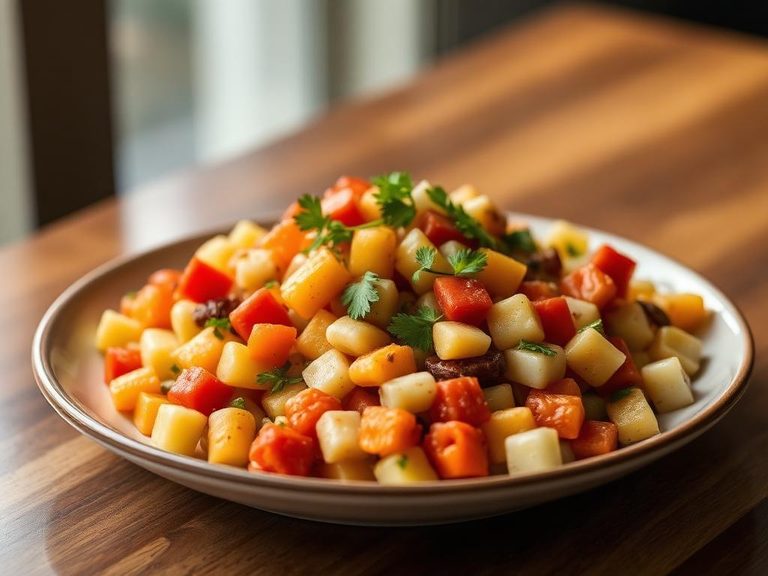
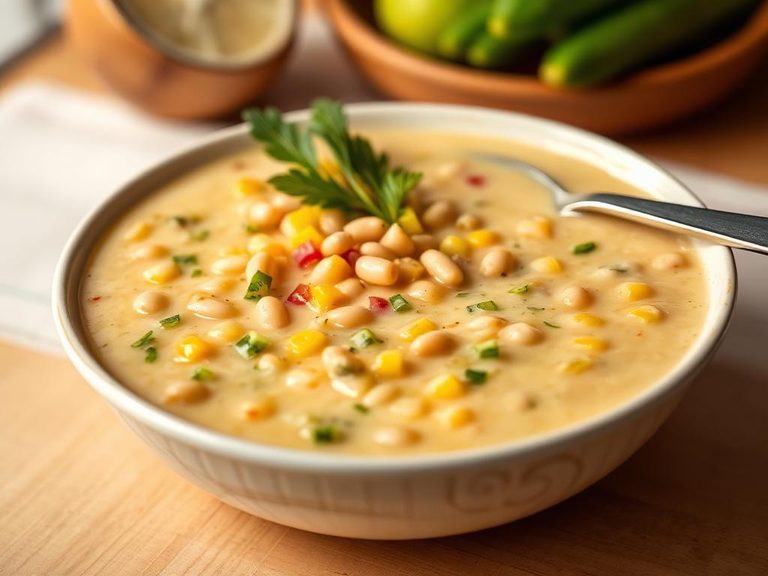
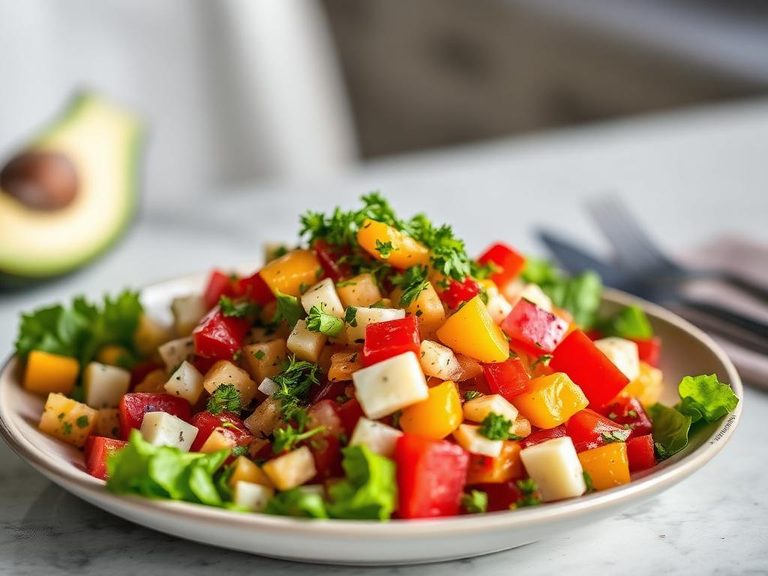
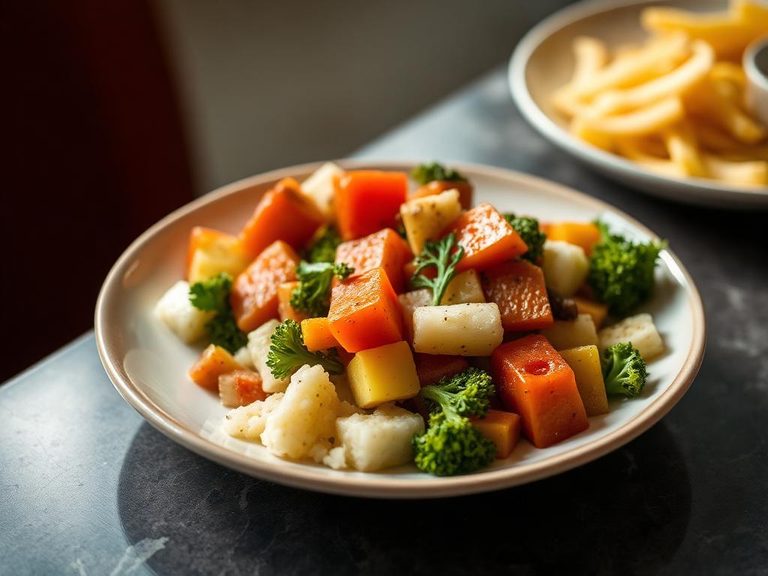
🍽️ Popular dishes
🌍 Where it's eaten
💡 Did you know?
Succotash, the iconic dish featuring lima beans and corn, derives its name from the Narragansett word 'msíckquatash,' which referred to a boiled corn kernel dish.
Full nutrition (USDA data · scales with serving)
| Water | 74.8 g |
| Energy | 92.0 kcal |
| Protein | 4.3 g |
| Total lipid (fat) | 0.50 g |
| Carbohydrate, by difference | 19.3 g |
| Fiber, total dietary | 3.8 g |
| Total Sugars | 2.2 g |
| Calcium, Ca | 17.0 mg |
| Iron, Fe | 1.1 mg |
| Magnesium, Mg | 35.0 mg |
| Phosphorus, P | 88.0 mg |
| Potassium, K | 268 mg |
| Sodium, Na | 151 mg |
| Zinc, Zn | 0.68 mg |
| Copper, Cu | 0.11 mg |
| Selenium, Se | 0.60 ug |
| Vitamin C, total ascorbic acid | 8.1 mg |
| Thiamin | 0.05 mg |
| Riboflavin | 0.06 mg |
| Niacin | 1.2 mg |
| Vitamin B-6 | 0.11 mg |
| Folate, total | 28.0 ug |
| Folic acid | 0.00 ug |
| Folate, food | 28.0 ug |
| Folate, DFE | 28.0 ug |
| Choline, total | 29.1 mg |
| Vitamin B-12 | 0.00 ug |
| Vitamin B-12, added | 0.00 ug |
| Vitamin A, RAE | 10.0 ug |
| Retinol | 0.00 ug |
| Carotene, beta | 82.0 ug |
| Carotene, alpha | 8.0 ug |
| Cryptoxanthin, beta | 61.0 ug |
| Lycopene | 0.00 ug |
| Lutein + zeaxanthin | 341 ug |
| Vitamin E (alpha-tocopherol) | 0.18 mg |
| Vitamin E, added | 0.00 mg |
| Vitamin D (D2 + D3) | 0.00 ug |
| Vitamin K (phylloquinone) | 2.7 ug |
| Alcohol, ethyl | 0.00 g |
| Caffeine | 0.00 mg |
| Theobromine | 0.00 mg |
Fat & fatty acid profile (per 100g)
| Fatty acids, total saturated | 0.09 g |
| SFA 4:0 | 0.00 g |
| SFA 6:0 | 0.00 g |
| SFA 8:0 | 0.00 g |
| SFA 10:0 | 0.00 g |
| SFA 12:0 | 0.00 g |
| SFA 14:0 | 0.00 g |
| SFA 16:0 | 0.08 g |
| SFA 18:0 | 0.01 g |
| Fatty acids, total monounsaturated | 0.11 g |
| MUFA 16:1 | 0.00 g |
| MUFA 18:1 | 0.11 g |
| MUFA 20:1 | 0.00 g |
| MUFA 22:1 | 0.00 g |
| Fatty acids, total polyunsaturated | 0.24 g |
| PUFA 18:2 | 0.21 g |
| PUFA 18:3 | 0.03 g |
| PUFA 18:4 | 0.00 g |
| PUFA 20:4 | 0.00 g |
| PUFA 20:5 n-3 (EPA) | 0.00 g |
| PUFA 22:5 n-3 (DPA) | 0.00 g |
| PUFA 22:6 n-3 (DHA) | 0.00 g |
| Cholesterol | 0.00 mg |
Amino acid profile (per 100g)
Estimated from Lima beans, immature seeds, raw — USDA does not publish this profile for Lima beans and corn.
| Tryptophan | 0.09 g |
| Threonine | 0.29 g |
| Isoleucine | 0.44 g |
| Leucine | 0.54 g |
| Lysine | 0.45 g |
| Methionine | 0.07 g |
| Cystine | 0.08 g |
| Phenylalanine | 0.34 g |
| Tyrosine | 0.22 g |
| Valine | 0.43 g |
| Arginine | 0.46 g |
| Histidine | 0.23 g |
| Alanine | 0.26 g |
| Aspartic acid | 0.73 g |
| Glutamic acid | 0.88 g |
| Glycine | 0.27 g |
| Proline | 0.10 g |
| Serine | 0.43 g |
FAQ
Is this dish suitable for a vegan diet?
Yes, when prepared with no added fat as specified, it is completely plant-based and vegan-friendly.
Can I use frozen or canned lima beans and corn?
Absolutely. Frozen vegetables are an excellent option, often retaining more nutrients than canned. If using canned, rinse them thoroughly to reduce sodium content.
How can I add more flavor without adding fat?
Enhance it with herbs like thyme, parsley, or dill; a squeeze of lemon juice; spices like smoked paprika or cumin; or a splash of low-sodium vegetable broth while cooking.
Nutrient density (calculated · NRF9.3)
Nutrient Rich Foods index: beneficial nutrients (protein, fiber, vitamins, minerals) minus saturated fat, added sugar & sodium, per 100 kcal.
NRF9.3 index — Fulgoni, Keast & Drewnowski, 2009. Computed from USDA nutrients.
Weight-loss friendliness (composite index)
Energy density 0.92 kcal/g · 19% calories from protein · 3.8 g fiber · 2.2 g sugar per 100 g.
Composite of energy density (Rolls et al., 1999), protein & fiber satiety, minus sugar. A calculated heuristic — ranks satiety-per-calorie, not a clinical measure.
Dietary load (calculated from USDA values)
Potential renal acid load. Positive = acid-forming, negative = alkaline-forming.
Sodium-to-potassium ratio: 0.56 (lower is better — aim for ≤ 1)
Sodium:potassium per WHO potassium guidance. Computed from USDA nutrients.