

Lentils, from dried, no added fat
Common food

Photo: Wikipedia
Dried lentils, when cooked, transform into tender, earthy legumes with a mild, nutty flavor that absorbs spices beautifully. They offer a remarkable nutritional punch, delivering nearly 9 grams of protein and a substantial 8 grams of fiber per 100g serving, all for just 115 calories.
Calorie split: 30% protein · 67% carbs · 3% fat
↓ Full nutrition💚 Why it's loved
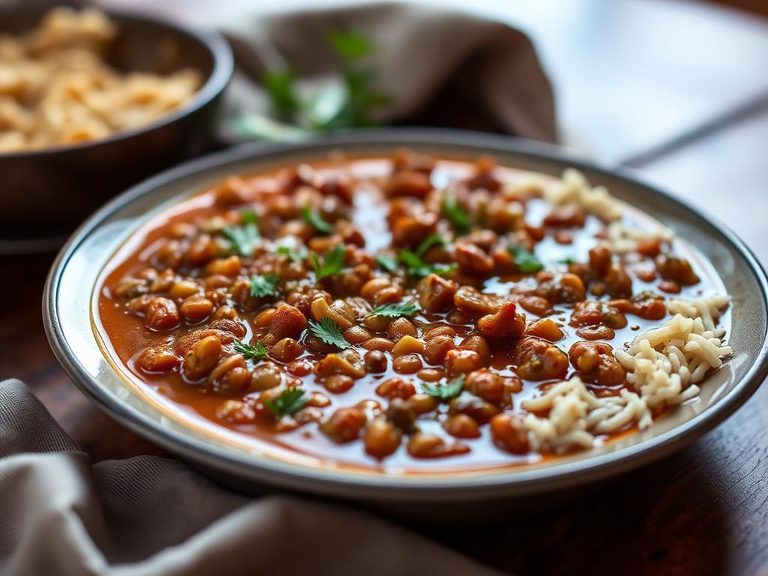
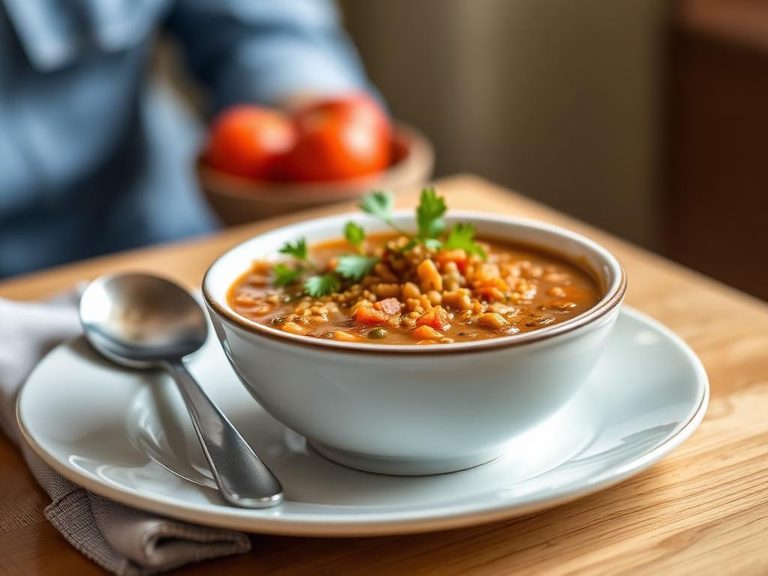
People love lentils for their incredible versatility and ability to act as a flavor sponge in countless cuisines. They are a staple comfort food in many cultures, forming the hearty base of soups, stews, and curries that are both nourishing and economical.
⚠️ Watch-outs & how to enjoy it better
Some may experience digestive discomfort or gas due to their high fiber and oligosaccharide content. To counteract this, start with smaller portions, ensure they are thoroughly cooked, and consider soaking dried lentils for a few hours before cooking to improve digestibility.
Key benefits
- Excellent plant-based protein source
- High in dietary fiber for digestive health
- Rich in essential minerals like iron and folate
- Low in fat and naturally cholesterol-free
- Provides sustained energy due to complex carbs
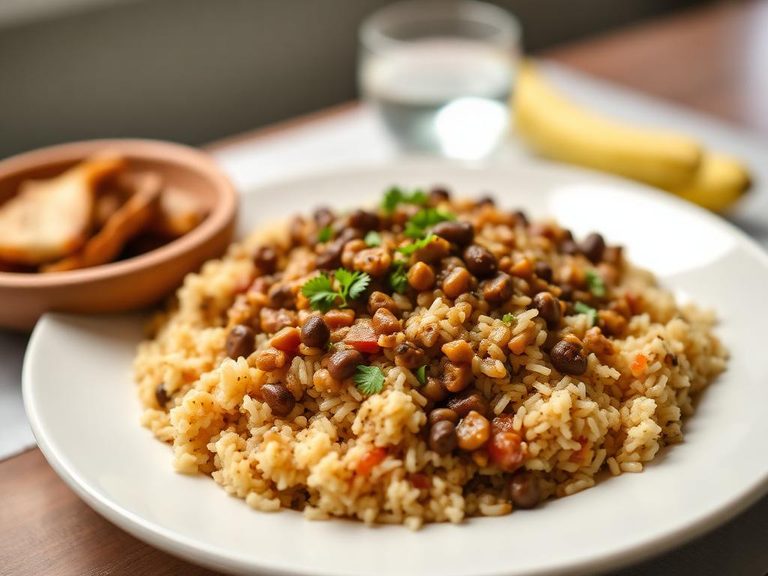
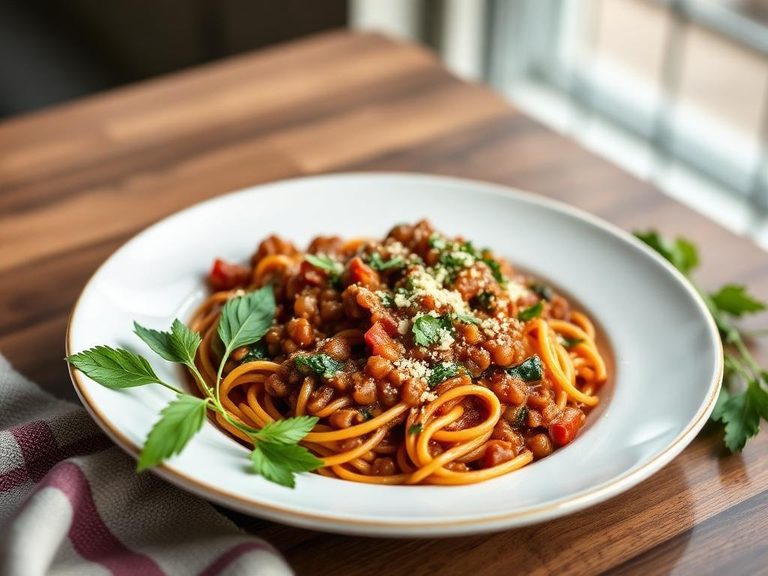
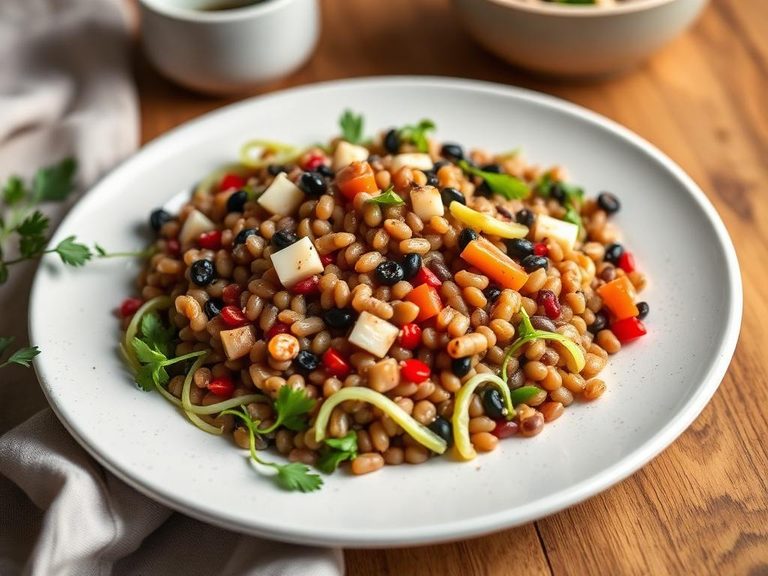
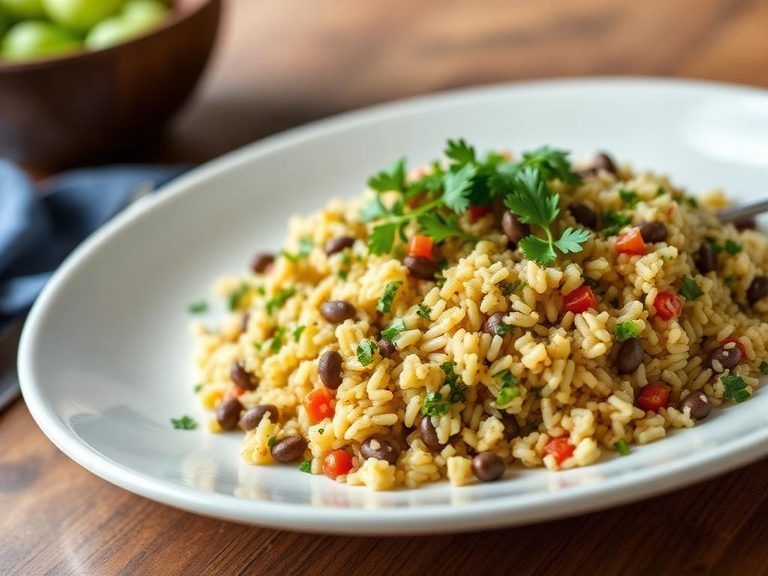
🍽️ Popular dishes
🌍 Where it's eaten
💡 Did you know?
Lentils are one of the oldest known cultivated crops, with evidence of their consumption dating back over 9,000 years to the ancient Fertile Crescent.
Full nutrition (USDA data · scales with serving)
| Water | 69.2 g |
| Energy | 115 kcal |
| Protein | 9.0 g |
| Total lipid (fat) | 0.38 g |
| Carbohydrate, by difference | 20.0 g |
| Fiber, total dietary | 7.9 g |
| Total Sugars | 1.8 g |
| Calcium, Ca | 19.0 mg |
| Iron, Fe | 3.3 mg |
| Magnesium, Mg | 36.0 mg |
| Phosphorus, P | 179 mg |
| Potassium, K | 367 mg |
| Sodium, Na | 233 mg |
| Zinc, Zn | 1.3 mg |
| Copper, Cu | 0.25 mg |
| Selenium, Se | 2.8 ug |
| Vitamin C, total ascorbic acid | 1.4 mg |
| Thiamin | 0.16 mg |
| Riboflavin | 0.07 mg |
| Niacin | 1.0 mg |
| Vitamin B-6 | 0.17 mg |
| Folate, total | 171 ug |
| Folic acid | 0.00 ug |
| Folate, food | 171 ug |
| Folate, DFE | 171 ug |
| Choline, total | 32.5 mg |
| Vitamin B-12 | 0.00 ug |
| Vitamin B-12, added | 0.00 ug |
| Vitamin A, RAE | 0.00 ug |
| Retinol | 0.00 ug |
| Carotene, beta | 5.0 ug |
| Carotene, alpha | 0.00 ug |
| Cryptoxanthin, beta | 0.00 ug |
| Lycopene | 0.00 ug |
| Lutein + zeaxanthin | 0.00 ug |
| Vitamin E (alpha-tocopherol) | 0.11 mg |
| Vitamin E, added | 0.00 mg |
| Vitamin D (D2 + D3) | 0.00 ug |
| Vitamin K (phylloquinone) | 1.7 ug |
| Alcohol, ethyl | 0.00 g |
| Caffeine | 0.00 mg |
| Theobromine | 0.00 mg |
Fat & fatty acid profile (per 100g)
| Fatty acids, total saturated | 0.05 g |
| SFA 4:0 | 0.00 g |
| SFA 6:0 | 0.00 g |
| SFA 8:0 | 0.00 g |
| SFA 10:0 | 0.00 g |
| SFA 12:0 | 0.00 g |
| SFA 14:0 | 0.00 g |
| SFA 16:0 | 0.04 g |
| SFA 18:0 | 0.01 g |
| Fatty acids, total monounsaturated | 0.06 g |
| MUFA 16:1 | 0.00 g |
| MUFA 18:1 | 0.06 g |
| MUFA 20:1 | 0.00 g |
| MUFA 22:1 | 0.00 g |
| Fatty acids, total polyunsaturated | 0.17 g |
| PUFA 18:2 | 0.14 g |
| PUFA 18:3 | 0.04 g |
| PUFA 18:4 | 0.00 g |
| PUFA 20:4 | 0.00 g |
| PUFA 20:5 n-3 (EPA) | 0.00 g |
| PUFA 22:5 n-3 (DPA) | 0.00 g |
| PUFA 22:6 n-3 (DHA) | 0.00 g |
| Cholesterol | 0.00 mg |
Amino acid profile (per 100g)
Estimated from Lentils, sprouted, raw — USDA does not publish this profile for Lentils.
| Threonine | 0.33 g |
| Isoleucine | 0.33 g |
| Leucine | 0.63 g |
| Lysine | 0.71 g |
| Methionine | 0.10 g |
| Cystine | 0.33 g |
| Phenylalanine | 0.44 g |
| Tyrosine | 0.25 g |
| Valine | 0.40 g |
| Arginine | 0.61 g |
| Histidine | 0.26 g |
| Alanine | 0.36 g |
| Aspartic acid | 1.4 g |
| Glutamic acid | 1.3 g |
| Glycine | 0.32 g |
| Proline | 0.36 g |
| Serine | 0.49 g |
FAQ
Do I need to soak dried lentils before cooking?
Unlike many beans, most lentils (especially brown and green) do not require soaking. A quick rinse is sufficient. Soaking can reduce cooking time and may make them easier to digest for some people.
How long does it take to cook dried lentils?
Cooking time varies by type. Brown or green lentils typically take 20-30 minutes, while red or yellow lentils cook faster, in about 15-20 minutes. Always cook until tender but not mushy.
Are lentils a complete protein?
Lentils are high in protein but are not a complete protein on their own, as they are low in methionine. Pairing them with grains like rice or bread creates a complete amino acid profile.
Nutrient density (calculated · NRF9.3)
Nutrient Rich Foods index: beneficial nutrients (protein, fiber, vitamins, minerals) minus saturated fat, added sugar & sodium, per 100 kcal.
NRF9.3 index — Fulgoni, Keast & Drewnowski, 2009. Computed from USDA nutrients.
Weight-loss friendliness (composite index)
Energy density 1.15 kcal/g · 31% calories from protein · 7.9 g fiber · 1.8 g sugar per 100 g.
Composite of energy density (Rolls et al., 1999), protein & fiber satiety, minus sugar. A calculated heuristic — ranks satiety-per-calorie, not a clinical measure.
Dietary load (calculated from USDA values)
Potential renal acid load. Positive = acid-forming, negative = alkaline-forming.
Sodium-to-potassium ratio: 0.63 (lower is better — aim for ≤ 1)
Sodium:potassium per WHO potassium guidance. Computed from USDA nutrients.