

Rice, white, with lentils, fat added
Common food

Photo: Wikipedia
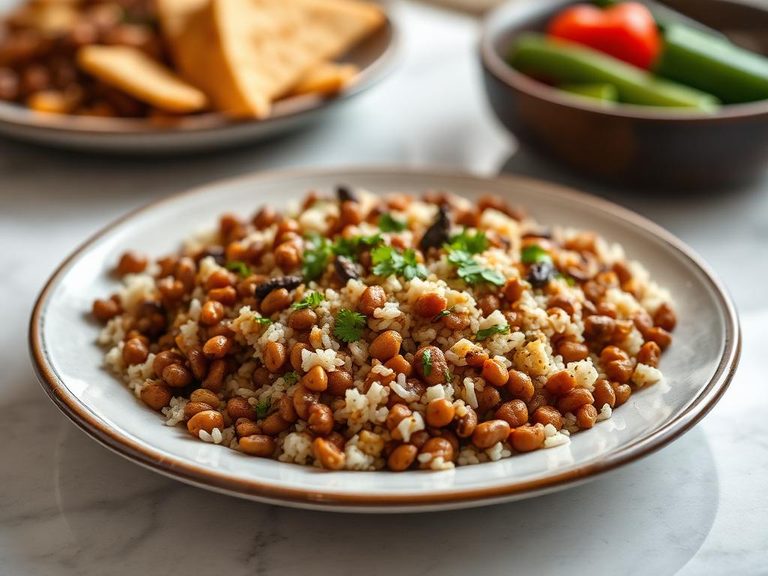
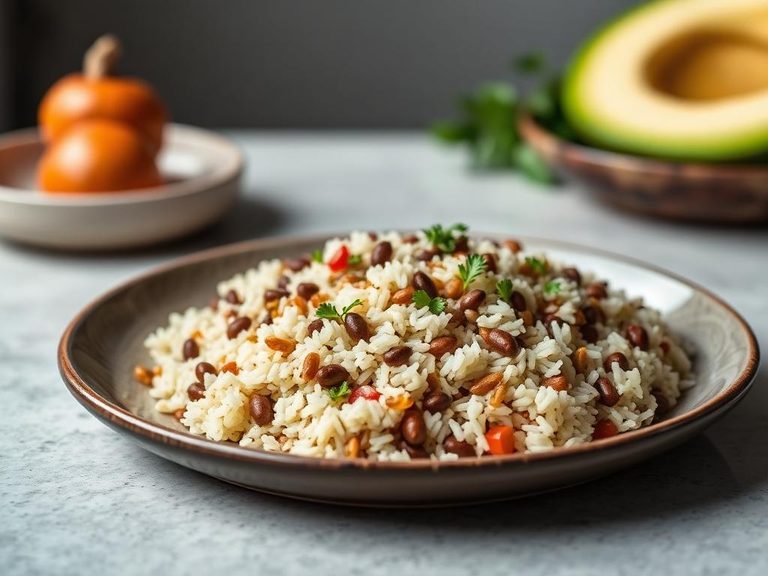
This is a hearty, comforting staple where fluffy white rice is cooked with tender lentils and a touch of fat for richness. The texture is soft and slightly nutty from the lentils, while the flavor is mild, earthy, and deeply satisfying. Nutritionally, it offers a solid balance of carbs and protein, making it a filling and energy-boosting meal.
Calorie split: 15% protein · 57% carbs · 29% fat
↓ Full nutrition💚 Why it's loved
People love this dish for its comforting, home-cooked appeal and the way it pairs perfectly with a wide range of spices, stews, and curries. Its mild, savory flavor and satisfying texture make it a beloved staple in many cultures, often evoking a sense of warmth and tradition.
⚠️ Watch-outs & how to enjoy it better
The added fat can increase calorie density, which may be a concern for those monitoring intake. The white rice component can cause blood-sugar spikes, especially for individuals with insulin sensitivity. To counteract, pair with non-starchy vegetables and a source of protein or healthy fat, and consider portion control. Soaking lentils before cooking can also reduce cooking time and improve digestibility.
Key benefits
- Provides plant-based protein from lentils
- Good source of dietary fiber for digestive health
- Balanced energy from complex carbohydrates
- Versatile base for many global cuisines
- Affordable and shelf-stable pantry staple
🍽️ Popular dishes
🌍 Where it's eaten
💡 Did you know?
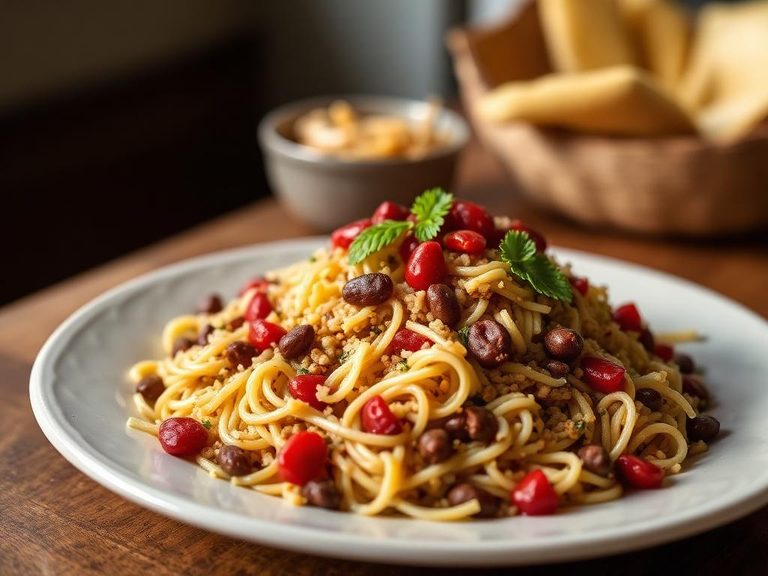
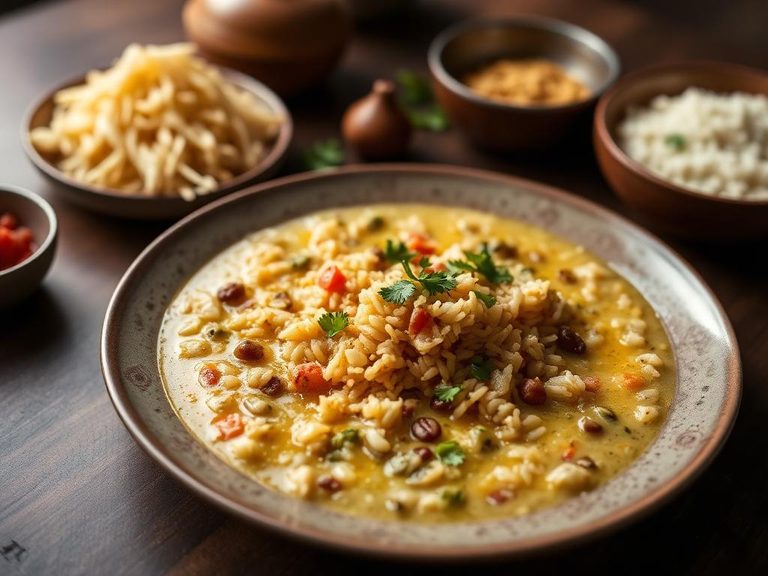
Mujadara, a classic lentil and rice dish, is so beloved in the Middle East that it's often called 'the food of the poor' because it's both nutritious and incredibly affordable, yet it's enjoyed by all social classes.
Full nutrition (USDA data · scales with serving)
| Water | 67.2 g |
| Energy | 150 kcal |
| Protein | 5.5 g |
| Total lipid (fat) | 4.8 g |
| Carbohydrate, by difference | 21.4 g |
| Fiber, total dietary | 4.1 g |
| Total Sugars | 1.3 g |
| Calcium, Ca | 17.0 mg |
| Iron, Fe | 2.2 mg |
| Magnesium, Mg | 23.0 mg |
| Phosphorus, P | 106 mg |
| Potassium, K | 207 mg |
| Sodium, Na | 189 mg |
| Zinc, Zn | 0.82 mg |
| Copper, Cu | 0.15 mg |
| Selenium, Se | 4.3 ug |
| Vitamin C, total ascorbic acid | 1.3 mg |
| Thiamin | 0.15 mg |
| Riboflavin | 0.04 mg |
| Niacin | 1.1 mg |
| Vitamin B-6 | 0.14 mg |
| Folate, total | 110 ug |
| Folic acid | 21.0 ug |
| Folate, food | 89.0 ug |
| Folate, DFE | 125 ug |
| Choline, total | 17.2 mg |
| Vitamin B-12 | 0.00 ug |
| Vitamin B-12, added | 0.00 ug |
| Vitamin A, RAE | 1.0 ug |
| Retinol | 0.00 ug |
| Carotene, beta | 12.0 ug |
| Carotene, alpha | 0.00 ug |
| Cryptoxanthin, beta | 2.0 ug |
| Lycopene | 0.00 ug |
| Lutein + zeaxanthin | 6.0 ug |
| Vitamin E (alpha-tocopherol) | 0.94 mg |
| Vitamin E, added | 0.00 mg |
| Vitamin D (D2 + D3) | 0.00 ug |
| Vitamin K (phylloquinone) | 6.7 ug |
| Alcohol, ethyl | 0.00 g |
| Caffeine | 0.00 mg |
| Theobromine | 0.00 mg |
Fat & fatty acid profile (per 100g)
| Fatty acids, total saturated | 0.66 g |
| SFA 4:0 | 0.00 g |
| SFA 6:0 | 0.00 g |
| SFA 8:0 | 0.00 g |
| SFA 10:0 | 0.00 g |
| SFA 12:0 | 0.00 g |
| SFA 14:0 | 0.00 g |
| SFA 16:0 | 0.48 g |
| SFA 18:0 | 0.14 g |
| Fatty acids, total monounsaturated | 2.0 g |
| MUFA 16:1 | 0.02 g |
| MUFA 18:1 | 1.9 g |
| MUFA 20:1 | 0.03 g |
| MUFA 22:1 | 0.00 g |
| Fatty acids, total polyunsaturated | 1.9 g |
| PUFA 18:2 | 1.6 g |
| PUFA 18:3 | 0.22 g |
| PUFA 18:4 | 0.00 g |
| PUFA 20:4 | 0.00 g |
| PUFA 20:5 n-3 (EPA) | 0.00 g |
| PUFA 22:5 n-3 (DPA) | 0.00 g |
| PUFA 22:6 n-3 (DHA) | 0.00 g |
| Cholesterol | 0.00 mg |
Amino acid profile (per 100g)
Estimated from Snacks, rice cakes, brown rice, sesame seed — USDA does not publish this profile for Rice.
| Tryptophan | 0.10 g |
| Threonine | 0.28 g |
| Isoleucine | 0.32 g |
| Leucine | 0.63 g |
| Lysine | 0.29 g |
| Methionine | 0.17 g |
| Cystine | 0.09 g |
| Phenylalanine | 0.39 g |
| Tyrosine | 0.29 g |
| Valine | 0.44 g |
| Arginine | 0.59 g |
| Histidine | 0.19 g |
| Alanine | 0.44 g |
| Aspartic acid | 0.71 g |
| Glutamic acid | 1.6 g |
| Glycine | 0.38 g |
| Proline | 0.35 g |
| Serine | 0.39 g |
FAQ
Is this dish suitable for vegetarians?
Yes, it is naturally vegetarian and can be made vegan if no animal-based fats are used.
How can I reduce the glycemic impact?
Pair it with fiber-rich vegetables, a source of protein like yogurt or meat, and use a smaller portion of rice relative to lentils.
Can I use brown rice instead of white?
Yes, brown rice adds more fiber and nutrients, but it will have a different texture and longer cooking time.
Nutrient density (calculated · NRF9.3)
Nutrient Rich Foods index: beneficial nutrients (protein, fiber, vitamins, minerals) minus saturated fat, added sugar & sodium, per 100 kcal.
NRF9.3 index — Fulgoni, Keast & Drewnowski, 2009. Computed from USDA nutrients.
Weight-loss friendliness (composite index)
Energy density 1.50 kcal/g · 15% calories from protein · 4.1 g fiber · 1.3 g sugar per 100 g.
Composite of energy density (Rolls et al., 1999), protein & fiber satiety, minus sugar. A calculated heuristic — ranks satiety-per-calorie, not a clinical measure.
Dietary load (calculated from USDA values)
Potential renal acid load. Positive = acid-forming, negative = alkaline-forming.
Sodium-to-potassium ratio: 0.91 (lower is better — aim for ≤ 1)
Sodium:potassium per WHO potassium guidance. Computed from USDA nutrients.