

Rice, white, with lentils, no added fat
Common food

Photo: Wikipedia
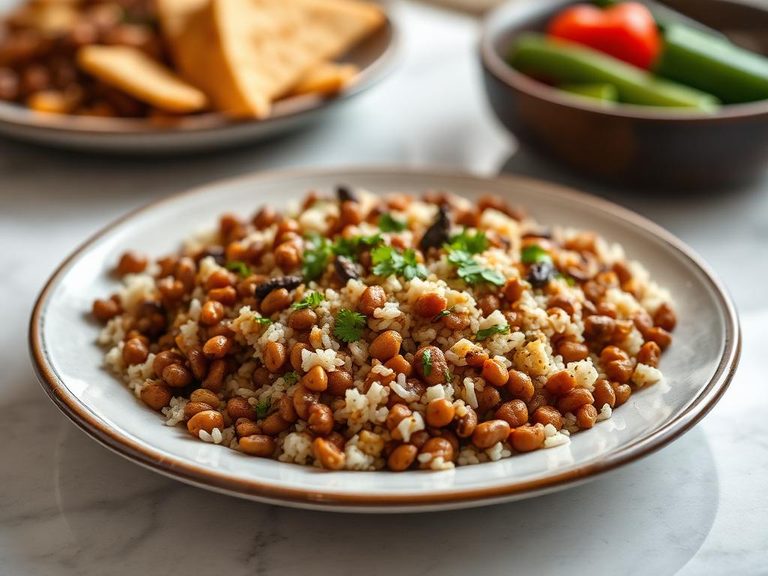
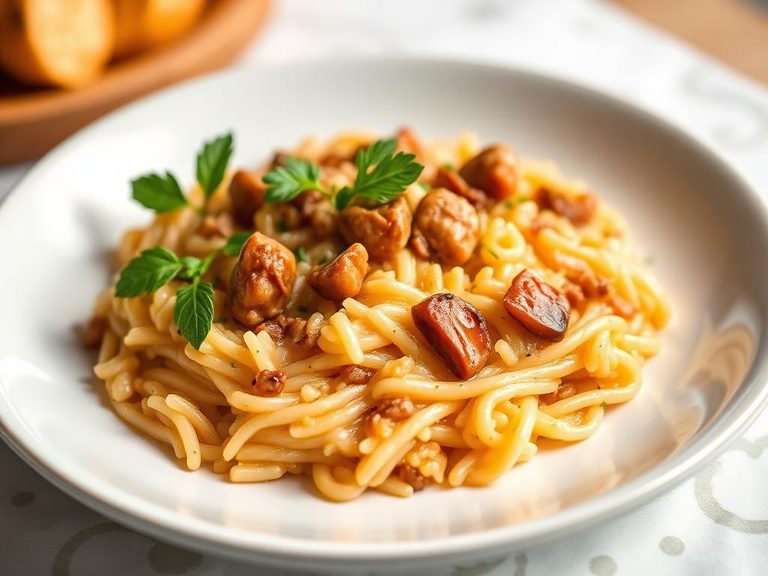
A humble yet hearty staple, this dish is a comforting blend of fluffy white rice and tender lentils, creating a soft, slightly nutty texture with a mild, earthy flavor. It's a nutritional powerhouse, offering a solid 5.76g of plant-based protein and 4.3g of fiber per 100g, all for a modest 115 calories.
Calorie split: 20% protein · 78% carbs · 3% fat
↓ Full nutrition💚 Why it's loved
People adore it for its comforting, mild taste that acts as a perfect canvas for bold spices and curries. Its simplicity and nutritional completeness make it a beloved, everyday staple in many cultures.
⚠️ Watch-outs & how to enjoy it better
The high carbohydrate content can cause blood-sugar spikes, especially for those with diabetes or insulin resistance. To counteract this, pair it with a source of protein (like yogurt or chicken) or healthy fat (like avocado or olive oil) to slow digestion. Also, ensure lentils are rinsed well and cooked thoroughly to reduce anti-nutrients like phytic acid.
Key benefits
- High in plant-based protein for muscle maintenance
- Excellent source of dietary fiber for digestive health
- Low in fat, making it a heart-healthy choice
- Provides sustained energy from complex carbohydrates
- Naturally gluten-free and suitable for vegan diets
🍽️ Popular dishes
🌍 Where it's eaten
💡 Did you know?
The combination of rice and lentils is considered a 'complete protein' in many traditional diets, as together they provide all nine essential amino acids the human body cannot make on its own.
Full nutrition (USDA data · scales with serving)
| Water | 70.3 g |
| Energy | 115 kcal |
| Protein | 5.8 g |
| Total lipid (fat) | 0.33 g |
| Carbohydrate, by difference | 22.4 g |
| Fiber, total dietary | 4.3 g |
| Total Sugars | 1.4 g |
| Calcium, Ca | 18.0 mg |
| Iron, Fe | 2.3 mg |
| Magnesium, Mg | 24.0 mg |
| Phosphorus, P | 111 mg |
| Potassium, K | 217 mg |
| Sodium, Na | 198 mg |
| Zinc, Zn | 0.86 mg |
| Copper, Cu | 0.16 mg |
| Selenium, Se | 4.5 ug |
| Vitamin C, total ascorbic acid | 1.3 mg |
| Thiamin | 0.15 mg |
| Riboflavin | 0.04 mg |
| Niacin | 1.1 mg |
| Vitamin B-6 | 0.14 mg |
| Folate, total | 115 ug |
| Folic acid | 22.0 ug |
| Folate, food | 93.0 ug |
| Folate, DFE | 131 ug |
| Choline, total | 18.0 mg |
| Vitamin B-12 | 0.00 ug |
| Vitamin B-12, added | 0.00 ug |
| Vitamin A, RAE | 1.0 ug |
| Retinol | 0.00 ug |
| Carotene, beta | 12.0 ug |
| Carotene, alpha | 0.00 ug |
| Cryptoxanthin, beta | 2.0 ug |
| Lycopene | 0.00 ug |
| Lutein + zeaxanthin | 7.0 ug |
| Vitamin E (alpha-tocopherol) | 0.09 mg |
| Vitamin E, added | 0.00 mg |
| Vitamin D (D2 + D3) | 0.00 ug |
| Vitamin K (phylloquinone) | 2.2 ug |
| Alcohol, ethyl | 0.00 g |
| Caffeine | 0.00 mg |
| Theobromine | 0.00 mg |
Fat & fatty acid profile (per 100g)
| Fatty acids, total saturated | 0.06 g |
| SFA 4:0 | 0.00 g |
| SFA 6:0 | 0.00 g |
| SFA 8:0 | 0.00 g |
| SFA 10:0 | 0.00 g |
| SFA 12:0 | 0.00 g |
| SFA 14:0 | 0.00 g |
| SFA 16:0 | 0.06 g |
| SFA 18:0 | 0.01 g |
| Fatty acids, total monounsaturated | 0.07 g |
| MUFA 16:1 | 0.00 g |
| MUFA 18:1 | 0.07 g |
| MUFA 20:1 | 0.00 g |
| MUFA 22:1 | 0.00 g |
| Fatty acids, total polyunsaturated | 0.13 g |
| PUFA 18:2 | 0.10 g |
| PUFA 18:3 | 0.03 g |
| PUFA 18:4 | 0.00 g |
| PUFA 20:4 | 0.00 g |
| PUFA 20:5 n-3 (EPA) | 0.00 g |
| PUFA 22:5 n-3 (DPA) | 0.00 g |
| PUFA 22:6 n-3 (DHA) | 0.00 g |
| Cholesterol | 0.00 mg |
Amino acid profile (per 100g)
Estimated from Snacks, rice cakes, brown rice, sesame seed — USDA does not publish this profile for Rice.
| Tryptophan | 0.10 g |
| Threonine | 0.28 g |
| Isoleucine | 0.32 g |
| Leucine | 0.63 g |
| Lysine | 0.29 g |
| Methionine | 0.17 g |
| Cystine | 0.09 g |
| Phenylalanine | 0.39 g |
| Tyrosine | 0.29 g |
| Valine | 0.44 g |
| Arginine | 0.59 g |
| Histidine | 0.19 g |
| Alanine | 0.44 g |
| Aspartic acid | 0.71 g |
| Glutamic acid | 1.6 g |
| Glycine | 0.38 g |
| Proline | 0.35 g |
| Serine | 0.39 g |
FAQ
Is this dish good for weight loss?
Yes, it can be. Its high fiber and protein content promote satiety, helping you feel full longer on relatively few calories. The key is portion control and pairing it with vegetables and lean protein rather than high-fat sauces.
How do I prevent it from becoming mushy?
Rinse the lentils well and cook them separately until just tender, then fold them into the cooked rice. Alternatively, use a firmer lentil variety like brown or green lentils instead of red, which holds its shape better.
Can I add fat for flavor without ruining its healthy profile?
Absolutely. A small amount of heart-healthy fat like a drizzle of extra-virgin olive oil or a pat of grass-fed butter can enhance flavor and nutrient absorption without significantly altering its lean nutritional profile.
Nutrient density (calculated · NRF9.3)
Nutrient Rich Foods index: beneficial nutrients (protein, fiber, vitamins, minerals) minus saturated fat, added sugar & sodium, per 100 kcal.
NRF9.3 index — Fulgoni, Keast & Drewnowski, 2009. Computed from USDA nutrients.
Weight-loss friendliness (composite index)
Energy density 1.15 kcal/g · 20% calories from protein · 4.3 g fiber · 1.4 g sugar per 100 g.
Composite of energy density (Rolls et al., 1999), protein & fiber satiety, minus sugar. A calculated heuristic — ranks satiety-per-calorie, not a clinical measure.
Dietary load (calculated from USDA values)
Potential renal acid load. Positive = acid-forming, negative = alkaline-forming.
Sodium-to-potassium ratio: 0.91 (lower is better — aim for ≤ 1)
Sodium:potassium per WHO potassium guidance. Computed from USDA nutrients.