Mujaddara
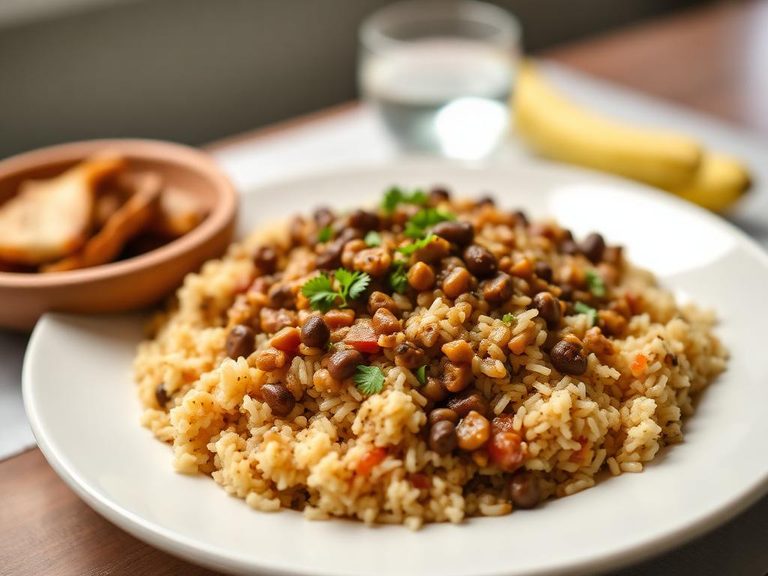
Mujaddara is a comforting and hearty Middle Eastern staple made from a simple yet flavorful combination of lentils, rice (or sometimes bulgur), and caramelized onions. The dish is typically seasoned with cumin and other warm spices, creating a rich, earthy flavor profile. It is widely enjoyed across the Levant and the broader Arab world as a nourishing and economical meal.
🍽️ Nutrition at a glance
Mujaddara is a well-balanced dish that is high in complex carbohydrates and plant-based protein, making it very filling and energizing. It provides excellent dietary fiber, iron, and B vitamins, with a typical serving containing roughly 350-450 calories, depending on the amount of oil used for the onions.
Nutrition breakdown
| Calories | 330 kcal |
| Protein | 13 g |
| Carbs | 58 g |
| Fat | 6 g |
| Fiber | 10 g |
| Sugar | 3 g |
| Sodium | 450 mg |
| Potassium | 450 mg |
| Iron | 4.5 mg |
| Magnesium | 80 mg |
| Phosphorus | 220 mg |
| Folate | 180 mcg |
| Thiamin (B1) | 0.4 mg |
| Zinc | 2.5 mg |
| Manganese | 1.8 mg |
Per 1 cup (200 g) · estimated, varies by recipe
💡 What's interesting
Culturally, Mujaddara is often affectionately called 'the food of the poor' or 'the rich man's lentils,' highlighting its historical role as a nutritious, affordable staple for all social classes. Its unique texture comes from the contrast between the soft lentils and rice and the crispy, sweet fried onions on top.