

Lau lau
Common food

Photo: Wikipedia
Lau lau is a traditional Hawaiian dish where pork, fish, and sometimes chicken are wrapped in taro leaves (lu'au) and steamed for hours until the meat is fall-apart tender and the leaves become silky, rich, and slightly sweet. The taro leaves impart a subtle, earthy flavor that complements the savory, fatty meat, creating a melt-in-your-mouth texture. Nutritionally, it's a high-protein, zero-carb option, making it a staple for those seeking a hearty, low-carb meal.
Calorie split: 45% protein · 0% carbs · 55% fat
↓ Full nutrition💚 Why it's loved
People love lau lau for its rich, savory flavor and tender, melt-in-your-mouth texture, often enjoyed at luaus and family gatherings. The combination of pork, fish, and taro leaves creates a unique, satisfying taste that embodies Hawaiian comfort food.
⚠️ Watch-outs & how to enjoy it better
Lau lau can be high in sodium and fat, which may concern those watching their intake. To counteract, opt for leaner cuts of pork, reduce added salt, and pair with a side of fresh vegetables or a light salad to balance the meal.
Key benefits
- High in protein (15.25g per 100g) for muscle maintenance
- Zero carbohydrates and sugar, ideal for low-carb diets
- Rich in healthy fats from pork and fish
- Taro leaves are a good source of vitamins A and C
- Traditional Hawaiian dish with cultural significance
🍽️ Popular dishes
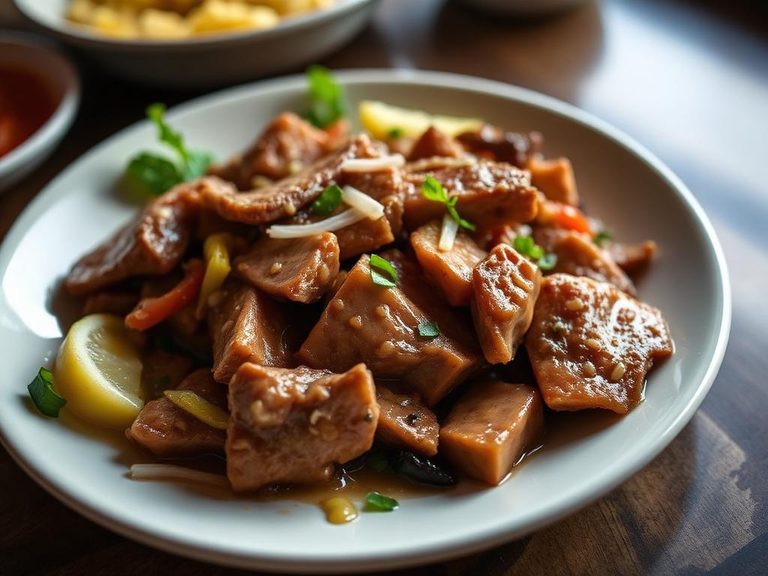
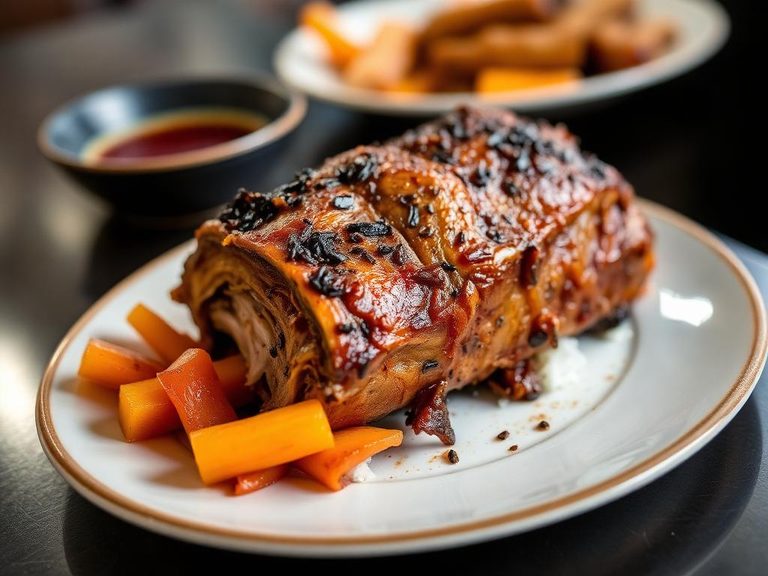
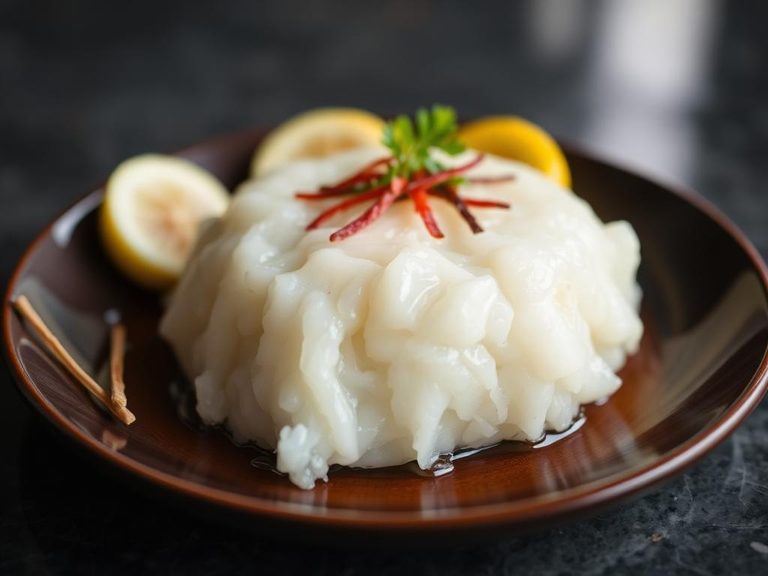
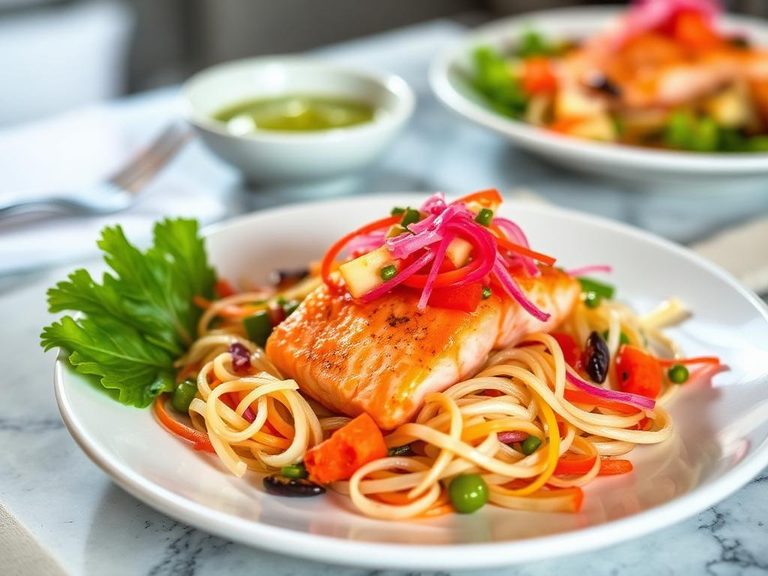
🌍 Where it's eaten
💡 Did you know?
Lau lau is traditionally cooked in an underground oven called an imu, where it steams for hours, allowing the taro leaves to break down and infuse the meat with a rich, earthy flavor.
Full nutrition (USDA data · scales with serving)
| Water | 75.0 g |
| Energy | 140 kcal |
| Protein | 15.3 g |
| Total lipid (fat) | 8.3 g |
| Carbohydrate, by difference | 0.00 g |
| Fiber, total dietary | 0.00 g |
| Total Sugars | 0.00 g |
| Calcium, Ca | 14.0 mg |
| Iron, Fe | 0.52 mg |
| Magnesium, Mg | 18.0 mg |
| Phosphorus, P | 197 mg |
| Potassium, K | 223 mg |
| Sodium, Na | 231 mg |
| Zinc, Zn | 1.3 mg |
| Copper, Cu | 0.04 mg |
| Selenium, Se | 27.4 ug |
| Vitamin C, total ascorbic acid | 0.10 mg |
| Thiamin | 0.18 mg |
| Riboflavin | 0.12 mg |
| Niacin | 2.7 mg |
| Vitamin B-6 | 0.21 mg |
| Folate, total | 3.0 ug |
| Folic acid | 0.00 ug |
| Folate, food | 3.0 ug |
| Folate, DFE | 3.0 ug |
| Choline, total | 47.9 mg |
| Vitamin B-12 | 0.78 ug |
| Vitamin B-12, added | 0.00 ug |
| Vitamin A, RAE | 5.0 ug |
| Retinol | 5.0 ug |
| Carotene, beta | 0.00 ug |
| Carotene, alpha | 0.00 ug |
| Cryptoxanthin, beta | 0.00 ug |
| Lycopene | 0.00 ug |
| Lutein + zeaxanthin | 0.00 ug |
| Vitamin E (alpha-tocopherol) | 0.37 mg |
| Vitamin E, added | 0.00 mg |
| Vitamin D (D2 + D3) | 1.7 ug |
| Vitamin K (phylloquinone) | 0.00 ug |
| Alcohol, ethyl | 0.00 g |
| Caffeine | 0.00 mg |
| Theobromine | 0.00 mg |
Fat & fatty acid profile (per 100g)
| Fatty acids, total saturated | 2.7 g |
| SFA 4:0 | 0.00 g |
| SFA 6:0 | 0.00 g |
| SFA 8:0 | 0.00 g |
| SFA 10:0 | 0.01 g |
| SFA 12:0 | 0.01 g |
| SFA 14:0 | 0.13 g |
| SFA 16:0 | 1.7 g |
| SFA 18:0 | 0.87 g |
| Fatty acids, total monounsaturated | 3.3 g |
| MUFA 16:1 | 0.23 g |
| MUFA 18:1 | 3.1 g |
| MUFA 20:1 | 0.08 g |
| MUFA 22:1 | 0.00 g |
| Fatty acids, total polyunsaturated | 1.0 g |
| PUFA 18:2 | 0.77 g |
| PUFA 18:3 | 0.05 g |
| PUFA 18:4 | 0.01 g |
| PUFA 20:4 | 0.07 g |
| PUFA 20:5 n-3 (EPA) | 0.07 g |
| PUFA 22:5 n-3 (DPA) | 0.01 g |
| PUFA 22:6 n-3 (DHA) | 0.05 g |
| Cholesterol | 57.0 mg |
Amino acid profile (per 100g)
Estimated from Milk, filled, fluid, with lauric acid oil — USDA does not publish this profile for Lau lau.
| Tryptophan | 0.05 g |
| Threonine | 0.15 g |
| Isoleucine | 0.20 g |
| Leucine | 0.33 g |
| Lysine | 0.26 g |
| Methionine | 0.08 g |
| Cystine | 0.03 g |
| Phenylalanine | 0.16 g |
| Tyrosine | 0.16 g |
| Valine | 0.22 g |
| Arginine | 0.12 g |
| Histidine | 0.09 g |
| Alanine | 0.12 g |
| Aspartic acid | 0.25 g |
| Glutamic acid | 0.70 g |
| Glycine | 0.07 g |
| Proline | 0.32 g |
| Serine | 0.18 g |
FAQ
What is lau lau made of?
Lau lau is made of pork, fish (often butterfish or salmon), and sometimes chicken, wrapped in taro leaves and steamed until tender.
Is lau lau healthy?
Lau lau is high in protein and low in carbs, but it can be high in fat and sodium. It's best enjoyed in moderation as part of a balanced diet.
How is lau lau traditionally cooked?
Lau lau is traditionally cooked in an underground oven called an imu, where it steams for several hours, allowing the flavors to meld and the meat to become tender.
Nutrient density (calculated · NRF9.3)
Nutrient Rich Foods index: beneficial nutrients (protein, fiber, vitamins, minerals) minus saturated fat, added sugar & sodium, per 100 kcal.
NRF9.3 index — Fulgoni, Keast & Drewnowski, 2009. Computed from USDA nutrients.
Weight-loss friendliness (composite index)
Energy density 1.40 kcal/g · 44% calories from protein · 0.0 g fiber · 0.0 g sugar per 100 g.
Composite of energy density (Rolls et al., 1999), protein & fiber satiety, minus sugar. A calculated heuristic — ranks satiety-per-calorie, not a clinical measure.
Dietary load (calculated from USDA values)
Potential renal acid load. Positive = acid-forming, negative = alkaline-forming.
Sodium-to-potassium ratio: 1.04 (lower is better — aim for ≤ 1)
Sodium:potassium per WHO potassium guidance. Computed from USDA nutrients.