

Kale, frozen, cooked, no added fat
Common food

Photo: Wikipedia
Frozen, cooked kale is a vibrant, deep-green vegetable with a tender yet slightly chewy texture and a mild, earthy, subtly sweet flavor. It's a nutritional powerhouse, delivering an impressive amount of protein and fiber for its minimal calorie count, making it a cornerstone of healthy eating.
Calorie split: 27% protein · 48% carbs · 25% fat
↓ Full nutrition💚 Why it's loved
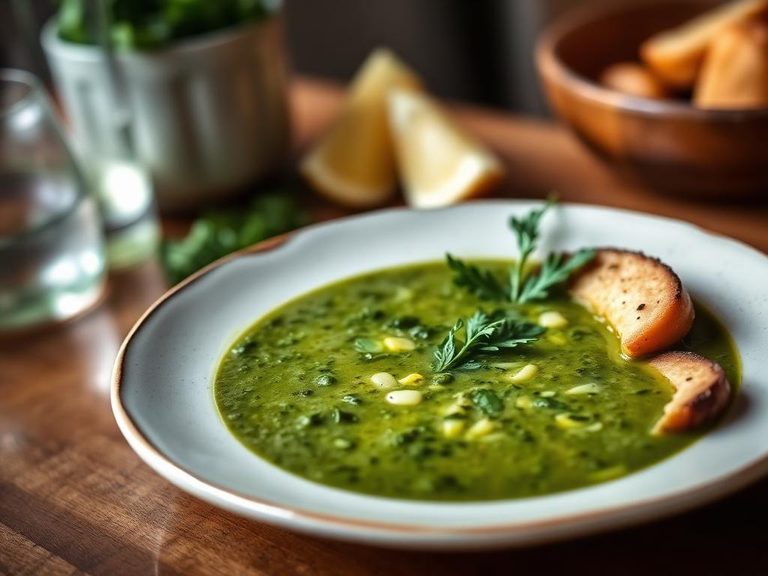
People love it for its hearty, satisfying texture that holds up well in soups, stews, and sautés, and its ability to absorb flavors. It's a beloved staple in health-conscious cooking and a key ingredient in classic dishes like Portuguese caldo verde.
⚠️ Watch-outs & how to enjoy it better
Kale contains oxalates, which can contribute to kidney stones in susceptible individuals. To mitigate this, cook it (as with this frozen version) and avoid pairing it with very high-calcium foods at the same meal. Its robust flavor can also be bitter to some; balancing it with a splash of acid (lemon) or a savory fat (olive oil) helps.
Key benefits
- Excellent source of vitamins K, A, and C
- High in fiber for digestive health
- Rich in antioxidants like lutein and zeaxanthin
- Good plant-based protein source
- Low in calories and naturally low in fat
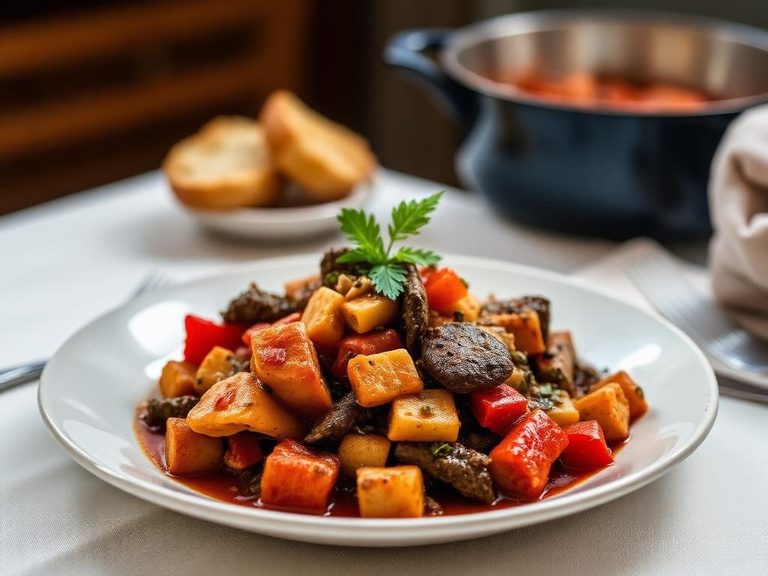
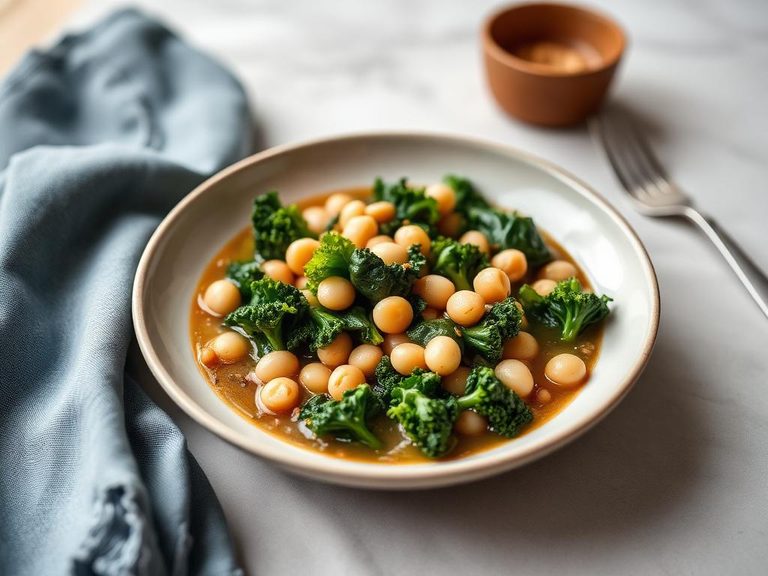
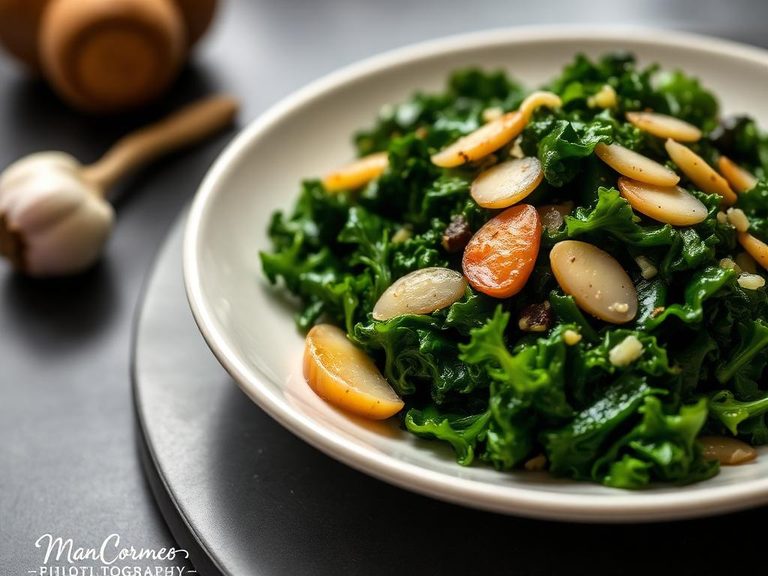
🍽️ Popular dishes
🌍 Where it's eaten
💡 Did you know?
Kale is a member of the Brassica oleracea species, making it a close relative of broccoli, cauliflower, and Brussels sprouts—all different cultivars of the same plant.
Full nutrition (USDA data · scales with serving)
| Water | 89.5 g |
| Energy | 44.0 kcal |
| Protein | 2.9 g |
| Total lipid (fat) | 1.2 g |
| Carbohydrate, by difference | 5.3 g |
| Fiber, total dietary | 2.3 g |
| Total Sugars | 1.1 g |
| Calcium, Ca | 150 mg |
| Iron, Fe | 0.84 mg |
| Magnesium, Mg | 25.0 mg |
| Phosphorus, P | 42.0 mg |
| Potassium, K | 144 mg |
| Sodium, Na | 132 mg |
| Zinc, Zn | 0.27 mg |
| Copper, Cu | 0.07 mg |
| Selenium, Se | 1.0 ug |
| Vitamin C, total ascorbic acid | 17.7 mg |
| Thiamin | 0.06 mg |
| Riboflavin | 0.14 mg |
| Niacin | 0.46 mg |
| Vitamin B-6 | 0.06 mg |
| Folate, total | 65.0 ug |
| Folic acid | 0.00 ug |
| Folate, food | 65.0 ug |
| Folate, DFE | 65.0 ug |
| Choline, total | 0.50 mg |
| Vitamin B-12 | 0.00 ug |
| Vitamin B-12, added | 0.00 ug |
| Vitamin A, RAE | 146 ug |
| Retinol | 0.00 ug |
| Carotene, beta | 1725 ug |
| Carotene, alpha | 10.0 ug |
| Cryptoxanthin, beta | 26.0 ug |
| Lycopene | 0.00 ug |
| Lutein + zeaxanthin | 4965 ug |
| Vitamin E (alpha-tocopherol) | 1.6 mg |
| Vitamin E, added | 0.00 mg |
| Vitamin D (D2 + D3) | 0.00 ug |
| Vitamin K (phylloquinone) | 417 ug |
| Alcohol, ethyl | 0.00 g |
| Caffeine | 0.00 mg |
| Theobromine | 0.00 mg |
Fat & fatty acid profile (per 100g)
| Fatty acids, total saturated | 0.16 g |
| SFA 4:0 | 0.00 g |
| SFA 6:0 | 0.00 g |
| SFA 8:0 | 0.00 g |
| SFA 10:0 | 0.00 g |
| SFA 12:0 | 0.01 g |
| SFA 14:0 | 0.01 g |
| SFA 16:0 | 0.14 g |
| SFA 18:0 | 0.01 g |
| Fatty acids, total monounsaturated | 0.09 g |
| MUFA 16:1 | 0.00 g |
| MUFA 18:1 | 0.09 g |
| MUFA 20:1 | 0.00 g |
| MUFA 22:1 | 0.00 g |
| Fatty acids, total polyunsaturated | 0.59 g |
| PUFA 18:2 | 0.26 g |
| PUFA 18:3 | 0.34 g |
| PUFA 18:4 | 0.00 g |
| PUFA 20:4 | 0.00 g |
| PUFA 20:5 n-3 (EPA) | 0.00 g |
| PUFA 22:5 n-3 (DPA) | 0.00 g |
| PUFA 22:6 n-3 (DHA) | 0.00 g |
| Cholesterol | 0.00 mg |
Amino acid profile (per 100g)
Estimated from Kale, raw — USDA does not publish this profile for Kale.
| Tryptophan | 0.04 g |
| Threonine | 0.13 g |
| Isoleucine | 0.17 g |
| Leucine | 0.20 g |
| Lysine | 0.17 g |
| Methionine | 0.03 g |
| Cystine | 0.04 g |
| Phenylalanine | 0.15 g |
| Tyrosine | 0.10 g |
| Valine | 0.16 g |
| Arginine | 0.16 g |
| Histidine | 0.17 g |
| Alanine | 0.15 g |
| Aspartic acid | 0.26 g |
| Glutamic acid | 0.33 g |
| Glycine | 0.14 g |
| Proline | 0.17 g |
| Serine | 0.12 g |
FAQ
Is frozen kale as nutritious as fresh?
Often, yes. Flash-freezing preserves nutrients very effectively. Frozen kale can sometimes have higher levels of certain antioxidants than fresh kale that has traveled long distances.
Why is my cooked kale bitter?
Kale contains natural compounds called glucosinolates that can taste bitter. Cooking, especially with a bit of fat (like olive oil) or acid (like lemon juice), helps mellow this bitterness.
How do I avoid mushy frozen kale?
Add frozen kale directly to hot dishes like soups or stews in the last 10-15 minutes of cooking. If sautéing, thaw and squeeze out excess water first to help it brown rather than steam.
Nutrient density (calculated · NRF9.3)
Nutrient Rich Foods index: beneficial nutrients (protein, fiber, vitamins, minerals) minus saturated fat, added sugar & sodium, per 100 kcal.
NRF9.3 index — Fulgoni, Keast & Drewnowski, 2009. Computed from USDA nutrients.
Weight-loss friendliness (composite index)
Energy density 0.44 kcal/g · 27% calories from protein · 2.3 g fiber · 1.1 g sugar per 100 g.
Composite of energy density (Rolls et al., 1999), protein & fiber satiety, minus sugar. A calculated heuristic — ranks satiety-per-calorie, not a clinical measure.
Dietary load (calculated from USDA values)
Potential renal acid load. Positive = acid-forming, negative = alkaline-forming.
Sodium-to-potassium ratio: 0.92 (lower is better — aim for ≤ 1)
Sodium:potassium per WHO potassium guidance. Computed from USDA nutrients.