

Kale, frozen, cooked, fat added
Common food

Photo: Wikipedia
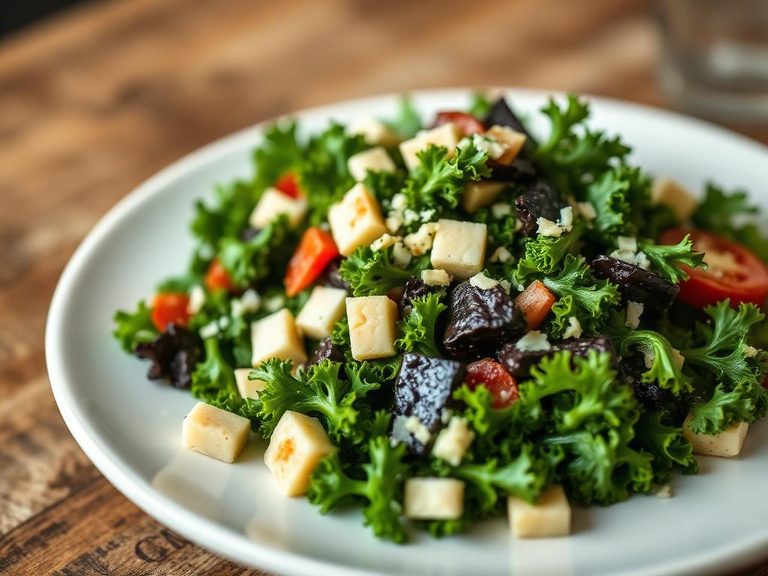
Frozen, cooked kale with added fat is a convenient, nutrient-dense staple, offering tender, earthy greens with a rich, savory mouthfeel. Its deep green color and mild, slightly sweet flavor make it a versatile base for countless dishes. Nutritionally, it packs a solid 2.85g of protein and 2.2g of fiber per 100g, all for just 66 calories.
Calorie split: 17% protein · 31% carbs · 51% fat
↓ Full nutrition💚 Why it's loved
People love it for its hearty, satisfying texture that holds up well in soups, stews, and sautés, and for the convenience of having pre-cooked greens ready to use. It's a cornerstone of comfort foods from Southern U.S. cuisine to hearty European winter dishes.
⚠️ Watch-outs & how to enjoy it better
The added fat increases calorie density, and kale contains oxalates which can inhibit mineral absorption. To counteract, pair it with a source of vitamin C (like lemon juice) to boost iron uptake, and enjoy it as part of a varied diet to manage oxalate intake. Those watching fat intake should compare brands, as added fat amounts can vary.
Key benefits
- Excellent source of vitamins K, A, and C
- High in antioxidants like lutein and zeaxanthin
- Good plant-based source of calcium and iron
- High fiber content supports digestive health
- Convenient year-round access to leafy greens
🍽️ Popular dishes
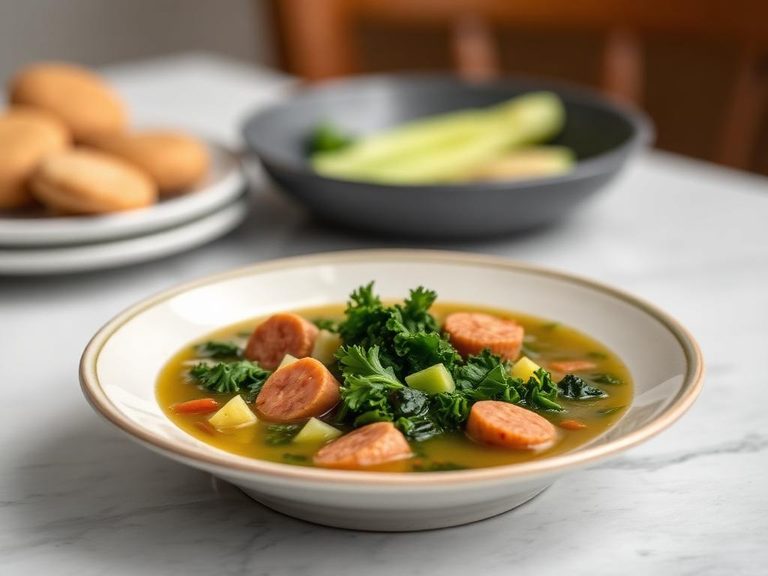
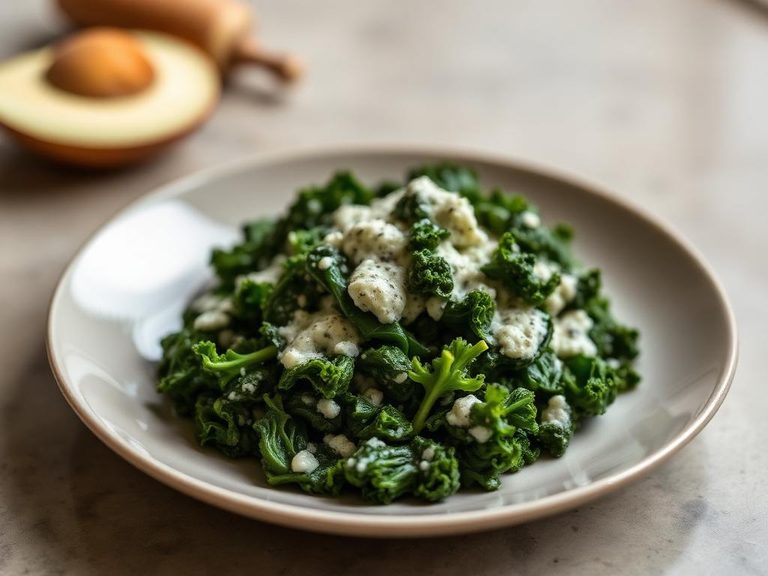
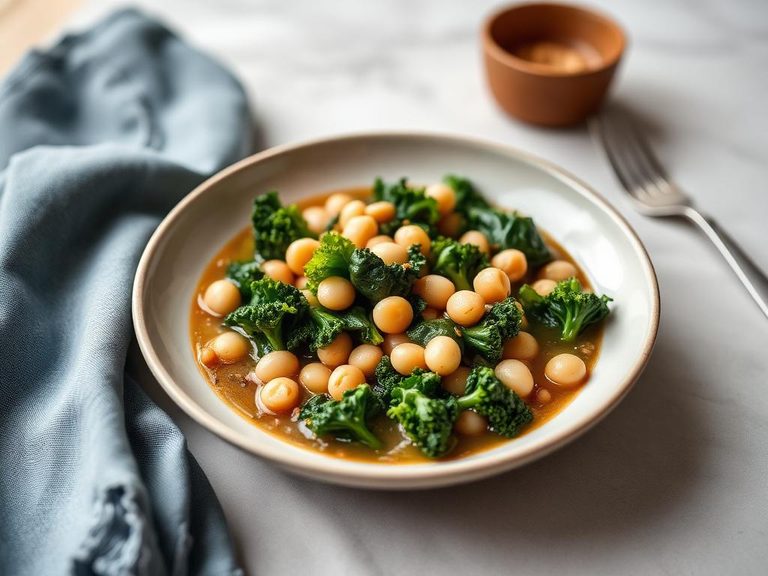
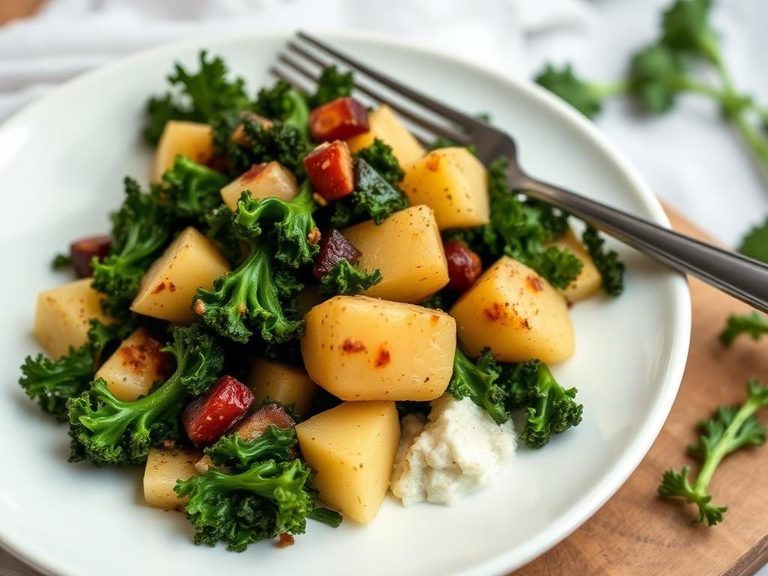
🌍 Where it's eaten
💡 Did you know?
Kale is a cultivar of wild cabbage (Brassica oleracea) and is more closely related to Brussels sprouts and broccoli than it is to spinach.
Full nutrition (USDA data · scales with serving)
| Water | 87.3 g |
| Energy | 66.0 kcal |
| Protein | 2.9 g |
| Total lipid (fat) | 3.7 g |
| Carbohydrate, by difference | 5.1 g |
| Fiber, total dietary | 2.2 g |
| Total Sugars | 1.1 g |
| Calcium, Ca | 146 mg |
| Iron, Fe | 0.82 mg |
| Magnesium, Mg | 24.0 mg |
| Phosphorus, P | 41.0 mg |
| Potassium, K | 140 mg |
| Sodium, Na | 136 mg |
| Zinc, Zn | 0.26 mg |
| Copper, Cu | 0.07 mg |
| Selenium, Se | 1.0 ug |
| Vitamin C, total ascorbic acid | 17.2 mg |
| Thiamin | 0.06 mg |
| Riboflavin | 0.14 mg |
| Niacin | 0.44 mg |
| Vitamin B-6 | 0.08 mg |
| Folate, total | 63.0 ug |
| Folic acid | 0.00 ug |
| Folate, food | 63.0 ug |
| Folate, DFE | 63.0 ug |
| Choline, total | 0.70 mg |
| Vitamin B-12 | 0.00 ug |
| Vitamin B-12, added | 0.00 ug |
| Vitamin A, RAE | 153 ug |
| Retinol | 11.0 ug |
| Carotene, beta | 1680 ug |
| Carotene, alpha | 10.0 ug |
| Cryptoxanthin, beta | 25.0 ug |
| Lycopene | 0.00 ug |
| Lutein + zeaxanthin | 4821 ug |
| Vitamin E (alpha-tocopherol) | 1.9 mg |
| Vitamin E, added | 0.00 mg |
| Vitamin D (D2 + D3) | 0.00 ug |
| Vitamin K (phylloquinone) | 407 ug |
| Alcohol, ethyl | 0.00 g |
| Caffeine | 0.00 mg |
| Theobromine | 0.00 mg |
Fat & fatty acid profile (per 100g)
| Fatty acids, total saturated | 0.82 g |
| SFA 4:0 | 0.02 g |
| SFA 6:0 | 0.01 g |
| SFA 8:0 | 0.01 g |
| SFA 10:0 | 0.02 g |
| SFA 12:0 | 0.03 g |
| SFA 14:0 | 0.07 g |
| SFA 16:0 | 0.50 g |
| SFA 18:0 | 0.14 g |
| Fatty acids, total monounsaturated | 0.99 g |
| MUFA 16:1 | 0.01 g |
| MUFA 18:1 | 0.96 g |
| MUFA 20:1 | 0.01 g |
| MUFA 22:1 | 0.00 g |
| Fatty acids, total polyunsaturated | 1.3 g |
| PUFA 18:2 | 0.90 g |
| PUFA 18:3 | 0.41 g |
| PUFA 18:4 | 0.00 g |
| PUFA 20:4 | 0.00 g |
| PUFA 20:5 n-3 (EPA) | 0.00 g |
| PUFA 22:5 n-3 (DPA) | 0.00 g |
| PUFA 22:6 n-3 (DHA) | 0.00 g |
| Cholesterol | 2.0 mg |
Amino acid profile (per 100g)
Estimated from Kale, raw — USDA does not publish this profile for Kale.
| Tryptophan | 0.04 g |
| Threonine | 0.13 g |
| Isoleucine | 0.17 g |
| Leucine | 0.20 g |
| Lysine | 0.17 g |
| Methionine | 0.03 g |
| Cystine | 0.04 g |
| Phenylalanine | 0.15 g |
| Tyrosine | 0.10 g |
| Valine | 0.16 g |
| Arginine | 0.16 g |
| Histidine | 0.17 g |
| Alanine | 0.15 g |
| Aspartic acid | 0.26 g |
| Glutamic acid | 0.33 g |
| Glycine | 0.14 g |
| Proline | 0.17 g |
| Serine | 0.12 g |
FAQ
How does freezing affect kale's nutrition?
Flash-freezing soon after harvest helps preserve most vitamins and minerals, particularly fat-soluble vitamins like A and K. The cooking process before freezing can reduce some heat-sensitive nutrients like vitamin C, but the overall nutritional profile remains very strong.
Why is fat added to frozen cooked kale?
Fat (often oil or butter) is added to improve flavor, mouthfeel, and to help the body absorb kale's fat-soluble vitamins (A, K, E). It also prevents the leaves from clumping together in the package.
Is the sugar content a concern?
No. The 1.09g of sugar per 100g is naturally occurring, minimal, and comes packaged with fiber and nutrients, so it does not cause blood sugar spikes like added sugars.
Nutrient density (calculated · NRF9.3)
Nutrient Rich Foods index: beneficial nutrients (protein, fiber, vitamins, minerals) minus saturated fat, added sugar & sodium, per 100 kcal.
NRF9.3 index — Fulgoni, Keast & Drewnowski, 2009. Computed from USDA nutrients.
Weight-loss friendliness (composite index)
Energy density 0.66 kcal/g · 17% calories from protein · 2.2 g fiber · 1.1 g sugar per 100 g.
Composite of energy density (Rolls et al., 1999), protein & fiber satiety, minus sugar. A calculated heuristic — ranks satiety-per-calorie, not a clinical measure.
Dietary load (calculated from USDA values)
Potential renal acid load. Positive = acid-forming, negative = alkaline-forming.
Sodium-to-potassium ratio: 0.97 (lower is better — aim for ≤ 1)
Sodium:potassium per WHO potassium guidance. Computed from USDA nutrients.