

Kale, fresh, cooked, no added fat
Common food

Photo: Wikipedia
Cooked kale transforms from tough, fibrous leaves into tender, deeply savory greens with a rich, earthy flavor and a satisfying, slightly chewy texture. This 46 kcal powerhouse is a nutritional standout, delivering over 4 grams of fiber and more than 3 grams of protein per 100g, making it a dense source of plant-based nutrients.
Calorie split: 27% protein · 41% carbs · 31% fat
↓ Full nutrition💚 Why it's loved
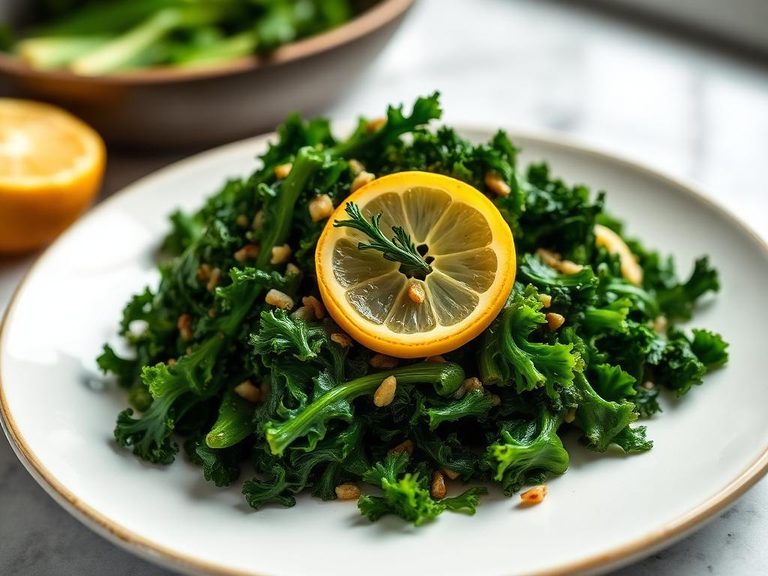
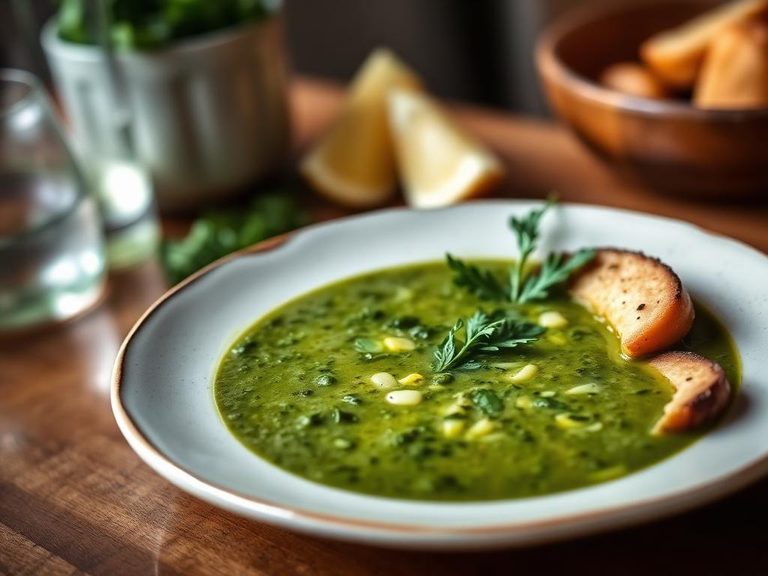
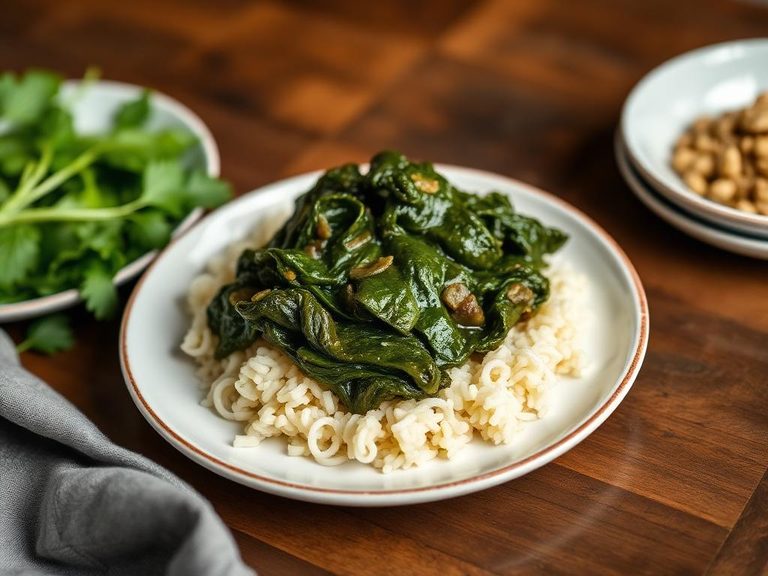
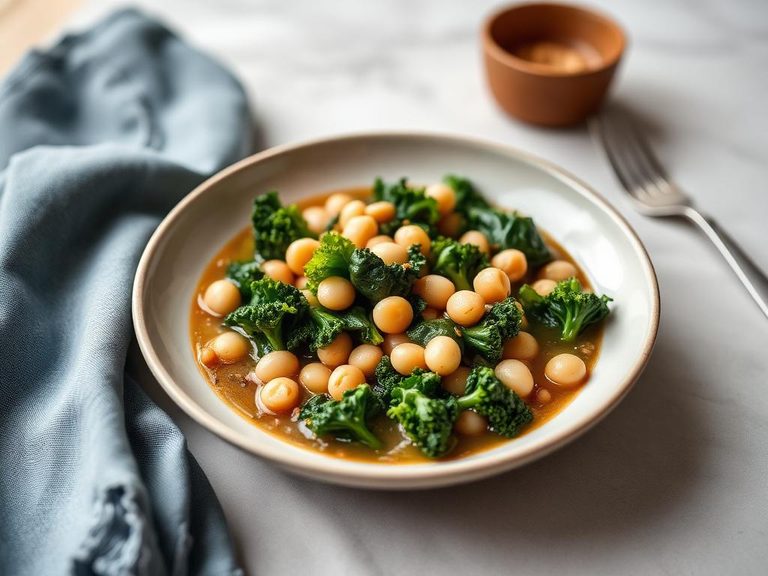
People love cooked kale for its hearty, substantial texture that holds up well in soups, stews, and sautés, and its ability to absorb flavors from garlic, lemon, or broth. It's a cultural staple from Southern U.S. soul food to Portuguese caldo verde, symbolizing rustic, nourishing cooking.
⚠️ Watch-outs & how to enjoy it better
Some find its natural bitterness or sulfurous notes when overcooked off-putting. Those with kidney issues or prone to kidney stones should be cautious due to its high oxalate content. To counteract bitterness, massage raw kale with salt or acid before cooking, or pair it with a fat like olive oil or a sweet ingredient like raisins. For oxalates, boiling kale and discarding the water can reduce their content.
Key benefits
- Exceptionally low in calories, ideal for volume eating.
- High in dietary fiber, supporting digestive health.
- Good source of plant-based protein.
- Rich in vitamins K, A, and C.
- Contains antioxidants like lutein and zeaxanthin.
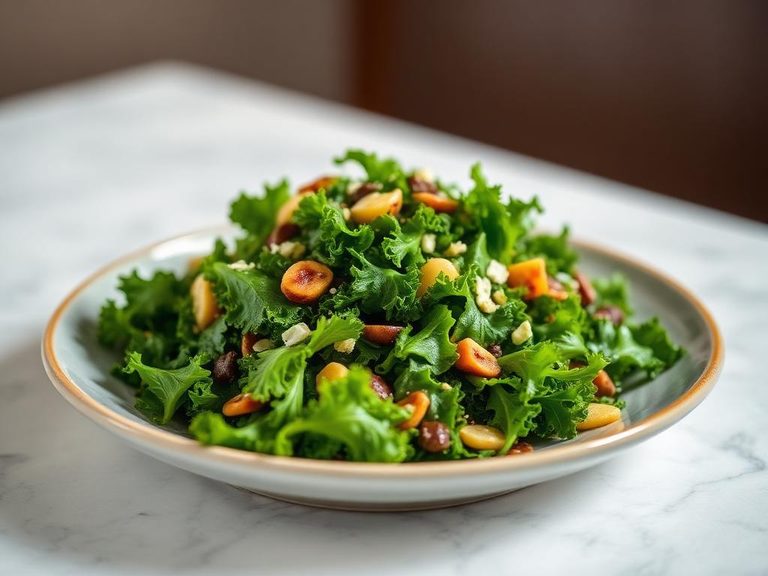
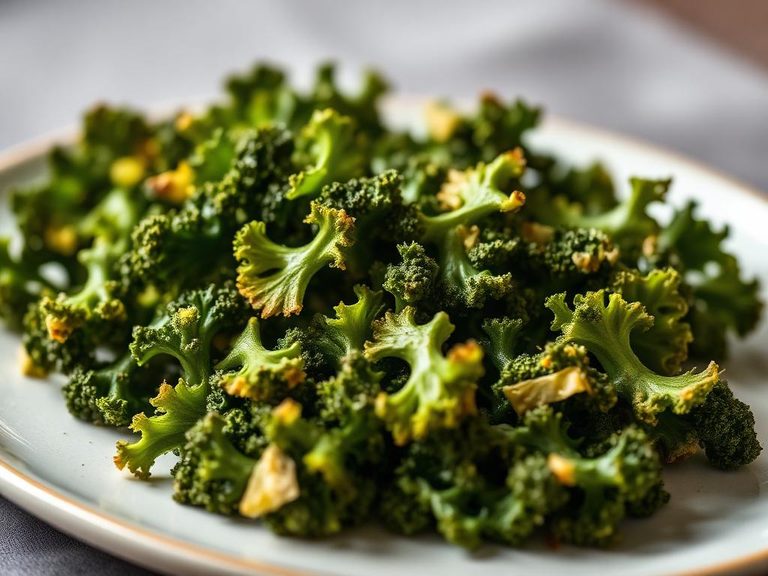
🍽️ Popular dishes
🌍 Where it's eaten
💡 Did you know?
Kale is a member of the Brassica oleracea species, making it a close relative of cabbage, broccoli, and cauliflower—essentially, it's the same plant bred for its leaves instead of its florets or buds.
Full nutrition (USDA data · scales with serving)
| Water | 88.5 g |
| Energy | 46.0 kcal |
| Protein | 3.1 g |
| Total lipid (fat) | 1.6 g |
| Carbohydrate, by difference | 4.7 g |
| Fiber, total dietary | 4.4 g |
| Total Sugars | 0.86 g |
| Calcium, Ca | 272 mg |
| Iron, Fe | 1.7 mg |
| Magnesium, Mg | 35.0 mg |
| Phosphorus, P | 59.0 mg |
| Potassium, K | 373 mg |
| Sodium, Na | 181 mg |
| Zinc, Zn | 0.42 mg |
| Copper, Cu | 0.06 mg |
| Selenium, Se | 1.0 ug |
| Vitamin C, total ascorbic acid | 70.1 mg |
| Thiamin | 0.11 mg |
| Riboflavin | 0.35 mg |
| Niacin | 1.2 mg |
| Vitamin B-6 | 0.15 mg |
| Folate, total | 50.0 ug |
| Folic acid | 0.00 ug |
| Folate, food | 50.0 ug |
| Folate, DFE | 50.0 ug |
| Choline, total | 0.50 mg |
| Vitamin B-12 | 0.00 ug |
| Vitamin B-12, added | 0.00 ug |
| Vitamin A, RAE | 245 ug |
| Retinol | 0.00 ug |
| Carotene, beta | 2923 ug |
| Carotene, alpha | 0.00 ug |
| Cryptoxanthin, beta | 27.0 ug |
| Lycopene | 0.00 ug |
| Lutein + zeaxanthin | 6375 ug |
| Vitamin E (alpha-tocopherol) | 0.71 mg |
| Vitamin E, added | 0.00 mg |
| Vitamin D (D2 + D3) | 0.00 ug |
| Vitamin K (phylloquinone) | 418 ug |
| Alcohol, ethyl | 0.00 g |
| Caffeine | 0.00 mg |
| Theobromine | 0.00 mg |
Fat & fatty acid profile (per 100g)
| Fatty acids, total saturated | 0.19 g |
| SFA 4:0 | 0.00 g |
| SFA 6:0 | 0.00 g |
| SFA 8:0 | 0.00 g |
| SFA 10:0 | 0.00 g |
| SFA 12:0 | 0.01 g |
| SFA 14:0 | 0.01 g |
| SFA 16:0 | 0.17 g |
| SFA 18:0 | 0.01 g |
| Fatty acids, total monounsaturated | 0.11 g |
| MUFA 16:1 | 0.00 g |
| MUFA 18:1 | 0.11 g |
| MUFA 20:1 | 0.00 g |
| MUFA 22:1 | 0.00 g |
| Fatty acids, total polyunsaturated | 0.72 g |
| PUFA 18:2 | 0.31 g |
| PUFA 18:3 | 0.41 g |
| PUFA 18:4 | 0.00 g |
| PUFA 20:4 | 0.00 g |
| PUFA 20:5 n-3 (EPA) | 0.00 g |
| PUFA 22:5 n-3 (DPA) | 0.00 g |
| PUFA 22:6 n-3 (DHA) | 0.00 g |
| Cholesterol | 0.00 mg |
Amino acid profile (per 100g)
Estimated from Kale, raw — USDA does not publish this profile for Kale.
| Tryptophan | 0.04 g |
| Threonine | 0.13 g |
| Isoleucine | 0.17 g |
| Leucine | 0.20 g |
| Lysine | 0.17 g |
| Methionine | 0.03 g |
| Cystine | 0.04 g |
| Phenylalanine | 0.15 g |
| Tyrosine | 0.10 g |
| Valine | 0.16 g |
| Arginine | 0.16 g |
| Histidine | 0.17 g |
| Alanine | 0.15 g |
| Aspartic acid | 0.26 g |
| Glutamic acid | 0.33 g |
| Glycine | 0.14 g |
| Proline | 0.17 g |
| Serine | 0.12 g |
FAQ
How do I reduce the bitterness of cooked kale?
Cook it with a small amount of sweetener like maple syrup or a splash of vinegar or lemon juice. Sautéing with garlic and onions also helps balance the flavor.
Is cooked kale as nutritious as raw?
Cooking can reduce some heat-sensitive vitamins like C, but it also makes other nutrients like beta-carotene more bioavailable and reduces oxalates, which can aid mineral absorption.
What's the best way to store cooked kale?
Let it cool completely, then store in an airtight container in the refrigerator for up to 4 days. It can also be frozen for longer storage.
Nutrient density (calculated · NRF9.3)
Nutrient Rich Foods index: beneficial nutrients (protein, fiber, vitamins, minerals) minus saturated fat, added sugar & sodium, per 100 kcal.
NRF9.3 index — Fulgoni, Keast & Drewnowski, 2009. Computed from USDA nutrients.
Weight-loss friendliness (composite index)
Energy density 0.46 kcal/g · 27% calories from protein · 4.4 g fiber · 0.9 g sugar per 100 g.
Composite of energy density (Rolls et al., 1999), protein & fiber satiety, minus sugar. A calculated heuristic — ranks satiety-per-calorie, not a clinical measure.
Dietary load (calculated from USDA values)
Potential renal acid load. Positive = acid-forming, negative = alkaline-forming.
Sodium-to-potassium ratio: 0.49 (lower is better — aim for ≤ 1)
Sodium:potassium per WHO potassium guidance. Computed from USDA nutrients.