

Industrial oil as ingredient in food
Common food

Photo: Wikipedia
Industrial oil is a highly refined, neutral-flavored fat extracted from seeds like soy, corn, or canola through chemical solvents and high heat. It has a smooth, liquid texture and a very high smoke point, making it a workhorse in commercial food production. Nutritionally, it is almost pure fat, providing 892 kcal per 100g with no protein, carbs, or fiber.
Calorie split: 0% protein · 0% carbs · 100% fat
↓ Full nutrition💚 Why it's loved
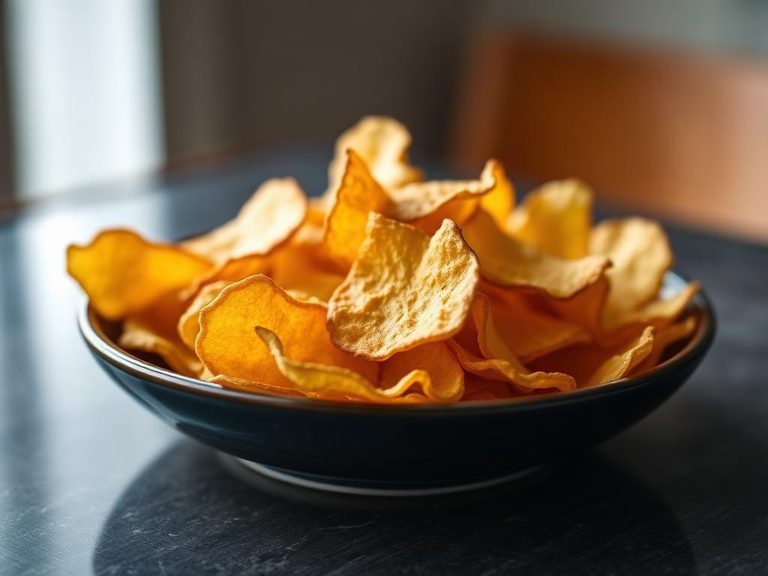
People value industrial oil for its incredible versatility and consistency; it's the invisible backbone of countless processed foods, from chips to baked goods, delivering a satisfying mouthfeel without altering the intended flavor profile.
⚠️ Watch-outs & how to enjoy it better
The refining process can strip away some natural nutrients and antioxidants, and high consumption of certain refined oils (like those high in omega-6) may promote inflammation if not balanced. To mitigate this, use it sparingly, opt for less refined oils like extra virgin olive oil for cold applications, and pair it with omega-3 rich foods like fatty fish or walnuts.
Key benefits
- High smoke point for frying and sautéing
- Neutral flavor doesn't overpower other ingredients
- Cost-effective for large-scale food manufacturing
- Long shelf life when stored properly
- Provides essential fatty acids (depending on the source)
🍽️ Popular dishes



🌍 Where it's eaten
💡 Did you know?
The term 'industrial oil' often refers to oils extracted using hexane, a petroleum-based solvent, which is then removed through distillation, leaving behind a highly purified fat.
Full nutrition (USDA data · scales with serving)
| Water | 0.00 g |
| Energy | 892 kcal |
| Protein | 0.00 g |
| Total lipid (fat) | 100 g |
| Carbohydrate, by difference | 0.00 g |
| Fiber, total dietary | 0.00 g |
| Total Sugars | 0.00 g |
| Calcium, Ca | 0.00 mg |
| Iron, Fe | 0.04 mg |
| Magnesium, Mg | 0.00 mg |
| Phosphorus, P | 0.00 mg |
| Potassium, K | 0.00 mg |
| Sodium, Na | 0.00 mg |
| Zinc, Zn | 0.01 mg |
| Copper, Cu | 0.00 mg |
| Selenium, Se | 0.00 ug |
| Vitamin C, total ascorbic acid | 0.00 mg |
| Thiamin | 0.00 mg |
| Riboflavin | 0.00 mg |
| Niacin | 0.00 mg |
| Vitamin B-6 | 0.00 mg |
| Folate, total | 0.00 ug |
| Folic acid | 0.00 ug |
| Folate, food | 0.00 ug |
| Folate, DFE | 0.00 ug |
| Choline, total | 0.20 mg |
| Vitamin B-12 | 0.00 ug |
| Vitamin B-12, added | 0.00 ug |
| Vitamin A, RAE | 0.00 ug |
| Retinol | 0.00 ug |
| Carotene, beta | 0.00 ug |
| Carotene, alpha | 0.00 ug |
| Cryptoxanthin, beta | 0.00 ug |
| Lycopene | 0.00 ug |
| Lutein + zeaxanthin | 0.00 ug |
| Vitamin E (alpha-tocopherol) | 10.5 mg |
| Vitamin E, added | 0.00 mg |
| Vitamin D (D2 + D3) | 0.00 ug |
| Vitamin K (phylloquinone) | 156 ug |
| Alcohol, ethyl | 0.00 g |
| Caffeine | 0.00 mg |
| Theobromine | 0.00 mg |
Fat & fatty acid profile (per 100g)
| Fatty acids, total saturated | 32.7 g |
| SFA 4:0 | 0.00 g |
| SFA 6:0 | 0.00 g |
| SFA 8:0 | 0.00 g |
| SFA 10:0 | 0.00 g |
| SFA 12:0 | 0.00 g |
| SFA 14:0 | 0.05 g |
| SFA 16:0 | 8.4 g |
| SFA 18:0 | 23.3 g |
| Fatty acids, total monounsaturated | 31.1 g |
| MUFA 16:1 | 0.07 g |
| MUFA 18:1 | 30.7 g |
| MUFA 20:1 | 0.32 g |
| MUFA 22:1 | 0.02 g |
| Fatty acids, total polyunsaturated | 31.8 g |
| PUFA 18:2 | 30.1 g |
| PUFA 18:3 | 1.7 g |
| PUFA 18:4 | 0.00 g |
| PUFA 20:4 | 0.00 g |
| PUFA 20:5 n-3 (EPA) | 0.00 g |
| PUFA 22:5 n-3 (DPA) | 0.00 g |
| PUFA 22:6 n-3 (DHA) | 0.00 g |
| Cholesterol | 0.00 mg |
Amino acid profile (per 100g)
Estimated from Oil, industrial, coconut, principal uses candy coatings, oil sprays, roasting nuts — USDA does not publish this profile for Industrial oil as ingredient in food.
| Tryptophan | 0.00 g |
| Threonine | 0.00 g |
| Isoleucine | 0.00 g |
| Leucine | 0.00 g |
| Lysine | 0.00 g |
| Methionine | 0.00 g |
| Cystine | 0.00 g |
| Phenylalanine | 0.00 g |
| Tyrosine | 0.00 g |
| Valine | 0.00 g |
| Arginine | 0.00 g |
| Histidine | 0.00 g |
| Alanine | 0.00 g |
| Aspartic acid | 0.00 g |
| Glutamic acid | 0.00 g |
| Glycine | 0.00 g |
| Proline | 0.00 g |
| Serine | 0.00 g |
FAQ
What is the difference between industrial oil and cold-pressed oil?
Industrial oil is refined using heat and chemical solvents for high yield and neutral flavor, while cold-pressed oil is extracted mechanically at low temperatures, preserving more nutrients and natural flavors.
Is industrial oil safe to consume?
Yes, it is generally recognized as safe (GRAS) by regulatory agencies when used within recommended limits, though it lacks the nutritional benefits of less processed oils.
Can I use industrial oil for deep frying?
Yes, its high smoke point makes it suitable for deep frying, but it's best used in moderation and not reused multiple times to avoid the formation of harmful compounds.
Nutrient density (calculated · NRF9.3)
Nutrient Rich Foods index: beneficial nutrients (protein, fiber, vitamins, minerals) minus saturated fat, added sugar & sodium, per 100 kcal.
NRF9.3 index — Fulgoni, Keast & Drewnowski, 2009. Computed from USDA nutrients.
Weight-loss friendliness (composite index)
Energy density 8.92 kcal/g · 0% calories from protein · 0.0 g fiber · 0.0 g sugar per 100 g.
Composite of energy density (Rolls et al., 1999), protein & fiber satiety, minus sugar. A calculated heuristic — ranks satiety-per-calorie, not a clinical measure.
Dietary load (calculated from USDA values)
Potential renal acid load. Positive = acid-forming, negative = alkaline-forming.
Sodium:potassium per WHO potassium guidance. Computed from USDA nutrients.