

Ham or pork, noodles, and vegetables including carrots, broccoli, and/or dark-green leafy; no sauce
Common food
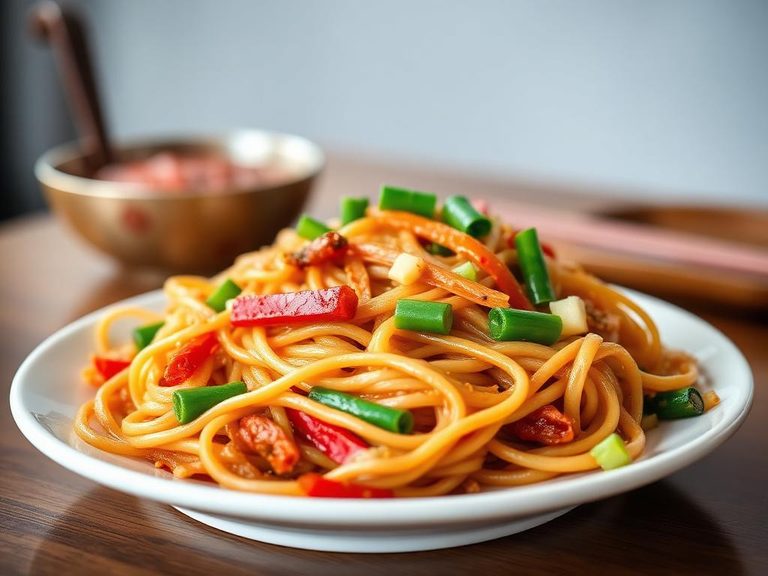
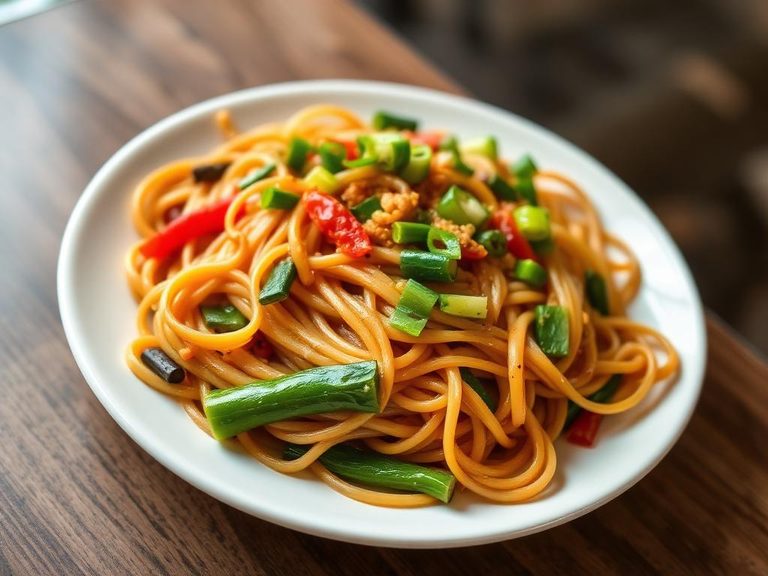
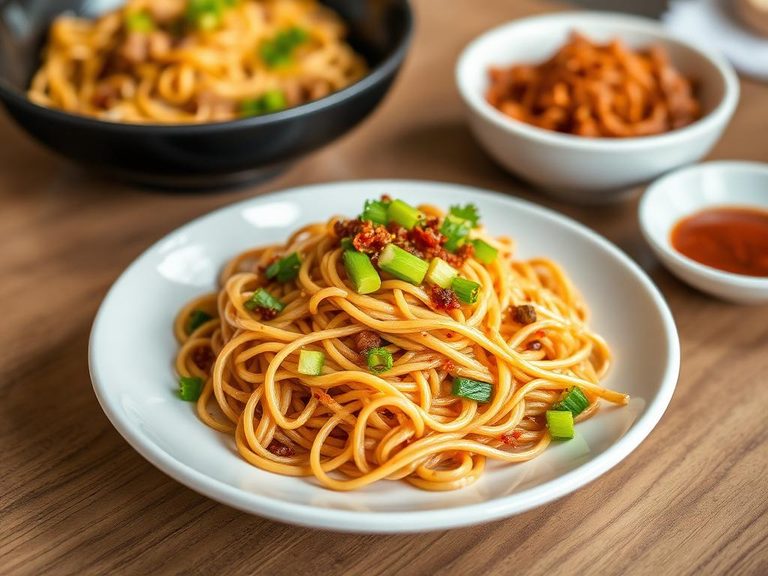
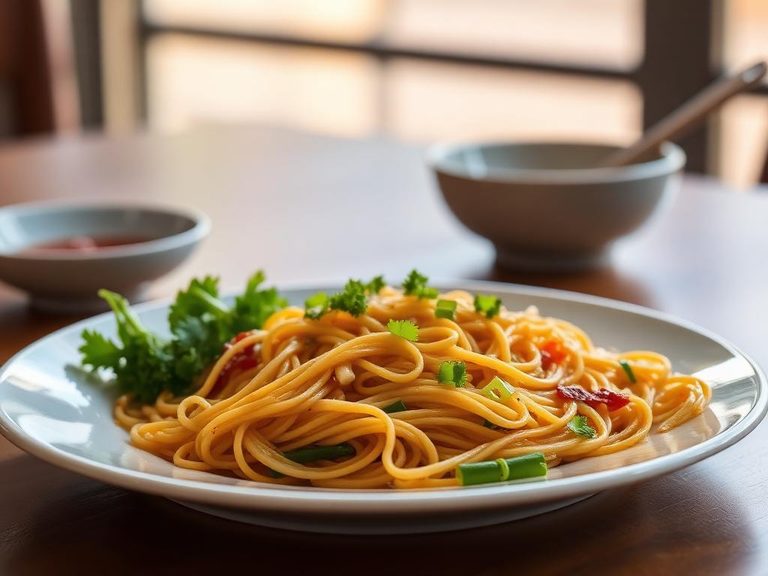
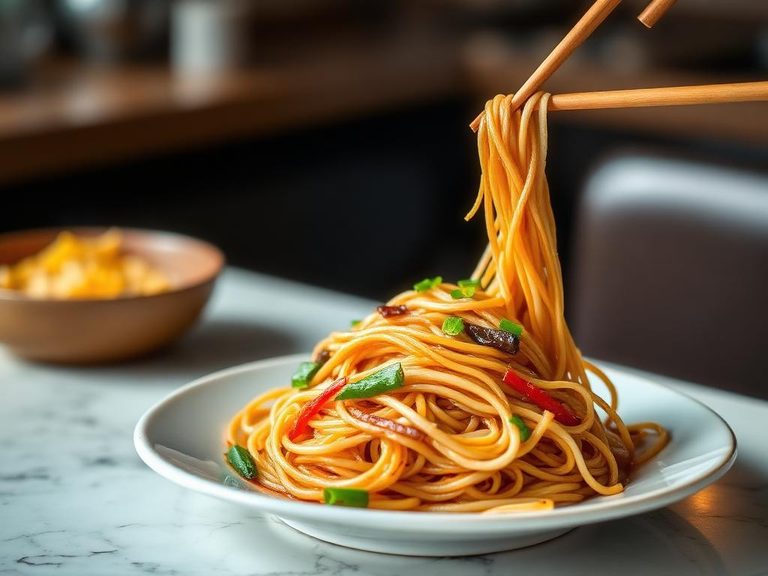
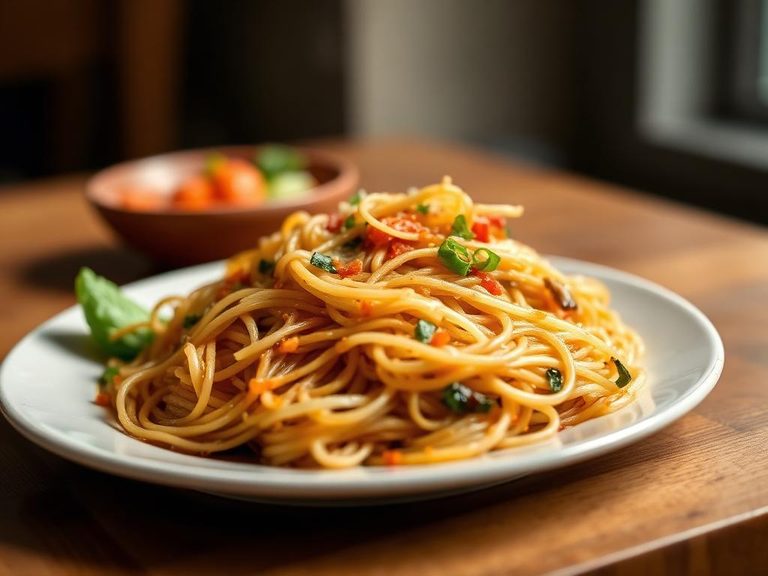
A comforting, savory bowl of stir-fried or tossed noodles, tender pork or ham, and crisp-tender vegetables like carrots, broccoli, and leafy greens. The dish offers a satisfying mix of textures—chewy noodles, soft meat, and crunchy vegetables—with a clean, savory flavor profile. It provides a balanced, moderate-energy meal with a good protein-to-carb ratio.
Calorie split: 23% protein · 46% carbs · 32% fat
↓ Full nutrition💚 Why it's loved
People love this dish for its comforting, familiar flavors and the satisfying combination of textures in every bite. It's a highly adaptable canvas for home cooks and chefs alike, easily tailored to what's on hand or regional tastes.
⚠️ Watch-outs & how to enjoy it better
The sodium content can be high, especially if using cured ham or pre-made sauces, which is a consideration for those monitoring salt intake. To counteract, use low-sodium soy sauce or season with aromatics like garlic and ginger, and ensure plenty of unsalted vegetables are included. The dish is also a common vehicle for wheat gluten, so those with celiac disease or gluten sensitivity should opt for rice noodles or other gluten-free alternatives.
Key benefits
- Good source of lean protein from pork/ham.
- Provides complex carbohydrates for sustained energy.
- Contains fiber and micronutrients from mixed vegetables.
- Low in added sugar, making it a savory choice.
- Versatile base for adjusting portion and nutrient density.
🍽️ Popular dishes
🌍 Where it's eaten
💡 Did you know?
The word 'noodle' likely derives from the German 'Nudel,' but the concept of pasta-like foods has been independently developed across cultures for millennia, with the oldest known noodles (made from millet) found in China and dating back about 4,000 years.
Full nutrition (USDA data · scales with serving)
| Water | 68.4 g |
| Energy | 148 kcal |
| Protein | 8.3 g |
| Total lipid (fat) | 5.2 g |
| Carbohydrate, by difference | 16.7 g |
| Fiber, total dietary | 1.5 g |
| Total Sugars | 0.91 g |
| Calcium, Ca | 19.0 mg |
| Iron, Fe | 1.2 mg |
| Magnesium, Mg | 21.0 mg |
| Phosphorus, P | 100 mg |
| Potassium, K | 140 mg |
| Sodium, Na | 302 mg |
| Zinc, Zn | 0.92 mg |
| Copper, Cu | 0.08 mg |
| Selenium, Se | 20.9 ug |
| Vitamin C, total ascorbic acid | 5.2 mg |
| Thiamin | 0.37 mg |
| Riboflavin | 0.16 mg |
| Niacin | 2.4 mg |
| Vitamin B-6 | 0.15 mg |
| Folate, total | 59.0 ug |
| Folic acid | 46.0 ug |
| Folate, food | 12.0 ug |
| Folate, DFE | 91.0 ug |
| Choline, total | 36.3 mg |
| Vitamin B-12 | 0.19 ug |
| Vitamin B-12, added | 0.00 ug |
| Vitamin A, RAE | 112 ug |
| Retinol | 4.0 ug |
| Carotene, beta | 1061 ug |
| Carotene, alpha | 450 ug |
| Cryptoxanthin, beta | 0.00 ug |
| Lycopene | 0.00 ug |
| Lutein + zeaxanthin | 236 ug |
| Vitamin E (alpha-tocopherol) | 0.82 mg |
| Vitamin E, added | 0.00 mg |
| Vitamin D (D2 + D3) | 0.20 ug |
| Vitamin K (phylloquinone) | 14.4 ug |
| Alcohol, ethyl | 0.00 g |
| Caffeine | 0.00 mg |
| Theobromine | 0.00 mg |
Fat & fatty acid profile (per 100g)
| Fatty acids, total saturated | 1.2 g |
| SFA 4:0 | 0.00 g |
| SFA 6:0 | 0.00 g |
| SFA 8:0 | 0.00 g |
| SFA 10:0 | 0.00 g |
| SFA 12:0 | 0.00 g |
| SFA 14:0 | 0.03 g |
| SFA 16:0 | 0.81 g |
| SFA 18:0 | 0.31 g |
| Fatty acids, total monounsaturated | 2.0 g |
| MUFA 16:1 | 0.09 g |
| MUFA 18:1 | 1.9 g |
| MUFA 20:1 | 0.03 g |
| MUFA 22:1 | 0.00 g |
| Fatty acids, total polyunsaturated | 1.3 g |
| PUFA 18:2 | 1.2 g |
| PUFA 18:3 | 0.12 g |
| PUFA 18:4 | 0.00 g |
| PUFA 20:4 | 0.01 g |
| PUFA 20:5 n-3 (EPA) | 0.00 g |
| PUFA 22:5 n-3 (DPA) | 0.00 g |
| PUFA 22:6 n-3 (DHA) | 0.00 g |
| Cholesterol | 32.0 mg |
Amino acid profile (per 100g)
Estimated from Pork, fresh, leg (ham), rump half, separable lean and fat, raw — USDA does not publish this profile for Ham or pork.
| Tryptophan | 0.24 g |
| Threonine | 0.89 g |
| Isoleucine | 0.96 g |
| Leucine | 1.7 g |
| Lysine | 1.8 g |
| Methionine | 0.56 g |
| Cystine | 0.23 g |
| Phenylalanine | 0.84 g |
| Tyrosine | 0.80 g |
| Valine | 1.0 g |
| Arginine | 1.3 g |
| Histidine | 0.82 g |
| Alanine | 1.2 g |
| Aspartic acid | 1.9 g |
| Glutamic acid | 3.1 g |
| Glycine | 0.92 g |
| Proline | 0.82 g |
| Serine | 0.85 g |
| Hydroxyproline | 0.07 g |
FAQ
Is this a complete meal?
Yes, it's generally considered a complete meal as it contains all three macronutrients: carbohydrates from noodles, protein from pork/ham, and fats from cooking oil and the meat itself, along with fiber and vitamins from the vegetables.
How can I make it healthier?
You can boost the vegetable-to-noodle ratio, use whole-grain or legume-based noodles for more fiber and protein, choose lean pork loin or un-cured ham, and limit added fats and high-sodium sauces.
Can I use different vegetables?
Absolutely. This dish is a great way to use seasonal or leftover vegetables. Bell peppers, snap peas, mushrooms, bok choy, and cabbage are all excellent substitutes or additions.
Nutrient density (calculated · NRF9.3)
Nutrient Rich Foods index: beneficial nutrients (protein, fiber, vitamins, minerals) minus saturated fat, added sugar & sodium, per 100 kcal.
NRF9.3 index — Fulgoni, Keast & Drewnowski, 2009. Computed from USDA nutrients.
Weight-loss friendliness (composite index)
Energy density 1.48 kcal/g · 23% calories from protein · 1.5 g fiber · 0.9 g sugar per 100 g.
Composite of energy density (Rolls et al., 1999), protein & fiber satiety, minus sugar. A calculated heuristic — ranks satiety-per-calorie, not a clinical measure.
Dietary load (calculated from USDA values)
Potential renal acid load. Positive = acid-forming, negative = alkaline-forming.
Sodium-to-potassium ratio: 2.16 (lower is better — aim for ≤ 1)
Sodium:potassium per WHO potassium guidance. Computed from USDA nutrients.