

Chicken or turkey, noodles, and vegetables including carrots, broccoli, and/or dark-green leafy; no sauce
Common food
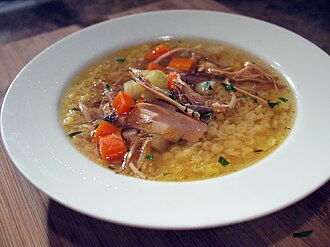
Photo: Wikipedia
A clean, broth-based stir-fry or toss of tender poultry and crisp vegetables, this dish delivers a satisfying, savory bite without the heaviness of a sauce. The texture is a pleasant contrast of soft noodles and meat against the snap of carrots and broccoli, creating a light yet filling meal. It's a nutritionally balanced option, offering solid protein and fiber with a remarkably low calorie count.
Calorie split: 22% protein · 45% carbs · 33% fat
↓ Full nutrition💚 Why it's loved
People love this dish for its comforting, home-cooked simplicity and the way it lets the natural flavors of chicken, turkey, and fresh vegetables shine through. Its versatility makes it a staple in many cuisines, easily adapted with whatever greens or noodles are on hand.
⚠️ Watch-outs & how to enjoy it better
The lack of sauce can make it seem bland or dry to some, and the noodles can cause a moderate blood-sugar spike if not balanced with enough protein and fiber. To counteract this, pair it with a side of plain yogurt or a drizzle of olive oil to slow digestion, and use whole-grain or legume-based noodles for a lower glycemic impact.
Key benefits
- High protein-to-calorie ratio supports muscle maintenance.
- Rich in fiber from broccoli and leafy greens aids digestion.
- Low in added sugars, making it a steady-energy meal.
- Provides complex carbohydrates from noodles for sustained fuel.
- Naturally low in fat, especially without added sauce.
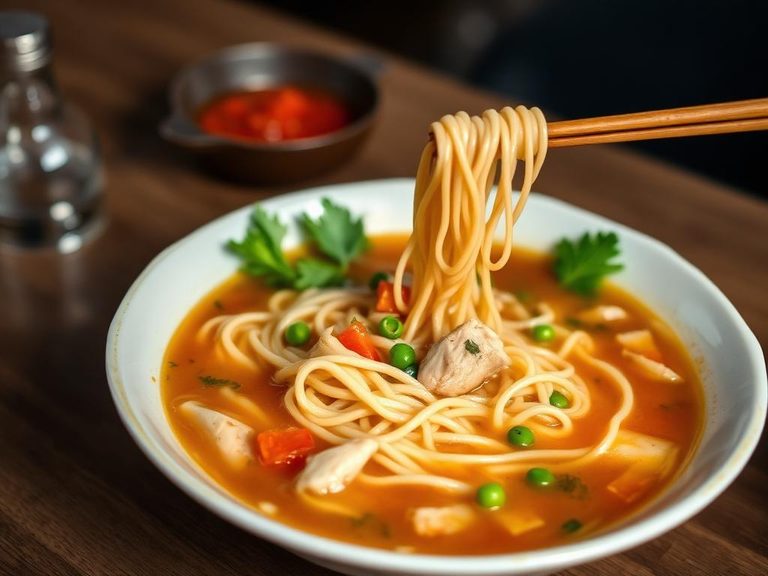
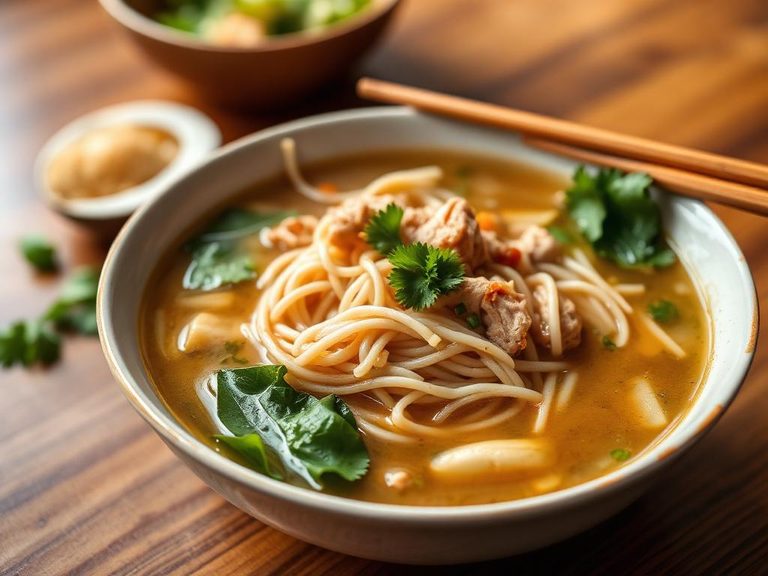
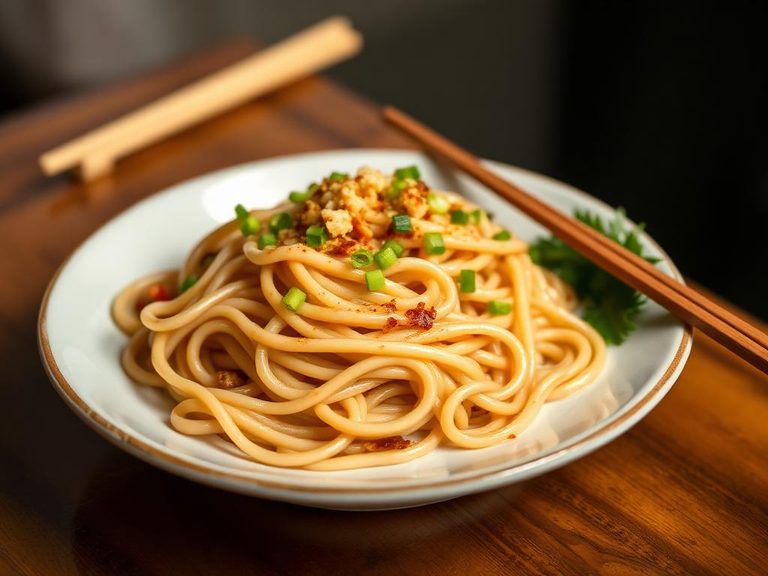
🍽️ Popular dishes
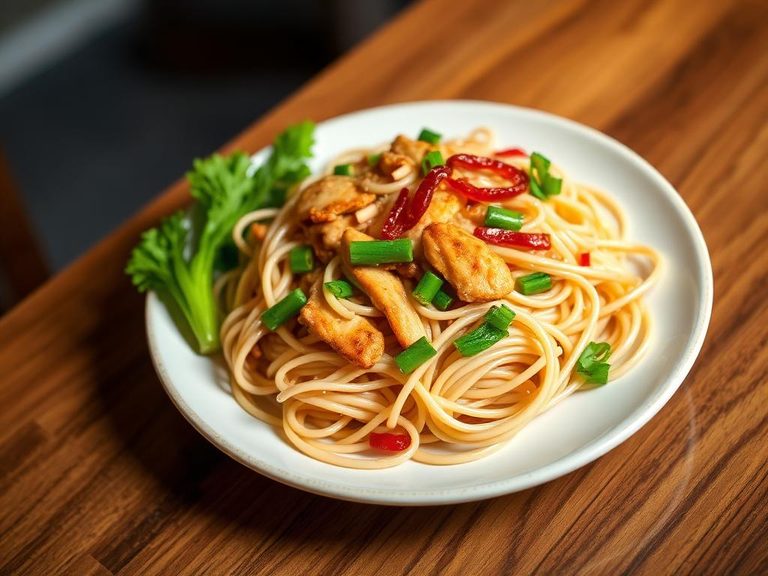
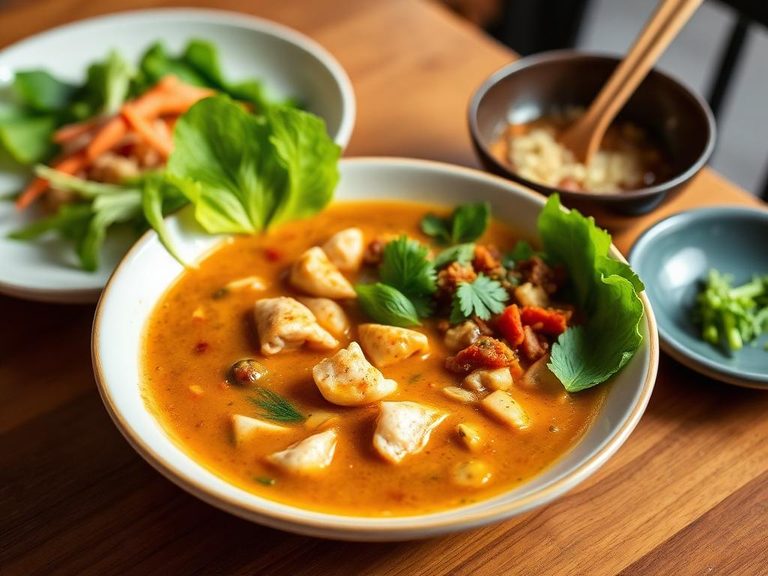
🌍 Where it's eaten
💡 Did you know?
The noodles in this dish are often made from wheat flour, but in many Asian cuisines, they can be crafted from rice, mung bean, or even sweet potato starch, each offering a distinct texture and nutritional profile.
Full nutrition (USDA data · scales with serving)
| Water | 68.7 g |
| Energy | 147 kcal |
| Protein | 8.0 g |
| Total lipid (fat) | 5.5 g |
| Carbohydrate, by difference | 16.6 g |
| Fiber, total dietary | 1.5 g |
| Total Sugars | 0.90 g |
| Calcium, Ca | 18.0 mg |
| Iron, Fe | 1.1 mg |
| Magnesium, Mg | 20.0 mg |
| Phosphorus, P | 98.0 mg |
| Potassium, K | 113 mg |
| Sodium, Na | 351 mg |
| Zinc, Zn | 0.75 mg |
| Copper, Cu | 0.08 mg |
| Selenium, Se | 18.7 ug |
| Vitamin C, total ascorbic acid | 5.1 mg |
| Thiamin | 0.20 mg |
| Riboflavin | 0.13 mg |
| Niacin | 2.7 mg |
| Vitamin B-6 | 0.10 mg |
| Folate, total | 60.0 ug |
| Folic acid | 46.0 ug |
| Folate, food | 14.0 ug |
| Folate, DFE | 92.0 ug |
| Choline, total | 30.2 mg |
| Vitamin B-12 | 0.12 ug |
| Vitamin B-12, added | 0.00 ug |
| Vitamin A, RAE | 112 ug |
| Retinol | 5.0 ug |
| Carotene, beta | 1052 ug |
| Carotene, alpha | 446 ug |
| Cryptoxanthin, beta | 0.00 ug |
| Lycopene | 0.00 ug |
| Lutein + zeaxanthin | 234 ug |
| Vitamin E (alpha-tocopherol) | 1.0 mg |
| Vitamin E, added | 0.00 mg |
| Vitamin D (D2 + D3) | 0.10 ug |
| Vitamin K (phylloquinone) | 15.2 ug |
| Alcohol, ethyl | 0.00 g |
| Caffeine | 0.00 mg |
| Theobromine | 0.00 mg |
Fat & fatty acid profile (per 100g)
| Fatty acids, total saturated | 0.95 g |
| SFA 4:0 | 0.00 g |
| SFA 6:0 | 0.00 g |
| SFA 8:0 | 0.00 g |
| SFA 10:0 | 0.00 g |
| SFA 12:0 | 0.00 g |
| SFA 14:0 | 0.01 g |
| SFA 16:0 | 0.73 g |
| SFA 18:0 | 0.18 g |
| Fatty acids, total monounsaturated | 2.1 g |
| MUFA 16:1 | 0.12 g |
| MUFA 18:1 | 2.0 g |
| MUFA 20:1 | 0.02 g |
| MUFA 22:1 | 0.00 g |
| Fatty acids, total polyunsaturated | 1.7 g |
| PUFA 18:2 | 1.5 g |
| PUFA 18:3 | 0.17 g |
| PUFA 18:4 | 0.00 g |
| PUFA 20:4 | 0.00 g |
| PUFA 20:5 n-3 (EPA) | 0.00 g |
| PUFA 22:5 n-3 (DPA) | 0.00 g |
| PUFA 22:6 n-3 (DHA) | 0.00 g |
| Cholesterol | 37.0 mg |
Amino acid profile (per 100g)
Estimated from Turnover, chicken- or turkey-, and vegetable-filled, reduced fat, frozen — USDA does not publish this profile for Chicken or turkey.
| Tryptophan | 0.16 g |
| Threonine | 0.41 g |
| Isoleucine | 0.47 g |
| Leucine | 0.80 g |
| Lysine | 0.61 g |
| Methionine | 0.23 g |
| Cystine | 0.13 g |
| Phenylalanine | 0.47 g |
| Tyrosine | 0.37 g |
| Valine | 0.53 g |
| Arginine | 0.51 g |
| Histidine | 0.30 g |
| Alanine | 0.45 g |
| Aspartic acid | 0.80 g |
| Glutamic acid | 2.2 g |
| Glycine | 0.38 g |
| Proline | 0.87 g |
| Serine | 0.42 g |
| Hydroxyproline | 0.00 g |
FAQ
Is this dish gluten-free?
It depends on the noodles. Traditional wheat noodles contain gluten, but using rice noodles, zucchini noodles, or shirataki noodles makes it gluten-free.
Can I make this dish vegan?
Yes, simply replace the chicken or turkey with tofu, tempeh, or a plant-based protein like edamame, and use vegetable broth for cooking.
How can I add more flavor without sauce?
Use aromatic ingredients like garlic, ginger, and scallions during cooking, and finish with a squeeze of lemon or lime juice, a sprinkle of sesame seeds, or a dash of chili flakes.
Nutrient density (calculated · NRF9.3)
Nutrient Rich Foods index: beneficial nutrients (protein, fiber, vitamins, minerals) minus saturated fat, added sugar & sodium, per 100 kcal.
NRF9.3 index — Fulgoni, Keast & Drewnowski, 2009. Computed from USDA nutrients.
Weight-loss friendliness (composite index)
Energy density 1.47 kcal/g · 22% calories from protein · 1.5 g fiber · 0.9 g sugar per 100 g.
Composite of energy density (Rolls et al., 1999), protein & fiber satiety, minus sugar. A calculated heuristic — ranks satiety-per-calorie, not a clinical measure.
Dietary load (calculated from USDA values)
Potential renal acid load. Positive = acid-forming, negative = alkaline-forming.
Sodium-to-potassium ratio: 3.11 (lower is better — aim for ≤ 1)
Sodium:potassium per WHO potassium guidance. Computed from USDA nutrients.