

Gin
Common food

Photo: Wikipedia
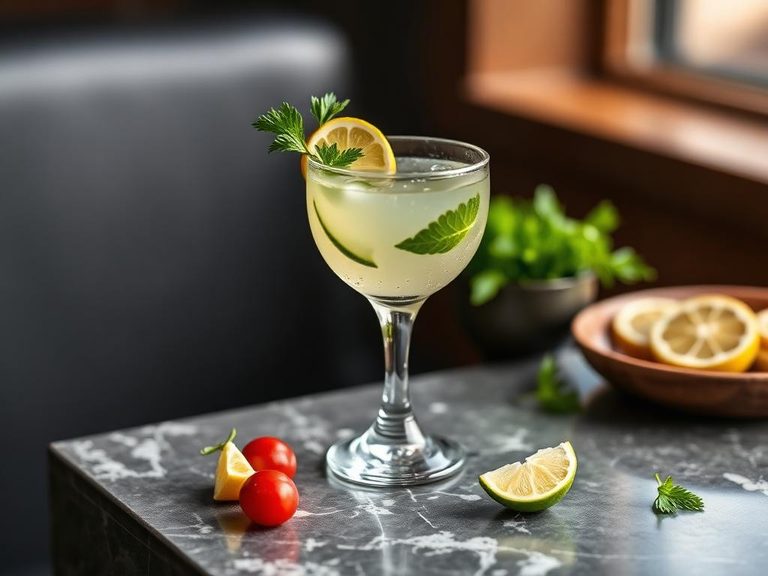
Gin is a clear, aromatic spirit distilled from juniper berries and other botanicals, offering a crisp, piney, and often citrusy flavor profile. Nutritionally, it provides 231 kcal per 100ml with zero protein, carbs, or fat, making it a pure source of alcohol calories.
💚 Why it's loved
People love gin for its complex, botanical flavor that can range from floral to spicy, and its incredible versatility in cocktails. It's deeply tied to social rituals, from classic gin & tonics to sophisticated martinis.
⚠️ Watch-outs & how to enjoy it better
As an alcoholic beverage, it carries risks of intoxication, liver strain, and addiction, and its empty calories can contribute to weight gain. Those with alcohol sensitivity, liver conditions, or who are pregnant should avoid it. To mitigate, practice strict portion control (e.g., a single 44ml shot), avoid sugary mixers, and never drink on an empty stomach.
Key benefits
- Zero sugar and carbohydrates
- No fat or cholesterol
- Contains juniper, which has traditional herbal uses
- Low in calories compared to sugary cocktails
- Versatile base for low-calorie mixed drinks
🍽️ Popular dishes
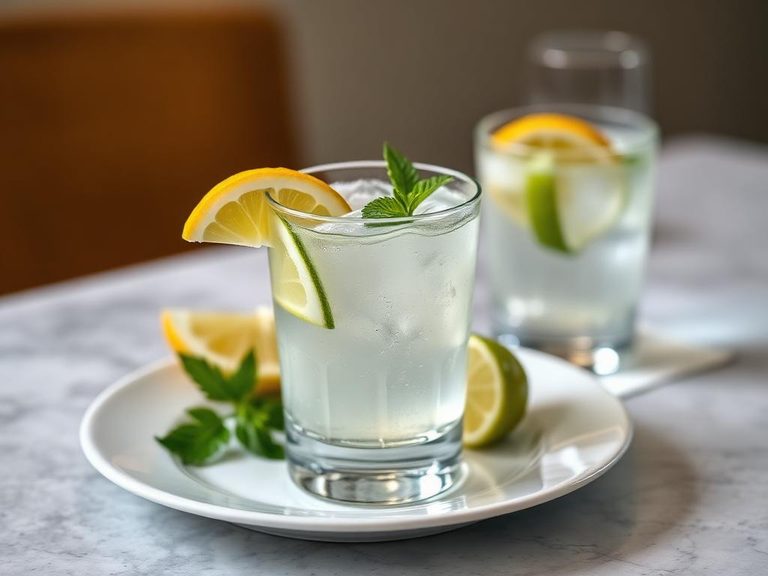
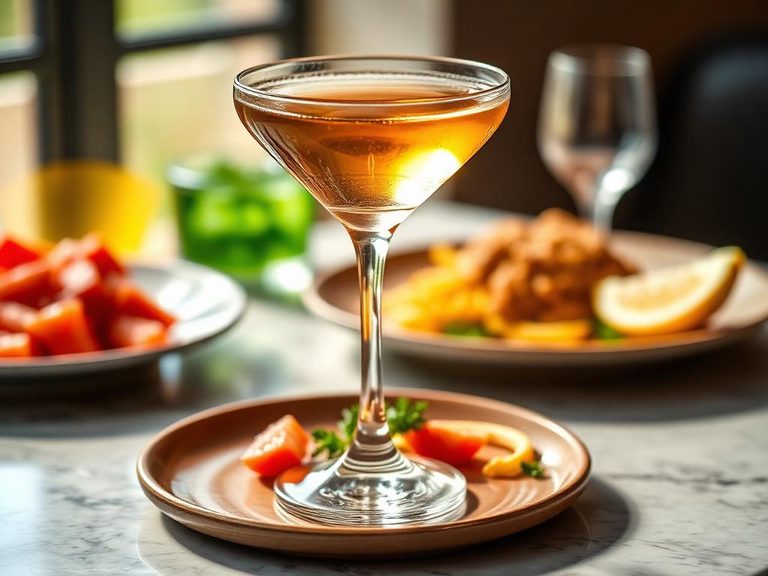
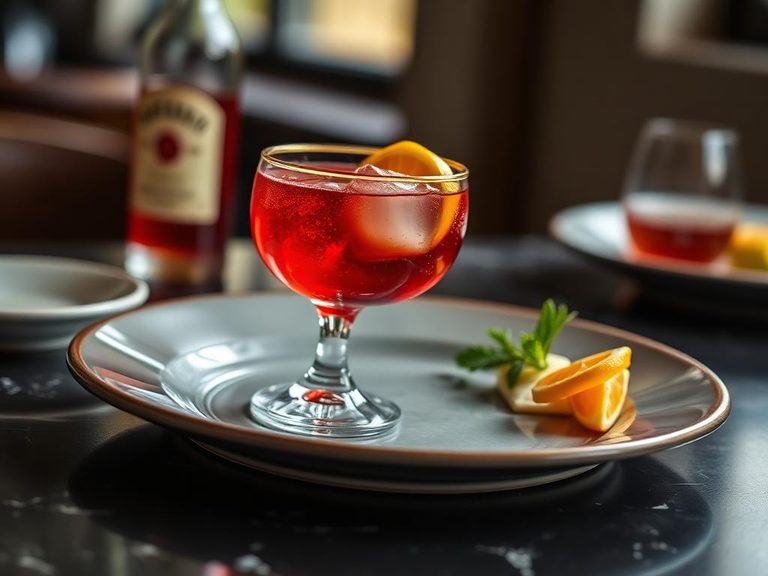
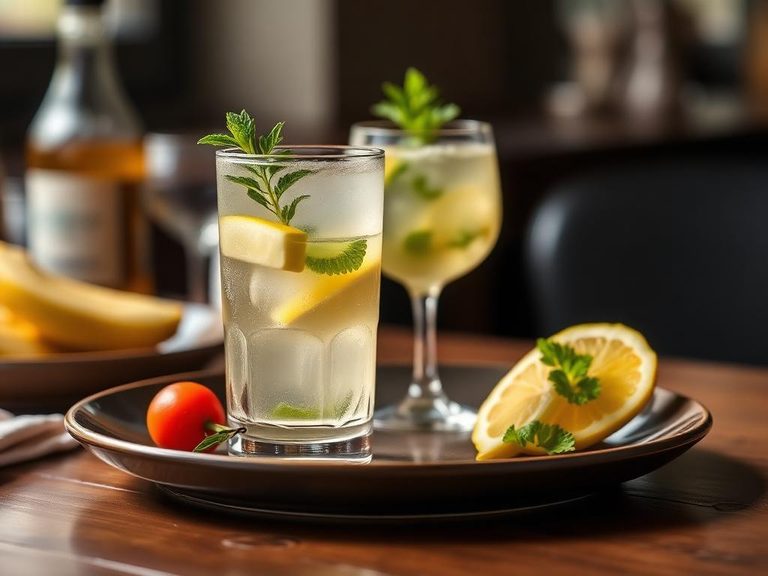
🌍 Where it's eaten
💡 Did you know?
The word 'gin' is derived from the Dutch word 'genever,' which itself comes from the juniper berry, the spirit's defining botanical.
Full nutrition (USDA data · scales with serving)
| Water | 66.6 g |
| Energy | 231 kcal |
| Protein | 0.00 g |
| Total lipid (fat) | 0.00 g |
| Carbohydrate, by difference | 0.00 g |
| Fiber, total dietary | 0.00 g |
| Total Sugars | 0.00 g |
| Calcium, Ca | 0.00 mg |
| Iron, Fe | 0.04 mg |
| Magnesium, Mg | 0.00 mg |
| Phosphorus, P | 4.0 mg |
| Potassium, K | 2.0 mg |
| Sodium, Na | 1.0 mg |
| Zinc, Zn | 0.04 mg |
| Copper, Cu | 0.02 mg |
| Selenium, Se | 0.00 ug |
| Vitamin C, total ascorbic acid | 0.00 mg |
| Thiamin | 0.01 mg |
| Riboflavin | 0.00 mg |
| Niacin | 0.01 mg |
| Vitamin B-6 | 0.00 mg |
| Folate, total | 0.00 ug |
| Folic acid | 0.00 ug |
| Folate, food | 0.00 ug |
| Folate, DFE | 0.00 ug |
| Choline, total | 0.00 mg |
| Vitamin B-12 | 0.00 ug |
| Vitamin B-12, added | 0.00 ug |
| Vitamin A, RAE | 0.00 ug |
| Retinol | 0.00 ug |
| Carotene, beta | 0.00 ug |
| Carotene, alpha | 0.00 ug |
| Cryptoxanthin, beta | 0.00 ug |
| Lycopene | 0.00 ug |
| Lutein + zeaxanthin | 0.00 ug |
| Vitamin E (alpha-tocopherol) | 0.00 mg |
| Vitamin E, added | 0.00 mg |
| Vitamin D (D2 + D3) | 0.00 ug |
| Vitamin K (phylloquinone) | 0.00 ug |
| Alcohol, ethyl | 33.4 g |
| Caffeine | 0.00 mg |
| Theobromine | 0.00 mg |
Fat & fatty acid profile (per 100g)
| Fatty acids, total saturated | 0.00 g |
| SFA 4:0 | 0.00 g |
| SFA 6:0 | 0.00 g |
| SFA 8:0 | 0.00 g |
| SFA 10:0 | 0.00 g |
| SFA 12:0 | 0.00 g |
| SFA 14:0 | 0.00 g |
| SFA 16:0 | 0.00 g |
| SFA 18:0 | 0.00 g |
| Fatty acids, total monounsaturated | 0.00 g |
| MUFA 16:1 | 0.00 g |
| MUFA 18:1 | 0.00 g |
| MUFA 20:1 | 0.00 g |
| MUFA 22:1 | 0.00 g |
| Fatty acids, total polyunsaturated | 0.00 g |
| PUFA 18:2 | 0.00 g |
| PUFA 18:3 | 0.00 g |
| PUFA 18:4 | 0.00 g |
| PUFA 20:4 | 0.00 g |
| PUFA 20:5 n-3 (EPA) | 0.00 g |
| PUFA 22:5 n-3 (DPA) | 0.00 g |
| PUFA 22:6 n-3 (DHA) | 0.00 g |
| Cholesterol | 0.00 mg |
Amino acid profile (per 100g)
Estimated from Cookies, gingersnaps — USDA does not publish this profile for Gin.
| Tryptophan | 0.08 g |
| Threonine | 0.15 g |
| Isoleucine | 0.21 g |
| Leucine | 0.38 g |
| Lysine | 0.20 g |
| Methionine | 0.09 g |
| Cystine | 0.12 g |
| Phenylalanine | 0.26 g |
| Tyrosine | 0.16 g |
| Valine | 0.25 g |
| Arginine | 0.21 g |
| Histidine | 0.11 g |
| Alanine | 0.17 g |
| Aspartic acid | 0.25 g |
| Glutamic acid | 1.8 g |
| Glycine | 0.19 g |
| Proline | 0.61 g |
| Serine | 0.29 g |
FAQ
Is gin gluten-free?
Yes, most gin is gluten-free as it's distilled from botanicals, not gluten grains. However, those with severe celiac disease should check for potential cross-contamination or additives.
Why does gin have zero sugar and carbs?
During distillation, the alcohol is separated from the original mash, leaving behind sugars and carbohydrates. The final spirit is essentially pure ethanol and water with dissolved botanical oils.
What gives gin its juniper flavor?
Juniper berries are the primary botanical. They are crushed or steeped during distillation, releasing oils that provide the signature piney, slightly peppery taste.
Nutrient density (calculated · NRF9.3)
Nutrient Rich Foods index: beneficial nutrients (protein, fiber, vitamins, minerals) minus saturated fat, added sugar & sodium, per 100 kcal.
NRF9.3 index — Fulgoni, Keast & Drewnowski, 2009. Computed from USDA nutrients.
Weight-loss friendliness (composite index)
Energy density 2.31 kcal/g · 0% calories from protein · 0.0 g fiber · 0.0 g sugar per 100 g.
Composite of energy density (Rolls et al., 1999), protein & fiber satiety, minus sugar. A calculated heuristic — ranks satiety-per-calorie, not a clinical measure.
Dietary load (calculated from USDA values)
Potential renal acid load. Positive = acid-forming, negative = alkaline-forming.
Sodium-to-potassium ratio: 0.50 (lower is better — aim for ≤ 1)
Sodium:potassium per WHO potassium guidance. Computed from USDA nutrients.