

Fruit, NFS
Common food

Photo: Wikipedia
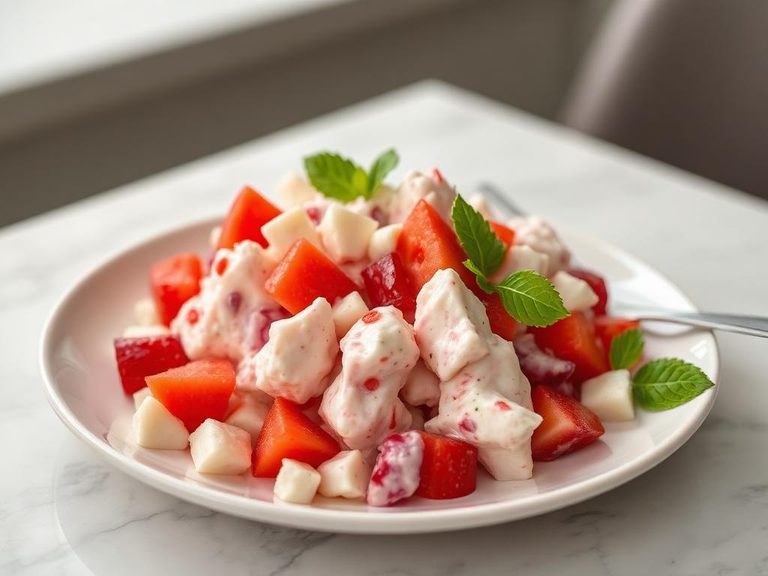
Fruit, NFS (Not Further Specified) is a catch-all term for a mixed or unspecified fruit serving, typically offering a sweet, juicy burst with a texture ranging from crisp to soft depending on the specific fruits included. Nutritionally, it's a light, carbohydrate-focused snack with minimal fat and protein, providing quick energy primarily from natural sugars. Its high water content and fiber make it a hydrating and satisfying choice.
Calorie split: 4% protein · 93% carbs · 3% fat
↓ Full nutrition💚 Why it's loved
People love it for its immediate sweetness and refreshing juiciness, offering a convenient and natural way to satisfy a sugar craving. Its versatility makes it perfect for everything from a standalone snack to a vibrant addition in salads, desserts, and beverages.
⚠️ Watch-outs & how to enjoy it better
The high natural sugar content can cause rapid blood-sugar spikes, especially for individuals managing diabetes or insulin resistance. To counteract this, pair it with a source of protein (like Greek yogurt) or healthy fat (like nuts) to slow sugar absorption, and be mindful of portion size.
Key benefits
- Provides quick, natural energy from carbohydrates.
- Low in fat and a source of dietary fiber.
- High water content supports hydration.
- Contains vitamins and antioxidants depending on the fruit mix.
- Serves as a versatile, no-prep snack or ingredient.
🍽️ Popular dishes
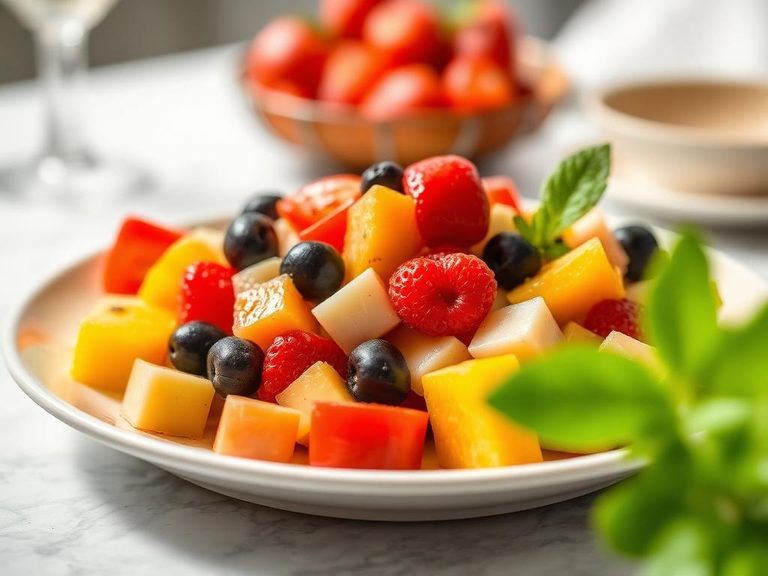
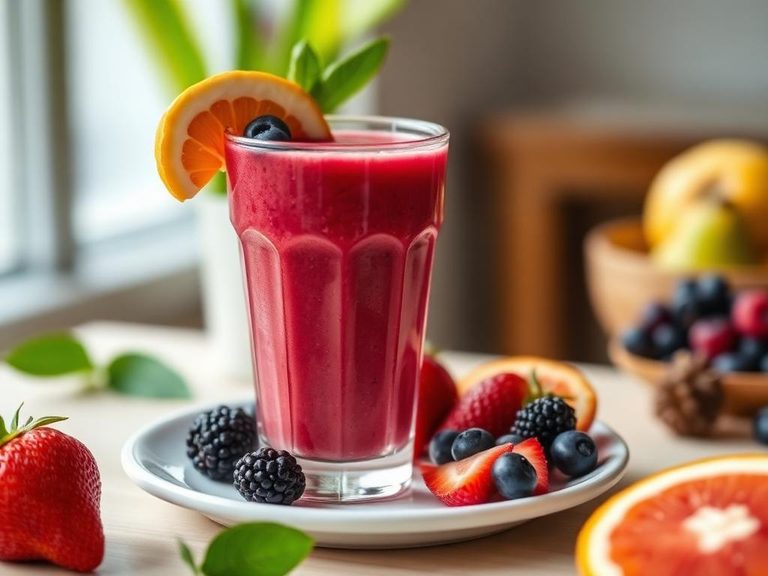

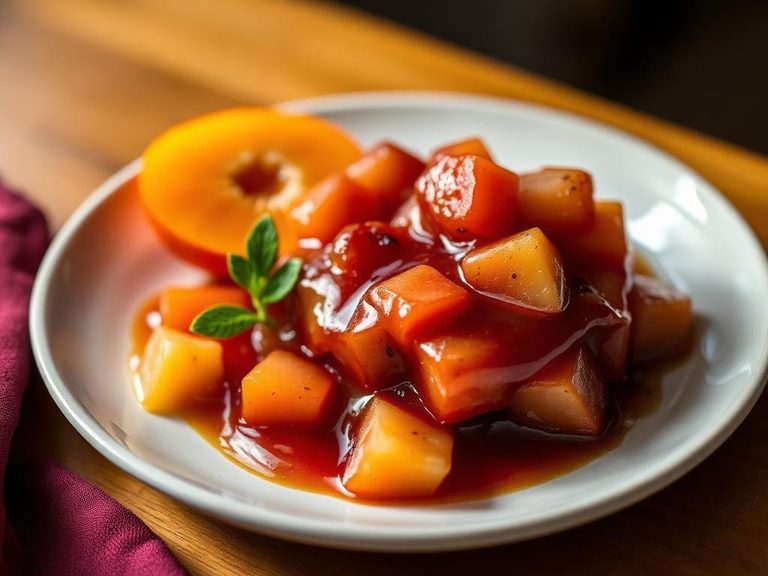
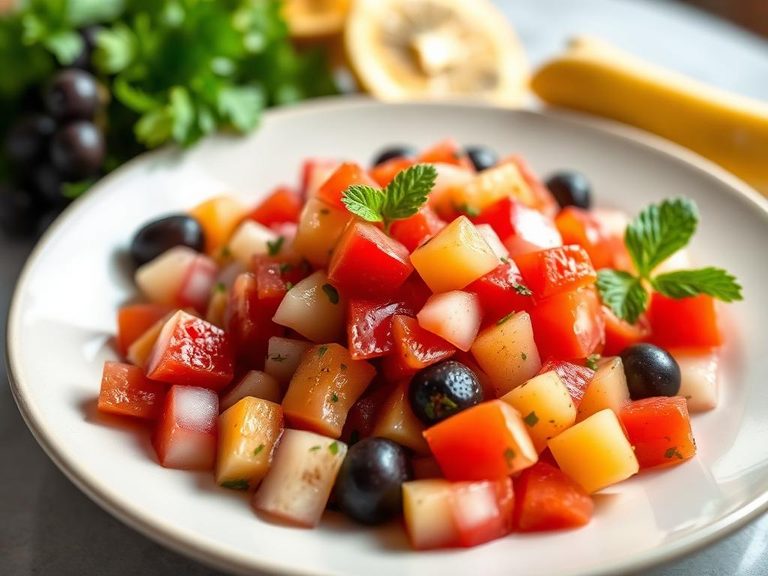
🌍 Where it's eaten
💡 Did you know?
The term 'NFS' is used in USDA food databases as a placeholder when the specific fruit variety or mixture isn't identified, meaning this entry could represent anything from a bowl of mixed berries to a sliced apple.
Full nutrition (USDA data · scales with serving)
| Water | 82.4 g |
| Energy | 68.0 kcal |
| Protein | 0.68 g |
| Total lipid (fat) | 0.21 g |
| Carbohydrate, by difference | 16.2 g |
| Fiber, total dietary | 1.8 g |
| Total Sugars | 12.0 g |
| Calcium, Ca | 13.0 mg |
| Iron, Fe | 0.12 mg |
| Magnesium, Mg | 14.0 mg |
| Phosphorus, P | 18.0 mg |
| Potassium, K | 206 mg |
| Sodium, Na | 1.0 mg |
| Zinc, Zn | 0.09 mg |
| Copper, Cu | 0.06 mg |
| Selenium, Se | 0.20 ug |
| Vitamin C, total ascorbic acid | 19.8 mg |
| Thiamin | 0.05 mg |
| Riboflavin | 0.03 mg |
| Niacin | 0.36 mg |
| Vitamin B-6 | 0.10 mg |
| Folate, total | 11.0 ug |
| Folic acid | 0.00 ug |
| Folate, food | 11.0 ug |
| Folate, DFE | 11.0 ug |
| Choline, total | 6.8 mg |
| Vitamin B-12 | 0.00 ug |
| Vitamin B-12, added | 0.00 ug |
| Vitamin A, RAE | 5.0 ug |
| Retinol | 0.00 ug |
| Carotene, beta | 42.0 ug |
| Carotene, alpha | 4.0 ug |
| Cryptoxanthin, beta | 24.0 ug |
| Lycopene | 227 ug |
| Lutein + zeaxanthin | 49.0 ug |
| Vitamin E (alpha-tocopherol) | 0.18 mg |
| Vitamin E, added | 0.00 mg |
| Vitamin D (D2 + D3) | 0.00 ug |
| Vitamin K (phylloquinone) | 3.8 ug |
| Alcohol, ethyl | 0.00 g |
| Caffeine | 0.00 mg |
| Theobromine | 0.00 mg |
Fat & fatty acid profile (per 100g)
| Fatty acids, total saturated | 0.05 g |
| SFA 4:0 | 0.00 g |
| SFA 6:0 | 0.00 g |
| SFA 8:0 | 0.00 g |
| SFA 10:0 | 0.00 g |
| SFA 12:0 | 0.00 g |
| SFA 14:0 | 0.00 g |
| SFA 16:0 | 0.04 g |
| SFA 18:0 | 0.00 g |
| Fatty acids, total monounsaturated | 0.02 g |
| MUFA 16:1 | 0.00 g |
| MUFA 18:1 | 0.02 g |
| MUFA 20:1 | 0.00 g |
| MUFA 22:1 | 0.00 g |
| Fatty acids, total polyunsaturated | 0.05 g |
| PUFA 18:2 | 0.04 g |
| PUFA 18:3 | 0.02 g |
| PUFA 18:4 | 0.00 g |
| PUFA 20:4 | 0.00 g |
| PUFA 20:5 n-3 (EPA) | 0.00 g |
| PUFA 22:5 n-3 (DPA) | 0.00 g |
| PUFA 22:6 n-3 (DHA) | 0.00 g |
| Cholesterol | 0.00 mg |
Amino acid profile (per 100g)
Estimated from Babyfood, snack, GERBER GRADUATE FRUIT STRIPS, Real Fruit Bars — USDA does not publish this profile for Fruit.
| Tryptophan | 0.00 g |
| Threonine | 0.00 g |
| Isoleucine | 0.00 g |
| Leucine | 0.00 g |
| Lysine | 0.00 g |
| Methionine | 0.00 g |
| Cystine | 0.00 g |
| Phenylalanine | 0.00 g |
| Tyrosine | 0.00 g |
| Valine | 0.00 g |
| Arginine | 0.00 g |
| Histidine | 0.00 g |
| Alanine | 0.00 g |
| Aspartic acid | 0.00 g |
| Glutamic acid | 0.00 g |
| Glycine | 0.00 g |
| Proline | 0.00 g |
| Serine | 0.00 g |
FAQ
Why is it called 'Fruit, NFS'?
'NFS' stands for 'Not Further Specified.' It's a database term used when the exact type or blend of fruit isn't identified, serving as a general category for mixed or unspecified fruit servings.
Is this healthier than fruit juice?
Generally, yes. Whole or sliced fruit (as implied by this entry) retains its natural fiber, which slows sugar absorption and promotes fullness, unlike juice which is often stripped of fiber and more concentrated in sugar.
How can I use this in meal planning?
Use it as a quick snack, a topping for oatmeal or yogurt, a side to balance a savory meal, or blended into smoothies. Its generic nature makes it a flexible component in any diet focused on whole foods.
Nutrient density (calculated · NRF9.3)
Nutrient Rich Foods index: beneficial nutrients (protein, fiber, vitamins, minerals) minus saturated fat, added sugar & sodium, per 100 kcal.
NRF9.3 index — Fulgoni, Keast & Drewnowski, 2009. Computed from USDA nutrients.
Weight-loss friendliness (composite index)
Energy density 0.68 kcal/g · 4% calories from protein · 1.8 g fiber · 12.0 g sugar per 100 g.
Composite of energy density (Rolls et al., 1999), protein & fiber satiety, minus sugar. A calculated heuristic — ranks satiety-per-calorie, not a clinical measure.
Dietary load (calculated from USDA values)
Potential renal acid load. Positive = acid-forming, negative = alkaline-forming.
Sodium-to-potassium ratio: 0.00 (lower is better — aim for ≤ 1)
Sodium:potassium per WHO potassium guidance. Computed from USDA nutrients.