

Fruit smoothie, NFS
Common food

Photo: Wikipedia
A fruit smoothie is a blended beverage of pureed fruits, often with a liquid base like water, juice, or milk, resulting in a thick, drinkable texture. Its flavor is a vibrant, sweet-tart harmony of the fruits used, ranging from tropical mango-pineapple to earthy berry blends. Nutritionally, it's a concentrated source of quick energy from natural sugars and carbohydrates, with a modest amount of protein and fiber depending on the specific fruits.
Calorie split: 14% protein · 71% carbs · 15% fat
↓ Full nutrition💚 Why it's loved
People love fruit smoothies for their refreshing, customizable sweetness and the convenience of consuming multiple fruits in one drink. They are a cultural staple in health-focused cafés, juice bars, and home kitchens worldwide, symbolizing a quick, vibrant meal or snack.
⚠️ Watch-outs & how to enjoy it better
The high natural sugar content can cause rapid blood-sugar spikes, especially without added protein or fat to slow absorption. To counteract this, pair your smoothie with a source of protein (like Greek yogurt or a handful of nuts) or healthy fat (like chia seeds or avocado) to create a more balanced, satiating drink.
Key benefits
- Provides a quick, natural source of energy from fruit sugars
- Can be an easy way to increase fruit intake
- Offers hydration and electrolytes from the liquid base
- Contains vitamins and antioxidants specific to the fruits used
- Can be customized for dietary needs (e.g., dairy-free, vegan)
🍽️ Popular dishes
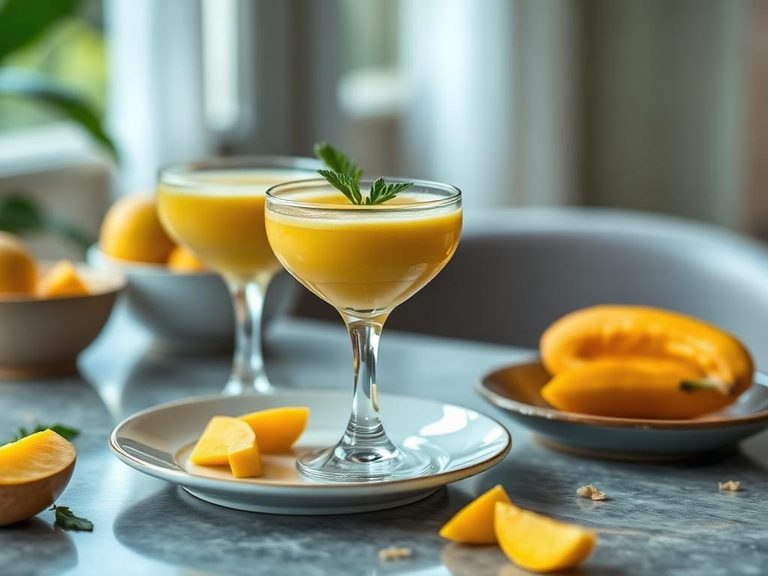
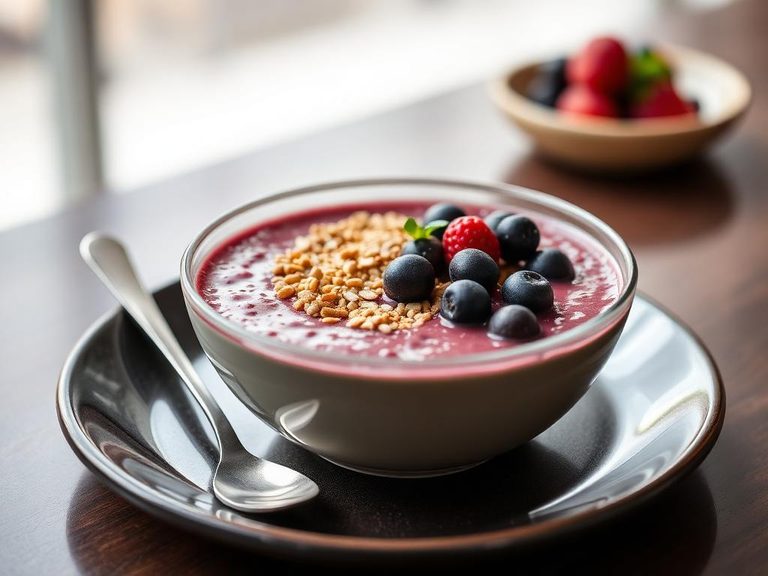
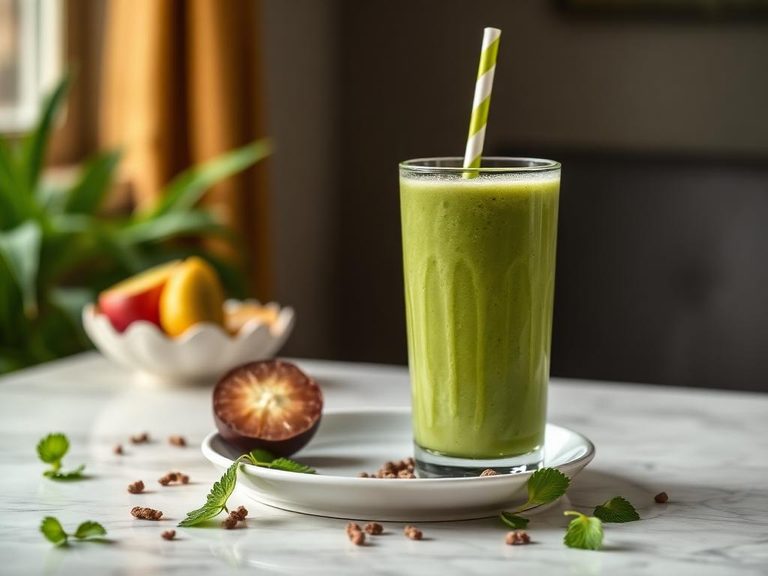

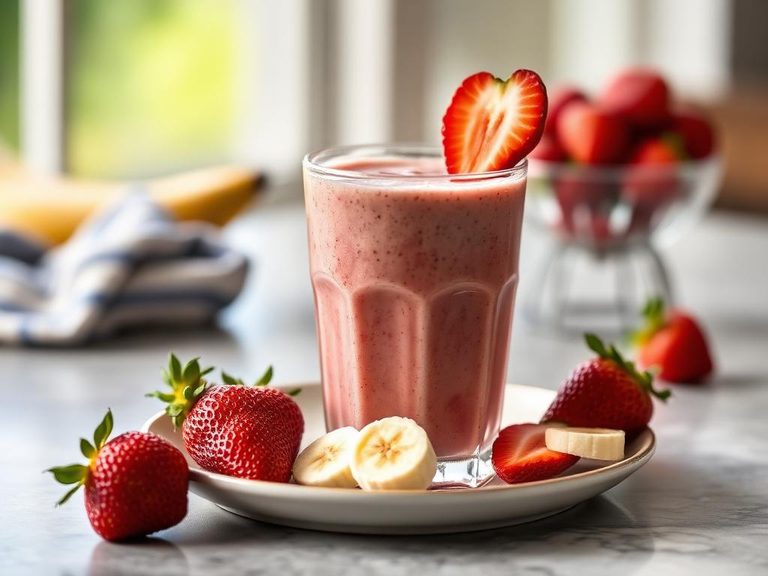

🌍 Where it's eaten
💡 Did you know?
The term 'smoothie' was first trademarked in the U.S. in 1940, but the drink's popularity exploded in the 1960s and 70s with the health food movement and the invention of affordable, powerful home blenders.
Full nutrition (USDA data · scales with serving)
| Water | 84.0 g |
| Energy | 66.0 kcal |
| Protein | 2.3 g |
| Total lipid (fat) | 1.1 g |
| Carbohydrate, by difference | 12.0 g |
| Fiber, total dietary | 1.1 g |
| Total Sugars | 8.9 g |
| Calcium, Ca | 80.0 mg |
| Iron, Fe | 0.19 mg |
| Magnesium, Mg | 14.0 mg |
| Phosphorus, P | 67.0 mg |
| Potassium, K | 174 mg |
| Sodium, Na | 28.0 mg |
| Zinc, Zn | 0.37 mg |
| Copper, Cu | 0.03 mg |
| Selenium, Se | 1.5 ug |
| Vitamin C, total ascorbic acid | 9.5 mg |
| Thiamin | 0.04 mg |
| Riboflavin | 0.10 mg |
| Niacin | 0.31 mg |
| Vitamin B-6 | 0.07 mg |
| Folate, total | 9.0 ug |
| Folic acid | 0.00 ug |
| Folate, food | 9.0 ug |
| Folate, DFE | 9.0 ug |
| Choline, total | 11.8 mg |
| Vitamin B-12 | 0.28 ug |
| Vitamin B-12, added | 0.00 ug |
| Vitamin A, RAE | 20.0 ug |
| Retinol | 19.0 ug |
| Carotene, beta | 12.0 ug |
| Carotene, alpha | 1.0 ug |
| Cryptoxanthin, beta | 0.00 ug |
| Lycopene | 0.00 ug |
| Lutein + zeaxanthin | 19.0 ug |
| Vitamin E (alpha-tocopherol) | 0.16 mg |
| Vitamin E, added | 0.00 mg |
| Vitamin D (D2 + D3) | 0.60 ug |
| Vitamin K (phylloquinone) | 3.3 ug |
| Alcohol, ethyl | 0.00 g |
| Caffeine | 0.00 mg |
| Theobromine | 0.00 mg |
Fat & fatty acid profile (per 100g)
| Fatty acids, total saturated | 0.59 g |
| SFA 4:0 | 0.02 g |
| SFA 6:0 | 0.02 g |
| SFA 8:0 | 0.01 g |
| SFA 10:0 | 0.03 g |
| SFA 12:0 | 0.03 g |
| SFA 14:0 | 0.09 g |
| SFA 16:0 | 0.27 g |
| SFA 18:0 | 0.09 g |
| Fatty acids, total monounsaturated | 0.24 g |
| MUFA 16:1 | 0.02 g |
| MUFA 18:1 | 0.23 g |
| MUFA 20:1 | 0.00 g |
| MUFA 22:1 | 0.00 g |
| Fatty acids, total polyunsaturated | 0.10 g |
| PUFA 18:2 | 0.07 g |
| PUFA 18:3 | 0.03 g |
| PUFA 18:4 | 0.00 g |
| PUFA 20:4 | 0.00 g |
| PUFA 20:5 n-3 (EPA) | 0.00 g |
| PUFA 22:5 n-3 (DPA) | 0.00 g |
| PUFA 22:6 n-3 (DHA) | 0.00 g |
| Cholesterol | 4.0 mg |
FAQ
Is a fruit smoothie a healthy breakfast?
It can be, but it depends on the ingredients. A smoothie made solely with fruit and juice is high in sugar and low in protein and fat, which may not keep you full. For a balanced breakfast, include protein (yogurt, protein powder), healthy fats (nut butter, seeds), and fiber (oats, leafy greens).
Can I make a smoothie ahead of time?
Yes, but it's best consumed fresh to preserve nutrients and texture. If storing, use an airtight container, fill it to the top to minimize air exposure, and refrigerate for up to 24 hours. Separation is normal; simply shake or re-blend before drinking.
Why is my smoothie not sweet enough?
The sweetness of fruit varies by ripeness and variety. Use fully ripe bananas, mangoes, or dates for natural sweetness. A small amount of honey, maple syrup, or a sweet fruit juice (like apple) can also be added. For a less sweet but flavorful boost, try a dash of vanilla extract or cinnamon.
Nutrient density (calculated · NRF9.3)
Nutrient Rich Foods index: beneficial nutrients (protein, fiber, vitamins, minerals) minus saturated fat, added sugar & sodium, per 100 kcal.
NRF9.3 index — Fulgoni, Keast & Drewnowski, 2009. Computed from USDA nutrients.
Weight-loss friendliness (composite index)
Energy density 0.66 kcal/g · 14% calories from protein · 1.1 g fiber · 8.9 g sugar per 100 g.
Composite of energy density (Rolls et al., 1999), protein & fiber satiety, minus sugar. A calculated heuristic — ranks satiety-per-calorie, not a clinical measure.
Dietary load (calculated from USDA values)
Potential renal acid load. Positive = acid-forming, negative = alkaline-forming.
Sodium-to-potassium ratio: 0.16 (lower is better — aim for ≤ 1)
Sodium:potassium per WHO potassium guidance. Computed from USDA nutrients.