

Fruit smoothie, with whole fruit, no dairy
Common food
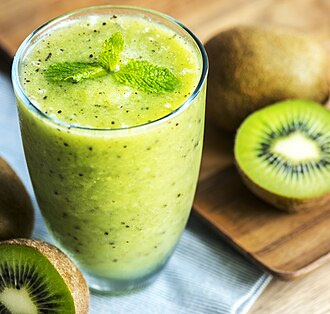
Photo: Wikipedia
A vibrant, refreshing drink made by blending whole fruits with water or ice, delivering a naturally sweet, pulpy texture that's both hydrating and satisfying. Its low-calorie density and high water content make it a guilt-free way to enjoy concentrated fruit flavors. The minimal processing preserves the fruit's natural fiber, offering a more complete nutritional profile than filtered juices.
Calorie split: 4% protein · 90% carbs · 6% fat
↓ Full nutrition💚 Why it's loved
People love it for its incredible versatility and instant refreshment, allowing for endless flavor combinations from tropical mango-pineapple to berry-packed blends. It's a culturally beloved way to consume multiple servings of fruit quickly, often associated with health-conscious lifestyles and tropical climates.
⚠️ Watch-outs & how to enjoy it better
The natural fruit sugars can cause rapid blood sugar spikes, especially in large portions or for individuals with insulin sensitivity. To mitigate this, pair the smoothie with a source of protein (like nuts or seeds) or healthy fat (like avocado) to slow sugar absorption, and stick to a 1-cup serving size.
Key benefits
- Excellent source of hydration from high water content
- Provides natural energy from fruit sugars without added sweeteners
- Retains dietary fiber for digestive health and satiety
- Low in fat and cholesterol-free
- Rich in vitamins and antioxidants depending on the fruit used
🍽️ Popular dishes
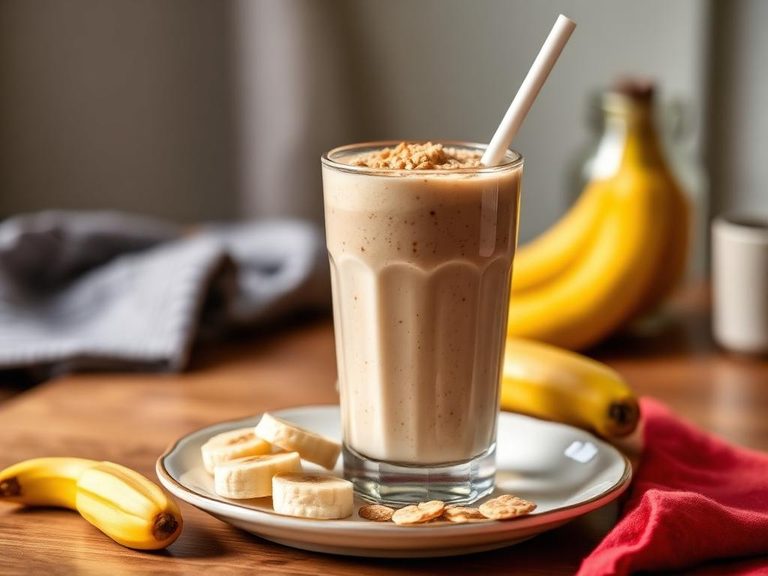
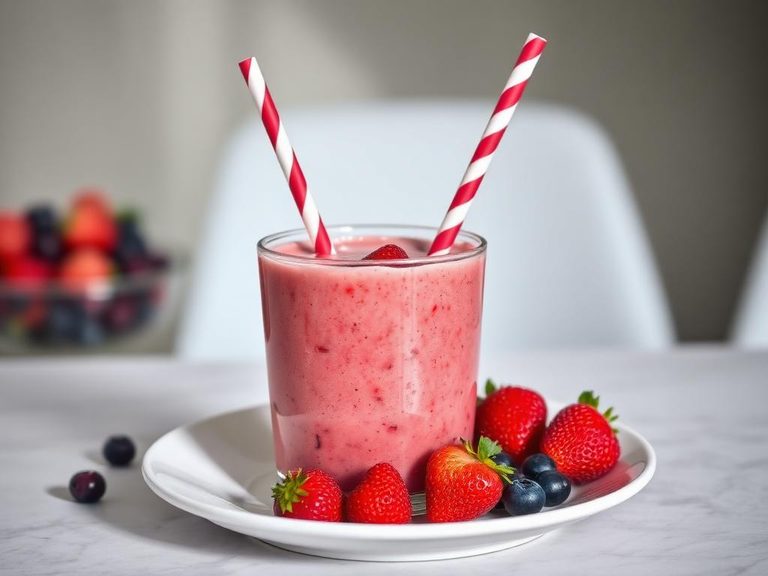
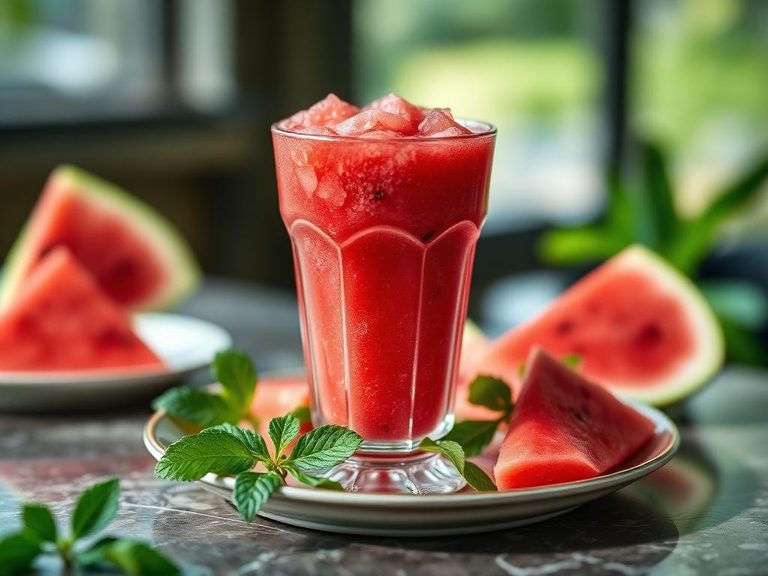
🌍 Where it's eaten
💡 Did you know?
The modern 'smoothie' as we know it gained popularity in the U.S. during the health food movement of the 1960s and 70s, but the concept of blended fruit drinks dates back centuries in tropical cultures.
Full nutrition (USDA data · scales with serving)
| Water | 86.0 g |
| Energy | 54.0 kcal |
| Protein | 0.61 g |
| Total lipid (fat) | 0.35 g |
| Carbohydrate, by difference | 12.7 g |
| Fiber, total dietary | 1.5 g |
| Total Sugars | 8.8 g |
| Calcium, Ca | 27.0 mg |
| Iron, Fe | 0.23 mg |
| Magnesium, Mg | 12.0 mg |
| Phosphorus, P | 16.0 mg |
| Potassium, K | 171 mg |
| Sodium, Na | 2.0 mg |
| Zinc, Zn | 0.08 mg |
| Copper, Cu | 0.05 mg |
| Selenium, Se | 0.20 ug |
| Vitamin C, total ascorbic acid | 22.7 mg |
| Thiamin | 0.05 mg |
| Riboflavin | 0.03 mg |
| Niacin | 0.35 mg |
| Vitamin B-6 | 0.07 mg |
| Folate, total | 19.0 ug |
| Folic acid | 0.00 ug |
| Folate, food | 19.0 ug |
| Folate, DFE | 19.0 ug |
| Choline, total | 6.5 mg |
| Vitamin B-12 | 0.00 ug |
| Vitamin B-12, added | 0.00 ug |
| Vitamin A, RAE | 2.0 ug |
| Retinol | 0.00 ug |
| Carotene, beta | 17.0 ug |
| Carotene, alpha | 4.0 ug |
| Cryptoxanthin, beta | 10.0 ug |
| Lycopene | 0.00 ug |
| Lutein + zeaxanthin | 35.0 ug |
| Vitamin E (alpha-tocopherol) | 0.27 mg |
| Vitamin E, added | 0.00 mg |
| Vitamin D (D2 + D3) | 0.10 ug |
| Vitamin K (phylloquinone) | 4.2 ug |
| Alcohol, ethyl | 0.00 g |
| Caffeine | 0.00 mg |
| Theobromine | 0.00 mg |
Fat & fatty acid profile (per 100g)
| Fatty acids, total saturated | 0.04 g |
| SFA 4:0 | 0.00 g |
| SFA 6:0 | 0.00 g |
| SFA 8:0 | 0.00 g |
| SFA 10:0 | 0.00 g |
| SFA 12:0 | 0.00 g |
| SFA 14:0 | 0.00 g |
| SFA 16:0 | 0.03 g |
| SFA 18:0 | 0.00 g |
| Fatty acids, total monounsaturated | 0.04 g |
| MUFA 16:1 | 0.00 g |
| MUFA 18:1 | 0.03 g |
| MUFA 20:1 | 0.00 g |
| MUFA 22:1 | 0.00 g |
| Fatty acids, total polyunsaturated | 0.10 g |
| PUFA 18:2 | 0.06 g |
| PUFA 18:3 | 0.04 g |
| PUFA 18:4 | 0.00 g |
| PUFA 20:4 | 0.00 g |
| PUFA 20:5 n-3 (EPA) | 0.00 g |
| PUFA 22:5 n-3 (DPA) | 0.00 g |
| PUFA 22:6 n-3 (DHA) | 0.00 g |
| Cholesterol | 0.00 mg |
FAQ
Is a whole-fruit smoothie healthier than fruit juice?
Yes, because blending the whole fruit retains the dietary fiber, which slows the absorption of natural sugars and promotes fullness, whereas juicing removes most of the fiber.
Can I make a smoothie without any added liquid?
It's very difficult. Most fruits need a liquid base like water, coconut water, or plant milk to blend smoothly. High-water-content fruits like watermelon or cucumber can sometimes blend alone.
Why does my smoothie turn brown or separate?
Oxidation from air exposure causes browning, especially in fruits like apples and bananas. Separation is natural as pulp settles. Drink immediately for best color and texture, or add a splash of lemon juice to slow browning.
Nutrient density (calculated · NRF9.3)
Nutrient Rich Foods index: beneficial nutrients (protein, fiber, vitamins, minerals) minus saturated fat, added sugar & sodium, per 100 kcal.
NRF9.3 index — Fulgoni, Keast & Drewnowski, 2009. Computed from USDA nutrients.
Weight-loss friendliness (composite index)
Energy density 0.54 kcal/g · 5% calories from protein · 1.5 g fiber · 8.8 g sugar per 100 g.
Composite of energy density (Rolls et al., 1999), protein & fiber satiety, minus sugar. A calculated heuristic — ranks satiety-per-calorie, not a clinical measure.
Dietary load (calculated from USDA values)
Potential renal acid load. Positive = acid-forming, negative = alkaline-forming.
Sodium-to-potassium ratio: 0.01 (lower is better — aim for ≤ 1)
Sodium:potassium per WHO potassium guidance. Computed from USDA nutrients.