

Fruit smoothie, with whole fruit, non-dairy
Common food

Photo: Wikipedia
A vibrant, refreshing beverage made by blending whole fruits into a smooth, thick liquid, often with a plant-based milk or water. It delivers a naturally sweet, fruity flavor with a satisfying, pulpy texture from the blended fiber. Despite its indulgent taste, it's remarkably light, packing only 60 calories per 100g while providing essential vitamins and minerals.
Calorie split: 9% protein · 75% carbs · 15% fat
↓ Full nutrition💚 Why it's loved
People adore it for its refreshing, customizable nature—it's a delicious way to consume multiple servings of fruit in one glass. It's a staple in health-conscious cultures and a beloved on-the-go breakfast or post-workout refreshment worldwide.
⚠️ Watch-outs & how to enjoy it better
The natural fruit sugars can cause blood-sugar spikes if consumed alone, especially for those with insulin sensitivity. To counteract this, pair it with a source of protein (like a handful of nuts or protein powder) or healthy fat (like chia seeds or avocado) to slow sugar absorption. Those with certain digestive conditions may need to watch the fiber content.
Key benefits
- Excellent source of dietary fiber from whole fruit
- Naturally low in fat and calories
- Provides quick, natural energy from fruit sugars
- Hydrating and rich in micronutrients
- Dairy-free, suitable for vegan diets
🍽️ Popular dishes
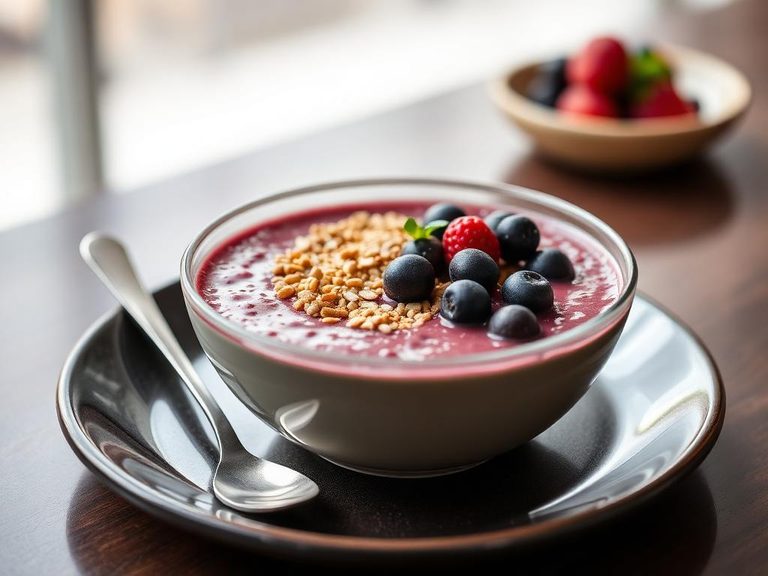
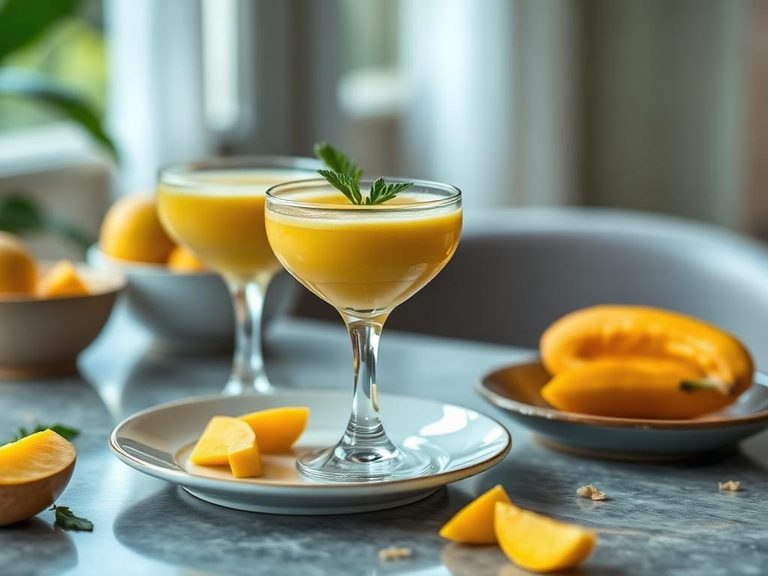
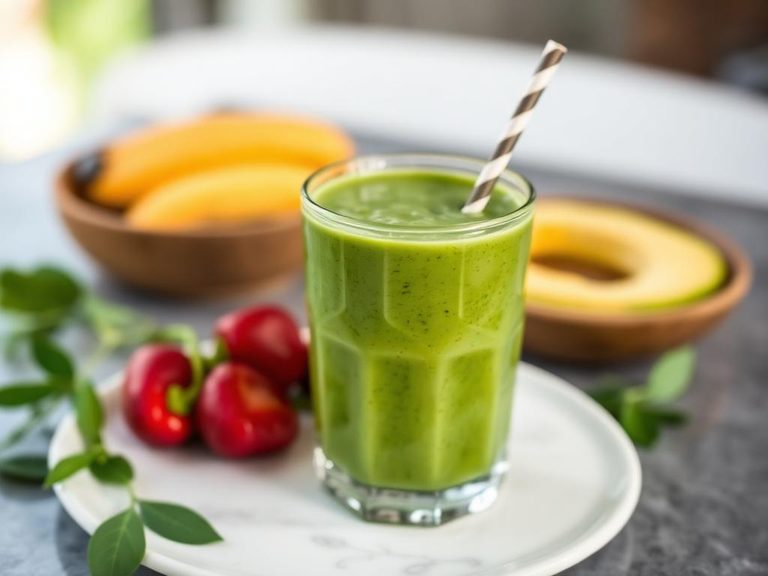

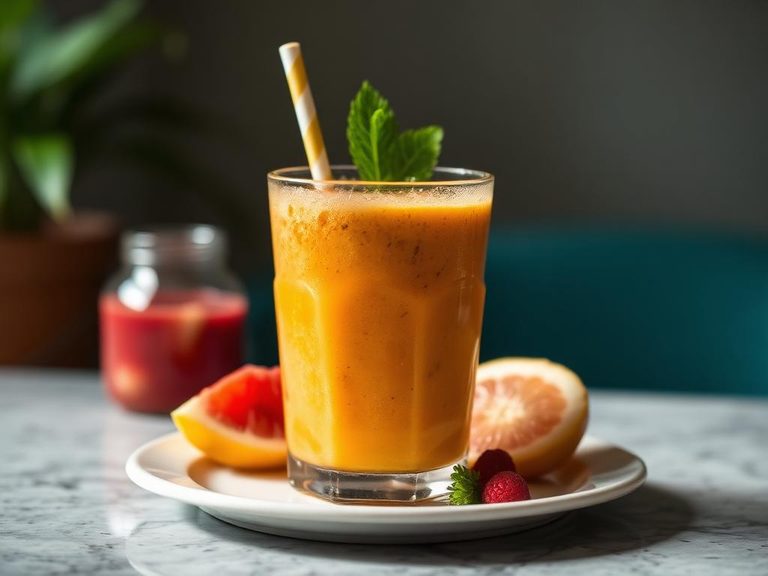

🌍 Where it's eaten
💡 Did you know?
The modern 'smoothie' gained massive popularity in the U.S. during the 1960s and 70s health food movement, but its roots trace back to early 20th-century health food advocates and Brazilian açaí traditions.
Full nutrition (USDA data · scales with serving)
| Water | 85.3 g |
| Energy | 60.0 kcal |
| Protein | 1.4 g |
| Total lipid (fat) | 1.1 g |
| Carbohydrate, by difference | 11.6 g |
| Fiber, total dietary | 1.1 g |
| Total Sugars | 5.2 g |
| Calcium, Ca | 77.0 mg |
| Iron, Fe | 0.52 mg |
| Magnesium, Mg | 19.0 mg |
| Phosphorus, P | 26.0 mg |
| Potassium, K | 104 mg |
| Sodium, Na | 23.0 mg |
| Zinc, Zn | 0.19 mg |
| Copper, Cu | 0.06 mg |
| Selenium, Se | 3.6 ug |
| Vitamin C, total ascorbic acid | 9.6 mg |
| Thiamin | 0.04 mg |
| Riboflavin | 0.03 mg |
| Niacin | 0.34 mg |
| Vitamin B-6 | 0.05 mg |
| Folate, total | 9.0 ug |
| Folic acid | 0.00 ug |
| Folate, food | 9.0 ug |
| Folate, DFE | 9.0 ug |
| Choline, total | 17.3 mg |
| Vitamin B-12 | 0.10 ug |
| Vitamin B-12, added | 0.10 ug |
| Vitamin A, RAE | 11.0 ug |
| Retinol | 10.0 ug |
| Carotene, beta | 15.0 ug |
| Carotene, alpha | 1.0 ug |
| Cryptoxanthin, beta | 0.00 ug |
| Lycopene | 0.00 ug |
| Lutein + zeaxanthin | 20.0 ug |
| Vitamin E (alpha-tocopherol) | 0.79 mg |
| Vitamin E, added | 0.54 mg |
| Vitamin D (D2 + D3) | 0.30 ug |
| Vitamin K (phylloquinone) | 4.3 ug |
| Alcohol, ethyl | 0.00 g |
| Caffeine | 0.00 mg |
| Theobromine | 0.00 mg |
Fat & fatty acid profile (per 100g)
| Fatty acids, total saturated | 0.14 g |
| SFA 4:0 | 0.00 g |
| SFA 6:0 | 0.00 g |
| SFA 8:0 | 0.00 g |
| SFA 10:0 | 0.00 g |
| SFA 12:0 | 0.00 g |
| SFA 14:0 | 0.00 g |
| SFA 16:0 | 0.10 g |
| SFA 18:0 | 0.03 g |
| Fatty acids, total monounsaturated | 0.34 g |
| MUFA 16:1 | 0.00 g |
| MUFA 18:1 | 0.33 g |
| MUFA 20:1 | 0.00 g |
| MUFA 22:1 | 0.00 g |
| Fatty acids, total polyunsaturated | 0.47 g |
| PUFA 18:2 | 0.39 g |
| PUFA 18:3 | 0.07 g |
| PUFA 18:4 | 0.00 g |
| PUFA 20:4 | 0.00 g |
| PUFA 20:5 n-3 (EPA) | 0.00 g |
| PUFA 22:5 n-3 (DPA) | 0.00 g |
| PUFA 22:6 n-3 (DHA) | 0.00 g |
| Cholesterol | 0.00 mg |
FAQ
Is a fruit smoothie with whole fruit better than fruit juice?
Yes, generally. Blending the whole fruit retains the dietary fiber, which is lost in juicing. This fiber helps slow the absorption of sugars, aids digestion, and increases feelings of fullness.
Can I make it ahead of time?
It's best consumed fresh for optimal nutrient retention and texture. However, you can store it in an airtight container in the refrigerator for up to 24 hours. Separation may occur; simply shake or stir before drinking.
What's a good non-dairy base?
Common options include almond milk, oat milk, coconut water, soy milk, or simply water or ice. Each adds a slightly different flavor and nutritional profile.
Nutrient density (calculated · NRF9.3)
Nutrient Rich Foods index: beneficial nutrients (protein, fiber, vitamins, minerals) minus saturated fat, added sugar & sodium, per 100 kcal.
NRF9.3 index — Fulgoni, Keast & Drewnowski, 2009. Computed from USDA nutrients.
Weight-loss friendliness (composite index)
Energy density 0.60 kcal/g · 10% calories from protein · 1.1 g fiber · 5.2 g sugar per 100 g.
Composite of energy density (Rolls et al., 1999), protein & fiber satiety, minus sugar. A calculated heuristic — ranks satiety-per-calorie, not a clinical measure.
Dietary load (calculated from USDA values)
Potential renal acid load. Positive = acid-forming, negative = alkaline-forming.
Sodium-to-potassium ratio: 0.22 (lower is better — aim for ≤ 1)
Sodium:potassium per WHO potassium guidance. Computed from USDA nutrients.