

Fruit and vegetable smoothie, non-dairy, added protein
Common food

Photo: Wikipedia
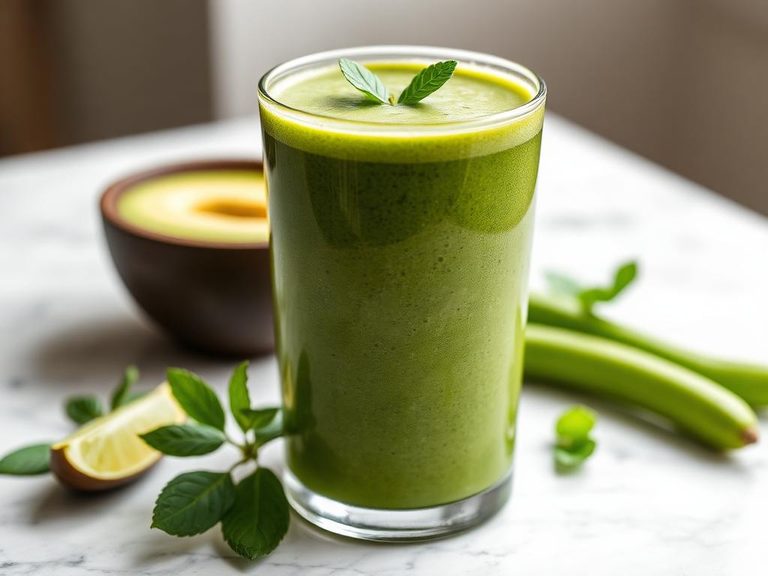
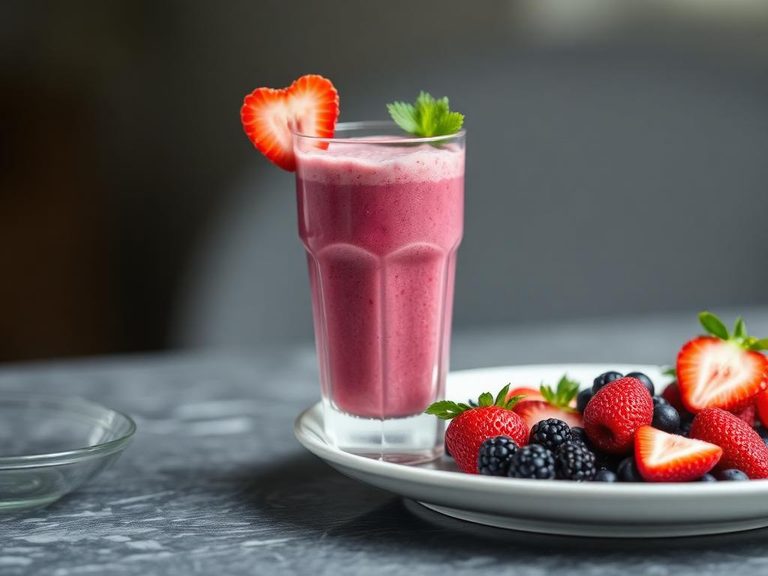
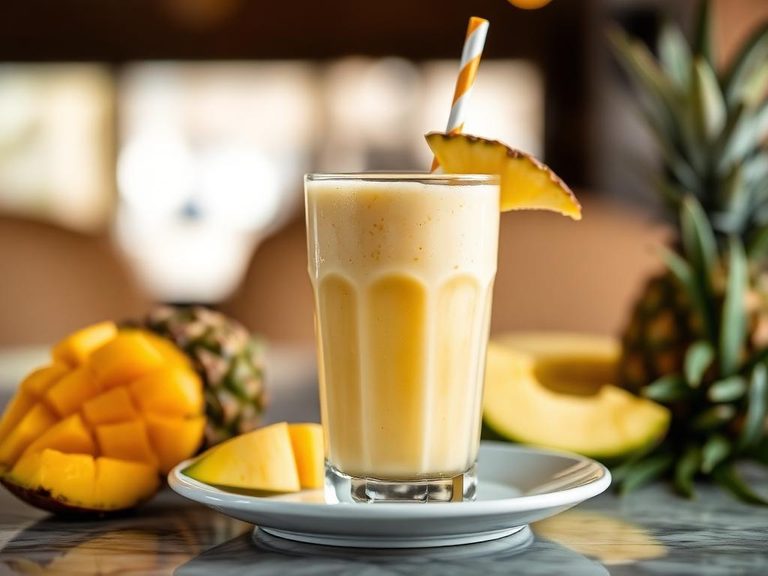
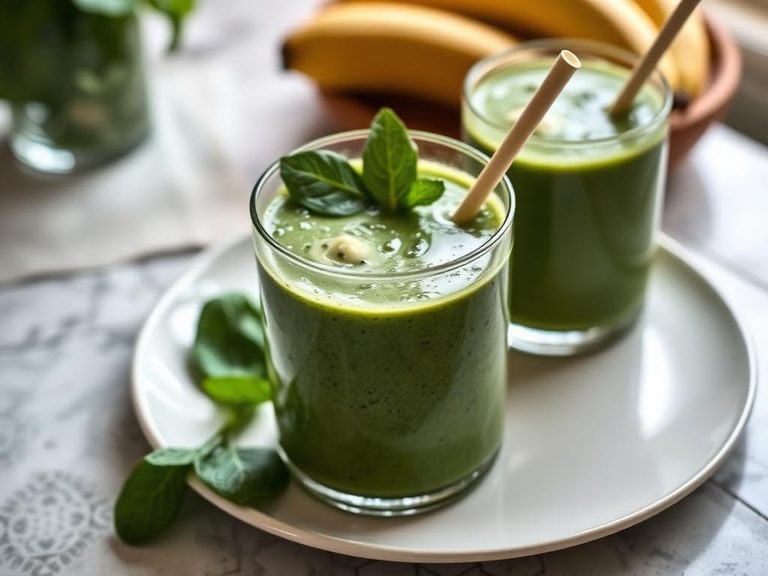
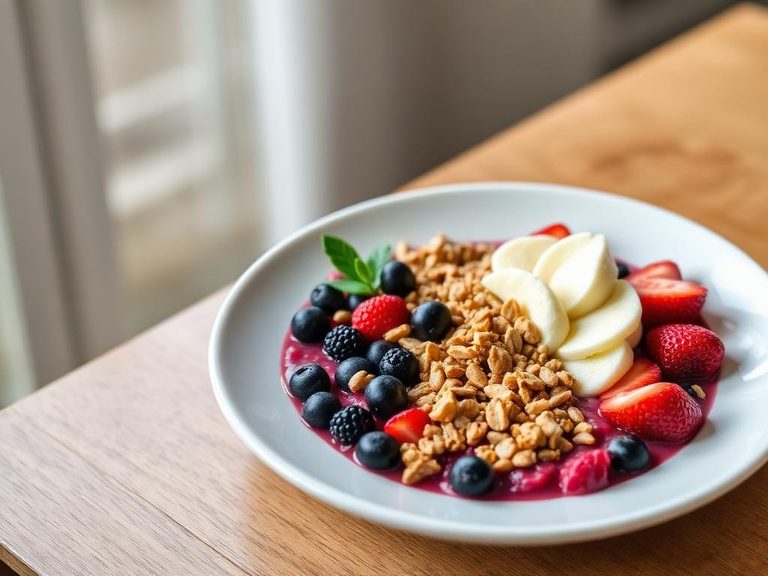
A vibrant, plant-based blend of fruits and vegetables, this smoothie offers a refreshing, slightly sweet, and earthy flavor with a smooth, drinkable texture. It's a nutritional powerhouse, packing a surprising 7.09g of protein per 100g from added sources like pea or soy protein, making it a satisfying, low-fat option. At just 83 kcal, it's a light yet nutrient-dense choice for a quick boost or meal supplement.
Calorie split: 34% protein · 58% carbs · 8% fat
↓ Full nutrition💚 Why it's loved
People love it for its convenient, on-the-go nutrition and the ability to customize flavors with various fruits and veggies. It's a staple in health-conscious and vegan communities, often enjoyed as a post-workout refresher or a quick breakfast.
⚠️ Watch-outs & how to enjoy it better
The added protein can sometimes give a chalky or gritty texture if not blended well, and the natural sugars (7.95g per 100g) may cause blood-sugar spikes for some. To counteract this, pair it with a handful of nuts or seeds for healthy fats and fiber, or choose a lower-sugar fruit base like berries. Always check for common allergens like soy or pea protein if sensitive.
Key benefits
- High protein content for muscle repair and satiety
- Low in fat and calories, supporting weight management
- Good source of natural sugars and fiber for energy
- Dairy-free, making it suitable for lactose-intolerant individuals
- Convenient way to increase fruit and vegetable intake
🍽️ Popular dishes
🌍 Where it's eaten
💡 Did you know?
The concept of blending fruits and vegetables into a drinkable form dates back to the 1930s, but the modern protein-enhanced smoothie boom began in the 1990s with the rise of fitness culture and plant-based protein powders.
Full nutrition (USDA data · scales with serving)
| Water | 78.8 g |
| Energy | 83.0 kcal |
| Protein | 7.1 g |
| Total lipid (fat) | 0.69 g |
| Carbohydrate, by difference | 11.9 g |
| Fiber, total dietary | 1.2 g |
| Total Sugars | 8.0 g |
| Calcium, Ca | 89.0 mg |
| Iron, Fe | 0.35 mg |
| Magnesium, Mg | 43.0 mg |
| Phosphorus, P | 126 mg |
| Potassium, K | 292 mg |
| Sodium, Na | 38.0 mg |
| Zinc, Zn | 0.64 mg |
| Copper, Cu | 0.07 mg |
| Selenium, Se | 2.2 ug |
| Vitamin C, total ascorbic acid | 15.2 mg |
| Thiamin | 0.10 mg |
| Riboflavin | 0.20 mg |
| Niacin | 0.43 mg |
| Vitamin B-6 | 0.16 mg |
| Folate, total | 33.0 ug |
| Folic acid | 0.00 ug |
| Folate, food | 33.0 ug |
| Folate, DFE | 33.0 ug |
| Choline, total | 26.3 mg |
| Vitamin B-12 | 0.26 ug |
| Vitamin B-12, added | 0.07 ug |
| Vitamin A, RAE | 49.0 ug |
| Retinol | 6.0 ug |
| Carotene, beta | 508 ug |
| Carotene, alpha | 4.0 ug |
| Cryptoxanthin, beta | 7.0 ug |
| Lycopene | 0.00 ug |
| Lutein + zeaxanthin | 906 ug |
| Vitamin E (alpha-tocopherol) | 0.76 mg |
| Vitamin E, added | 0.36 mg |
| Vitamin D (D2 + D3) | 0.30 ug |
| Vitamin K (phylloquinone) | 71.7 ug |
| Alcohol, ethyl | 0.00 g |
| Caffeine | 0.00 mg |
| Theobromine | 0.00 mg |
Fat & fatty acid profile (per 100g)
| Fatty acids, total saturated | 0.14 g |
| SFA 4:0 | 0.00 g |
| SFA 6:0 | 0.00 g |
| SFA 8:0 | 0.00 g |
| SFA 10:0 | 0.00 g |
| SFA 12:0 | 0.00 g |
| SFA 14:0 | 0.01 g |
| SFA 16:0 | 0.10 g |
| SFA 18:0 | 0.02 g |
| Fatty acids, total monounsaturated | 0.17 g |
| MUFA 16:1 | 0.01 g |
| MUFA 18:1 | 0.16 g |
| MUFA 20:1 | 0.00 g |
| MUFA 22:1 | 0.00 g |
| Fatty acids, total polyunsaturated | 0.17 g |
| PUFA 18:2 | 0.13 g |
| PUFA 18:3 | 0.05 g |
| PUFA 18:4 | 0.00 g |
| PUFA 20:4 | 0.00 g |
| PUFA 20:5 n-3 (EPA) | 0.00 g |
| PUFA 22:5 n-3 (DPA) | 0.00 g |
| PUFA 22:6 n-3 (DHA) | 0.00 g |
| Cholesterol | 1.0 mg |
FAQ
Is this smoothie suitable for a vegan diet?
Yes, it is non-dairy and uses plant-based protein sources, making it fully vegan-friendly.
How does the protein content compare to regular fruit smoothies?
It has significantly higher protein (7.09g per 100g) than typical fruit smoothies, which often have less than 2g per 100g, thanks to added protein powders.
Can I make this at home without a protein powder?
You can use natural protein sources like Greek yogurt (if not vegan), silken tofu, or a scoop of nut butter, but the texture and nutrition may vary slightly.
Nutrient density (calculated · NRF9.3)
Nutrient Rich Foods index: beneficial nutrients (protein, fiber, vitamins, minerals) minus saturated fat, added sugar & sodium, per 100 kcal.
NRF9.3 index — Fulgoni, Keast & Drewnowski, 2009. Computed from USDA nutrients.
Weight-loss friendliness (composite index)
Energy density 0.83 kcal/g · 34% calories from protein · 1.2 g fiber · 8.0 g sugar per 100 g.
Composite of energy density (Rolls et al., 1999), protein & fiber satiety, minus sugar. A calculated heuristic — ranks satiety-per-calorie, not a clinical measure.
Dietary load (calculated from USDA values)
Potential renal acid load. Positive = acid-forming, negative = alkaline-forming.
Sodium-to-potassium ratio: 0.13 (lower is better — aim for ≤ 1)
Sodium:potassium per WHO potassium guidance. Computed from USDA nutrients.