

Fruit smoothie, with whole fruit and dairy, added protein
Common food

Photo: Wikipedia
A vibrant, drinkable blend of whole fruit, dairy, and added protein, this smoothie offers a creamy, refreshing texture with a natural sweetness from the fruit. Its standout feature is a balanced macronutrient profile, delivering a solid 7.35g of protein per 100g alongside fiber and natural sugars, making it more than just a sweet treat.
Calorie split: 36% protein · 50% carbs · 14% fat
↓ Full nutrition💚 Why it's loved
People love it for its customizable, refreshing taste that feels indulgent yet nutritious, and its role as a quick, satisfying breakfast or post-workout refuel in busy, health-conscious cultures worldwide.
⚠️ Watch-outs & how to enjoy it better
The natural fruit sugars can cause a blood-sugar spike, especially on an empty stomach. To counteract this, pair it with a source of healthy fat (like a handful of nuts) or consume it alongside a meal to slow sugar absorption. Those with dairy or lactose intolerance should use lactose-free milk or a plant-based alternative.
Key benefits
- High-quality protein for muscle repair and satiety
- Natural fruit sugars provide quick energy
- Dairy contributes calcium for bone health
- Whole fruit fiber aids digestion
- Convenient, portable meal or snack
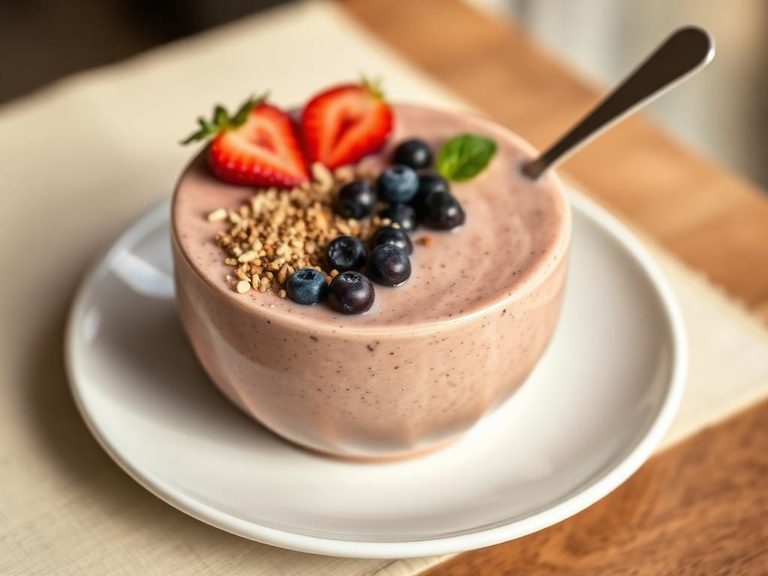
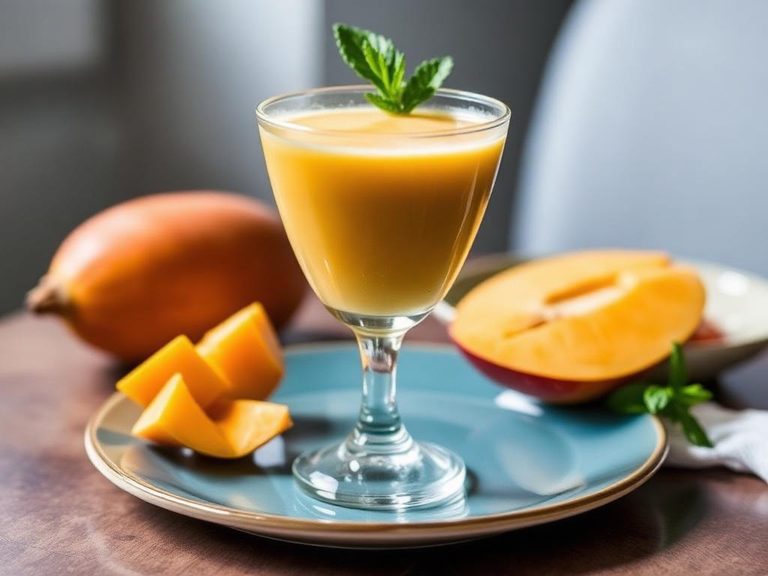
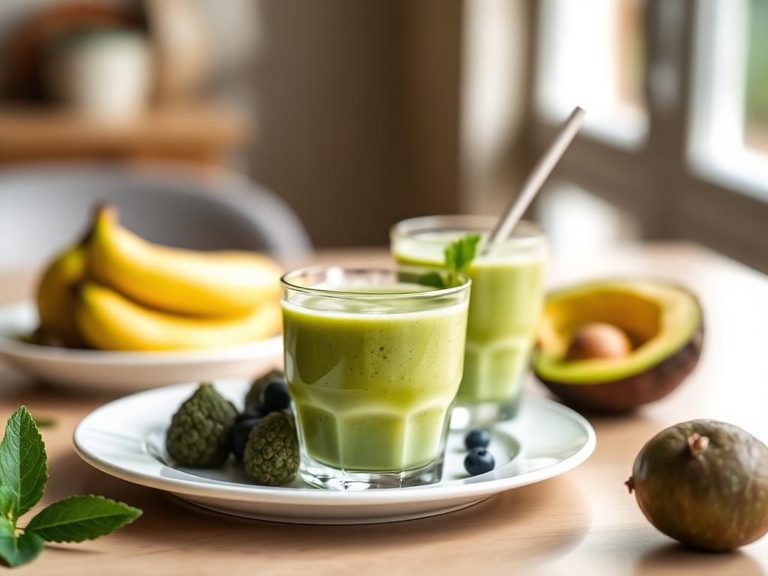
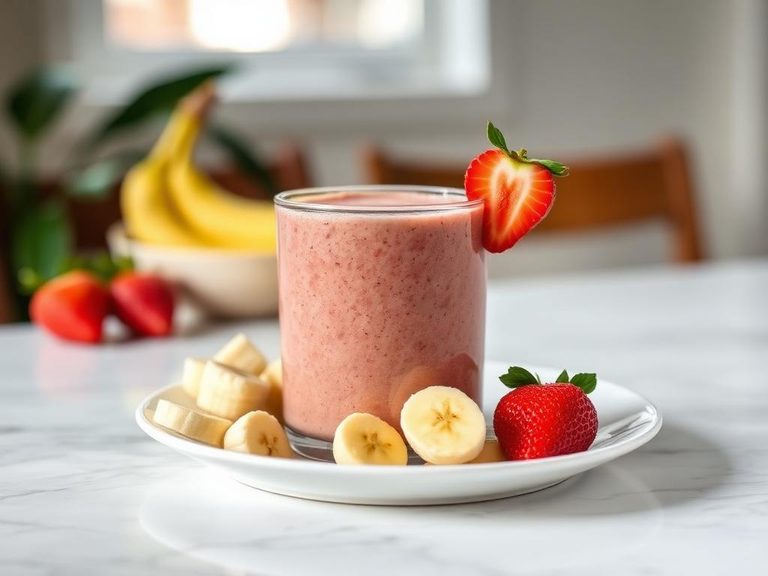
🍽️ Popular dishes
🌍 Where it's eaten
💡 Did you know?
The modern 'smoothie' name and trend was popularized in the U.S. during the 1960s health food movement, but its concept is much older, with blended fruit drinks like Brazilian 'vitaminas' being a daily staple for decades.
Full nutrition (USDA data · scales with serving)
| Water | 80.1 g |
| Energy | 79.0 kcal |
| Protein | 7.3 g |
| Total lipid (fat) | 1.2 g |
| Carbohydrate, by difference | 10.0 g |
| Fiber, total dietary | 1.1 g |
| Total Sugars | 7.4 g |
| Calcium, Ca | 115 mg |
| Iron, Fe | 0.28 mg |
| Magnesium, Mg | 23.0 mg |
| Phosphorus, P | 153 mg |
| Potassium, K | 173 mg |
| Sodium, Na | 40.0 mg |
| Zinc, Zn | 0.77 mg |
| Copper, Cu | 0.03 mg |
| Selenium, Se | 3.3 ug |
| Vitamin C, total ascorbic acid | 8.5 mg |
| Thiamin | 0.08 mg |
| Riboflavin | 0.24 mg |
| Niacin | 0.31 mg |
| Vitamin B-6 | 0.09 mg |
| Folate, total | 10.0 ug |
| Folic acid | 0.00 ug |
| Folate, food | 10.0 ug |
| Folate, DFE | 10.0 ug |
| Choline, total | 25.5 mg |
| Vitamin B-12 | 0.45 ug |
| Vitamin B-12, added | 0.00 ug |
| Vitamin A, RAE | 21.0 ug |
| Retinol | 20.0 ug |
| Carotene, beta | 12.0 ug |
| Carotene, alpha | 0.00 ug |
| Cryptoxanthin, beta | 0.00 ug |
| Lycopene | 0.00 ug |
| Lutein + zeaxanthin | 17.0 ug |
| Vitamin E (alpha-tocopherol) | 0.16 mg |
| Vitamin E, added | 0.00 mg |
| Vitamin D (D2 + D3) | 0.70 ug |
| Vitamin K (phylloquinone) | 3.5 ug |
| Alcohol, ethyl | 0.00 g |
| Caffeine | 0.00 mg |
| Theobromine | 0.00 mg |
Fat & fatty acid profile (per 100g)
| Fatty acids, total saturated | 0.67 g |
| SFA 4:0 | 0.03 g |
| SFA 6:0 | 0.02 g |
| SFA 8:0 | 0.01 g |
| SFA 10:0 | 0.03 g |
| SFA 12:0 | 0.03 g |
| SFA 14:0 | 0.10 g |
| SFA 16:0 | 0.30 g |
| SFA 18:0 | 0.11 g |
| Fatty acids, total monounsaturated | 0.27 g |
| MUFA 16:1 | 0.02 g |
| MUFA 18:1 | 0.25 g |
| MUFA 20:1 | 0.00 g |
| MUFA 22:1 | 0.00 g |
| Fatty acids, total polyunsaturated | 0.11 g |
| PUFA 18:2 | 0.08 g |
| PUFA 18:3 | 0.03 g |
| PUFA 18:4 | 0.00 g |
| PUFA 20:4 | 0.00 g |
| PUFA 20:5 n-3 (EPA) | 0.00 g |
| PUFA 22:5 n-3 (DPA) | 0.00 g |
| PUFA 22:6 n-3 (DHA) | 0.00 g |
| Cholesterol | 5.0 mg |
FAQ
Is this smoothie a complete meal replacement?
It can be a substantial snack or part of a meal, but for a full meal replacement, it may lack sufficient calories, healthy fats, and a broader range of micronutrients unless additional ingredients like oats, nut butter, or seeds are added.
Why is the protein content listed as 'added'?
This indicates the protein comes not just from the whole fruit and dairy (like milk or yogurt), but from an additional source such as whey powder, plant-based protein powder, or Greek yogurt, boosting its total protein content.
How can I reduce the sugar impact without losing sweetness?
Use lower-sugar fruits like berries, add a pinch of cinnamon, or include a source of fat or fiber (like chia seeds or avocado) to blunt the glycemic response.
Nutrient density (calculated · NRF9.3)
Nutrient Rich Foods index: beneficial nutrients (protein, fiber, vitamins, minerals) minus saturated fat, added sugar & sodium, per 100 kcal.
NRF9.3 index — Fulgoni, Keast & Drewnowski, 2009. Computed from USDA nutrients.
Weight-loss friendliness (composite index)
Energy density 0.79 kcal/g · 37% calories from protein · 1.1 g fiber · 7.4 g sugar per 100 g.
Composite of energy density (Rolls et al., 1999), protein & fiber satiety, minus sugar. A calculated heuristic — ranks satiety-per-calorie, not a clinical measure.
Dietary load (calculated from USDA values)
Potential renal acid load. Positive = acid-forming, negative = alkaline-forming.
Sodium-to-potassium ratio: 0.23 (lower is better — aim for ≤ 1)
Sodium:potassium per WHO potassium guidance. Computed from USDA nutrients.