

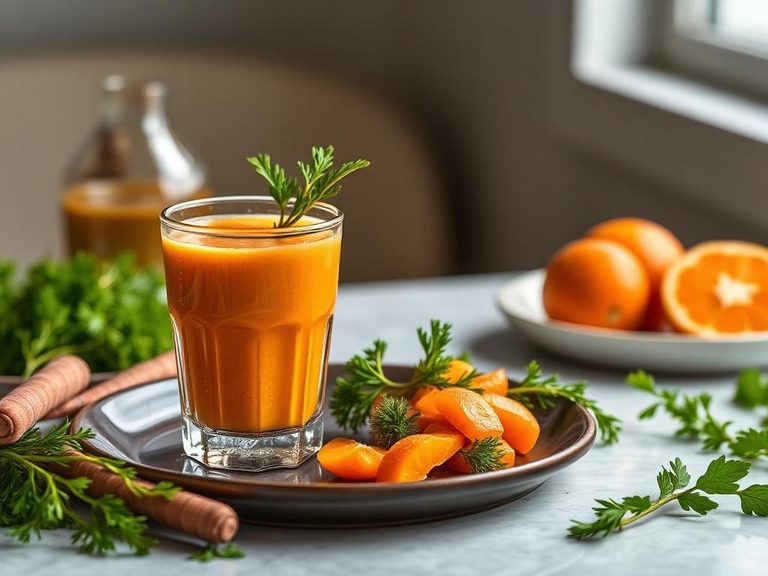
Fruit and vegetable smoothie, non-dairy
Common food

Photo: Wikipedia
This is a light, refreshing blend of pureed fruits and vegetables, typically with a water or juice base, creating a vibrant, smooth texture. Its taste is naturally sweet and tangy, with a clean, hydrating finish that varies by ingredient. Nutritionally, it's exceptionally low in calories and fat while providing a quick source of natural sugars and a modest amount of fiber.
Calorie split: 8% protein · 83% carbs · 9% fat
↓ Full nutrition💚 Why it's loved
People love it for its vibrant, customizable flavors and the refreshing, guilt-free sensation it provides, especially as a quick breakfast or post-workout drink. Its versatility allows for endless combinations, from tropical mango-pineapple to earthy beet-apple blends, making it a staple in health-conscious and on-the-go lifestyles.
⚠️ Watch-outs & how to enjoy it better
The high natural sugar content can cause blood-sugar spikes, particularly for those with insulin sensitivity, and it lacks significant protein or fat for satiety. To counteract this, pair it with a source of protein (like Greek yogurt or nuts) or healthy fat (like chia seeds or avocado) to slow sugar absorption and keep you full longer.
Key benefits
- Quick, low-calorie source of vitamins and antioxidants
- Hydrating and refreshing, ideal for a light snack or meal supplement
- Provides a gentle energy boost from natural fruit sugars
- Supports digestive health with dietary fiber
- Easy way to increase daily fruit and vegetable intake
🍽️ Popular dishes
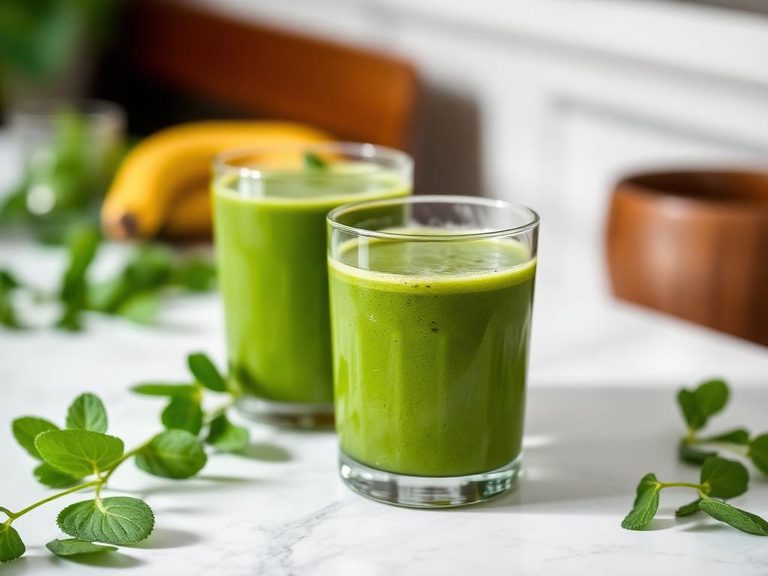
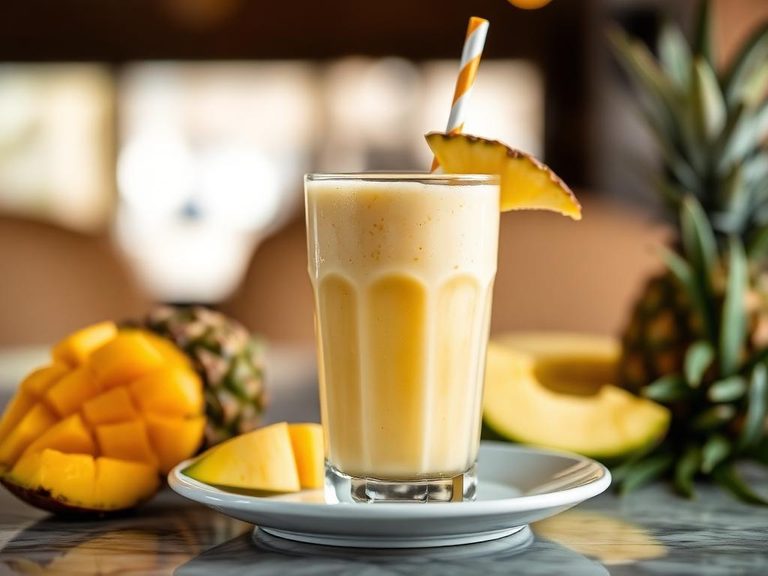
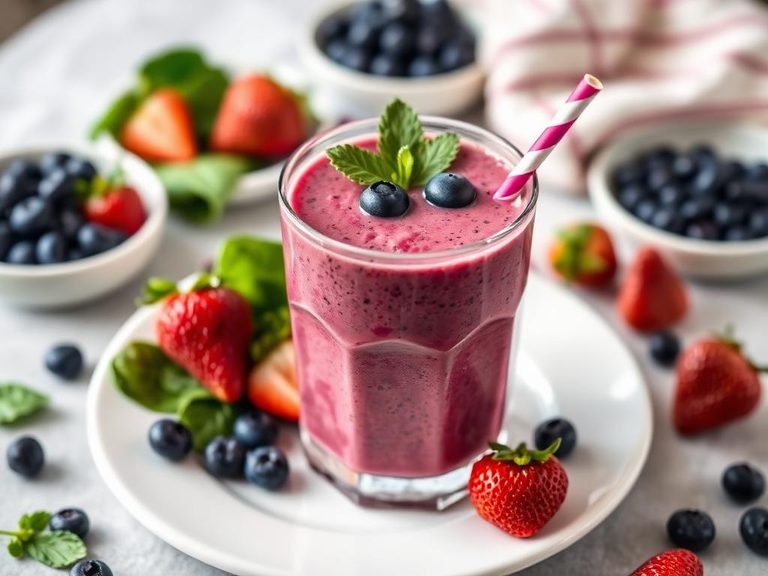
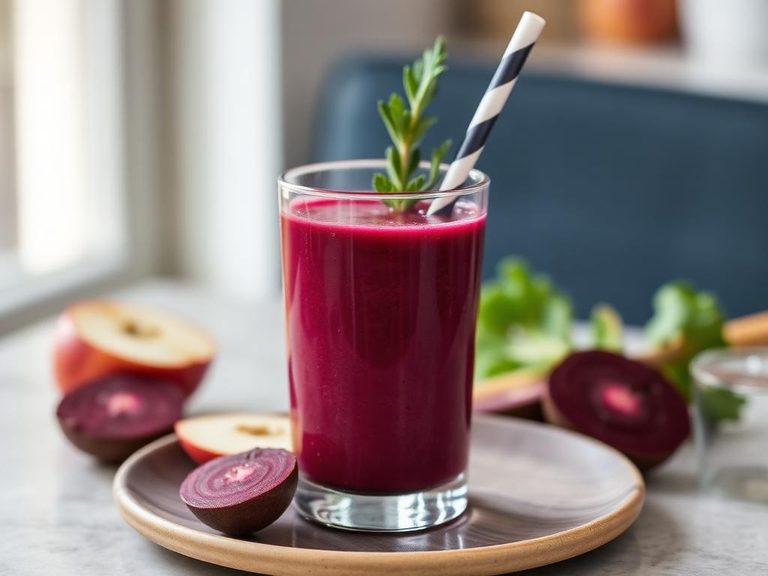
🌍 Where it's eaten
💡 Did you know?
The modern smoothie's popularity exploded in the 1960s and 70s with the rise of health food stores and the invention of the electric blender, but its roots trace back to ancient cultures blending fruits and grains with water.
Full nutrition (USDA data · scales with serving)
| Water | 85.1 g |
| Energy | 60.0 kcal |
| Protein | 1.2 g |
| Total lipid (fat) | 0.61 g |
| Carbohydrate, by difference | 12.4 g |
| Fiber, total dietary | 1.0 g |
| Total Sugars | 8.6 g |
| Calcium, Ca | 58.0 mg |
| Iron, Fe | 0.28 mg |
| Magnesium, Mg | 30.0 mg |
| Phosphorus, P | 26.0 mg |
| Potassium, K | 275 mg |
| Sodium, Na | 28.0 mg |
| Zinc, Zn | 0.18 mg |
| Copper, Cu | 0.07 mg |
| Selenium, Se | 0.20 ug |
| Vitamin C, total ascorbic acid | 16.5 mg |
| Thiamin | 0.06 mg |
| Riboflavin | 0.05 mg |
| Niacin | 0.37 mg |
| Vitamin B-6 | 0.12 mg |
| Folate, total | 33.0 ug |
| Folic acid | 0.00 ug |
| Folate, food | 33.0 ug |
| Folate, DFE | 33.0 ug |
| Choline, total | 9.8 mg |
| Vitamin B-12 | 0.07 ug |
| Vitamin B-12, added | 0.07 ug |
| Vitamin A, RAE | 53.0 ug |
| Retinol | 7.0 ug |
| Carotene, beta | 551 ug |
| Carotene, alpha | 5.0 ug |
| Cryptoxanthin, beta | 7.0 ug |
| Lycopene | 0.00 ug |
| Lutein + zeaxanthin | 982 ug |
| Vitamin E (alpha-tocopherol) | 0.82 mg |
| Vitamin E, added | 0.38 mg |
| Vitamin D (D2 + D3) | 0.30 ug |
| Vitamin K (phylloquinone) | 77.7 ug |
| Alcohol, ethyl | 0.00 g |
| Caffeine | 0.00 mg |
| Theobromine | 0.00 mg |
Fat & fatty acid profile (per 100g)
| Fatty acids, total saturated | 0.09 g |
| SFA 4:0 | 0.00 g |
| SFA 6:0 | 0.00 g |
| SFA 8:0 | 0.00 g |
| SFA 10:0 | 0.00 g |
| SFA 12:0 | 0.00 g |
| SFA 14:0 | 0.00 g |
| SFA 16:0 | 0.07 g |
| SFA 18:0 | 0.01 g |
| Fatty acids, total monounsaturated | 0.17 g |
| MUFA 16:1 | 0.01 g |
| MUFA 18:1 | 0.16 g |
| MUFA 20:1 | 0.00 g |
| MUFA 22:1 | 0.00 g |
| Fatty acids, total polyunsaturated | 0.16 g |
| PUFA 18:2 | 0.12 g |
| PUFA 18:3 | 0.05 g |
| PUFA 18:4 | 0.00 g |
| PUFA 20:4 | 0.00 g |
| PUFA 20:5 n-3 (EPA) | 0.00 g |
| PUFA 22:5 n-3 (DPA) | 0.00 g |
| PUFA 22:6 n-3 (DHA) | 0.00 g |
| Cholesterol | 0.00 mg |
FAQ
Is a fruit and vegetable smoothie a meal replacement?
While it can be part of a meal, this low-calorie, low-protein version is better suited as a snack or supplement. For a full meal, add protein (like yogurt or protein powder) and healthy fats (like nut butter or seeds) to increase satiety and nutritional balance.
Can I drink this smoothie if I'm watching my sugar intake?
Yes, but be mindful. The 8.62g of sugar per 100g comes from natural fruit sugars. To manage intake, choose lower-sugar fruits (like berries) and pair the smoothie with protein or fat to moderate blood sugar response.
How does this smoothie compare to a fruit juice?
Unlike juice, this smoothie retains the fiber from whole fruits and vegetables, which slows sugar absorption and aids digestion. However, it's still lower in protein and fat than a balanced meal, so it's best enjoyed as part of a varied diet.
Nutrient density (calculated · NRF9.3)
Nutrient Rich Foods index: beneficial nutrients (protein, fiber, vitamins, minerals) minus saturated fat, added sugar & sodium, per 100 kcal.
NRF9.3 index — Fulgoni, Keast & Drewnowski, 2009. Computed from USDA nutrients.
Weight-loss friendliness (composite index)
Energy density 0.60 kcal/g · 8% calories from protein · 1.0 g fiber · 8.6 g sugar per 100 g.
Composite of energy density (Rolls et al., 1999), protein & fiber satiety, minus sugar. A calculated heuristic — ranks satiety-per-calorie, not a clinical measure.
Dietary load (calculated from USDA values)
Potential renal acid load. Positive = acid-forming, negative = alkaline-forming.
Sodium-to-potassium ratio: 0.10 (lower is better — aim for ≤ 1)
Sodium:potassium per WHO potassium guidance. Computed from USDA nutrients.