

Fruit Smoothie
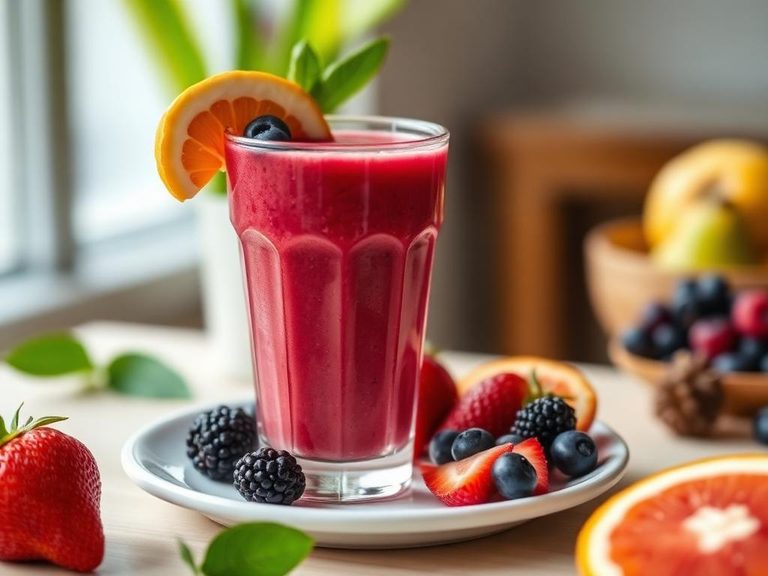
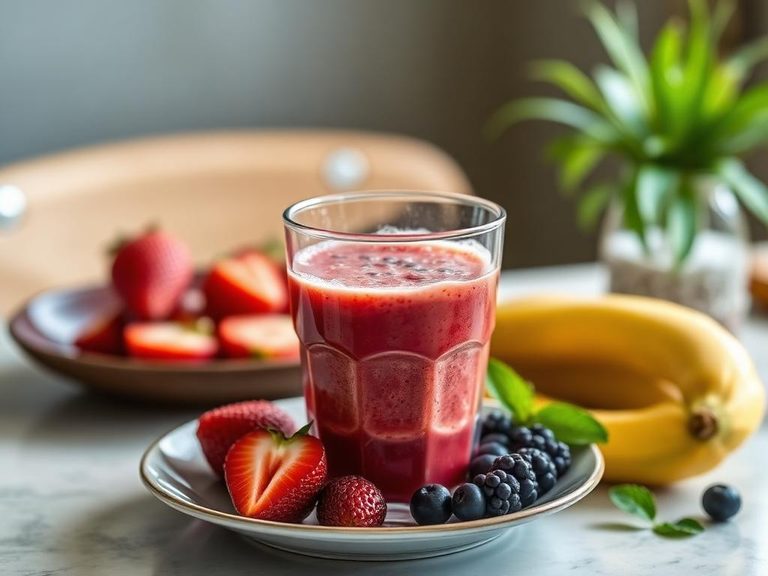
A fruit smoothie is a blended beverage made from fresh or frozen fruits, often combined with a liquid base like water, juice, or milk, and sometimes enhanced with yogurt, seeds, or sweeteners. It originated in the United States during the health food movement of the 1960s and has since become a global staple for quick, refreshing nutrition.
🍳 View the full Fruit Smoothie recipe →
🍽️ Nutrition at a glance
Fruit smoothies are typically high in natural carbohydrates from fruit sugars and fiber, with moderate protein if yogurt or protein powder is added, and low in fat unless ingredients like nut butters are included. They provide key nutrients such as vitamin C, potassium, and antioxidants, with a typical serving ranging from 150 to 300 calories depending on ingredients.
Nutrition breakdown
| Calories | 150 kcal |
| Protein | 2 g |
| Carbs | 35 g |
| Fat | 1 g |
| Fiber | 4 g |
| Sugar | 25 g |
| Sodium | 15 mg |
| Vitamin C | 45 mg |
| Potassium | 400 mg |
| Vitamin A | 120 mcg |
| Vitamin K | 15 mcg |
| Folate | 50 mcg |
| Magnesium | 30 mg |
| Manganese | 0.5 mg |
| Vitamin B6 | 0.2 mg |
Per 1 cup (240 g) · estimated, varies by recipe
💡 What's interesting
Culturally, smoothies symbolize modern wellness trends and are often customized to reflect local fruit availability, like tropical versions in Southeast Asia or berry-based ones in North America. Nutritionally, they offer a convenient way to consume multiple fruit servings in one drink, though blending can reduce fiber's textural benefits compared to whole fruit.
🍽️ Related dishes
AI estimate may be inaccurate · Terms