

Fruit juice drink, diet
Common food

Photo: Wikipedia
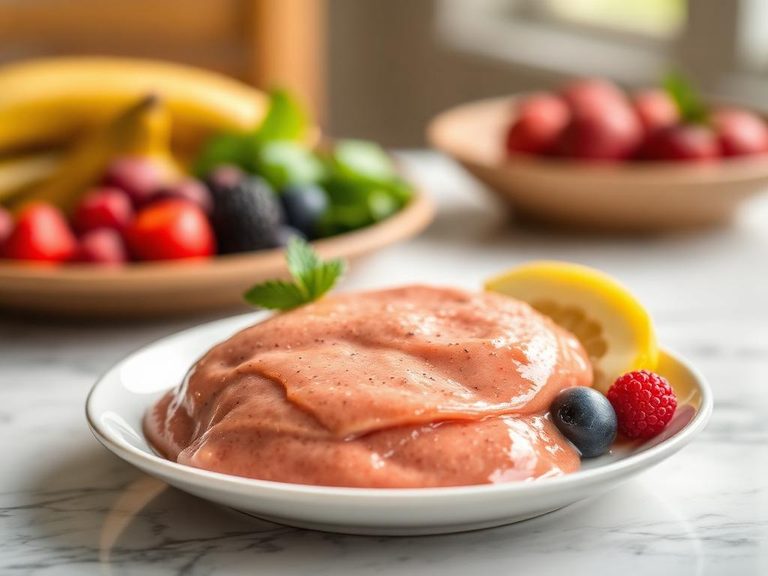
A diet fruit juice drink is a clear, often brightly colored beverage engineered to mimic the taste of fruit juice without the calories. Its flavor is typically sweet and fruity, achieved through high-intensity sweeteners, with a thin, watery texture identical to water. Nutritionally, it is a near-zero-calorie option, providing minimal carbohydrates and no protein, fat, or fiber.
Calorie split: 0% protein · 100% carbs · 0% fat
↓ Full nutrition💚 Why it's loved
People love it for delivering a burst of sweet, fruity flavor—like lemon-lime, orange, or berry—without the guilt of sugar and calories. It's a popular, versatile mixer for cocktails and mocktails, and a staple in many households as a refreshing, guilt-free treat.
⚠️ Watch-outs & how to enjoy it better
Some may experience a lingering aftertaste from artificial sweeteners or find the lack of body unsatisfying. Those with phenylketonuria (PKU) must avoid it if sweetened with aspartame. To counteract any potential digestive discomfort from sugar alcohols (if used), start with a small portion. For a more satisfying drink, consider adding a splash of 100% juice or infusing with fresh fruit slices.
Key benefits
- Provides a sweet taste with virtually no calories.
- Helps reduce overall sugar and calorie intake compared to regular juice.
- Offers hydration similar to water.
- Can satisfy a craving for sweet, fruity flavors.
- Useful in calorie-controlled diets or for managing blood sugar levels.
🍽️ Popular dishes
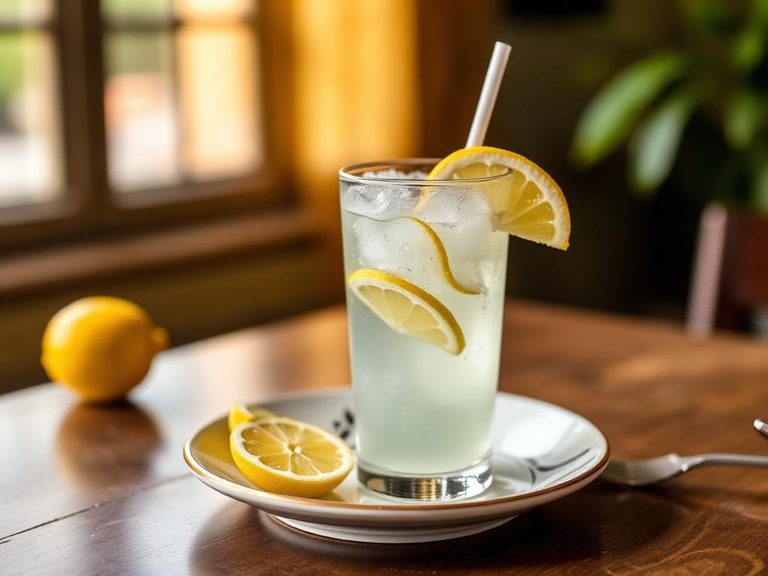
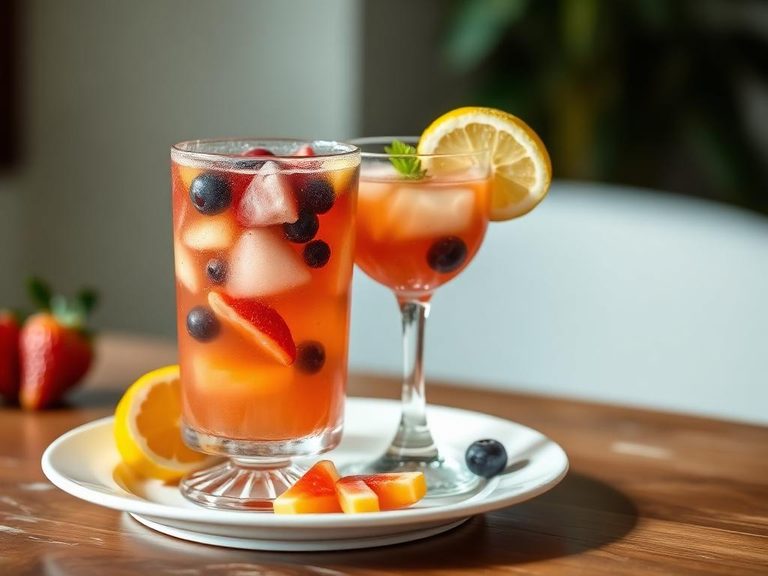
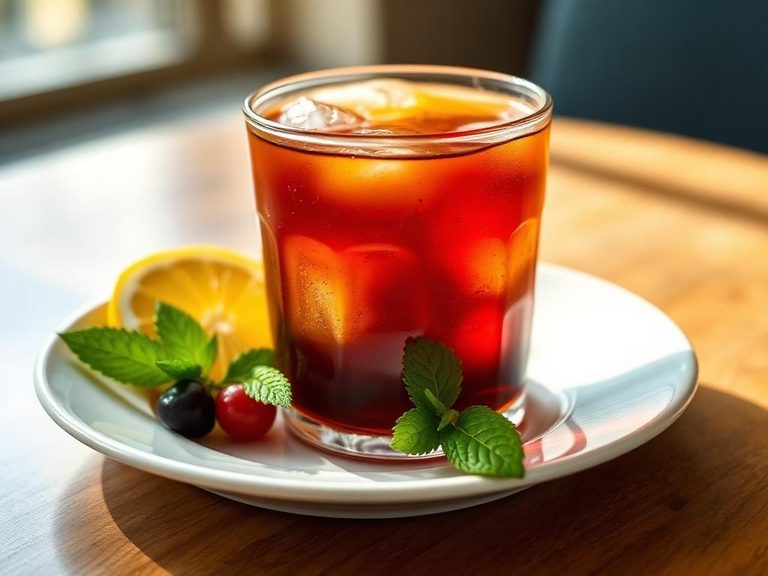
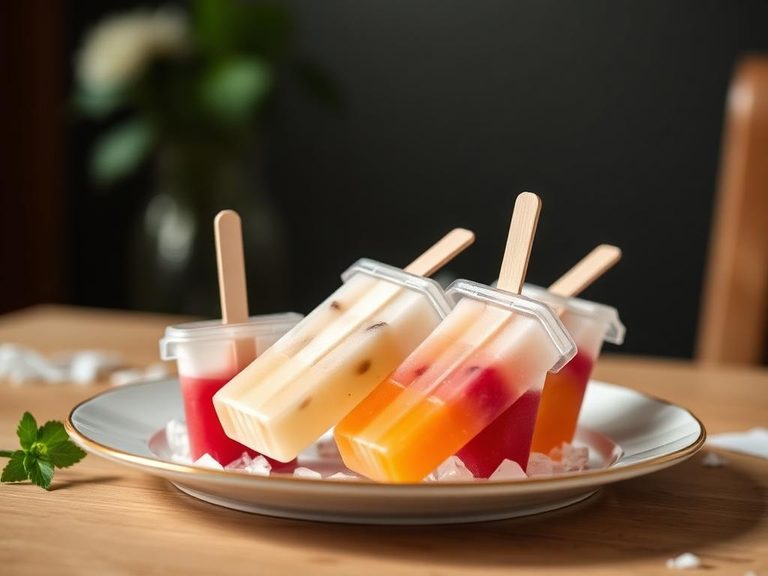
🌍 Where it's eaten
💡 Did you know?
The first diet soft drink, 'No-Cal,' was introduced in 1952, paving the way for the entire category of zero-calorie flavored beverages, including diet fruit drinks.
Full nutrition (USDA data · scales with serving)
| Water | 99.4 g |
| Energy | 1.0 kcal |
| Protein | 0.00 g |
| Total lipid (fat) | 0.00 g |
| Carbohydrate, by difference | 0.47 g |
| Fiber, total dietary | 0.00 g |
| Total Sugars | 0.00 g |
| Calcium, Ca | 9.0 mg |
| Iron, Fe | 0.00 mg |
| Magnesium, Mg | 1.0 mg |
| Phosphorus, P | 7.0 mg |
| Potassium, K | 4.0 mg |
| Sodium, Na | 5.0 mg |
| Zinc, Zn | 0.00 mg |
| Copper, Cu | 0.01 mg |
| Selenium, Se | 0.00 ug |
| Vitamin C, total ascorbic acid | 3.0 mg |
| Thiamin | 0.00 mg |
| Riboflavin | 0.00 mg |
| Niacin | 0.00 mg |
| Vitamin B-6 | 0.00 mg |
| Folate, total | 0.00 ug |
| Folic acid | 0.00 ug |
| Folate, food | 0.00 ug |
| Folate, DFE | 0.00 ug |
| Choline, total | 0.00 mg |
| Vitamin B-12 | 0.00 ug |
| Vitamin B-12, added | 0.00 ug |
| Vitamin A, RAE | 0.00 ug |
| Retinol | 0.00 ug |
| Carotene, beta | 0.00 ug |
| Carotene, alpha | 0.00 ug |
| Cryptoxanthin, beta | 0.00 ug |
| Lycopene | 0.00 ug |
| Lutein + zeaxanthin | 0.00 ug |
| Vitamin E (alpha-tocopherol) | 0.00 mg |
| Vitamin E, added | 0.00 mg |
| Vitamin D (D2 + D3) | 0.00 ug |
| Vitamin K (phylloquinone) | 0.00 ug |
| Alcohol, ethyl | 0.00 g |
| Caffeine | 0.00 mg |
| Theobromine | 0.00 mg |
Fat & fatty acid profile (per 100g)
| Fatty acids, total saturated | 0.00 g |
| SFA 4:0 | 0.00 g |
| SFA 6:0 | 0.00 g |
| SFA 8:0 | 0.00 g |
| SFA 10:0 | 0.00 g |
| SFA 12:0 | 0.00 g |
| SFA 14:0 | 0.00 g |
| SFA 16:0 | 0.00 g |
| SFA 18:0 | 0.00 g |
| Fatty acids, total monounsaturated | 0.00 g |
| MUFA 16:1 | 0.00 g |
| MUFA 18:1 | 0.00 g |
| MUFA 20:1 | 0.00 g |
| MUFA 22:1 | 0.00 g |
| Fatty acids, total polyunsaturated | 0.00 g |
| PUFA 18:2 | 0.00 g |
| PUFA 18:3 | 0.00 g |
| PUFA 18:4 | 0.00 g |
| PUFA 20:4 | 0.00 g |
| PUFA 20:5 n-3 (EPA) | 0.00 g |
| PUFA 22:5 n-3 (DPA) | 0.00 g |
| PUFA 22:6 n-3 (DHA) | 0.00 g |
| Cholesterol | 0.00 mg |
Amino acid profile (per 100g)
Estimated from Babyfood, juice treats, fruit medley, toddler — USDA does not publish this profile for Fruit juice drink.
| Tryptophan | 0.00 g |
| Threonine | 0.00 g |
| Isoleucine | 0.00 g |
| Leucine | 0.00 g |
| Lysine | 0.00 g |
| Methionine | 0.00 g |
| Cystine | 0.00 g |
| Phenylalanine | 0.00 g |
| Tyrosine | 0.00 g |
| Valine | 0.00 g |
| Arginine | 0.00 g |
| Histidine | 0.00 g |
| Alanine | 0.00 g |
| Aspartic acid | 0.00 g |
| Glutamic acid | 0.00 g |
| Glycine | 0.00 g |
| Proline | 0.00 g |
| Serine | 0.00 g |
FAQ
Does diet fruit juice drink have any vitamins?
Typically, no. It is formulated for flavor and low calories, not nutrition. It does not contain the vitamins, minerals, or phytonutrients found in whole fruit or 100% juice.
Is it better than regular fruit juice for weight loss?
Yes, from a calorie perspective. It provides the sweet taste with 1 kcal per 100g versus the ~45 kcal and ~10g of sugar in regular orange juice, making it easier to stay in a calorie deficit.
Can I cook or bake with it?
You can, but it won't provide sugar for browning or structure. It works best in glazes, marinades, or to add fruity flavor to syrups where the sweetener's stability under heat is a consideration.
Nutrient density (calculated · NRF9.3)
Nutrient Rich Foods index: beneficial nutrients (protein, fiber, vitamins, minerals) minus saturated fat, added sugar & sodium, per 100 kcal.
NRF9.3 index — Fulgoni, Keast & Drewnowski, 2009. Computed from USDA nutrients.
Weight-loss friendliness (composite index)
Energy density 0.01 kcal/g · 0% calories from protein · 0.0 g fiber · 0.0 g sugar per 100 g.
Composite of energy density (Rolls et al., 1999), protein & fiber satiety, minus sugar. A calculated heuristic — ranks satiety-per-calorie, not a clinical measure.
Dietary load (calculated from USDA values)
Potential renal acid load. Positive = acid-forming, negative = alkaline-forming.
Sodium-to-potassium ratio: 1.25 (lower is better — aim for ≤ 1)
Sodium:potassium per WHO potassium guidance. Computed from USDA nutrients.