

Fish, salmon, smoked
Common food

Photo: Wikipedia
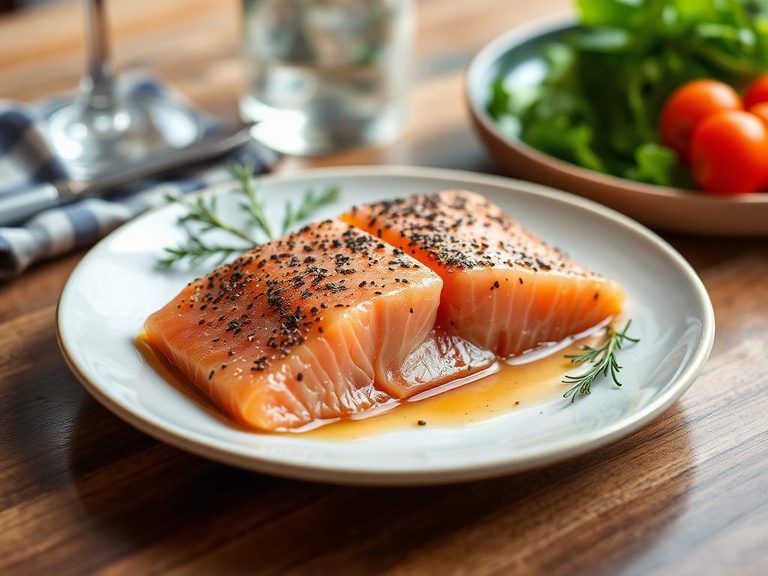
Smoked salmon is a delicacy of salmon fillets cured in salt and cold-smoked, yielding a silky, buttery texture with a deep, woodsy aroma. Its flavor is rich and savory, often described as a luxurious blend of ocean brine and subtle smokiness. Nutritionally, it's a powerhouse of high-quality protein and heart-healthy omega-3 fats, with virtually no carbohydrates.
Calorie split: 65% protein · 0% carbs · 35% fat
↓ Full nutrition💚 Why it's loved
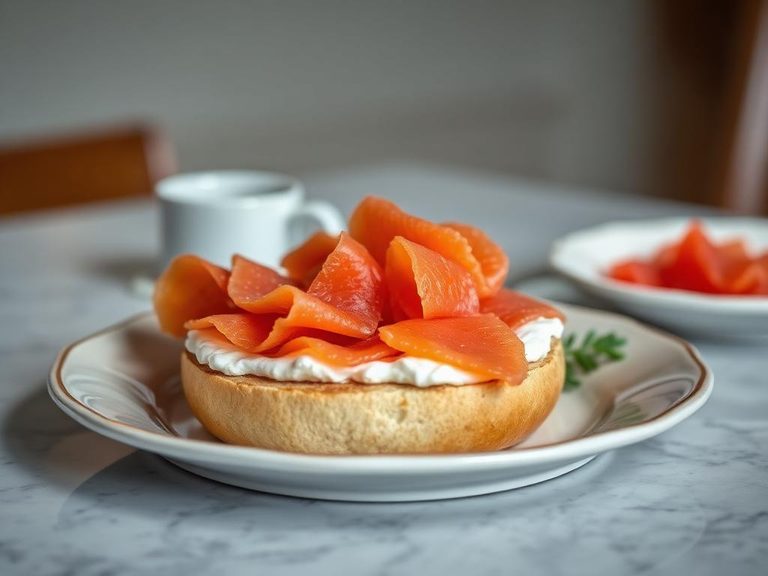
People love it for its complex, umami-rich flavor and melt-in-your-mouth texture that feels indulgent yet wholesome. It's celebrated for its incredible versatility, elevating everything from a simple bagel topping to an elegant canapé.
⚠️ Watch-outs & how to enjoy it better
The primary concern is its high sodium content from the curing process, which can be an issue for those monitoring blood pressure. As a common fish allergen, it must be avoided by those with salmon or fish allergies. To counteract sodium, pair it with potassium-rich foods like avocado or cucumber, and practice portion control by enjoying it as a flavor accent rather than the main protein.
Key benefits
- Excellent source of complete protein (18g per 100g)
- Rich in omega-3 fatty acids EPA and DHA
- Contains vitamin D, crucial for bone and immune health
- Provides B vitamins like B12 and niacin for energy metabolism
- Low in carbohydrates, suitable for low-carb diets
🍽️ Popular dishes

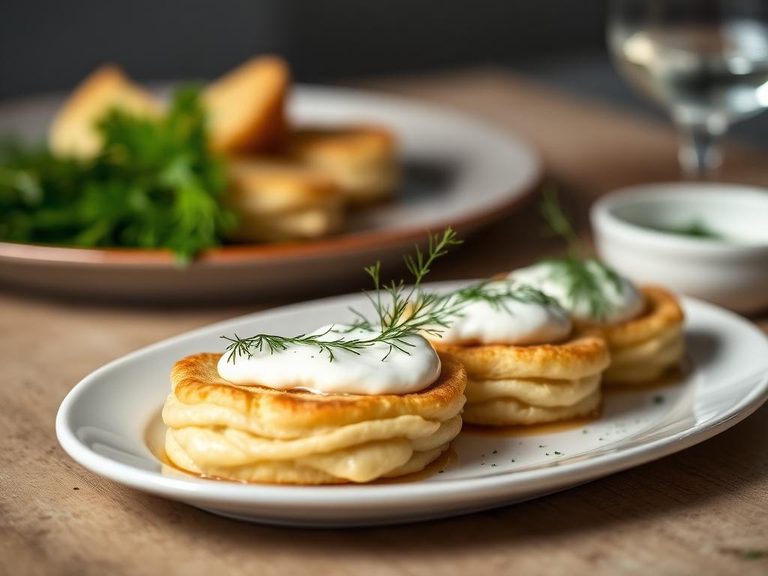
🌍 Where it's eaten
💡 Did you know?
The traditional method of smoking salmon over alder wood in the Pacific Northwest wasn't just for flavor; the phenols in the smoke acted as a natural antimicrobial, preserving the fish for months without refrigeration.
Full nutrition (USDA data · scales with serving)
| Water | 72.0 g |
| Energy | 117 kcal |
| Protein | 18.3 g |
| Total lipid (fat) | 4.3 g |
| Carbohydrate, by difference | 0.00 g |
| Fiber, total dietary | 0.00 g |
| Total Sugars | 0.00 g |
| Calcium, Ca | 11.0 mg |
| Iron, Fe | 0.85 mg |
| Magnesium, Mg | 18.0 mg |
| Phosphorus, P | 164 mg |
| Potassium, K | 175 mg |
| Sodium, Na | 672 mg |
| Zinc, Zn | 0.31 mg |
| Copper, Cu | 0.23 mg |
| Selenium, Se | 32.4 ug |
| Vitamin C, total ascorbic acid | 0.00 mg |
| Thiamin | 0.02 mg |
| Riboflavin | 0.10 mg |
| Niacin | 4.7 mg |
| Vitamin B-6 | 0.28 mg |
| Folate, total | 2.0 ug |
| Folic acid | 0.00 ug |
| Folate, food | 2.0 ug |
| Folate, DFE | 2.0 ug |
| Choline, total | 89.0 mg |
| Vitamin B-12 | 3.3 ug |
| Vitamin B-12, added | 0.00 ug |
| Vitamin A, RAE | 26.0 ug |
| Retinol | 26.0 ug |
| Carotene, beta | 0.00 ug |
| Carotene, alpha | 0.00 ug |
| Cryptoxanthin, beta | 0.00 ug |
| Lycopene | 0.00 ug |
| Lutein + zeaxanthin | 0.00 ug |
| Vitamin E (alpha-tocopherol) | 1.4 mg |
| Vitamin E, added | 0.00 mg |
| Vitamin D (D2 + D3) | 17.1 ug |
| Vitamin K (phylloquinone) | 0.10 ug |
| Alcohol, ethyl | 0.00 g |
| Caffeine | 0.00 mg |
| Theobromine | 0.00 mg |
Fat & fatty acid profile (per 100g)
| Fatty acids, total saturated | 0.93 g |
| SFA 4:0 | 0.00 g |
| SFA 6:0 | 0.00 g |
| SFA 8:0 | 0.00 g |
| SFA 10:0 | 0.00 g |
| SFA 12:0 | 0.00 g |
| SFA 14:0 | 0.18 g |
| SFA 16:0 | 0.56 g |
| SFA 18:0 | 0.19 g |
| Fatty acids, total monounsaturated | 2.0 g |
| MUFA 16:1 | 0.30 g |
| MUFA 18:1 | 0.95 g |
| MUFA 20:1 | 0.47 g |
| MUFA 22:1 | 0.30 g |
| Fatty acids, total polyunsaturated | 0.99 g |
| PUFA 18:2 | 0.47 g |
| PUFA 18:3 | 0.00 g |
| PUFA 18:4 | 0.00 g |
| PUFA 20:4 | 0.00 g |
| PUFA 20:5 n-3 (EPA) | 0.18 g |
| PUFA 22:5 n-3 (DPA) | 0.07 g |
| PUFA 22:6 n-3 (DHA) | 0.27 g |
| Cholesterol | 23.0 mg |
Amino acid profile (per 100g)
Estimated from Fish, fish sticks, frozen, prepared — USDA does not publish this profile for Fish.
| Tryptophan | 0.12 g |
| Threonine | 0.37 g |
| Isoleucine | 0.43 g |
| Leucine | 0.85 g |
| Lysine | 0.80 g |
| Methionine | 0.30 g |
| Phenylalanine | 0.47 g |
| Tyrosine | 0.29 g |
| Valine | 0.50 g |
| Arginine | 0.59 g |
| Histidine | 0.23 g |
| Alanine | 0.55 g |
| Aspartic acid | 0.82 g |
| Glutamic acid | 2.3 g |
| Glycine | 0.47 g |
| Proline | 0.78 g |
| Serine | 0.49 g |
| Hydroxyproline | 0.00 g |
FAQ
What's the difference between hot-smoked and cold-smoked salmon?
Cold-smoked salmon (like traditional lox) is cured and smoked at low temperatures (below 80°F/27°C), so it remains raw, silky, and translucent. Hot-smoked salmon is cooked through during smoking at higher temperatures (120-180°F/49-82°C), resulting in a flaky, opaque, and more robust texture.
Is smoked salmon safe to eat during pregnancy?
Generally, yes. Commercially prepared, refrigerated smoked salmon is considered safe. However, it's advised to avoid 'freshly caught and smoked' varieties from local sources due to potential parasites, and to ensure it's stored and served properly.
How should I store opened smoked salmon?
Re-wrap the original packaging tightly or place it in an airtight container. Store it in the coldest part of the refrigerator (not the door) and consume within 3-5 days. For longer storage, it can be frozen for up to 2 months, though the texture may become slightly softer upon thawing.
Nutrient density (calculated · NRF9.3)
Nutrient Rich Foods index: beneficial nutrients (protein, fiber, vitamins, minerals) minus saturated fat, added sugar & sodium, per 100 kcal.
NRF9.3 index — Fulgoni, Keast & Drewnowski, 2009. Computed from USDA nutrients.
Weight-loss friendliness (composite index)
Energy density 1.17 kcal/g · 62% calories from protein · 0.0 g fiber · 0.0 g sugar per 100 g.
Composite of energy density (Rolls et al., 1999), protein & fiber satiety, minus sugar. A calculated heuristic — ranks satiety-per-calorie, not a clinical measure.
Dietary load (calculated from USDA values)
Potential renal acid load. Positive = acid-forming, negative = alkaline-forming.
Sodium-to-potassium ratio: 3.84 (lower is better — aim for ≤ 1)
Sodium:potassium per WHO potassium guidance. Computed from USDA nutrients.