

Egg, whole, fried with margarine
Common food

Photo: Wikipedia
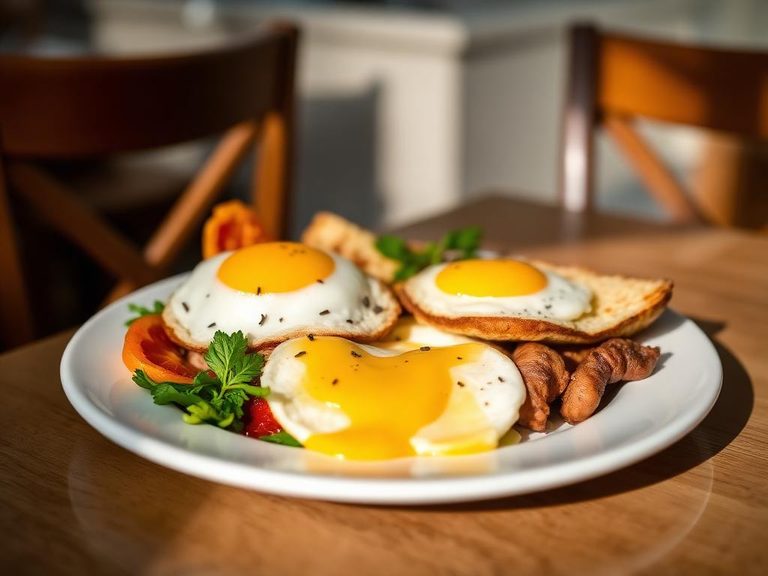
A whole egg fried in margarine develops a beautifully crisp, lacy edge and a rich, savory flavor, with a yolk that ranges from gloriously runny to fully set. Nutritionally, it's a powerhouse of high-quality protein and healthy fats, providing sustained energy with virtually no carbohydrates.
Calorie split: 27% protein · 2% carbs · 71% fat
↓ Full nutrition💚 Why it's loved
People adore it for its unmatched simplicity and comforting, savory flavor that forms the foundation of countless breakfasts worldwide. The contrast between the crispy, golden edges and the rich, creamy yolk is a textural delight that feels both humble and indulgent.
⚠️ Watch-outs & how to enjoy it better
Fried in margarine, it can be higher in saturated and trans fats compared to other cooking methods, which may be a concern for heart health. Those watching their cholesterol intake should be mindful of portion frequency. To counteract, consider using a non-stick pan with minimal fat, or pairing it with fiber-rich vegetables like spinach or tomatoes to balance the meal.
Key benefits
- Excellent source of complete protein (11.57g per 100g)
- Rich in essential vitamins like B12, D, and riboflavin
- Provides choline, crucial for brain and liver health
- High in satiating fats to promote fullness
- Zero carbs, making it ideal for low-carb diets
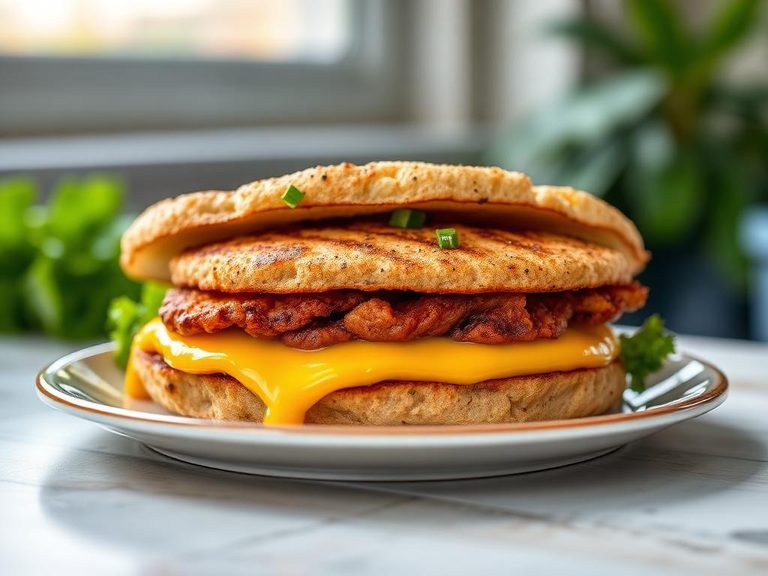
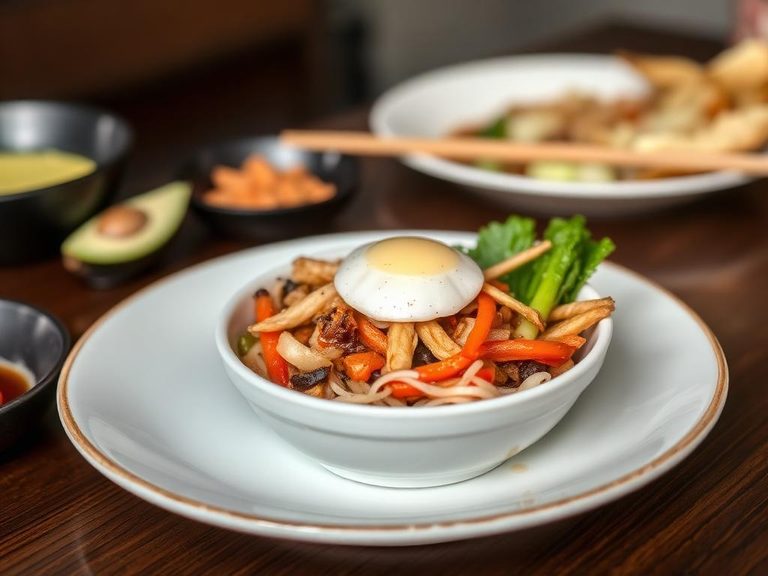
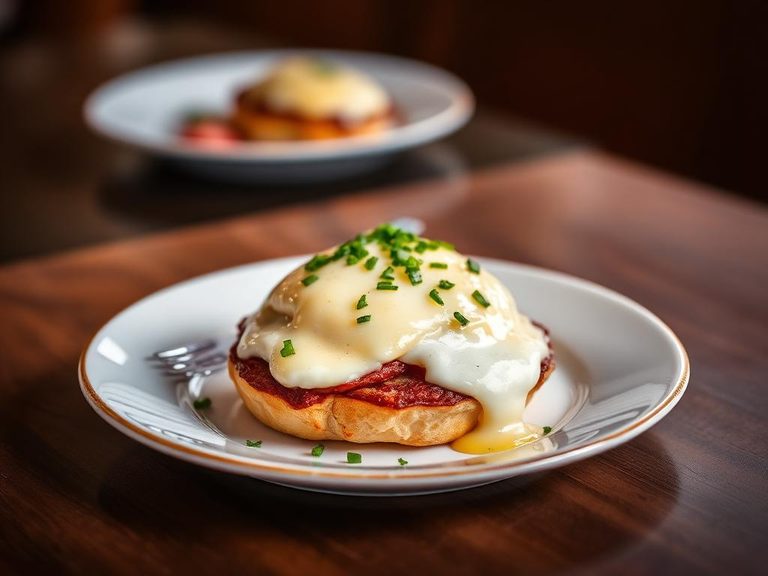
🍽️ Popular dishes

🌍 Where it's eaten
💡 Did you know?
The Maillard reaction between the egg's proteins and the margarine's milk solids is what creates the distinctive savory, nutty aroma and crispy brown edges of a perfectly fried egg.
Full nutrition (USDA data · scales with serving)
| Water | 72.8 g |
| Energy | 171 kcal |
| Protein | 11.6 g |
| Total lipid (fat) | 13.5 g |
| Carbohydrate, by difference | 0.95 g |
| Fiber, total dietary | 0.00 g |
| Total Sugars | 0.19 g |
| Calcium, Ca | 46.0 mg |
| Iron, Fe | 1.6 mg |
| Magnesium, Mg | 10.0 mg |
| Phosphorus, P | 172 mg |
| Potassium, K | 125 mg |
| Sodium, Na | 274 mg |
| Zinc, Zn | 1.2 mg |
| Copper, Cu | 0.00 mg |
| Selenium, Se | 29.0 ug |
| Vitamin C, total ascorbic acid | 0.00 mg |
| Thiamin | 0.06 mg |
| Riboflavin | 0.37 mg |
| Niacin | 0.00 mg |
| Vitamin B-6 | 0.24 mg |
| Folate, total | 50.0 ug |
| Folic acid | 0.00 ug |
| Folate, food | 50.0 ug |
| Folate, DFE | 50.0 ug |
| Choline, total | 251 mg |
| Vitamin B-12 | 0.76 ug |
| Vitamin B-12, added | 0.00 ug |
| Vitamin A, RAE | 221 ug |
| Retinol | 217 ug |
| Carotene, beta | 40.0 ug |
| Carotene, alpha | 0.00 ug |
| Cryptoxanthin, beta | 12.0 ug |
| Lycopene | 0.00 ug |
| Lutein + zeaxanthin | 469 ug |
| Vitamin E (alpha-tocopherol) | 2.2 mg |
| Vitamin E, added | 0.00 mg |
| Vitamin D (D2 + D3) | 2.6 ug |
| Vitamin K (phylloquinone) | 6.8 ug |
| Alcohol, ethyl | 0.00 g |
| Caffeine | 0.00 mg |
| Theobromine | 0.00 mg |
Fat & fatty acid profile (per 100g)
| Fatty acids, total saturated | 3.8 g |
| SFA 4:0 | 0.00 g |
| SFA 6:0 | 0.00 g |
| SFA 8:0 | 0.00 g |
| SFA 10:0 | 0.00 g |
| SFA 12:0 | 0.01 g |
| SFA 14:0 | 0.04 g |
| SFA 16:0 | 2.6 g |
| SFA 18:0 | 1.1 g |
| Fatty acids, total monounsaturated | 5.0 g |
| MUFA 16:1 | 0.23 g |
| MUFA 18:1 | 4.7 g |
| MUFA 20:1 | 0.01 g |
| MUFA 22:1 | 0.00 g |
| Fatty acids, total polyunsaturated | 3.4 g |
| PUFA 18:2 | 2.9 g |
| PUFA 18:3 | 0.18 g |
| PUFA 18:4 | 0.00 g |
| PUFA 20:4 | 0.00 g |
| PUFA 20:5 n-3 (EPA) | 0.00 g |
| PUFA 22:5 n-3 (DPA) | 0.00 g |
| PUFA 22:6 n-3 (DHA) | 0.00 g |
| Cholesterol | 383 mg |
Amino acid profile (per 100g)
Estimated from Fish, whitefish, eggs (Alaska Native) — USDA does not publish this profile for Egg.
| Tryptophan | 0.28 g |
| Threonine | 1.0 g |
| Isoleucine | 1.1 g |
| Leucine | 1.6 g |
| Lysine | 1.6 g |
| Methionine | 0.56 g |
| Cystine | 0.23 g |
| Phenylalanine | 0.90 g |
| Tyrosine | 0.76 g |
| Valine | 1.3 g |
| Arginine | 1.1 g |
| Histidine | 0.53 g |
| Alanine | 1.6 g |
| Aspartic acid | 1.6 g |
| Glutamic acid | 2.2 g |
| Glycine | 0.50 g |
| Proline | 1.1 g |
| Serine | 1.2 g |
FAQ
How does frying in margarine affect nutrition vs. butter or oil?
Margarine is plant-based, so it typically has less saturated fat than butter but may contain trans fats depending on the type. It has a higher smoke point than butter, making it less likely to burn. Nutritionally, it adds similar calories and fat as other cooking fats.
Is the protein in a fried egg as good as a boiled egg?
Yes, the protein quality and digestibility remain excellent regardless of cooking method. Frying may cause a very slight reduction in heat-sensitive vitamins like B12, but it's still a highly nutritious preparation.
Can I reduce the fat content when frying an egg?
Absolutely. Use a high-quality non-stick pan with just a light coating of margarine or cooking spray. You can also 'fry' in a small amount of water or broth for a lower-fat version called 'water-frying' or 'basting'.
Nutrient density (calculated · NRF9.3)
Nutrient Rich Foods index: beneficial nutrients (protein, fiber, vitamins, minerals) minus saturated fat, added sugar & sodium, per 100 kcal.
NRF9.3 index — Fulgoni, Keast & Drewnowski, 2009. Computed from USDA nutrients.
Weight-loss friendliness (composite index)
Energy density 1.71 kcal/g · 27% calories from protein · 0.0 g fiber · 0.2 g sugar per 100 g.
Composite of energy density (Rolls et al., 1999), protein & fiber satiety, minus sugar. A calculated heuristic — ranks satiety-per-calorie, not a clinical measure.
Dietary load (calculated from USDA values)
Potential renal acid load. Positive = acid-forming, negative = alkaline-forming.
Sodium-to-potassium ratio: 2.19 (lower is better — aim for ≤ 1)
Sodium:potassium per WHO potassium guidance. Computed from USDA nutrients.