

Egg, whole, fried, from fast food / restaurant
Common food
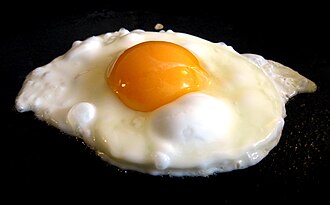
Photo: Wikipedia
A whole egg fried in oil, typically with a set white and a runny or firm yolk, offering a rich, savory flavor and a tender-yet-crispy texture. It's a protein-packed staple with a high fat content, especially from the yolk and cooking oil. A single 100g serving provides over 11g of protein but is calorie-dense due to its fat.
Calorie split: 24% protein · 2% carbs · 74% fat
↓ Full nutrition💚 Why it's loved
People adore its comforting, savory taste and the satisfying contrast of a crispy edge with a creamy yolk. It's incredibly versatile, serving as a quick breakfast, a protein boost in salads, or a savory topping for burgers and rice bowls.
⚠️ Watch-outs & how to enjoy it better
The high fat and cholesterol content may concern those managing heart health or specific diets. The frying process can also add significant calories and oxidized fats. To counteract, use minimal healthy oil (like olive or avocado), pair with fiber-rich vegetables or whole grains, and consider poaching or boiling as alternative cooking methods.
Key benefits
- Excellent source of complete, high-quality protein.
- Rich in choline, essential for brain and liver health.
- Contains lutein and zeaxanthin, antioxidants for eye health.
- Provides vitamin D, B12, and selenium.
- High satiety, helping to control appetite.
🍽️ Popular dishes


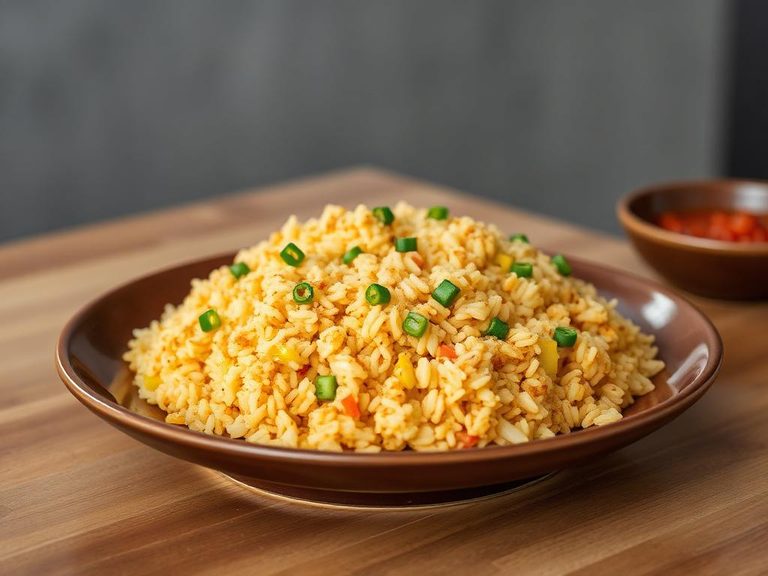
🌍 Where it's eaten
💡 Did you know?
The 'fried egg' is a standard test for kitchen competence in culinary schools, judged on its symmetry, the doneness of the white, and the state of the yolk.
Full nutrition (USDA data · scales with serving)
| Water | 70.6 g |
| Energy | 192 kcal |
| Protein | 11.6 g |
| Total lipid (fat) | 15.8 g |
| Carbohydrate, by difference | 0.90 g |
| Fiber, total dietary | 0.00 g |
| Total Sugars | 0.19 g |
| Calcium, Ca | 45.0 mg |
| Iron, Fe | 1.6 mg |
| Magnesium, Mg | 10.0 mg |
| Phosphorus, P | 171 mg |
| Potassium, K | 123 mg |
| Sodium, Na | 228 mg |
| Zinc, Zn | 1.2 mg |
| Copper, Cu | 0.00 mg |
| Selenium, Se | 29.0 ug |
| Vitamin C, total ascorbic acid | 0.00 mg |
| Thiamin | 0.06 mg |
| Riboflavin | 0.37 mg |
| Niacin | 0.00 mg |
| Vitamin B-6 | 0.06 mg |
| Folate, total | 50.0 ug |
| Folic acid | 0.00 ug |
| Folate, food | 50.0 ug |
| Folate, DFE | 50.0 ug |
| Choline, total | 250 mg |
| Vitamin B-12 | 0.76 ug |
| Vitamin B-12, added | 0.00 ug |
| Vitamin A, RAE | 168 ug |
| Retinol | 167 ug |
| Carotene, beta | 0.00 ug |
| Carotene, alpha | 0.00 ug |
| Cryptoxanthin, beta | 12.0 ug |
| Lycopene | 0.00 ug |
| Lutein + zeaxanthin | 469 ug |
| Vitamin E (alpha-tocopherol) | 2.2 mg |
| Vitamin E, added | 0.00 mg |
| Vitamin D (D2 + D3) | 2.3 ug |
| Vitamin K (phylloquinone) | 6.8 ug |
| Alcohol, ethyl | 0.00 g |
| Caffeine | 0.00 mg |
| Theobromine | 0.00 mg |
Fat & fatty acid profile (per 100g)
| Fatty acids, total saturated | 3.9 g |
| SFA 4:0 | 0.00 g |
| SFA 6:0 | 0.00 g |
| SFA 8:0 | 0.00 g |
| SFA 10:0 | 0.00 g |
| SFA 12:0 | 0.00 g |
| SFA 14:0 | 0.03 g |
| SFA 16:0 | 2.8 g |
| SFA 18:0 | 0.95 g |
| Fatty acids, total monounsaturated | 6.1 g |
| MUFA 16:1 | 0.24 g |
| MUFA 18:1 | 5.8 g |
| MUFA 20:1 | 0.04 g |
| MUFA 22:1 | 0.00 g |
| Fatty acids, total polyunsaturated | 4.2 g |
| PUFA 18:2 | 3.6 g |
| PUFA 18:3 | 0.29 g |
| PUFA 18:4 | 0.00 g |
| PUFA 20:4 | 0.00 g |
| PUFA 20:5 n-3 (EPA) | 0.00 g |
| PUFA 22:5 n-3 (DPA) | 0.00 g |
| PUFA 22:6 n-3 (DHA) | 0.00 g |
| Cholesterol | 383 mg |
Amino acid profile (per 100g)
Estimated from Fish, whitefish, eggs (Alaska Native) — USDA does not publish this profile for Egg.
| Tryptophan | 0.28 g |
| Threonine | 1.0 g |
| Isoleucine | 1.1 g |
| Leucine | 1.6 g |
| Lysine | 1.6 g |
| Methionine | 0.56 g |
| Cystine | 0.23 g |
| Phenylalanine | 0.90 g |
| Tyrosine | 0.76 g |
| Valine | 1.3 g |
| Arginine | 1.1 g |
| Histidine | 0.53 g |
| Alanine | 1.6 g |
| Aspartic acid | 1.6 g |
| Glutamic acid | 2.2 g |
| Glycine | 0.50 g |
| Proline | 1.1 g |
| Serine | 1.2 g |
FAQ
Is a fried egg healthier than a boiled egg?
A boiled egg is generally lower in calories and fat because it doesn't require added cooking oil. However, the health impact of frying depends heavily on the type and amount of oil used. Using a small amount of a stable, high-smoke-point oil can make it a reasonably healthy choice.
Why does the egg white sometimes get rubbery when fried?
This happens from overcooking at high heat, which squeezes out moisture and toughens the proteins. For a tender white, cook over medium-low heat, cover the pan briefly to steam the top, or baste with the hot oil.
Can I reduce the fat content when frying an egg?
Yes. Use a non-stick pan with a minimal spray of oil, or use a well-seasoned cast-iron skillet. You can also 'fry' in a small amount of water or broth (water-frying) to cook the egg without added fat.
Nutrient density (calculated · NRF9.3)
Nutrient Rich Foods index: beneficial nutrients (protein, fiber, vitamins, minerals) minus saturated fat, added sugar & sodium, per 100 kcal.
NRF9.3 index — Fulgoni, Keast & Drewnowski, 2009. Computed from USDA nutrients.
Weight-loss friendliness (composite index)
Energy density 1.92 kcal/g · 24% calories from protein · 0.0 g fiber · 0.2 g sugar per 100 g.
Composite of energy density (Rolls et al., 1999), protein & fiber satiety, minus sugar. A calculated heuristic — ranks satiety-per-calorie, not a clinical measure.
Dietary load (calculated from USDA values)
Potential renal acid load. Positive = acid-forming, negative = alkaline-forming.
Sodium-to-potassium ratio: 1.85 (lower is better — aim for ≤ 1)
Sodium:potassium per WHO potassium guidance. Computed from USDA nutrients.