

Egg, whole, baked, NS as to fat
Common food

Photo: Wikipedia
A whole egg, gently baked in its shell or out of it, transforms from liquid to a tender, custardy solid with a delicate, rich flavor. Its texture is uniquely smooth and slightly springy, a hallmark of controlled heat that sets the proteins without browning. Nutritionally, it's a powerhouse of complete protein and healthy fats, with virtually no carbohydrates.
Calorie split: 25% protein · 2% carbs · 73% fat
↓ Full nutrition💚 Why it's loved
People love baked eggs for their comforting, mild richness and incredible versatility—they can be a simple snack or the centerpiece of a dish. Their neutral flavor makes them a perfect canvas for herbs, spices, and sauces.
⚠️ Watch-outs & how to enjoy it better
As a common allergen, eggs can trigger reactions in some individuals. Their high dietary cholesterol content means those with specific lipid disorders may need to monitor intake. To counteract, pair with fiber-rich vegetables to slow digestion and consider portion control (e.g., 1 egg per serving).
Key benefits
- Excellent source of complete protein for muscle maintenance
- Rich in choline, essential for brain and liver health
- Provides fat-soluble vitamins A, D, E, and K
- Contains lutein and zeaxanthin for eye health
- Highly satiating due to protein and fat content
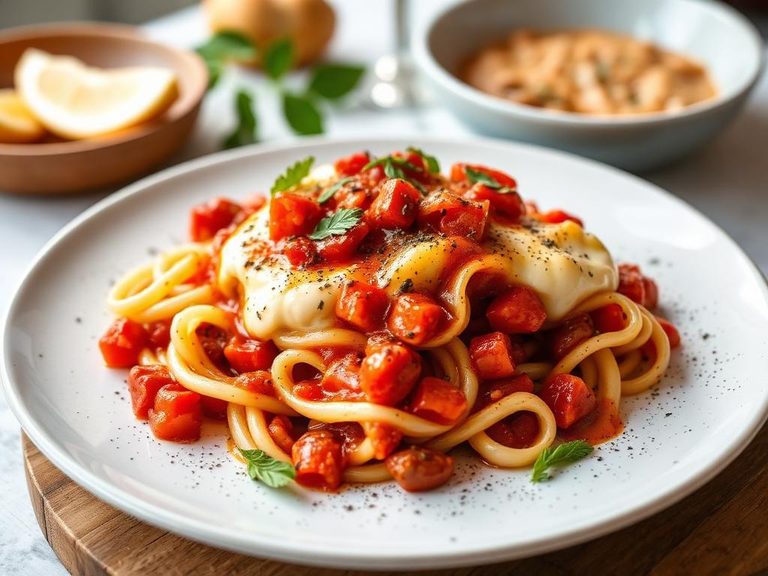
🍽️ Popular dishes
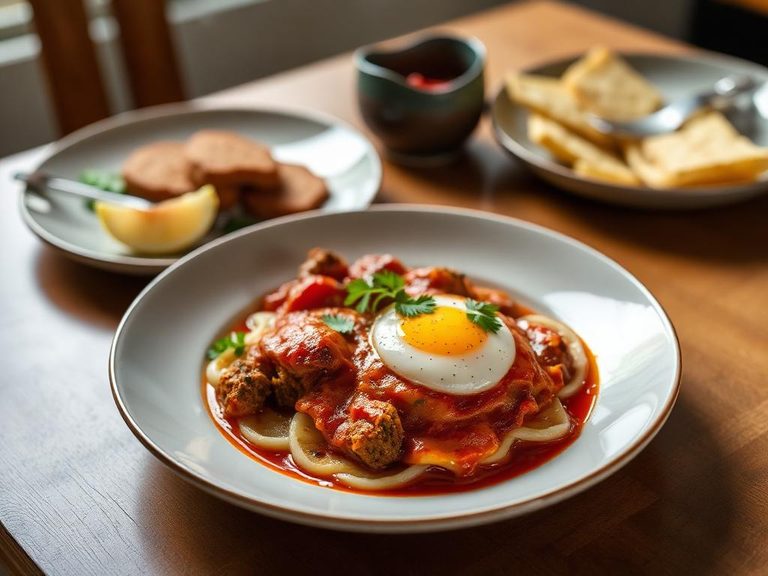
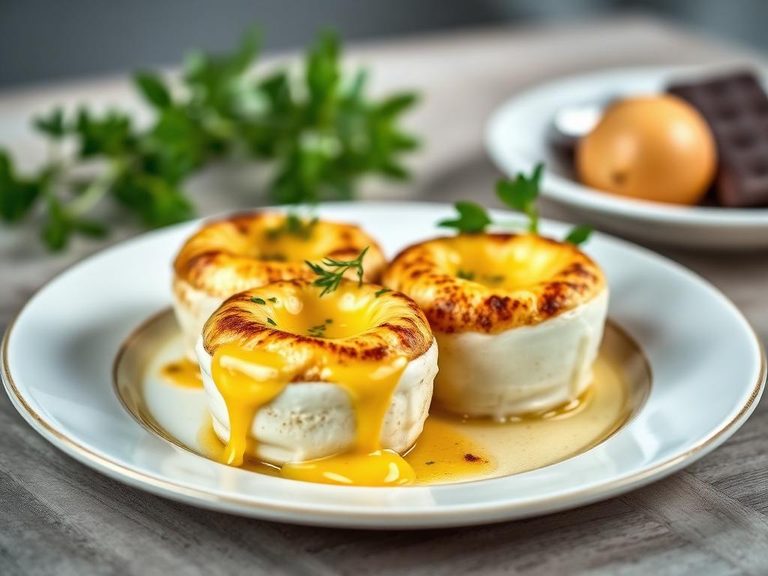
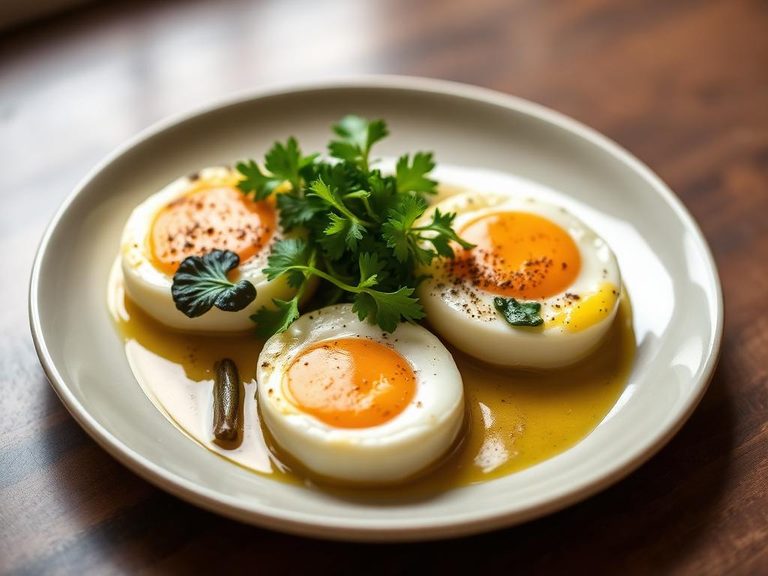
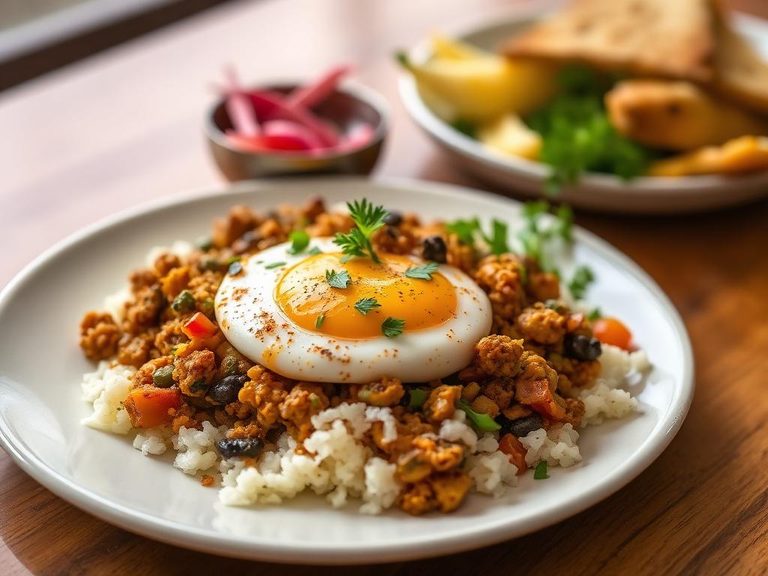
🌍 Where it's eaten
💡 Did you know?
A baked egg can be cooked in its shell in a low oven (around 160°F/70°C) for about 30-40 minutes, resulting in a perfectly set, uniform texture often called an 'onsen egg' in Japanese cuisine.
Full nutrition (USDA data · scales with serving)
| Water | 71.4 g |
| Energy | 185 kcal |
| Protein | 11.6 g |
| Total lipid (fat) | 15.0 g |
| Carbohydrate, by difference | 0.91 g |
| Fiber, total dietary | 0.00 g |
| Total Sugars | 0.20 g |
| Calcium, Ca | 46.0 mg |
| Iron, Fe | 1.6 mg |
| Magnesium, Mg | 10.0 mg |
| Phosphorus, P | 172 mg |
| Potassium, K | 124 mg |
| Sodium, Na | 248 mg |
| Zinc, Zn | 1.2 mg |
| Copper, Cu | 0.00 mg |
| Selenium, Se | 29.0 ug |
| Vitamin C, total ascorbic acid | 0.00 mg |
| Thiamin | 0.06 mg |
| Riboflavin | 0.37 mg |
| Niacin | 0.00 mg |
| Vitamin B-6 | 0.09 mg |
| Folate, total | 50.0 ug |
| Folic acid | 0.00 ug |
| Folate, food | 50.0 ug |
| Folate, DFE | 50.0 ug |
| Choline, total | 250 mg |
| Vitamin B-12 | 0.76 ug |
| Vitamin B-12, added | 0.00 ug |
| Vitamin A, RAE | 193 ug |
| Retinol | 191 ug |
| Carotene, beta | 11.0 ug |
| Carotene, alpha | 0.00 ug |
| Cryptoxanthin, beta | 12.0 ug |
| Lycopene | 0.00 ug |
| Lutein + zeaxanthin | 469 ug |
| Vitamin E (alpha-tocopherol) | 1.8 mg |
| Vitamin E, added | 0.00 mg |
| Vitamin D (D2 + D3) | 2.4 ug |
| Vitamin K (phylloquinone) | 5.0 ug |
| Alcohol, ethyl | 0.00 g |
| Caffeine | 0.00 mg |
| Theobromine | 0.00 mg |
Fat & fatty acid profile (per 100g)
| Fatty acids, total saturated | 4.5 g |
| SFA 4:0 | 0.04 g |
| SFA 6:0 | 0.03 g |
| SFA 8:0 | 0.02 g |
| SFA 10:0 | 0.04 g |
| SFA 12:0 | 0.04 g |
| SFA 14:0 | 0.17 g |
| SFA 16:0 | 3.0 g |
| SFA 18:0 | 1.1 g |
| Fatty acids, total monounsaturated | 5.4 g |
| MUFA 16:1 | 0.25 g |
| MUFA 18:1 | 5.1 g |
| MUFA 20:1 | 0.03 g |
| MUFA 22:1 | 0.00 g |
| Fatty acids, total polyunsaturated | 3.3 g |
| PUFA 18:2 | 2.8 g |
| PUFA 18:3 | 0.19 g |
| PUFA 18:4 | 0.00 g |
| PUFA 20:4 | 0.00 g |
| PUFA 20:5 n-3 (EPA) | 0.00 g |
| PUFA 22:5 n-3 (DPA) | 0.00 g |
| PUFA 22:6 n-3 (DHA) | 0.00 g |
| Cholesterol | 388 mg |
Amino acid profile (per 100g)
Estimated from Fish, whitefish, eggs (Alaska Native) — USDA does not publish this profile for Egg.
| Tryptophan | 0.28 g |
| Threonine | 1.0 g |
| Isoleucine | 1.1 g |
| Leucine | 1.6 g |
| Lysine | 1.6 g |
| Methionine | 0.56 g |
| Cystine | 0.23 g |
| Phenylalanine | 0.90 g |
| Tyrosine | 0.76 g |
| Valine | 1.3 g |
| Arginine | 1.1 g |
| Histidine | 0.53 g |
| Alanine | 1.6 g |
| Aspartic acid | 1.6 g |
| Glutamic acid | 2.2 g |
| Glycine | 0.50 g |
| Proline | 1.1 g |
| Serine | 1.2 g |
FAQ
How is a baked egg different from a boiled egg?
Baking uses dry, ambient heat, which cooks the egg more gently and evenly, often resulting in a slightly firmer, more custardy texture compared to the sometimes rubbery texture of over-boiled eggs. It also frees up stovetop space.
Can I bake eggs directly in their shells?
Yes, this is a traditional method. Place whole, uncracked eggs in a muffin tin or oven-safe dish and bake at 325°F (163°C) for about 25-30 minutes. Transfer immediately to an ice bath to stop cooking and make peeling easier.
Are baked eggs healthier than fried eggs?
Generally, yes. Baking requires little to no added fat, unlike frying which often uses oil or butter. This makes baked eggs lower in calories and total fat while preserving their nutritional profile.
Nutrient density (calculated · NRF9.3)
Nutrient Rich Foods index: beneficial nutrients (protein, fiber, vitamins, minerals) minus saturated fat, added sugar & sodium, per 100 kcal.
NRF9.3 index — Fulgoni, Keast & Drewnowski, 2009. Computed from USDA nutrients.
Weight-loss friendliness (composite index)
Energy density 1.85 kcal/g · 25% calories from protein · 0.0 g fiber · 0.2 g sugar per 100 g.
Composite of energy density (Rolls et al., 1999), protein & fiber satiety, minus sugar. A calculated heuristic — ranks satiety-per-calorie, not a clinical measure.
Dietary load (calculated from USDA values)
Potential renal acid load. Positive = acid-forming, negative = alkaline-forming.
Sodium-to-potassium ratio: 2.00 (lower is better — aim for ≤ 1)
Sodium:potassium per WHO potassium guidance. Computed from USDA nutrients.