

Egg white omelet, scrambled, or fried, NS as to fat type
Common food
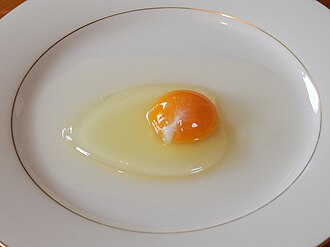
Photo: Wikipedia
A lean, protein-packed preparation of egg whites cooked until just set, offering a mild, slightly briny flavor with a tender, delicate texture that ranges from soft curds to a light, airy fold. It's a foundational ingredient for health-conscious cooking, prized for its high protein-to-calorie ratio and neutral canvas that absorbs surrounding flavors.
Calorie split: 40% protein · 9% carbs · 51% fat
↓ Full nutrition💚 Why it's loved
People love it for its incredible versatility—it's a blank slate that can be seasoned with herbs, folded with vegetables, or used as a binder in countless dishes. It's a staple in fitness and weight-management diets for its ability to deliver satisfying protein without excess calories.
⚠️ Watch-outs & how to enjoy it better
The primary downside is its lack of flavor and potential for a rubbery texture if overcooked. Those watching sodium should be mindful of added salt, and individuals with an egg white allergy must avoid it entirely. To counteract blandness, cook with flavorful vegetables, herbs, or a splash of low-sodium broth, and use gentle heat with frequent stirring for a softer texture.
Key benefits
- Excellent source of complete, high-quality protein
- Very low in calories and carbohydrates
- Naturally cholesterol-free and fat-free
- Rich in selenium and riboflavin (vitamin B2)
- Provides albumin, a protein used in vaccines and research
🍽️ Popular dishes
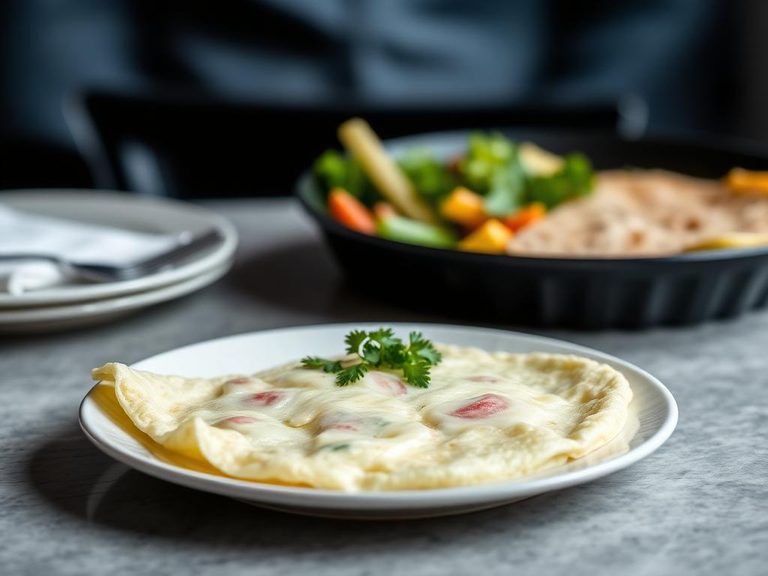


🌍 Where it's eaten
💡 Did you know?
The proteins in egg whites are so effective at trapping air bubbles that a single egg white can be whipped to form a foam that increases its volume by over 800%, the key structure for meringues and soufflés.
Full nutrition (USDA data · scales with serving)
| Water | 81.2 g |
| Energy | 100 kcal |
| Protein | 10.0 g |
| Total lipid (fat) | 5.7 g |
| Carbohydrate, by difference | 2.2 g |
| Fiber, total dietary | 0.00 g |
| Total Sugars | 0.67 g |
| Calcium, Ca | 7.0 mg |
| Iron, Fe | 0.08 mg |
| Magnesium, Mg | 10.0 mg |
| Phosphorus, P | 15.0 mg |
| Potassium, K | 153 mg |
| Sodium, Na | 282 mg |
| Zinc, Zn | 0.03 mg |
| Copper, Cu | 0.02 mg |
| Selenium, Se | 16.7 ug |
| Vitamin C, total ascorbic acid | 0.00 mg |
| Thiamin | 0.00 mg |
| Riboflavin | 0.35 mg |
| Niacin | 0.09 mg |
| Vitamin B-6 | 0.04 mg |
| Folate, total | 3.0 ug |
| Folic acid | 0.00 ug |
| Folate, food | 3.0 ug |
| Folate, DFE | 3.0 ug |
| Choline, total | 1.3 mg |
| Vitamin B-12 | 0.07 ug |
| Vitamin B-12, added | 0.00 ug |
| Vitamin A, RAE | 26.0 ug |
| Retinol | 25.0 ug |
| Carotene, beta | 11.0 ug |
| Carotene, alpha | 0.00 ug |
| Cryptoxanthin, beta | 0.00 ug |
| Lycopene | 0.00 ug |
| Lutein + zeaxanthin | 0.00 ug |
| Vitamin E (alpha-tocopherol) | 0.86 mg |
| Vitamin E, added | 0.00 mg |
| Vitamin D (D2 + D3) | 0.10 ug |
| Vitamin K (phylloquinone) | 4.7 ug |
| Alcohol, ethyl | 0.00 g |
| Caffeine | 0.00 mg |
| Theobromine | 0.00 mg |
Fat & fatty acid profile (per 100g)
| Fatty acids, total saturated | 1.5 g |
| SFA 4:0 | 0.04 g |
| SFA 6:0 | 0.03 g |
| SFA 8:0 | 0.02 g |
| SFA 10:0 | 0.04 g |
| SFA 12:0 | 0.04 g |
| SFA 14:0 | 0.14 g |
| SFA 16:0 | 0.82 g |
| SFA 18:0 | 0.31 g |
| Fatty acids, total monounsaturated | 2.0 g |
| MUFA 16:1 | 0.03 g |
| MUFA 18:1 | 2.0 g |
| MUFA 20:1 | 0.03 g |
| MUFA 22:1 | 0.00 g |
| Fatty acids, total polyunsaturated | 1.6 g |
| PUFA 18:2 | 1.5 g |
| PUFA 18:3 | 0.18 g |
| PUFA 18:4 | 0.00 g |
| PUFA 20:4 | 0.00 g |
| PUFA 20:5 n-3 (EPA) | 0.00 g |
| PUFA 22:5 n-3 (DPA) | 0.00 g |
| PUFA 22:6 n-3 (DHA) | 0.00 g |
| Cholesterol | 5.0 mg |
Amino acid profile (per 100g)
Estimated from Fish, whitefish, eggs (Alaska Native) — USDA does not publish this profile for Egg white omelet.
| Tryptophan | 0.28 g |
| Threonine | 1.0 g |
| Isoleucine | 1.1 g |
| Leucine | 1.6 g |
| Lysine | 1.6 g |
| Methionine | 0.56 g |
| Cystine | 0.23 g |
| Phenylalanine | 0.90 g |
| Tyrosine | 0.76 g |
| Valine | 1.3 g |
| Arginine | 1.1 g |
| Histidine | 0.53 g |
| Alanine | 1.6 g |
| Aspartic acid | 1.6 g |
| Glutamic acid | 2.2 g |
| Glycine | 0.50 g |
| Proline | 1.1 g |
| Serine | 1.2 g |
FAQ
Is egg white healthier than a whole egg?
It depends on your goals. Egg whites are lower in calories, fat, and cholesterol, making them ideal for high-protein, low-calorie diets. Whole eggs provide more nutrients like choline, vitamin D, and healthy fats from the yolk.
Why do my scrambled egg whites turn rubbery?
Overcooking is the main culprit. Egg white proteins tighten and squeeze out moisture when heated too long. Cook over medium-low heat, stir gently, and remove from the pan while still slightly moist, as they will continue to cook from residual heat.
Can I substitute egg whites for whole eggs in baking?
Yes, but with adjustments. Egg whites provide structure and leavening but lack the fat and emulsifying properties of yolks. Recipes may need added fat (like oil or butter) and may have a drier, spongier texture. A common ratio is 2 tablespoons of egg white per 1 whole egg.
Nutrient density (calculated · NRF9.3)
Nutrient Rich Foods index: beneficial nutrients (protein, fiber, vitamins, minerals) minus saturated fat, added sugar & sodium, per 100 kcal.
NRF9.3 index — Fulgoni, Keast & Drewnowski, 2009. Computed from USDA nutrients.
Weight-loss friendliness (composite index)
Energy density 1.00 kcal/g · 40% calories from protein · 0.0 g fiber · 0.7 g sugar per 100 g.
Composite of energy density (Rolls et al., 1999), protein & fiber satiety, minus sugar. A calculated heuristic — ranks satiety-per-calorie, not a clinical measure.
Dietary load (calculated from USDA values)
Potential renal acid load. Positive = acid-forming, negative = alkaline-forming.
Sodium-to-potassium ratio: 1.84 (lower is better — aim for ≤ 1)
Sodium:potassium per WHO potassium guidance. Computed from USDA nutrients.