

Egg omelet or scrambled egg, NS as to fat type
Common food

Photo: Wikipedia
A classic egg omelet or scrambled egg is a tender, fluffy preparation of beaten eggs cooked until just set or softly curdled. Its rich, savory flavor and custard-like texture make it a staple breakfast item. Nutritionally, it's a powerhouse of high-quality protein and healthy fats, with virtually no carbohydrates.
Calorie split: 25% protein · 2% carbs · 73% fat
↓ Full nutrition💚 Why it's loved
People love it for its comforting, savory flavor and incredible versatility—it's a blank canvas that can be filled with cheese, herbs, or vegetables. It's also a quick, reliable, and culturally universal comfort food found in nearly every cuisine.
⚠️ Watch-outs & how to enjoy it better
The primary concern is the high cholesterol and saturated fat content from the yolks, which may require moderation for some individuals. To counteract this, you can use a mix of whole eggs and egg whites, or pair it with fiber-rich vegetables like spinach or tomatoes to balance the meal.
Key benefits
- Excellent source of complete protein for muscle repair and satiety.
- Rich in choline, essential for brain health and liver function.
- Provides fat-soluble vitamins A, D, E, and K.
- Contains lutein and zeaxanthin, antioxidants that support eye health.
- A low-carb, high-protein option for balanced meals.
🍽️ Popular dishes
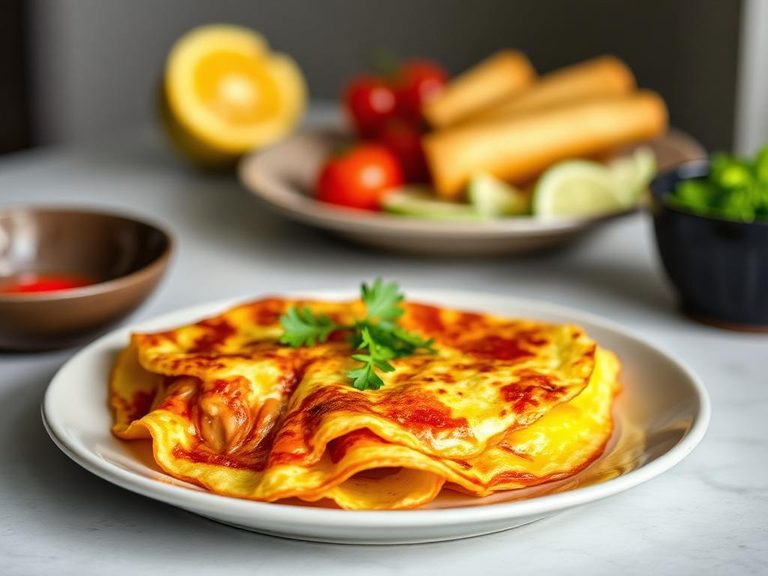
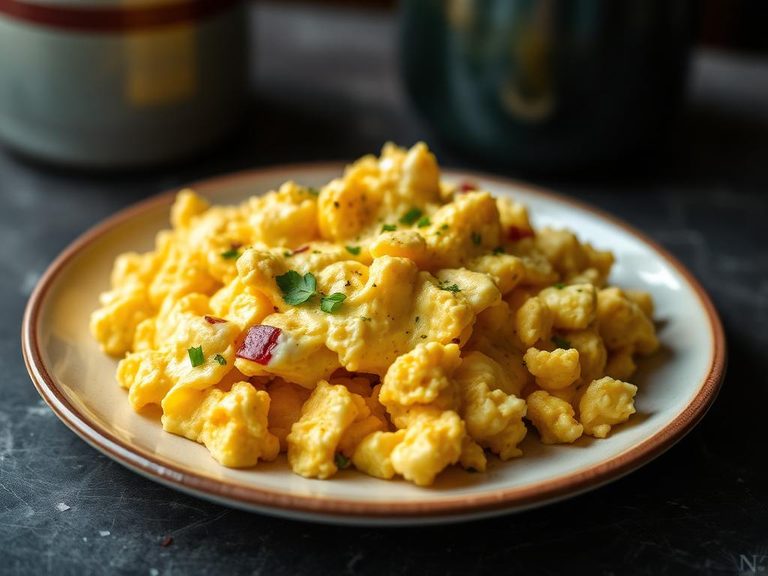
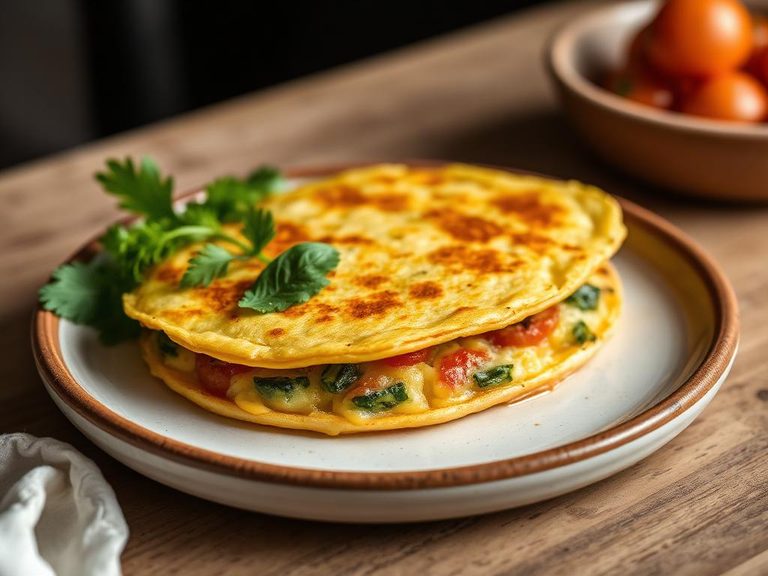
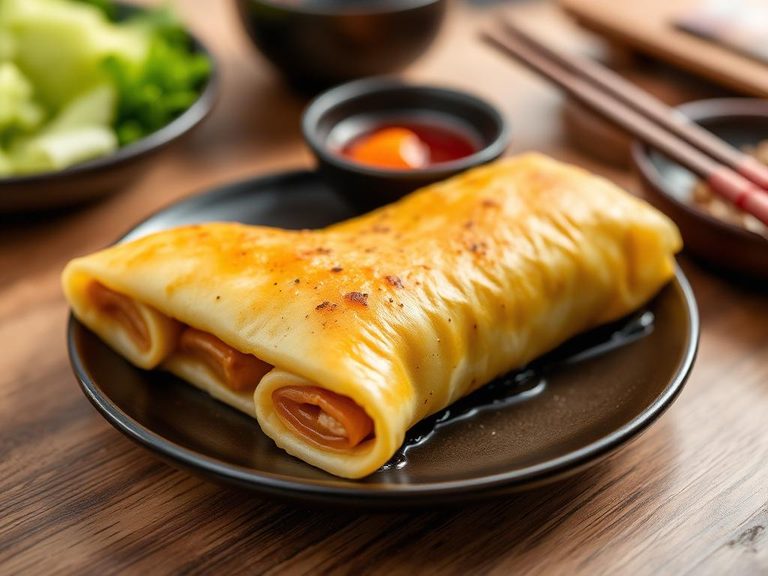
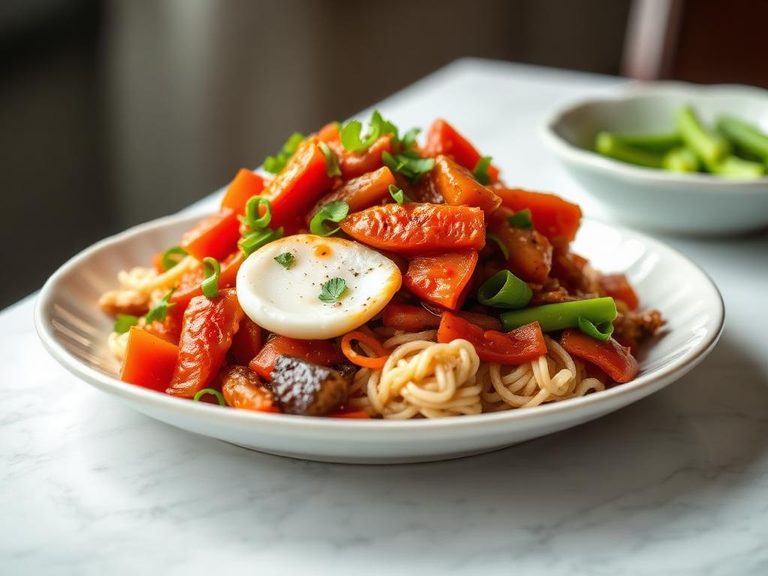
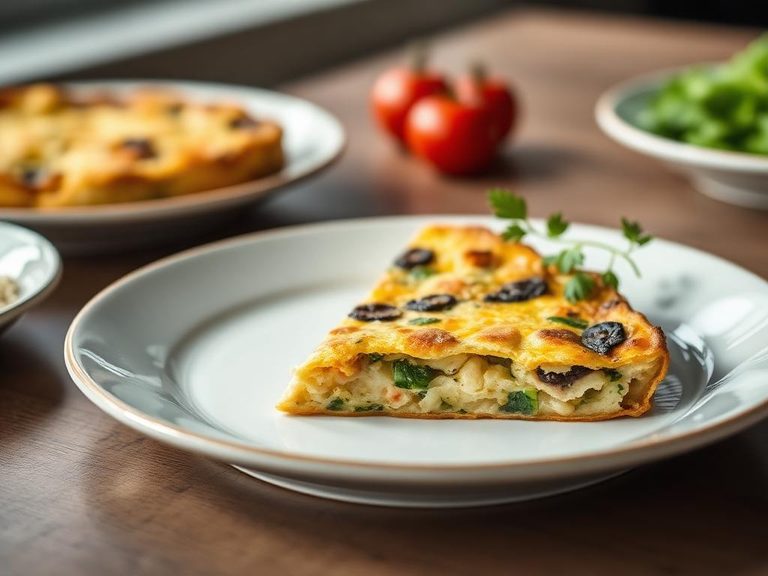
🌍 Where it's eaten
💡 Did you know?
The world record for the largest scrambled egg dish was set in 2012 in Spain, using over 5,000 eggs to make a giant tortilla de patatas.
Full nutrition (USDA data · scales with serving)
| Water | 71.4 g |
| Energy | 185 kcal |
| Protein | 11.6 g |
| Total lipid (fat) | 15.0 g |
| Carbohydrate, by difference | 0.91 g |
| Fiber, total dietary | 0.00 g |
| Total Sugars | 0.20 g |
| Calcium, Ca | 46.0 mg |
| Iron, Fe | 1.6 mg |
| Magnesium, Mg | 10.0 mg |
| Phosphorus, P | 172 mg |
| Potassium, K | 124 mg |
| Sodium, Na | 248 mg |
| Zinc, Zn | 1.2 mg |
| Copper, Cu | 0.00 mg |
| Selenium, Se | 29.0 ug |
| Vitamin C, total ascorbic acid | 0.00 mg |
| Thiamin | 0.06 mg |
| Riboflavin | 0.37 mg |
| Niacin | 0.00 mg |
| Vitamin B-6 | 0.09 mg |
| Folate, total | 50.0 ug |
| Folic acid | 0.00 ug |
| Folate, food | 50.0 ug |
| Folate, DFE | 50.0 ug |
| Choline, total | 250 mg |
| Vitamin B-12 | 0.76 ug |
| Vitamin B-12, added | 0.00 ug |
| Vitamin A, RAE | 193 ug |
| Retinol | 191 ug |
| Carotene, beta | 11.0 ug |
| Carotene, alpha | 0.00 ug |
| Cryptoxanthin, beta | 12.0 ug |
| Lycopene | 0.00 ug |
| Lutein + zeaxanthin | 469 ug |
| Vitamin E (alpha-tocopherol) | 1.8 mg |
| Vitamin E, added | 0.00 mg |
| Vitamin D (D2 + D3) | 2.4 ug |
| Vitamin K (phylloquinone) | 5.0 ug |
| Alcohol, ethyl | 0.00 g |
| Caffeine | 0.00 mg |
| Theobromine | 0.00 mg |
Fat & fatty acid profile (per 100g)
| Fatty acids, total saturated | 4.5 g |
| SFA 4:0 | 0.04 g |
| SFA 6:0 | 0.03 g |
| SFA 8:0 | 0.02 g |
| SFA 10:0 | 0.04 g |
| SFA 12:0 | 0.04 g |
| SFA 14:0 | 0.17 g |
| SFA 16:0 | 3.0 g |
| SFA 18:0 | 1.1 g |
| Fatty acids, total monounsaturated | 5.4 g |
| MUFA 16:1 | 0.25 g |
| MUFA 18:1 | 5.1 g |
| MUFA 20:1 | 0.03 g |
| MUFA 22:1 | 0.00 g |
| Fatty acids, total polyunsaturated | 3.3 g |
| PUFA 18:2 | 2.8 g |
| PUFA 18:3 | 0.19 g |
| PUFA 18:4 | 0.00 g |
| PUFA 20:4 | 0.00 g |
| PUFA 20:5 n-3 (EPA) | 0.00 g |
| PUFA 22:5 n-3 (DPA) | 0.00 g |
| PUFA 22:6 n-3 (DHA) | 0.00 g |
| Cholesterol | 388 mg |
Amino acid profile (per 100g)
Estimated from Egg, whole, cooked, omelet — USDA does not publish this profile for Egg omelet or scrambled egg.
| Tryptophan | 0.14 g |
| Threonine | 0.47 g |
| Isoleucine | 0.56 g |
| Leucine | 0.91 g |
| Lysine | 0.77 g |
| Methionine | 0.32 g |
| Cystine | 0.23 g |
| Phenylalanine | 0.57 g |
| Tyrosine | 0.42 g |
| Valine | 0.72 g |
| Arginine | 0.69 g |
| Histidine | 0.26 g |
| Alanine | 0.62 g |
| Aspartic acid | 1.1 g |
| Glutamic acid | 1.4 g |
| Glycine | 0.36 g |
| Proline | 0.43 g |
| Serine | 0.82 g |
FAQ
What's the difference between an omelet and scrambled eggs?
An omelet is cooked as a single, folded patty with fillings inside, while scrambled eggs are continuously stirred into soft curds.
Are eggs a good source of protein?
Yes, eggs provide all nine essential amino acids, making them a complete and highly bioavailable protein source.
Can I make this dish with just egg whites?
Absolutely. Using only egg whites reduces the fat and cholesterol content significantly while retaining most of the protein.
Nutrient density (calculated · NRF9.3)
Nutrient Rich Foods index: beneficial nutrients (protein, fiber, vitamins, minerals) minus saturated fat, added sugar & sodium, per 100 kcal.
NRF9.3 index — Fulgoni, Keast & Drewnowski, 2009. Computed from USDA nutrients.
Weight-loss friendliness (composite index)
Energy density 1.85 kcal/g · 25% calories from protein · 0.0 g fiber · 0.2 g sugar per 100 g.
Composite of energy density (Rolls et al., 1999), protein & fiber satiety, minus sugar. A calculated heuristic — ranks satiety-per-calorie, not a clinical measure.
Dietary load (calculated from USDA values)
Potential renal acid load. Positive = acid-forming, negative = alkaline-forming.
Sodium-to-potassium ratio: 2.00 (lower is better — aim for ≤ 1)
Sodium:potassium per WHO potassium guidance. Computed from USDA nutrients.