

Egg omelet or scrambled egg, with tomatoes and dark-green vegetables, no fat added
Common food

Photo: Wikipedia
A fluffy, savory scramble of eggs folded with juicy, bright tomatoes and tender dark greens like spinach or kale. The eggs provide a rich, custard-like base, while the tomatoes add a burst of sweet acidity and the greens a mild, earthy note. With 10.94g of protein per 100g and minimal carbs, it's a nutrient-dense, low-calorie powerhouse.
Calorie split: 34% protein · 5% carbs · 61% fat
↓ Full nutrition💚 Why it's loved
This dish is beloved for its comforting, savory flavor and the satisfying contrast between soft eggs, juicy tomatoes, and wilted greens. It's incredibly versatile, ready in minutes, and fits seamlessly into breakfast, lunch, or a light dinner across many cultures.
⚠️ Watch-outs & how to enjoy it better
The primary concern is the cholesterol content in eggs, which may require moderation for individuals with specific health conditions. The oxalates in dark greens like spinach can also inhibit mineral absorption for some. To mitigate, pair this dish with a fiber-rich side like whole-grain toast and ensure a varied diet to balance oxalate intake.
Key benefits
- High-quality protein for muscle maintenance and satiety.
- Rich in lycopene from cooked tomatoes, a potent antioxidant.
- Excellent source of vitamins A, C, and K from dark greens.
- Naturally low in carbohydrates and sugar.
- Contains choline from eggs, important for brain health.
🍽️ Popular dishes
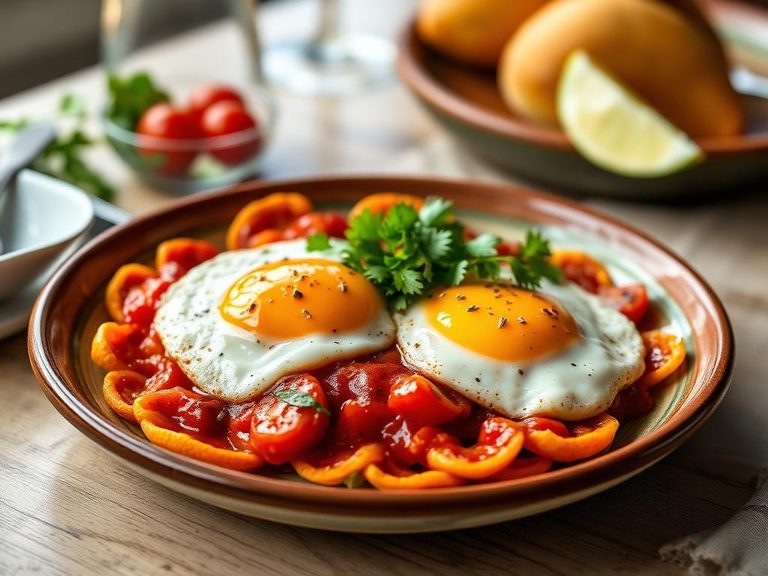
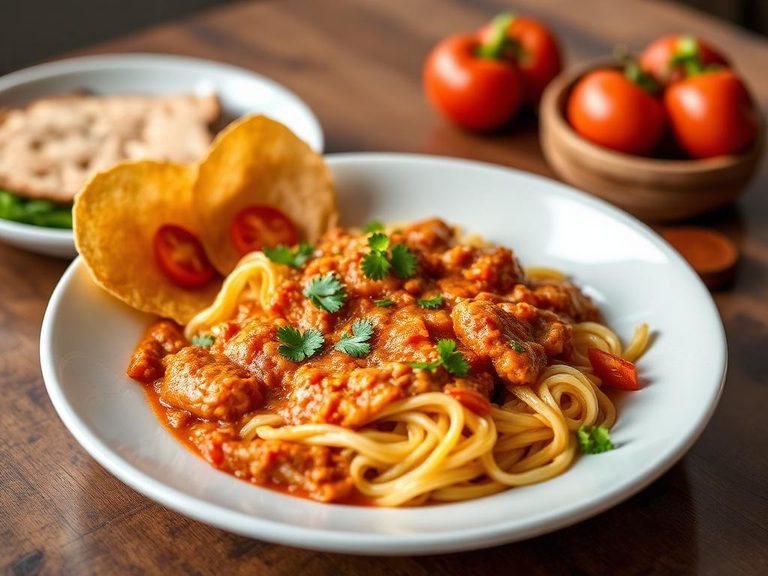
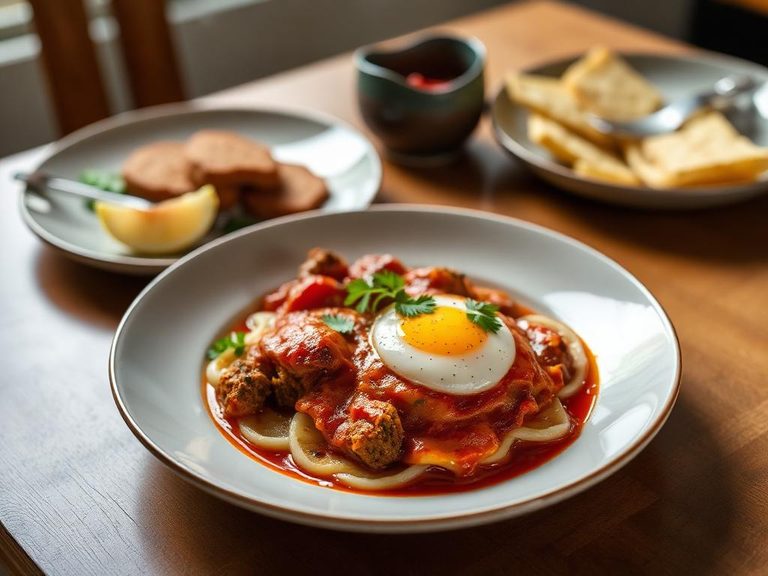
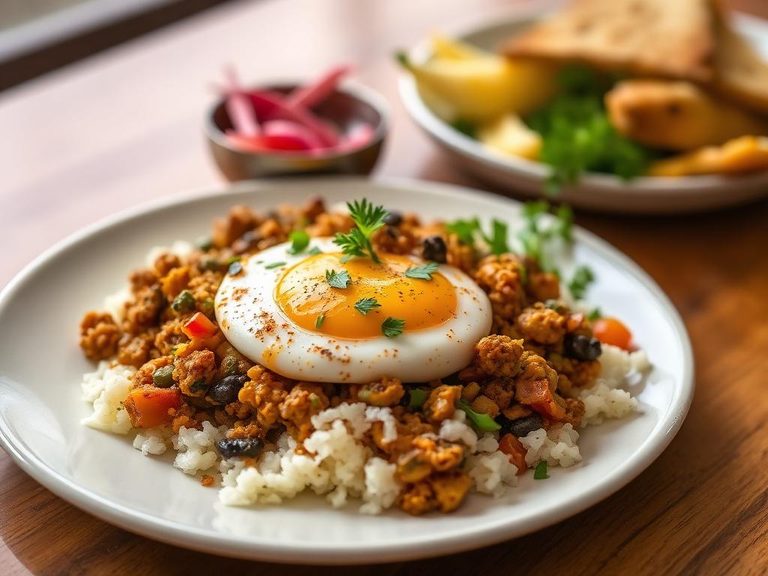
🌍 Where it's eaten
💡 Did you know?
Cooking tomatoes in a dish like this actually increases the bioavailability of lycopene, making it easier for your body to absorb this powerful antioxidant compared to raw tomatoes.
Full nutrition (USDA data · scales with serving)
| Water | 77.8 g |
| Energy | 127 kcal |
| Protein | 10.9 g |
| Total lipid (fat) | 8.6 g |
| Carbohydrate, by difference | 1.5 g |
| Fiber, total dietary | 0.20 g |
| Total Sugars | 0.49 g |
| Calcium, Ca | 47.0 mg |
| Iron, Fe | 1.5 mg |
| Magnesium, Mg | 16.0 mg |
| Phosphorus, P | 164 mg |
| Potassium, K | 164 mg |
| Sodium, Na | 218 mg |
| Zinc, Zn | 1.1 mg |
| Copper, Cu | 0.01 mg |
| Selenium, Se | 26.8 ug |
| Vitamin C, total ascorbic acid | 3.7 mg |
| Thiamin | 0.06 mg |
| Riboflavin | 0.36 mg |
| Niacin | 0.08 mg |
| Vitamin B-6 | 0.07 mg |
| Folate, total | 52.0 ug |
| Folic acid | 0.00 ug |
| Folate, food | 52.0 ug |
| Folate, DFE | 52.0 ug |
| Choline, total | 232 mg |
| Vitamin B-12 | 0.70 ug |
| Vitamin B-12, added | 0.00 ug |
| Vitamin A, RAE | 174 ug |
| Retinol | 154 ug |
| Carotene, beta | 231 ug |
| Carotene, alpha | 7.0 ug |
| Cryptoxanthin, beta | 12.0 ug |
| Lycopene | 179 ug |
| Lutein + zeaxanthin | 877 ug |
| Vitamin E (alpha-tocopherol) | 1.1 mg |
| Vitamin E, added | 0.00 mg |
| Vitamin D (D2 + D3) | 2.2 ug |
| Vitamin K (phylloquinone) | 29.3 ug |
| Alcohol, ethyl | 0.00 g |
| Caffeine | 0.00 mg |
| Theobromine | 0.00 mg |
Fat & fatty acid profile (per 100g)
| Fatty acids, total saturated | 2.8 g |
| SFA 4:0 | 0.00 g |
| SFA 6:0 | 0.00 g |
| SFA 8:0 | 0.00 g |
| SFA 10:0 | 0.00 g |
| SFA 12:0 | 0.00 g |
| SFA 14:0 | 0.03 g |
| SFA 16:0 | 2.0 g |
| SFA 18:0 | 0.70 g |
| Fatty acids, total monounsaturated | 3.1 g |
| MUFA 16:1 | 0.20 g |
| MUFA 18:1 | 2.9 g |
| MUFA 20:1 | 0.00 g |
| MUFA 22:1 | 0.00 g |
| Fatty acids, total polyunsaturated | 1.6 g |
| PUFA 18:2 | 1.3 g |
| PUFA 18:3 | 0.02 g |
| PUFA 18:4 | 0.00 g |
| PUFA 20:4 | 0.00 g |
| PUFA 20:5 n-3 (EPA) | 0.00 g |
| PUFA 22:5 n-3 (DPA) | 0.00 g |
| PUFA 22:6 n-3 (DHA) | 0.00 g |
| Cholesterol | 353 mg |
Amino acid profile (per 100g)
Estimated from Egg, whole, cooked, omelet — USDA does not publish this profile for Egg omelet or scrambled egg.
| Tryptophan | 0.14 g |
| Threonine | 0.47 g |
| Isoleucine | 0.56 g |
| Leucine | 0.91 g |
| Lysine | 0.77 g |
| Methionine | 0.32 g |
| Cystine | 0.23 g |
| Phenylalanine | 0.57 g |
| Tyrosine | 0.42 g |
| Valine | 0.72 g |
| Arginine | 0.69 g |
| Histidine | 0.26 g |
| Alanine | 0.62 g |
| Aspartic acid | 1.1 g |
| Glutamic acid | 1.4 g |
| Glycine | 0.36 g |
| Proline | 0.43 g |
| Serine | 0.82 g |
FAQ
Can I use frozen spinach or tomatoes?
Yes, but thaw and squeeze excess water from frozen spinach first to avoid a watery scramble. Frozen tomatoes will release more liquid during cooking, so cook them down a bit before adding eggs.
Is this suitable for a low-carb diet?
Absolutely. With only 1.51g of carbs per 100g, it's an excellent low-carb, high-protein meal option.
How do I prevent the eggs from becoming rubbery?
Cook over medium-low heat, stirring gently and frequently. Remove the pan from the heat while the eggs are still slightly underdone, as residual heat will finish cooking them to a soft, creamy texture.
Nutrient density (calculated · NRF9.3)
Nutrient Rich Foods index: beneficial nutrients (protein, fiber, vitamins, minerals) minus saturated fat, added sugar & sodium, per 100 kcal.
NRF9.3 index — Fulgoni, Keast & Drewnowski, 2009. Computed from USDA nutrients.
Weight-loss friendliness (composite index)
Energy density 1.27 kcal/g · 34% calories from protein · 0.2 g fiber · 0.5 g sugar per 100 g.
Composite of energy density (Rolls et al., 1999), protein & fiber satiety, minus sugar. A calculated heuristic — ranks satiety-per-calorie, not a clinical measure.
Dietary load (calculated from USDA values)
Potential renal acid load. Positive = acid-forming, negative = alkaline-forming.
Sodium-to-potassium ratio: 1.33 (lower is better — aim for ≤ 1)
Sodium:potassium per WHO potassium guidance. Computed from USDA nutrients.