

Egg omelet or scrambled egg, NS as to fat
Common food
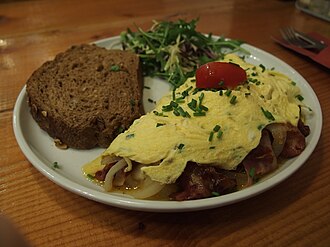
Photo: Wikipedia
A classic, fluffy egg preparation made by beating eggs and cooking them in a pan, either folded (omelet) or stirred (scrambled). The texture ranges from tender and custardy to firm and golden, depending on cooking time. It's a protein-packed, low-carb staple with a rich, savory flavor.
Calorie split: 25% protein · 2% carbs · 73% fat
↓ Full nutrition💚 Why it's loved
People adore its comforting, savory taste and incredible versatility—it can be a simple breakfast, a hearty dinner, or a vehicle for countless fillings and seasonings. Its cultural ubiquity makes it a familiar, nostalgic comfort food worldwide.
⚠️ Watch-outs & how to enjoy it better
The primary concern is its cholesterol and saturated fat content, which may require moderation for some individuals. To counteract, pair it with fiber-rich vegetables (like spinach or tomatoes) and use healthy cooking fats like olive oil. Also, be mindful of added salt; season with herbs and spices instead.
Key benefits
- Excellent source of high-quality protein for muscle maintenance.
- Provides essential nutrients like choline for brain health and vitamin D.
- Naturally low in carbohydrates and sugar, suitable for low-carb diets.
- Quick and versatile base for countless flavor combinations.
🍽️ Popular dishes
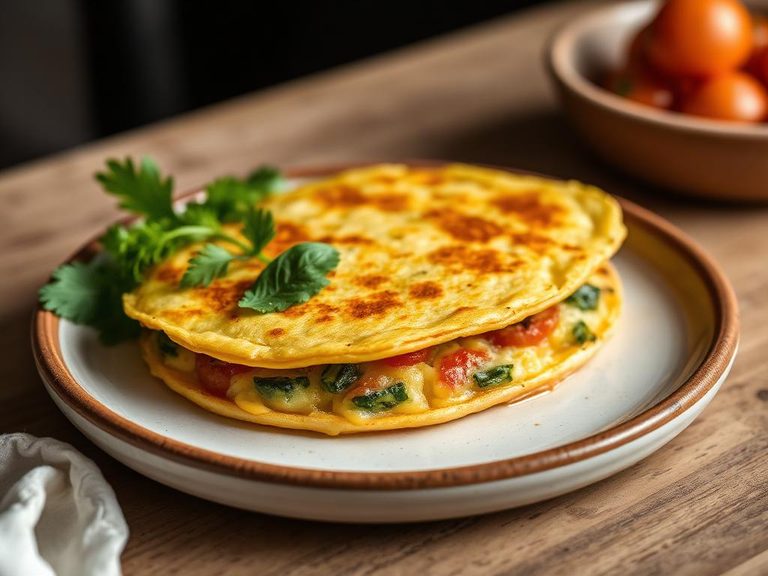
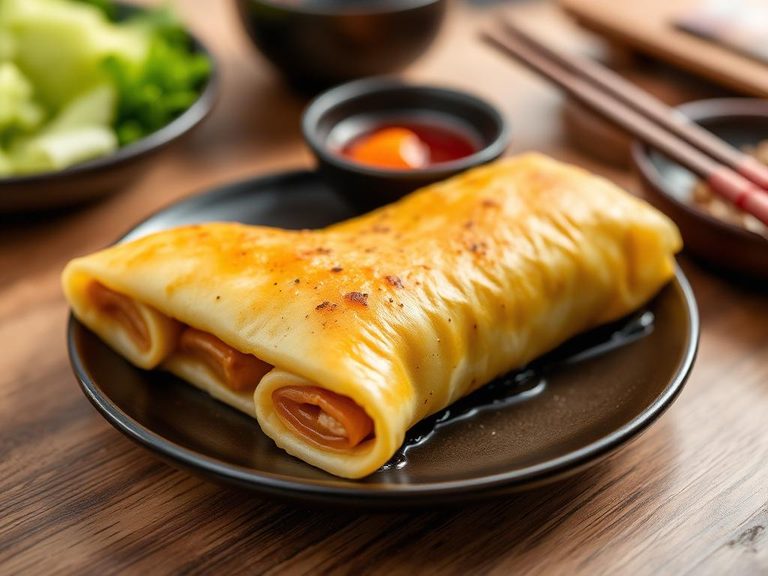
🌍 Where it's eaten
💡 Did you know?
The world record for the largest scrambled egg dish was set in 2012 in Spain, using over 5,000 kg of eggs to feed more than 10,000 people.
Full nutrition (USDA data · scales with serving)
| Water | 71.4 g |
| Energy | 185 kcal |
| Protein | 11.6 g |
| Total lipid (fat) | 15.0 g |
| Carbohydrate, by difference | 0.91 g |
| Fiber, total dietary | 0.00 g |
| Total Sugars | 0.20 g |
| Calcium, Ca | 46.0 mg |
| Iron, Fe | 1.6 mg |
| Magnesium, Mg | 10.0 mg |
| Phosphorus, P | 172 mg |
| Potassium, K | 124 mg |
| Sodium, Na | 248 mg |
| Zinc, Zn | 1.2 mg |
| Copper, Cu | 0.00 mg |
| Selenium, Se | 29.0 ug |
| Vitamin C, total ascorbic acid | 0.00 mg |
| Thiamin | 0.06 mg |
| Riboflavin | 0.37 mg |
| Niacin | 0.00 mg |
| Vitamin B-6 | 0.09 mg |
| Folate, total | 50.0 ug |
| Folic acid | 0.00 ug |
| Folate, food | 50.0 ug |
| Folate, DFE | 50.0 ug |
| Choline, total | 250 mg |
| Vitamin B-12 | 0.76 ug |
| Vitamin B-12, added | 0.00 ug |
| Vitamin A, RAE | 193 ug |
| Retinol | 191 ug |
| Carotene, beta | 11.0 ug |
| Carotene, alpha | 0.00 ug |
| Cryptoxanthin, beta | 12.0 ug |
| Lycopene | 0.00 ug |
| Lutein + zeaxanthin | 469 ug |
| Vitamin E (alpha-tocopherol) | 1.8 mg |
| Vitamin E, added | 0.00 mg |
| Vitamin D (D2 + D3) | 2.4 ug |
| Vitamin K (phylloquinone) | 5.0 ug |
| Alcohol, ethyl | 0.00 g |
| Caffeine | 0.00 mg |
| Theobromine | 0.00 mg |
Fat & fatty acid profile (per 100g)
| Fatty acids, total saturated | 4.5 g |
| SFA 4:0 | 0.04 g |
| SFA 6:0 | 0.03 g |
| SFA 8:0 | 0.02 g |
| SFA 10:0 | 0.04 g |
| SFA 12:0 | 0.04 g |
| SFA 14:0 | 0.17 g |
| SFA 16:0 | 3.0 g |
| SFA 18:0 | 1.1 g |
| Fatty acids, total monounsaturated | 5.4 g |
| MUFA 16:1 | 0.25 g |
| MUFA 18:1 | 5.1 g |
| MUFA 20:1 | 0.03 g |
| MUFA 22:1 | 0.00 g |
| Fatty acids, total polyunsaturated | 3.3 g |
| PUFA 18:2 | 2.8 g |
| PUFA 18:3 | 0.19 g |
| PUFA 18:4 | 0.00 g |
| PUFA 20:4 | 0.00 g |
| PUFA 20:5 n-3 (EPA) | 0.00 g |
| PUFA 22:5 n-3 (DPA) | 0.00 g |
| PUFA 22:6 n-3 (DHA) | 0.00 g |
| Cholesterol | 388 mg |
Amino acid profile (per 100g)
Estimated from Egg, whole, cooked, omelet — USDA does not publish this profile for Egg omelet or scrambled egg.
| Tryptophan | 0.14 g |
| Threonine | 0.47 g |
| Isoleucine | 0.56 g |
| Leucine | 0.91 g |
| Lysine | 0.77 g |
| Methionine | 0.32 g |
| Cystine | 0.23 g |
| Phenylalanine | 0.57 g |
| Tyrosine | 0.42 g |
| Valine | 0.72 g |
| Arginine | 0.69 g |
| Histidine | 0.26 g |
| Alanine | 0.62 g |
| Aspartic acid | 1.1 g |
| Glutamic acid | 1.4 g |
| Glycine | 0.36 g |
| Proline | 0.43 g |
| Serine | 0.82 g |
FAQ
What's the difference between an omelet and scrambled eggs?
An omelet is made by gently folding the cooked egg over fillings, while scrambled eggs are continuously stirred or folded in the pan until set into soft curds.
Are eggs a complete protein?
Yes, eggs contain all nine essential amino acids in the right proportions, making them a benchmark for high-quality, complete protein.
How can I make my scrambled eggs fluffier?
Whisk the eggs thoroughly to incorporate air, add a splash of milk or water, and cook over medium-low heat, gently pushing the curds from the edges to the center.
Nutrient density (calculated · NRF9.3)
Nutrient Rich Foods index: beneficial nutrients (protein, fiber, vitamins, minerals) minus saturated fat, added sugar & sodium, per 100 kcal.
NRF9.3 index — Fulgoni, Keast & Drewnowski, 2009. Computed from USDA nutrients.
Weight-loss friendliness (composite index)
Energy density 1.85 kcal/g · 25% calories from protein · 0.0 g fiber · 0.2 g sugar per 100 g.
Composite of energy density (Rolls et al., 1999), protein & fiber satiety, minus sugar. A calculated heuristic — ranks satiety-per-calorie, not a clinical measure.
Dietary load (calculated from USDA values)
Potential renal acid load. Positive = acid-forming, negative = alkaline-forming.
Sodium-to-potassium ratio: 2.00 (lower is better — aim for ≤ 1)
Sodium:potassium per WHO potassium guidance. Computed from USDA nutrients.