

Crackers, gluten free, flavored
Common food

Photo: Wikipedia
These are crisp, savory crackers made from gluten-free flours like rice or sorghum, often seasoned with herbs, spices, or cheese. They offer a satisfying crunch and a flavorful, sometimes salty, bite. Nutritionally, they provide a solid source of fiber and protein for a snack food, with a moderate calorie density.
Calorie split: 10% protein · 59% carbs · 31% fat
↓ Full nutrition💚 Why it's loved
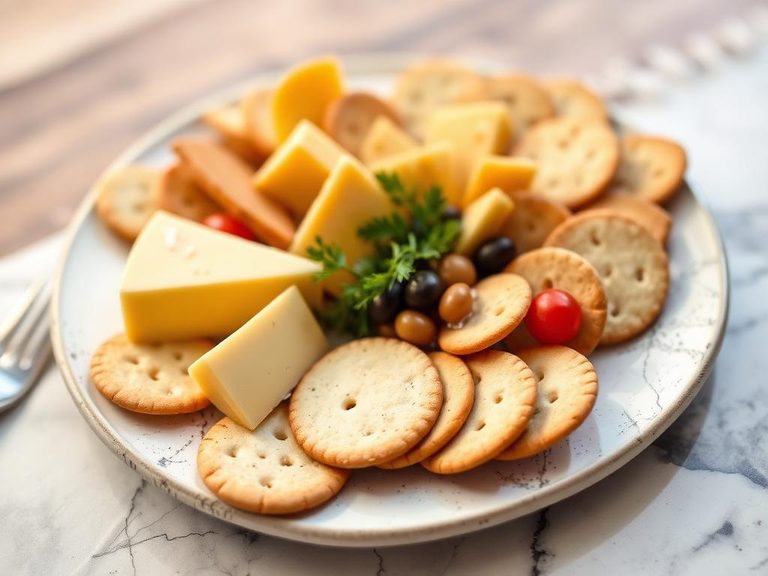
People love them for delivering a crunchy, flavorful snack experience without gluten, often using bold seasonings like rosemary, black pepper, or smoked paprika. They are a go-to for charcuterie boards, quick dips, and on-the-go snacking.
⚠️ Watch-outs & how to enjoy it better
They can be high in sodium, which may concern those monitoring blood pressure, and their refined starches can still impact blood sugar. To counteract this, pair them with protein-rich dips like hummus or cheese, or healthy fats like avocado, to slow digestion and improve satiety. Always check labels for added sugars or excessive salt.
Key benefits
- Naturally gluten-free, suitable for celiac or gluten-sensitive diets.
- Good source of dietary fiber (10.2g per 100g) for digestive health.
- Provides plant-based protein (11.25g per 100g) for satiety.
- Low in sugar (0.86g per 100g), avoiding excessive sweetness.
- Versatile base for both sweet and savory toppings.
🍽️ Popular dishes
🌍 Where it's eaten
💡 Did you know?
The word 'cracker' may have originated in the 19th century from the sound they make when bitten into, or from the practice of 'cracking' them open.
Full nutrition (USDA data · scales with serving)
| Water | 3.6 g |
| Energy | 453 kcal |
| Protein | 11.3 g |
| Total lipid (fat) | 15.8 g |
| Carbohydrate, by difference | 66.3 g |
| Fiber, total dietary | 10.2 g |
| Total Sugars | 0.86 g |
| Calcium, Ca | 238 mg |
| Iron, Fe | 2.8 mg |
| Magnesium, Mg | 164 mg |
| Phosphorus, P | 374 mg |
| Potassium, K | 381 mg |
| Sodium, Na | 438 mg |
| Zinc, Zn | 2.6 mg |
| Copper, Cu | 0.55 mg |
| Selenium, Se | 17.4 ug |
| Vitamin C, total ascorbic acid | 0.00 mg |
| Thiamin | 0.21 mg |
| Riboflavin | 0.17 mg |
| Niacin | 4.8 mg |
| Vitamin B-6 | 0.37 mg |
| Folate, total | 35.0 ug |
| Folic acid | 0.00 ug |
| Folate, food | 35.0 ug |
| Folate, DFE | 35.0 ug |
| Choline, total | 27.1 mg |
| Vitamin B-12 | 0.00 ug |
| Vitamin B-12, added | 0.00 ug |
| Vitamin A, RAE | 0.00 ug |
| Retinol | 0.00 ug |
| Carotene, beta | 4.0 ug |
| Carotene, alpha | 0.00 ug |
| Cryptoxanthin, beta | 0.00 ug |
| Lycopene | 0.00 ug |
| Lutein + zeaxanthin | 174 ug |
| Vitamin E (alpha-tocopherol) | 1.5 mg |
| Vitamin E, added | 0.00 mg |
| Vitamin D (D2 + D3) | 0.00 ug |
| Vitamin K (phylloquinone) | 13.7 ug |
| Alcohol, ethyl | 0.00 g |
| Caffeine | 0.00 mg |
| Theobromine | 0.00 mg |
Fat & fatty acid profile (per 100g)
| Fatty acids, total saturated | 2.1 g |
| SFA 4:0 | 0.00 g |
| SFA 6:0 | 0.00 g |
| SFA 8:0 | 0.00 g |
| SFA 10:0 | 0.00 g |
| SFA 12:0 | 0.00 g |
| SFA 14:0 | 0.01 g |
| SFA 16:0 | 1.3 g |
| SFA 18:0 | 0.67 g |
| Fatty acids, total monounsaturated | 7.0 g |
| MUFA 16:1 | 0.02 g |
| MUFA 18:1 | 6.9 g |
| MUFA 20:1 | 0.04 g |
| MUFA 22:1 | 0.01 g |
| Fatty acids, total polyunsaturated | 6.0 g |
| PUFA 18:2 | 5.0 g |
| PUFA 18:3 | 0.93 g |
| PUFA 18:4 | 0.00 g |
| PUFA 20:4 | 0.00 g |
| PUFA 20:5 n-3 (EPA) | 0.01 g |
| PUFA 22:5 n-3 (DPA) | 0.00 g |
| PUFA 22:6 n-3 (DHA) | 0.00 g |
| Cholesterol | 0.00 mg |
Amino acid profile (per 100g)
Estimated from Crackers, cheese, sandwich-type with cheese filling — USDA does not publish this profile for Crackers.
| Tryptophan | 0.11 g |
| Threonine | 0.33 g |
| Isoleucine | 0.36 g |
| Leucine | 0.64 g |
| Lysine | 0.39 g |
| Methionine | 0.15 g |
| Cystine | 0.15 g |
| Phenylalanine | 0.35 g |
| Tyrosine | 0.25 g |
| Valine | 0.38 g |
| Arginine | 0.29 g |
| Histidine | 0.17 g |
| Alanine | 0.30 g |
| Aspartic acid | 0.52 g |
| Glutamic acid | 2.2 g |
| Glycine | 0.24 g |
| Proline | 0.77 g |
| Serine | 0.40 g |
FAQ
Are gluten-free crackers healthier than regular ones?
Not necessarily. They are essential for those with gluten intolerance, but they can be similar in calories, fat, and sodium. Always compare nutrition labels, as some use nutrient-dense whole-grain flours while others rely on refined starches.
Why do some gluten-free crackers have a gritty texture?
This can come from the alternative flours used, like brown rice or sorghum, which don't have the same elasticity as wheat. High-quality brands often blend flours and use binders like xanthan gum to improve texture.
Can I use these in a cheesecake crust?
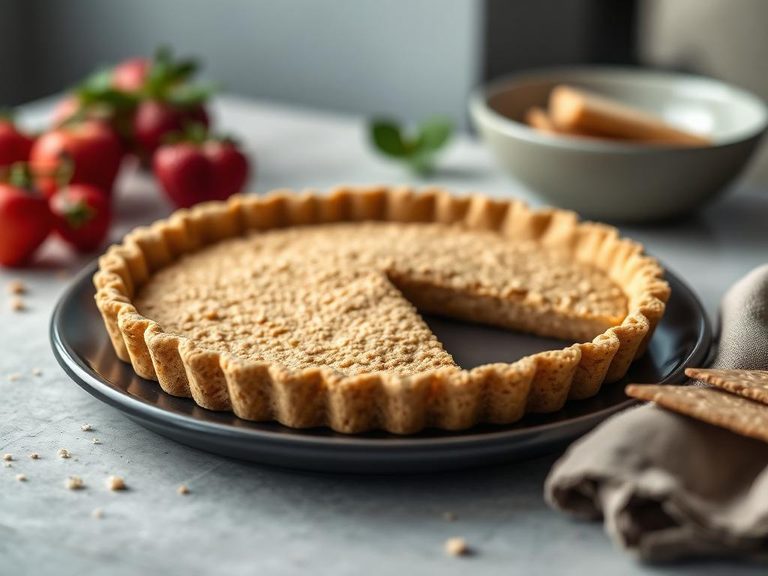
Yes, they are a popular gluten-free alternative to graham crackers. Crush them finely and mix with melted butter and sugar, then press into a pan and bake briefly to set.
Nutrient density (calculated · NRF9.3)
Nutrient Rich Foods index: beneficial nutrients (protein, fiber, vitamins, minerals) minus saturated fat, added sugar & sodium, per 100 kcal.
NRF9.3 index — Fulgoni, Keast & Drewnowski, 2009. Computed from USDA nutrients.
Weight-loss friendliness (composite index)
Energy density 4.53 kcal/g · 10% calories from protein · 10.2 g fiber · 0.9 g sugar per 100 g.
Composite of energy density (Rolls et al., 1999), protein & fiber satiety, minus sugar. A calculated heuristic — ranks satiety-per-calorie, not a clinical measure.
Dietary load (calculated from USDA values)
Potential renal acid load. Positive = acid-forming, negative = alkaline-forming.
Sodium-to-potassium ratio: 1.15 (lower is better — aim for ≤ 1)
Sodium:potassium per WHO potassium guidance. Computed from USDA nutrients.