

Cookies, coconut macaroon
Whole food · Baked Products

Photo: Wikipedia
A coconut macaroon is a dense, chewy confection made primarily from shredded coconut, egg whites, and sugar, often shaped into small mounds or rounds. It boasts a delightfully crisp, golden-brown exterior that gives way to a moist, intensely sweet, and coconut-rich interior. Nutritionally, it is a high-energy, high-carb treat, with a significant portion of its calories coming from sugar and fat.
Calorie split: 3% protein · 53% carbs · 44% fat
↓ Full nutrition💚 Why it's loved
People love macaroons for their intense, tropical coconut flavor and satisfyingly chewy texture that feels both indulgent and simple. They are a beloved staple at holiday gatherings and a classic accompaniment to afternoon tea or coffee across many cultures.
⚠️ Watch-outs & how to enjoy it better
The high sugar and fat content can lead to blood-sugar spikes and are a concern for those monitoring caloric intake or managing diabetes. To mitigate this, enjoy a single macaroon alongside a source of protein or healthy fat (like a handful of nuts) to slow sugar absorption, and practice strict portion control by choosing a smaller size or sharing. Those with tree nut allergies should avoid them entirely.
Key benefits
- Provides quick energy from its high carbohydrate content.
- Contains dietary fiber from shredded coconut.
- Offers a small amount of protein from egg whites.
- Gluten-free by nature, making it suitable for those with celiac disease or gluten sensitivity.
🍽️ Popular dishes
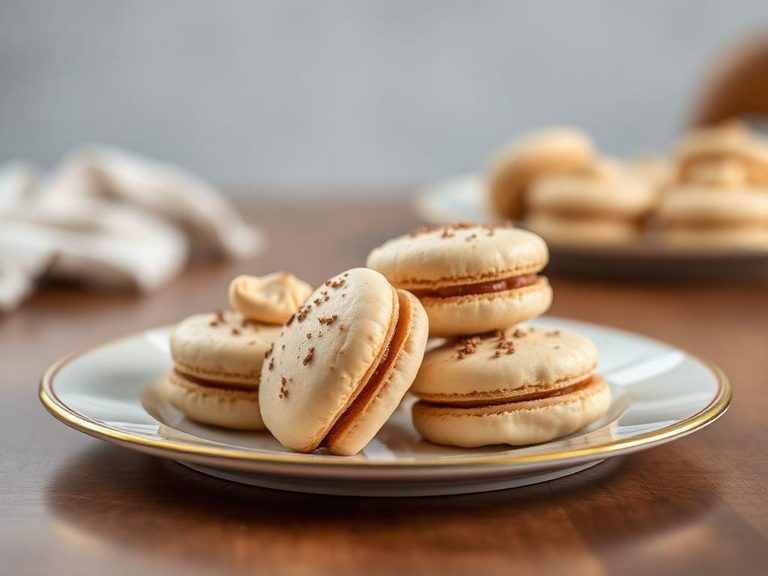
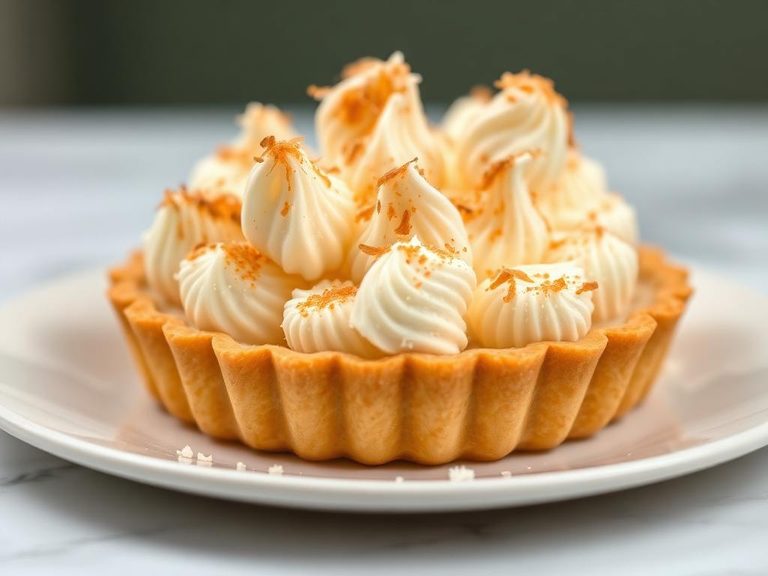
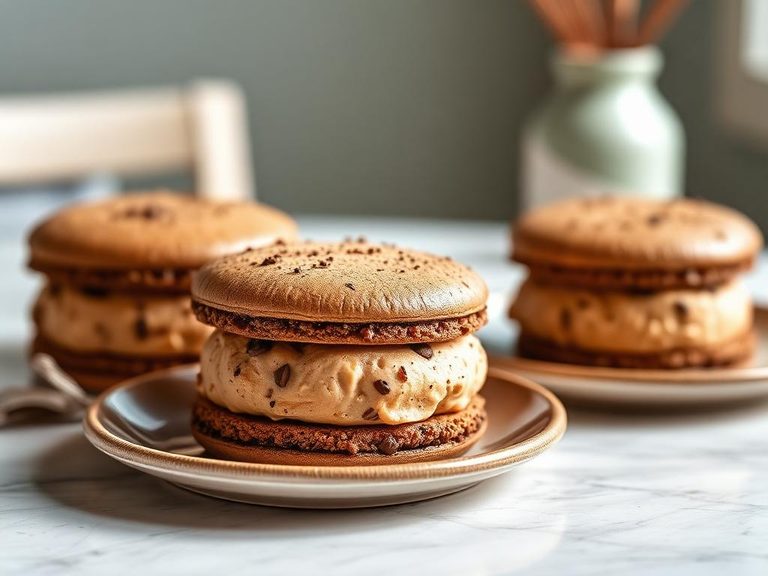
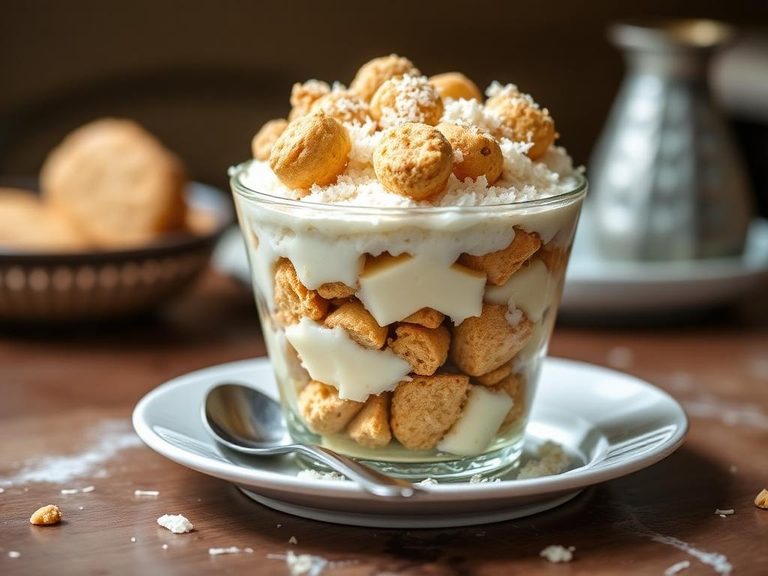
🌍 Where it's eaten
💡 Did you know?
The original macaroon was a flourless, almond-based cookie from Italy, but the coconut version we know today became popular in the United States in the 19th century after shredded coconut became widely available.
Full nutrition (USDA data · scales with serving)
| Water | 11.5 g |
| Energy | 460 kcal |
| Energy | 1924 kj |
| Protein | 3.0 g |
| Total lipid (fat) | 22.6 g |
| Ash | 1.7 g |
| Carbohydrate, by difference | 61.2 g |
| Fiber, total dietary | 5.1 g |
| Total Sugars | 45.2 g |
| Calcium, Ca | 5.0 mg |
| Iron, Fe | 0.82 mg |
| Magnesium, Mg | 29.0 mg |
| Phosphorus, P | 68.0 mg |
| Potassium, K | 123 mg |
| Sodium, Na | 241 mg |
| Zinc, Zn | 0.73 mg |
| Copper, Cu | 0.27 mg |
| Selenium, Se | 6.8 ug |
| Vitamin C, total ascorbic acid | 0.00 mg |
| Thiamin | 0.02 mg |
| Riboflavin | 0.06 mg |
| Niacin | 0.22 mg |
| Vitamin B-6 | 0.10 mg |
| Folate, total | 3.0 ug |
| Folic acid | 0.00 ug |
| Folate, food | 3.0 ug |
| Folate, DFE | 3.0 ug |
| Choline, total | 9.1 mg |
| Vitamin B-12 | 0.00 ug |
| Vitamin B-12, added | 0.00 ug |
| Vitamin A, RAE | 0.00 ug |
| Retinol | 0.00 ug |
| Carotene, beta | 0.00 ug |
| Carotene, alpha | 0.00 ug |
| Cryptoxanthin, beta | 0.00 ug |
| Vitamin A, IU | 0.00 iu |
| Lycopene | 0.00 ug |
| Lutein + zeaxanthin | 0.00 ug |
| Vitamin E (alpha-tocopherol) | 0.19 mg |
| Vitamin E, added | 0.00 mg |
| Vitamin D (D2 + D3), International Units | 0.00 iu |
| Vitamin D (D2 + D3) | 0.00 ug |
| Vitamin K (phylloquinone) | 1.1 ug |
| Alcohol, ethyl | 0.00 g |
| Caffeine | 0.00 mg |
| Theobromine | 0.00 mg |
Fat & fatty acid profile (per 100g)
| Fatty acids, total saturated | 20.1 g |
| SFA 4:0 | 0.00 g |
| SFA 6:0 | 0.13 g |
| SFA 8:0 | 1.6 g |
| SFA 10:0 | 1.3 g |
| SFA 12:0 | 10.0 g |
| SFA 14:0 | 4.0 g |
| SFA 16:0 | 2.0 g |
| SFA 18:0 | 1.2 g |
| Fatty acids, total monounsaturated | 1.6 g |
| MUFA 16:1 | 0.00 g |
| MUFA 18:1 | 1.6 g |
| MUFA 20:1 | 0.00 g |
| MUFA 22:1 | 0.00 g |
| Fatty acids, total polyunsaturated | 0.81 g |
| PUFA 18:2 | 0.76 g |
| PUFA 18:3 | 0.05 g |
| PUFA 18:4 | 0.00 g |
| PUFA 20:4 | 0.00 g |
| PUFA 20:5 n-3 (EPA) | 0.00 g |
| PUFA 22:5 n-3 (DPA) | 0.00 g |
| PUFA 22:6 n-3 (DHA) | 0.00 g |
| Cholesterol | 0.00 mg |
Amino acid profile (per 100g)
Estimated from Cookies, animal crackers (includes arrowroot, tea biscuits) — USDA does not publish this profile for Cookies.
| Tryptophan | 0.10 g |
| Threonine | 0.19 g |
| Isoleucine | 0.26 g |
| Leucine | 0.47 g |
| Lysine | 0.24 g |
| Methionine | 0.12 g |
| Cystine | 0.15 g |
| Phenylalanine | 0.32 g |
| Tyrosine | 0.20 g |
| Valine | 0.30 g |
| Arginine | 0.26 g |
| Histidine | 0.14 g |
| Alanine | 0.21 g |
| Aspartic acid | 0.29 g |
| Glutamic acid | 2.3 g |
| Glycine | 0.23 g |
| Proline | 0.76 g |
| Serine | 0.36 g |
FAQ
What is the difference between a macaroon and a macaron?
A macaroon is a dense, chewy cookie made primarily from shredded coconut, egg whites, and sugar. A macaron is a delicate, almond-based French sandwich cookie with a meringue-like texture and a filling, often made with ganache or buttercream.
Are coconut macaroons gluten-free?
Yes, traditional coconut macaroons are naturally gluten-free as they are made with coconut, egg whites, and sugar, not wheat flour. However, always check labels if they are commercially produced, as cross-contamination can occur.
How should I store coconut macaroons?
Store them in an airtight container at room temperature for up to a week, or in the refrigerator for up to two weeks. They can also be frozen for up to three months; thaw at room temperature before serving.
Nutrient density (calculated · NRF9.3)
Nutrient Rich Foods index: beneficial nutrients (protein, fiber, vitamins, minerals) minus saturated fat, added sugar & sodium, per 100 kcal.
NRF9.3 index — Fulgoni, Keast & Drewnowski, 2009. Computed from USDA nutrients.
Weight-loss friendliness (composite index)
Energy density 4.60 kcal/g · 3% calories from protein · 5.1 g fiber · 45.2 g sugar per 100 g.
Composite of energy density (Rolls et al., 1999), protein & fiber satiety, minus sugar. A calculated heuristic — ranks satiety-per-calorie, not a clinical measure.
Dietary load (calculated from USDA values)
Potential renal acid load. Positive = acid-forming, negative = alkaline-forming.
Sodium-to-potassium ratio: 1.96 (lower is better — aim for ≤ 1)
Sodium:potassium per WHO potassium guidance. Computed from USDA nutrients.