

Cookie, sugar or plain, sugar free
Common food

Photo: Wikipedia
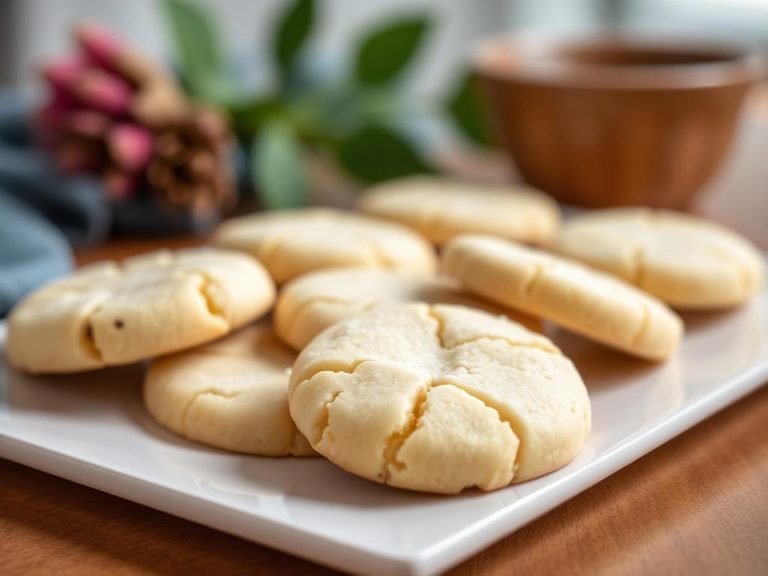
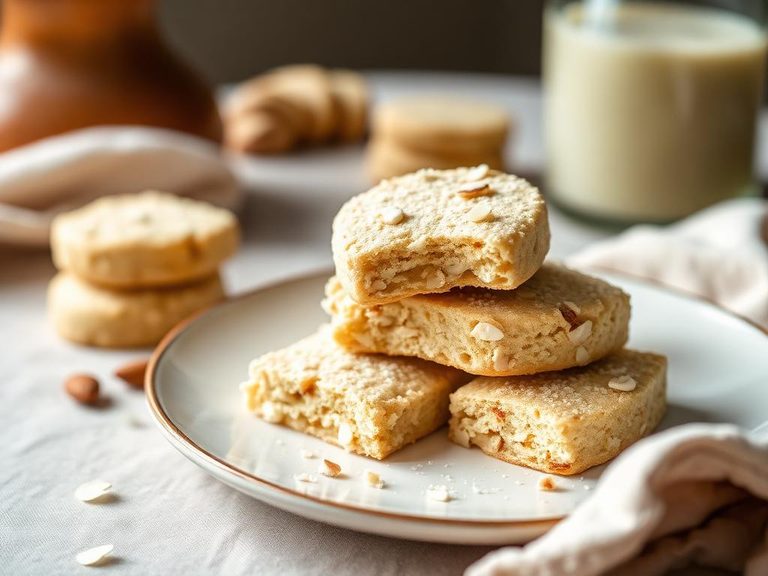
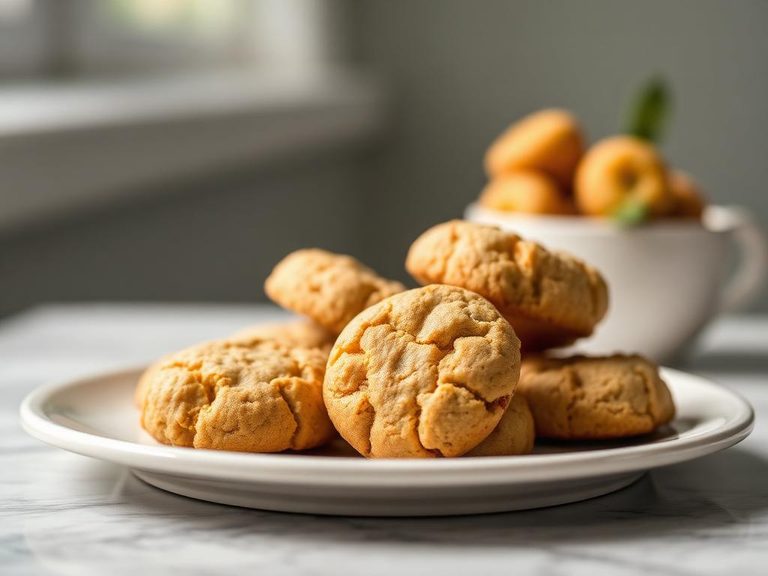
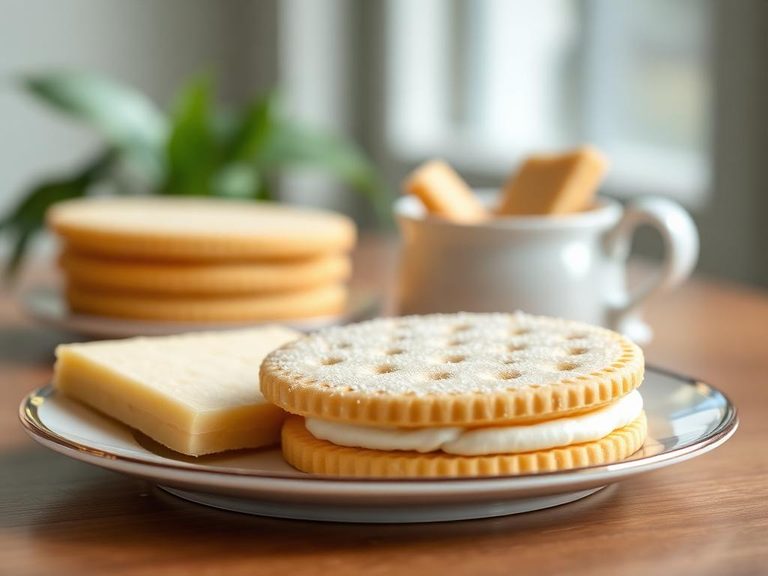
A crisp, buttery biscuit with a satisfying snap, this sugar-free sugar cookie achieves its classic texture and flavor without the glycemic impact of traditional versions. Its high fat and protein content, derived from ingredients like almond flour or butter, creates a rich, indulgent mouthfeel that belies its lack of added sugar. This makes it a compelling option for those seeking a sweet treat with a more balanced nutritional profile.
Calorie split: 8% protein · 39% carbs · 53% fat
↓ Full nutrition💚 Why it's loved
People love it for delivering the nostalgic, comforting flavor and satisfying crunch of a classic sugar cookie without the sugar crash. Its versatility makes it a perfect base for decorating or pairing with coffee, fitting seamlessly into both festive occasions and everyday snacking.
⚠️ Watch-outs & how to enjoy it better
The high fat content (31.03g per 100g) and calorie density (523 kcal per 100g) can be a concern for those monitoring caloric intake. It may also contain common allergens like wheat (gluten) and dairy (butter), and some sugar-free sweeteners can cause digestive discomfort in sensitive individuals. To counteract, practice portion control (e.g., one cookie as a treat), pair with a source of fiber like fruit, and check labels for specific allergens or sugar alcohols.
Key benefits
- Provides a sweet treat without added sugar, supporting stable blood sugar levels.
- High in protein (10.34g per 100g) for satiety and muscle maintenance.
- Contains dietary fiber (3.4g per 100g) to aid digestion.
- Offers a source of healthy fats from ingredients like butter or nut flours.
- Can be a suitable dessert option for low-sugar or diabetic-friendly diets.
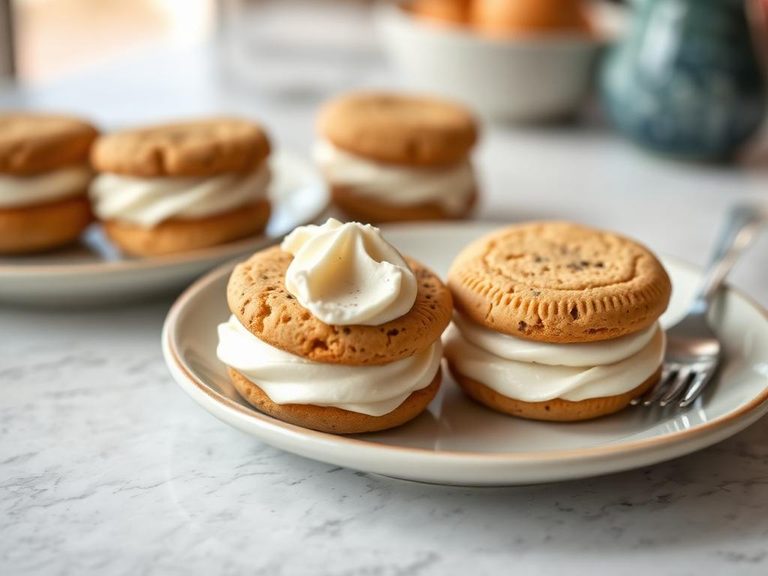
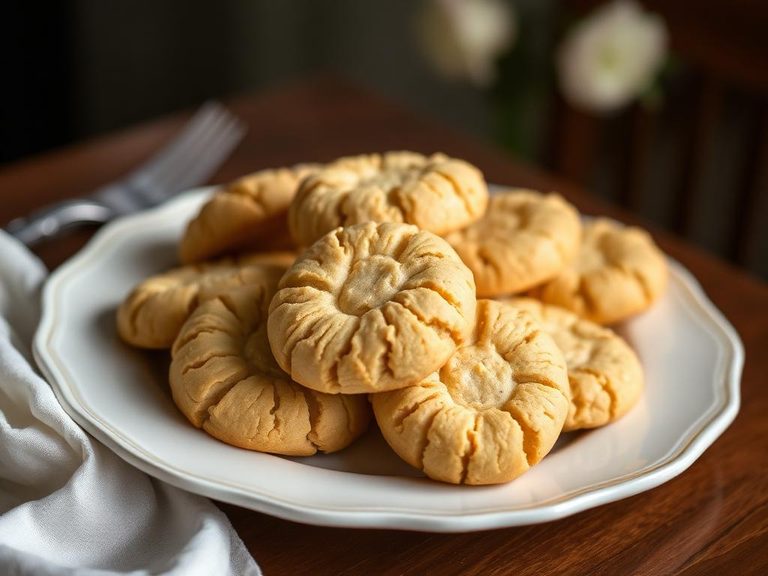
🍽️ Popular dishes
🌍 Where it's eaten
💡 Did you know?
The original sugar cookie, known as the 'Nazareth Sugar Cookie,' is said to have been created in the 1700s by Moravian settlers in Nazareth, Pennsylvania, and was a simple, round, flat, and sweetened biscuit.
Full nutrition (USDA data · scales with serving)
| Water | 6.2 g |
| Energy | 523 kcal |
| Protein | 10.3 g |
| Total lipid (fat) | 31.0 g |
| Carbohydrate, by difference | 50.5 g |
| Fiber, total dietary | 3.4 g |
| Total Sugars | 0.00 g |
| Calcium, Ca | 0.00 mg |
| Iron, Fe | 2.5 mg |
| Magnesium, Mg | 49.0 mg |
| Phosphorus, P | 132 mg |
| Potassium, K | 202 mg |
| Sodium, Na | 448 mg |
| Zinc, Zn | 1.1 mg |
| Copper, Cu | 0.20 mg |
| Selenium, Se | 16.6 ug |
| Vitamin C, total ascorbic acid | 0.00 mg |
| Thiamin | 0.34 mg |
| Riboflavin | 0.22 mg |
| Niacin | 5.5 mg |
| Vitamin B-6 | 0.11 mg |
| Folate, total | 83.0 ug |
| Folic acid | 48.0 ug |
| Folate, food | 35.0 ug |
| Folate, DFE | 117 ug |
| Choline, total | 38.5 mg |
| Vitamin B-12 | 0.00 ug |
| Vitamin B-12, added | 0.00 ug |
| Vitamin A, RAE | 0.00 ug |
| Retinol | 0.00 ug |
| Carotene, beta | 0.00 ug |
| Carotene, alpha | 0.00 ug |
| Cryptoxanthin, beta | 0.00 ug |
| Lycopene | 0.00 ug |
| Lutein + zeaxanthin | 31.0 ug |
| Vitamin E (alpha-tocopherol) | 3.5 mg |
| Vitamin E, added | 0.00 mg |
| Vitamin D (D2 + D3) | 0.00 ug |
| Vitamin K (phylloquinone) | 34.8 ug |
| Alcohol, ethyl | 0.00 g |
| Caffeine | 0.00 mg |
| Theobromine | 0.00 mg |
Fat & fatty acid profile (per 100g)
| Fatty acids, total saturated | 8.6 g |
| SFA 4:0 | 0.00 g |
| SFA 6:0 | 0.00 g |
| SFA 8:0 | 0.00 g |
| SFA 10:0 | 0.00 g |
| SFA 12:0 | 0.03 g |
| SFA 14:0 | 0.06 g |
| SFA 16:0 | 5.9 g |
| SFA 18:0 | 1.8 g |
| Fatty acids, total monounsaturated | 7.7 g |
| MUFA 16:1 | 0.03 g |
| MUFA 18:1 | 7.6 g |
| MUFA 20:1 | 0.14 g |
| MUFA 22:1 | 0.00 g |
| Fatty acids, total polyunsaturated | 11.5 g |
| PUFA 18:2 | 10.5 g |
| PUFA 18:3 | 0.99 g |
| PUFA 18:4 | 0.00 g |
| PUFA 20:4 | 0.00 g |
| PUFA 20:5 n-3 (EPA) | 0.00 g |
| PUFA 22:5 n-3 (DPA) | 0.00 g |
| PUFA 22:6 n-3 (DHA) | 0.00 g |
| Cholesterol | 17.0 mg |
Amino acid profile (per 100g)
Estimated from Pie Crust, Cookie-type, Chocolate, Ready Crust — USDA does not publish this profile for Cookie.
| Tryptophan | 0.08 g |
| Threonine | 0.20 g |
| Isoleucine | 0.23 g |
| Leucine | 0.38 g |
| Lysine | 0.24 g |
| Methionine | 0.07 g |
| Cystine | 0.11 g |
| Phenylalanine | 0.28 g |
| Tyrosine | 0.16 g |
| Valine | 0.32 g |
| Arginine | 0.29 g |
| Histidine | 0.11 g |
| Alanine | 0.24 g |
| Aspartic acid | 0.45 g |
| Glutamic acid | 1.3 g |
| Glycine | 0.24 g |
| Proline | 0.42 g |
| Serine | 0.26 g |
FAQ
What sweetener is typically used in sugar-free sugar cookies?
Common sugar-free sweeteners include erythritol, stevia, monk fruit, or allulose. These provide sweetness without the calories or blood sugar impact of regular sugar.
How does the texture differ from a regular sugar cookie?
Sugar-free versions can be slightly crumblier or denser, depending on the sweetener and flour used. Almond flour or coconut flour often yields a more tender, shortbread-like texture.
Are sugar-free sugar cookies suitable for people with diabetes?
They can be a better option than traditional cookies, but it's crucial to check the specific ingredients and their glycemic impact. Some sugar alcohols can still affect blood sugar, and portion control is key.
Can I use these cookies in baking recipes that call for regular cookies?
They can often be used as a substitute for a crust or topping, but the different texture and fat content may affect the final result. It's best to test a small batch first.
Nutrient density (calculated · NRF9.3)
Nutrient Rich Foods index: beneficial nutrients (protein, fiber, vitamins, minerals) minus saturated fat, added sugar & sodium, per 100 kcal.
NRF9.3 index — Fulgoni, Keast & Drewnowski, 2009. Computed from USDA nutrients.
Weight-loss friendliness (composite index)
Energy density 5.23 kcal/g · 8% calories from protein · 3.4 g fiber · 0.0 g sugar per 100 g.
Composite of energy density (Rolls et al., 1999), protein & fiber satiety, minus sugar. A calculated heuristic — ranks satiety-per-calorie, not a clinical measure.
Dietary load (calculated from USDA values)
Potential renal acid load. Positive = acid-forming, negative = alkaline-forming.
Sodium-to-potassium ratio: 2.22 (lower is better — aim for ≤ 1)
Sodium:potassium per WHO potassium guidance. Computed from USDA nutrients.