

Cookie, meringue
Common food

Photo: Wikipedia
Meringue cookies are ethereal, cloud-like confections made by whipping egg whites with sugar until stiff and glossy, then baking at a low temperature until crisp and dry. They offer a pure, intense sweetness with a delicate, shattering texture that dissolves on the tongue, containing virtually no fat. Nutritionally, they are a concentrated source of simple carbohydrates, providing quick energy with minimal protein or other macronutrients.
Calorie split: 6% protein · 93% carbs · 1% fat
↓ Full nutrition💚 Why it's loved
People love meringues for their satisfyingly crisp shell and airy, melt-in-your-mouth interior, which delivers a pure, unadulterated sugar rush. They are also cherished for their versatility as a base for countless elegant desserts, from Pavlova to lemon meringue pie.
⚠️ Watch-outs & how to enjoy it better
Due to their very high sugar content (over 80g per 100g), they can cause rapid blood-sugar spikes, making them a poor choice for individuals managing diabetes or insulin resistance. To mitigate this, enjoy them in small portions as part of a balanced meal that includes protein and healthy fats to slow sugar absorption. They are also a common vehicle for nuts or chocolate, which are frequent allergens.
Key benefits
- Provides quick energy from simple sugars.
- Fat-free and cholesterol-free.
- Low in sodium.
- Lightweight and portable.
- Naturally gluten-free (when prepared without additives).
🍽️ Popular dishes
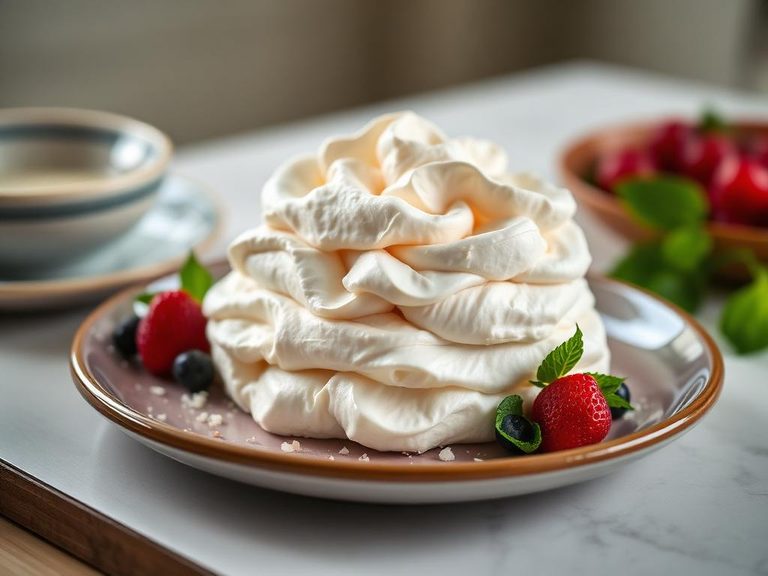
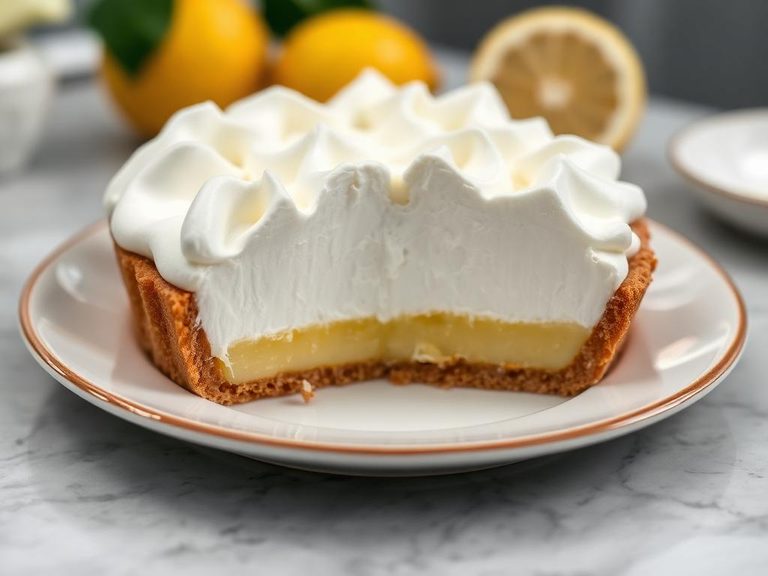
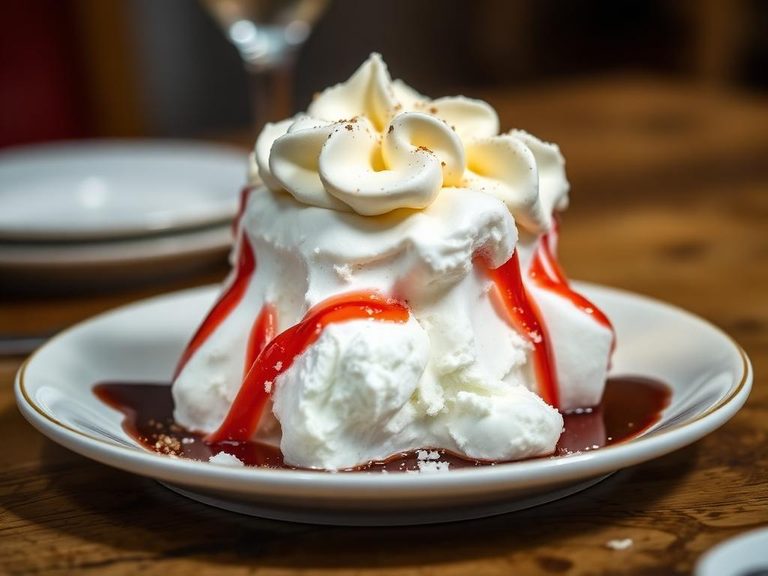
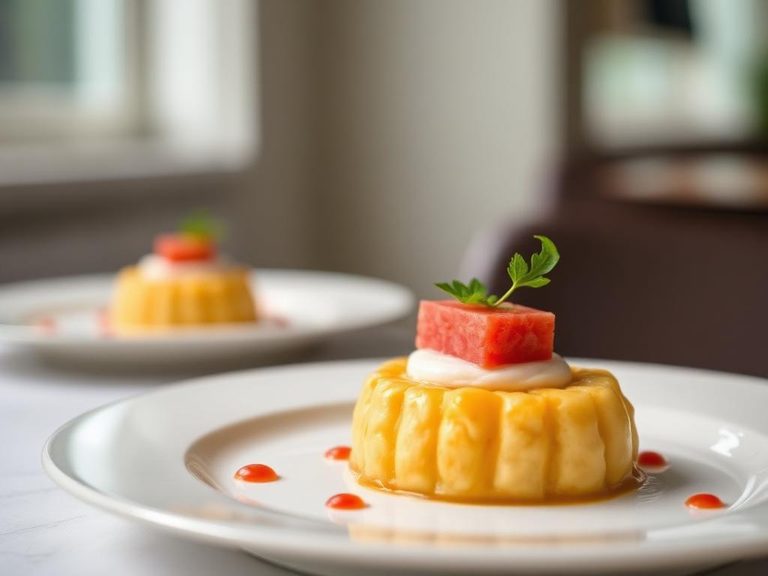
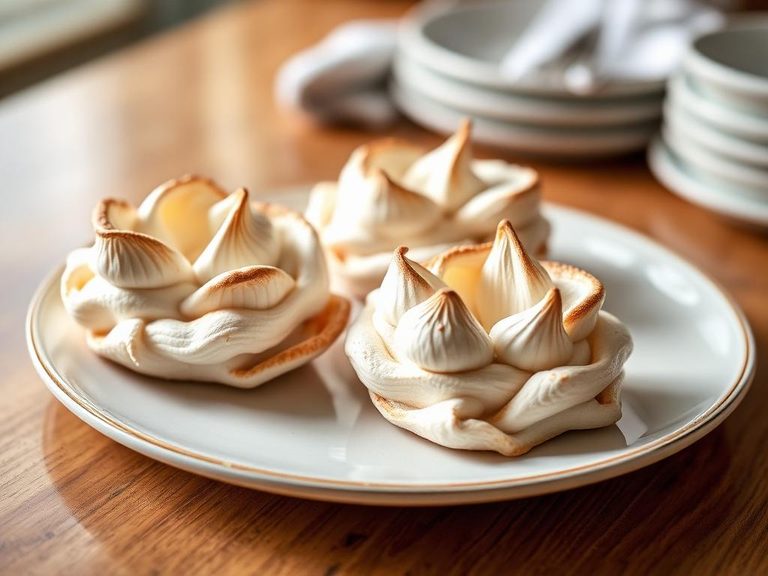
🌍 Where it's eaten
💡 Did you know?
The name 'meringue' is thought to have originated in the Swiss town of Meiringen, though the French and Italians both claim to have perfected the technique of stabilizing egg whites with sugar.
Full nutrition (USDA data · scales with serving)
| Water | 12.0 g |
| Energy | 350 kcal |
| Protein | 5.7 g |
| Total lipid (fat) | 0.26 g |
| Carbohydrate, by difference | 81.3 g |
| Fiber, total dietary | 0.00 g |
| Total Sugars | 80.6 g |
| Calcium, Ca | 5.0 mg |
| Iron, Fe | 0.08 mg |
| Magnesium, Mg | 6.0 mg |
| Phosphorus, P | 8.0 mg |
| Potassium, K | 88.0 mg |
| Sodium, Na | 244 mg |
| Zinc, Zn | 0.02 mg |
| Copper, Cu | 0.02 mg |
| Selenium, Se | 9.9 ug |
| Vitamin C, total ascorbic acid | 0.00 mg |
| Thiamin | 0.00 mg |
| Riboflavin | 0.21 mg |
| Niacin | 0.05 mg |
| Vitamin B-6 | 0.00 mg |
| Folate, total | 2.0 ug |
| Folic acid | 0.00 ug |
| Folate, food | 2.0 ug |
| Folate, DFE | 2.0 ug |
| Choline, total | 0.50 mg |
| Vitamin B-12 | 0.04 ug |
| Vitamin B-12, added | 0.00 ug |
| Vitamin A, RAE | 0.00 ug |
| Retinol | 0.00 ug |
| Carotene, beta | 0.00 ug |
| Carotene, alpha | 0.00 ug |
| Cryptoxanthin, beta | 0.00 ug |
| Lycopene | 0.00 ug |
| Lutein + zeaxanthin | 0.00 ug |
| Vitamin E (alpha-tocopherol) | 0.00 mg |
| Vitamin E, added | 0.00 mg |
| Vitamin D (D2 + D3) | 0.00 ug |
| Vitamin K (phylloquinone) | 0.00 ug |
| Alcohol, ethyl | 0.00 g |
| Caffeine | 0.00 mg |
| Theobromine | 0.00 mg |
Fat & fatty acid profile (per 100g)
| Fatty acids, total saturated | 0.00 g |
| SFA 4:0 | 0.00 g |
| SFA 6:0 | 0.00 g |
| SFA 8:0 | 0.00 g |
| SFA 10:0 | 0.00 g |
| SFA 12:0 | 0.00 g |
| SFA 14:0 | 0.00 g |
| SFA 16:0 | 0.00 g |
| SFA 18:0 | 0.00 g |
| Fatty acids, total monounsaturated | 0.00 g |
| MUFA 16:1 | 0.00 g |
| MUFA 18:1 | 0.00 g |
| MUFA 20:1 | 0.00 g |
| MUFA 22:1 | 0.00 g |
| Fatty acids, total polyunsaturated | 0.00 g |
| PUFA 18:2 | 0.00 g |
| PUFA 18:3 | 0.00 g |
| PUFA 18:4 | 0.00 g |
| PUFA 20:4 | 0.00 g |
| PUFA 20:5 n-3 (EPA) | 0.00 g |
| PUFA 22:5 n-3 (DPA) | 0.00 g |
| PUFA 22:6 n-3 (DHA) | 0.00 g |
| Cholesterol | 0.00 mg |
Amino acid profile (per 100g)
Estimated from Pie Crust, Cookie-type, Chocolate, Ready Crust — USDA does not publish this profile for Cookie.
| Tryptophan | 0.08 g |
| Threonine | 0.20 g |
| Isoleucine | 0.23 g |
| Leucine | 0.38 g |
| Lysine | 0.24 g |
| Methionine | 0.07 g |
| Cystine | 0.11 g |
| Phenylalanine | 0.28 g |
| Tyrosine | 0.16 g |
| Valine | 0.32 g |
| Arginine | 0.29 g |
| Histidine | 0.11 g |
| Alanine | 0.24 g |
| Aspartic acid | 0.45 g |
| Glutamic acid | 1.3 g |
| Glycine | 0.24 g |
| Proline | 0.42 g |
| Serine | 0.26 g |
FAQ
A chewy interior usually means the meringue was underbaked or the humidity was high during baking or cooling. Ensure it bakes long enough to dry out completely, and store it in an airtight container with a desiccant packet.
A chewy interior usually means the meringue was underbaked or the humidity was high during baking or cooling. Ensure it bakes long enough to dry out completely, and store it in an airtight container with a desiccant packet.
Can meringues be made without sugar?
No. Sugar is not just for sweetness; it stabilizes the egg-white foam, creates the crisp texture, and prevents the meringue from collapsing. Sugar-free versions would not hold their structure.
Why do my meringues weep or become sticky?
Weeping (beads of syrup on the surface) is often caused by underbeating the egg whites, underfolding the sugar, or overbaking. Using a clean, grease-free bowl and ensuring sugar is fully dissolved before baking helps prevent this.
Nutrient density (calculated · NRF9.3)
Nutrient Rich Foods index: beneficial nutrients (protein, fiber, vitamins, minerals) minus saturated fat, added sugar & sodium, per 100 kcal.
NRF9.3 index — Fulgoni, Keast & Drewnowski, 2009. Computed from USDA nutrients.
Weight-loss friendliness (composite index)
Energy density 3.50 kcal/g · 6% calories from protein · 0.0 g fiber · 80.6 g sugar per 100 g.
Composite of energy density (Rolls et al., 1999), protein & fiber satiety, minus sugar. A calculated heuristic — ranks satiety-per-calorie, not a clinical measure.
Dietary load (calculated from USDA values)
Potential renal acid load. Positive = acid-forming, negative = alkaline-forming.
Sodium-to-potassium ratio: 2.77 (lower is better — aim for ≤ 1)
Sodium:potassium per WHO potassium guidance. Computed from USDA nutrients.