

Pie, lemon meringue
Common food

Photo: Wikipedia
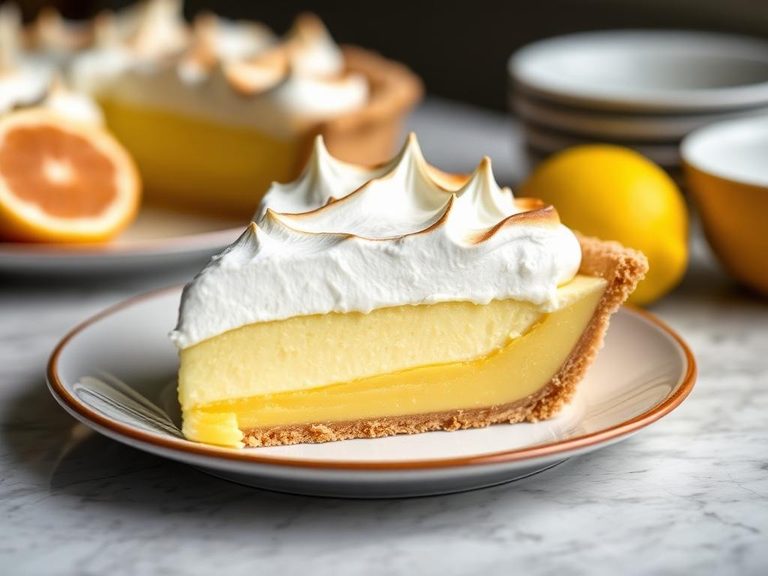
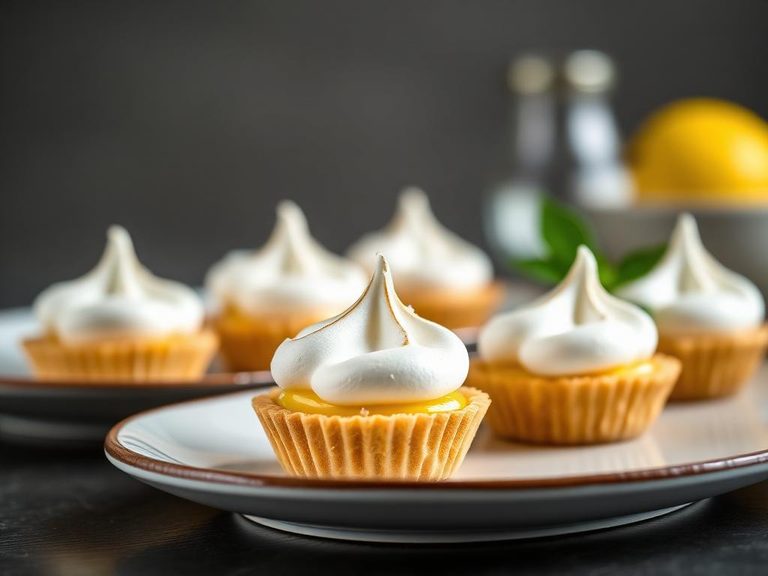
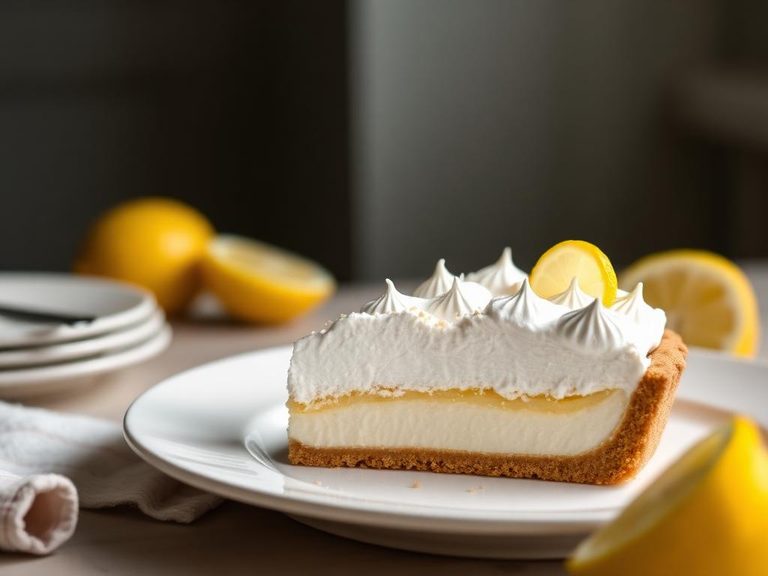
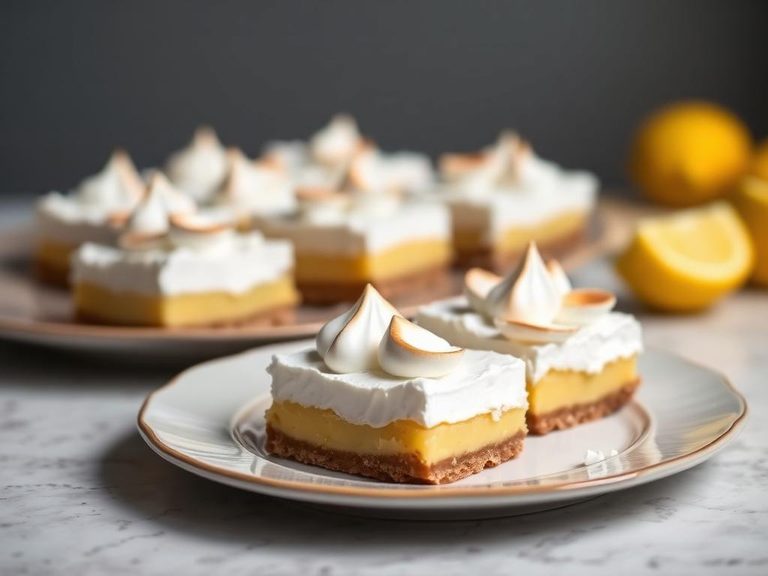
Lemon meringue pie is a vibrant dessert with a crisp, buttery crust holding a silky, intensely tart lemon curd, all crowned by a billowy, sweet meringue that's often toasted to a golden brown. Its signature contrast of sharp citrus and sweet, airy topping makes it a classic. Nutritionally, it's a significant source of carbohydrates and added sugars, with a modest amount of fat from the crust and egg yolks.
Calorie split: 6% protein · 59% carbs · 35% fat
↓ Full nutrition💚 Why it's loved
People adore the electrifying contrast between the mouth-puckering lemon filling and the sweet, cloud-like meringue, a perfect balance of tart and sweet. It's a nostalgic showstopper, often the centerpiece at family gatherings and holiday meals.
⚠️ Watch-outs & how to enjoy it better
Its high sugar content can cause rapid blood-sugar spikes, and the buttery crust adds saturated fat. Those monitoring blood sugar or calorie intake should practice strict portion control. To mitigate, enjoy a small slice alongside a source of protein or healthy fat (like a handful of nuts) to slow sugar absorption, and consider it an occasional treat rather than a regular dessert.
Key benefits
- Provides quick energy from carbohydrates
- Contains some protein from eggs in the curd and meringue
- Offers small amounts of vitamins A and C from lemon juice
- Source of dietary fat for satiety
- A traditional celebratory dessert in many cultures
🍽️ Popular dishes
🌍 Where it's eaten
💡 Did you know?
The modern lemon meringue pie is believed to have evolved from a 19th-century recipe called 'Lemon Pudding Cake,' where the batter magically separated into a lemon sauce layer and a sponge cake layer during baking.
Full nutrition (USDA data · scales with serving)
| Water | 39.7 g |
| Energy | 294 kcal |
| Protein | 4.5 g |
| Total lipid (fat) | 11.3 g |
| Carbohydrate, by difference | 43.7 g |
| Fiber, total dietary | 1.1 g |
| Total Sugars | 26.4 g |
| Calcium, Ca | 17.0 mg |
| Iron, Fe | 1.3 mg |
| Magnesium, Mg | 8.0 mg |
| Phosphorus, P | 63.0 mg |
| Potassium, K | 67.0 mg |
| Sodium, Na | 179 mg |
| Zinc, Zn | 0.42 mg |
| Copper, Cu | 0.04 mg |
| Selenium, Se | 8.4 ug |
| Vitamin C, total ascorbic acid | 0.60 mg |
| Thiamin | 0.11 mg |
| Riboflavin | 0.13 mg |
| Niacin | 1.1 mg |
| Vitamin B-6 | 0.03 mg |
| Folate, total | 33.0 ug |
| Folic acid | 16.0 ug |
| Folate, food | 17.0 ug |
| Folate, DFE | 44.0 ug |
| Choline, total | 56.1 mg |
| Vitamin B-12 | 0.16 ug |
| Vitamin B-12, added | 0.00 ug |
| Vitamin A, RAE | 35.0 ug |
| Retinol | 34.0 ug |
| Carotene, beta | 0.00 ug |
| Carotene, alpha | 0.00 ug |
| Cryptoxanthin, beta | 4.0 ug |
| Lycopene | 0.00 ug |
| Lutein + zeaxanthin | 97.0 ug |
| Vitamin E (alpha-tocopherol) | 0.39 mg |
| Vitamin E, added | 0.00 mg |
| Vitamin D (D2 + D3) | 0.50 ug |
| Vitamin K (phylloquinone) | 2.6 ug |
| Alcohol, ethyl | 0.00 g |
| Caffeine | 0.00 mg |
| Theobromine | 0.00 mg |
Fat & fatty acid profile (per 100g)
| Fatty acids, total saturated | 3.6 g |
| SFA 4:0 | 0.00 g |
| SFA 6:0 | 0.00 g |
| SFA 8:0 | 0.00 g |
| SFA 10:0 | 0.00 g |
| SFA 12:0 | 0.00 g |
| SFA 14:0 | 0.09 g |
| SFA 16:0 | 2.2 g |
| SFA 18:0 | 1.3 g |
| Fatty acids, total monounsaturated | 5.1 g |
| MUFA 16:1 | 0.18 g |
| MUFA 18:1 | 4.9 g |
| MUFA 20:1 | 0.05 g |
| MUFA 22:1 | 0.00 g |
| Fatty acids, total polyunsaturated | 1.5 g |
| PUFA 18:2 | 1.4 g |
| PUFA 18:3 | 0.05 g |
| PUFA 18:4 | 0.00 g |
| PUFA 20:4 | 0.01 g |
| PUFA 20:5 n-3 (EPA) | 0.00 g |
| PUFA 22:5 n-3 (DPA) | 0.00 g |
| PUFA 22:6 n-3 (DHA) | 0.00 g |
| Cholesterol | 79.0 mg |
Amino acid profile (per 100g)
Estimated from Pie Crust, Cookie-type, Chocolate, Ready Crust — USDA does not publish this profile for Pie.
| Tryptophan | 0.08 g |
| Threonine | 0.20 g |
| Isoleucine | 0.23 g |
| Leucine | 0.38 g |
| Lysine | 0.24 g |
| Methionine | 0.07 g |
| Cystine | 0.11 g |
| Phenylalanine | 0.28 g |
| Tyrosine | 0.16 g |
| Valine | 0.32 g |
| Arginine | 0.29 g |
| Histidine | 0.11 g |
| Alanine | 0.24 g |
| Aspartic acid | 0.45 g |
| Glutamic acid | 1.3 g |
| Glycine | 0.24 g |
| Proline | 0.42 g |
| Serine | 0.26 g |
FAQ
Why does the meringue weep or become watery?
This is often caused by undercooking the meringue, not sealing it to the hot filling to create a steam barrier, or using a bowl with any trace of fat or yolk, which prevents the egg whites from forming a stable foam.
Can I make lemon meringue pie ahead of time?
The assembled pie is best served within 6-8 hours. The crust can become soggy from the filling's moisture. For best results, bake the crust and make the filling separately, then assemble and top with meringue just before serving.
What's the difference between French, Swiss, and Italian meringue for this pie?
French meringue (raw sugar beaten into whites) is most common but least stable. Swiss meringue (whites and sugar warmed over a bain-marie) is silkier. Italian meringue (hot sugar syrup poured into whipping whites) is the most stable and food-safe, but requires a candy thermometer.
Nutrient density (calculated · NRF9.3)
Nutrient Rich Foods index: beneficial nutrients (protein, fiber, vitamins, minerals) minus saturated fat, added sugar & sodium, per 100 kcal.
NRF9.3 index — Fulgoni, Keast & Drewnowski, 2009. Computed from USDA nutrients.
Weight-loss friendliness (composite index)
Energy density 2.94 kcal/g · 6% calories from protein · 1.1 g fiber · 26.4 g sugar per 100 g.
Composite of energy density (Rolls et al., 1999), protein & fiber satiety, minus sugar. A calculated heuristic — ranks satiety-per-calorie, not a clinical measure.
Dietary load (calculated from USDA values)
Potential renal acid load. Positive = acid-forming, negative = alkaline-forming.
Sodium-to-potassium ratio: 2.67 (lower is better — aim for ≤ 1)
Sodium:potassium per WHO potassium guidance. Computed from USDA nutrients.