

Meringues
Common food

Photo: Wikipedia
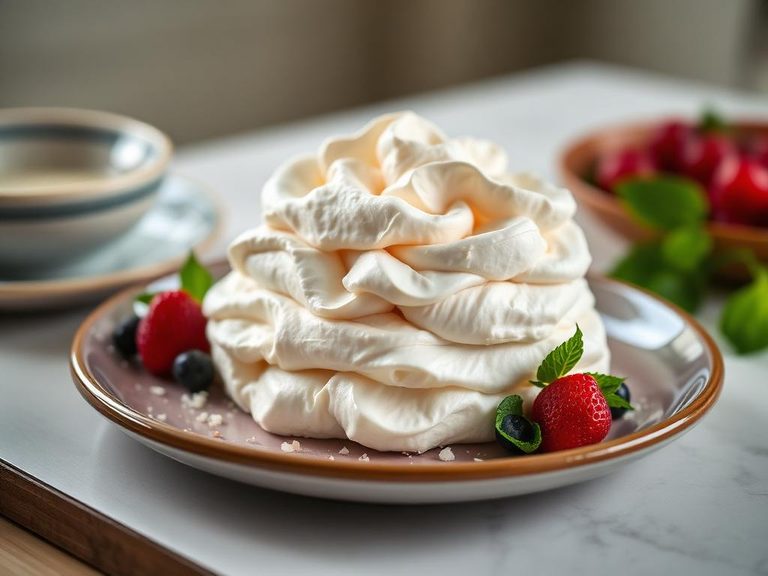
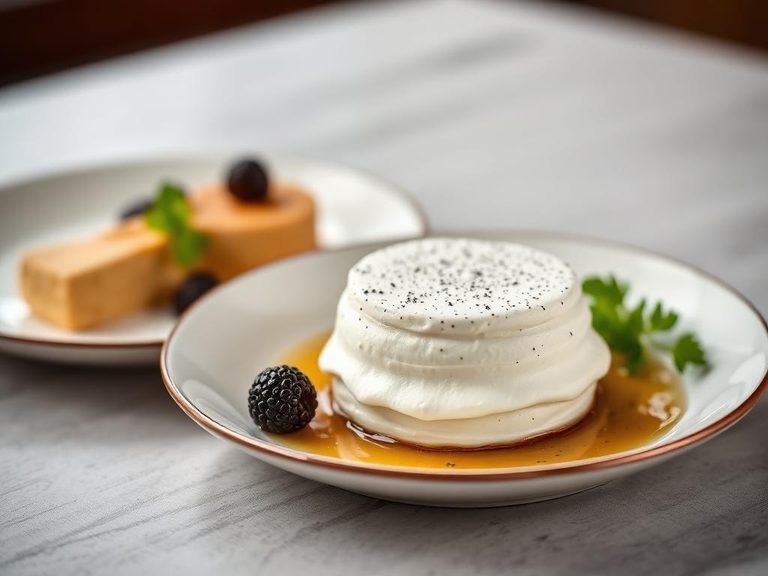
Meringues are light, airy confections made from whipped egg whites and sugar, baked until crisp on the outside with a delicate, marshmallow-like interior. They are virtually fat-free and consist almost entirely of simple carbohydrates from sugar, offering a sweet, melt-in-the-mouth experience.
Calorie split: 9% protein · 91% carbs · 0% fat
↓ Full nutrition💚 Why it's loved
People adore meringues for their satisfying textural contrast—a crisp shell giving way to a soft, chewy center—and their pure, sweet flavor that serves as a perfect canvas for toppings like cream and fruit.
⚠️ Watch-outs & how to enjoy it better
The extremely high sugar content (73g per 100g) can cause rapid blood-sugar spikes, making them unsuitable for those managing diabetes or insulin resistance. To counteract this, enjoy a small portion (one or two pieces) alongside a source of protein or fat (like nuts or Greek yogurt) to slow sugar absorption.
Key benefits
- Extremely low in fat (0.04g per 100g)
- Provides a quick source of energy from carbohydrates
- Naturally gluten-free
- Light and low in calories compared to many desserts
- Simple ingredient list (egg whites, sugar)
🍽️ Popular dishes

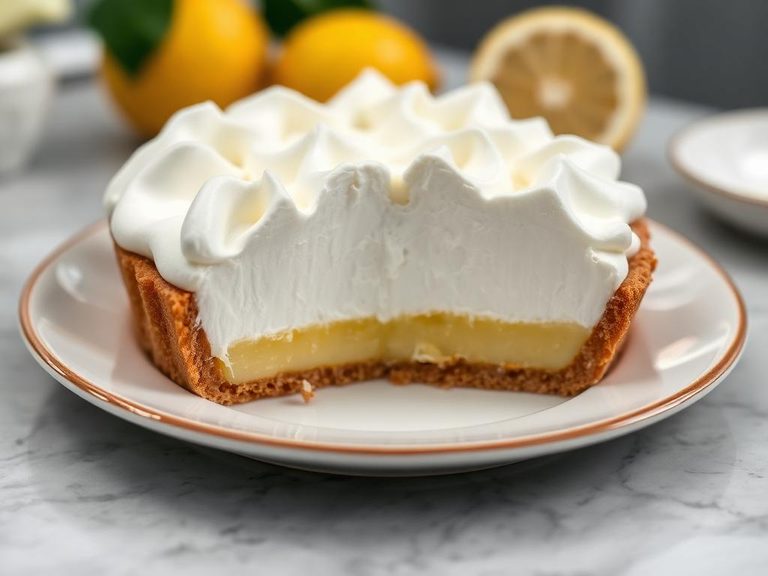
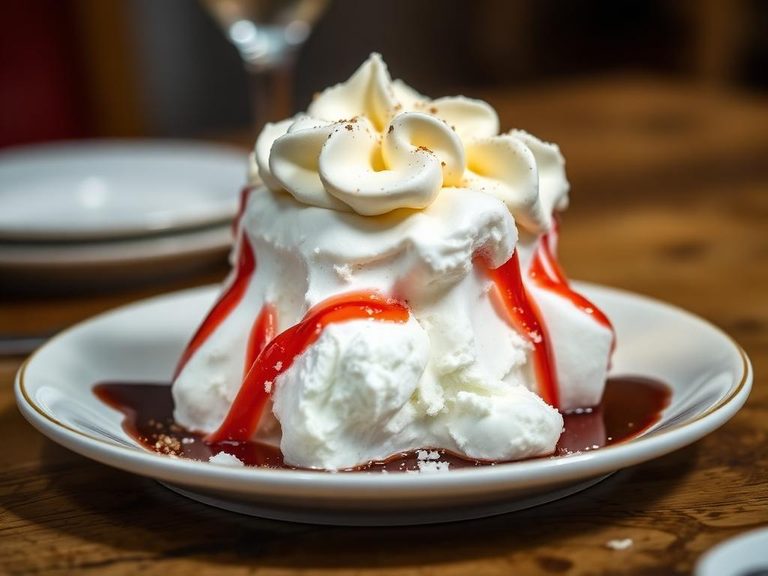
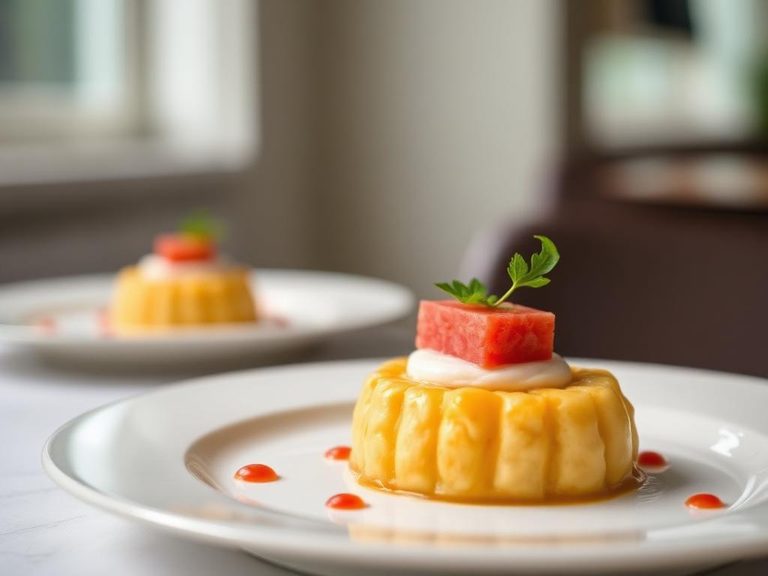
🌍 Where it's eaten
💡 Did you know?
The name 'meringue' is thought to derive from the Polish town of Meringen, though its exact origin is debated among culinary historians.
Full nutrition (USDA data · scales with serving)
| Water | 17.0 g |
| Energy | 324 kcal |
| Protein | 7.2 g |
| Total lipid (fat) | 0.04 g |
| Carbohydrate, by difference | 75.3 g |
| Fiber, total dietary | 0.00 g |
| Total Sugars | 73.1 g |
| Calcium, Ca | 5.0 mg |
| Iron, Fe | 0.10 mg |
| Magnesium, Mg | 7.0 mg |
| Phosphorus, P | 10.0 mg |
| Potassium, K | 111 mg |
| Sodium, Na | 113 mg |
| Zinc, Zn | 0.03 mg |
| Copper, Cu | 0.02 mg |
| Selenium, Se | 12.4 ug |
| Vitamin C, total ascorbic acid | 0.00 mg |
| Thiamin | 0.00 mg |
| Riboflavin | 0.26 mg |
| Niacin | 0.07 mg |
| Vitamin B-6 | 0.00 mg |
| Folate, total | 2.0 ug |
| Folic acid | 0.00 ug |
| Folate, food | 2.0 ug |
| Folate, DFE | 2.0 ug |
| Choline, total | 0.60 mg |
| Vitamin B-12 | 0.05 ug |
| Vitamin B-12, added | 0.00 ug |
| Vitamin A, RAE | 0.00 ug |
| Retinol | 0.00 ug |
| Carotene, beta | 0.00 ug |
| Carotene, alpha | 0.00 ug |
| Cryptoxanthin, beta | 0.00 ug |
| Lycopene | 0.00 ug |
| Lutein + zeaxanthin | 0.00 ug |
| Vitamin E (alpha-tocopherol) | 0.00 mg |
| Vitamin E, added | 0.00 mg |
| Vitamin D (D2 + D3) | 0.00 ug |
| Vitamin K (phylloquinone) | 0.00 ug |
| Alcohol, ethyl | 0.00 g |
| Caffeine | 0.00 mg |
| Theobromine | 0.00 mg |
Fat & fatty acid profile (per 100g)
| Fatty acids, total saturated | 0.00 g |
| SFA 4:0 | 0.00 g |
| SFA 6:0 | 0.00 g |
| SFA 8:0 | 0.00 g |
| SFA 10:0 | 0.00 g |
| SFA 12:0 | 0.00 g |
| SFA 14:0 | 0.00 g |
| SFA 16:0 | 0.00 g |
| SFA 18:0 | 0.00 g |
| Fatty acids, total monounsaturated | 0.00 g |
| MUFA 16:1 | 0.00 g |
| MUFA 18:1 | 0.00 g |
| MUFA 20:1 | 0.00 g |
| MUFA 22:1 | 0.00 g |
| Fatty acids, total polyunsaturated | 0.00 g |
| PUFA 18:2 | 0.00 g |
| PUFA 18:3 | 0.00 g |
| PUFA 18:4 | 0.00 g |
| PUFA 20:4 | 0.00 g |
| PUFA 20:5 n-3 (EPA) | 0.00 g |
| PUFA 22:5 n-3 (DPA) | 0.00 g |
| PUFA 22:6 n-3 (DHA) | 0.00 g |
| Cholesterol | 0.00 mg |
FAQ
Why do my meringues weep or become sticky?
Weeping is often caused by under-beating the egg whites, sugar not being fully dissolved, or humidity. Ensure whites are at room temperature, beat to stiff peaks, add sugar gradually, and bake in a low, dry oven.
Can I make meringues without refined sugar?
Traditional meringues rely on sugar for structure. Some recipes use powdered sugar or very fine caster sugar. Substitutes like honey or maple syrup add liquid and can prevent proper stiffening, making a stable meringue very difficult.
Are meringues safe for people with egg allergies?
No. Meringues are primarily made from egg whites, which are a major allergen. They are not suitable for anyone with an egg allergy.
Nutrient density (calculated · NRF9.3)
Nutrient Rich Foods index: beneficial nutrients (protein, fiber, vitamins, minerals) minus saturated fat, added sugar & sodium, per 100 kcal.
NRF9.3 index — Fulgoni, Keast & Drewnowski, 2009. Computed from USDA nutrients.
Weight-loss friendliness (composite index)
Energy density 3.24 kcal/g · 9% calories from protein · 0.0 g fiber · 73.1 g sugar per 100 g.
Composite of energy density (Rolls et al., 1999), protein & fiber satiety, minus sugar. A calculated heuristic — ranks satiety-per-calorie, not a clinical measure.
Dietary load (calculated from USDA values)
Potential renal acid load. Positive = acid-forming, negative = alkaline-forming.
Sodium-to-potassium ratio: 1.02 (lower is better — aim for ≤ 1)
Sodium:potassium per WHO potassium guidance. Computed from USDA nutrients.