

Baked Alaska
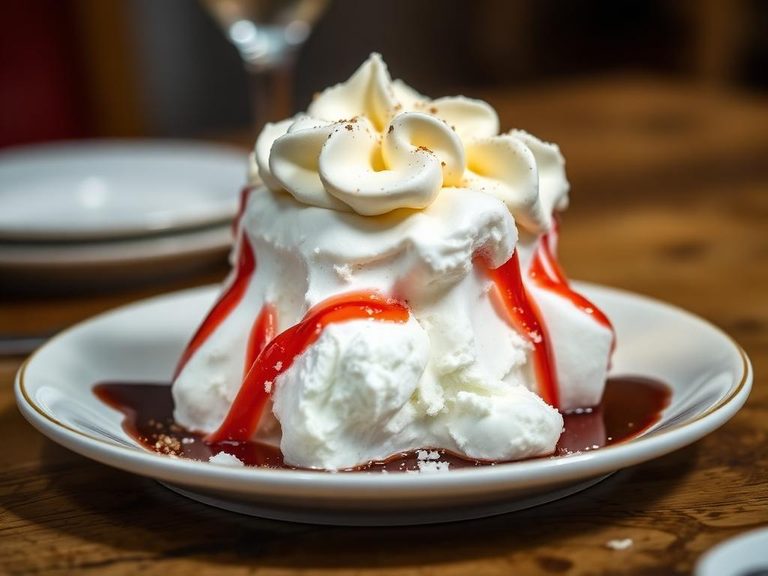
Baked Alaska is a classic dessert featuring a layer of ice cream and sometimes cake, completely encased in a thick, toasted meringue and then briefly baked or torched. It typically includes ingredients like sponge cake, various ice cream flavors, egg whites, sugar, and a splash of vanilla or cream of tartar. This dramatic treat is believed to have been popularized in the United States in the 19th century, with its name playfully referencing the contrast between the hot exterior and the icy interior.
🍳 View the full Baked Alaska recipe →
🍽️ Nutrition at a glance
Baked Alaska is very high in carbohydrates and fat, primarily from the sugar in the meringue and the ice cream, with minimal protein. A single serving can range from 300 to 500 calories, offering a significant energy boost but few essential nutrients beyond some calcium and a small amount of protein from the dairy and eggs.
Nutrition breakdown
| Calories | 450 kcal |
| Protein | 5 g |
| Carbs | 55 g |
| Fat | 24 g |
| Fiber | 1 g |
| Sugar | 40 g |
| Sodium | 180 mg |
| Calcium | 120 mg |
| Iron | 1.5 mg |
| Potassium | 200 mg |
| Vitamin A | 150 mcg RAE |
| Vitamin C | 2 mg |
| Vitamin D | 0.5 mcg |
| Phosphorus | 100 mg |
| Cholesterol | 95 mg |
Per 1 slice (approx. 150 g) · estimated, varies by recipe
💡 What's interesting
The culinary magic of Baked Alaska lies in the insulating properties of the air-filled meringue, which protects the frozen core from melting during the quick baking process—a fascinating demonstration of food science. Culturally, it's a show-stopping dessert often associated with celebrations and grand finales, symbolizing a delightful paradox of hot and cold in one bite.
🍽️ Related dishes

AI estimate may be inaccurate · Terms