

Pie, lemon meringue, prepared from recipe
Whole food · Baked Products

Photo: Wikipedia
A lemon meringue pie is a vibrant, tangy dessert with a crisp, sweet meringue topping over a smooth, zesty lemon curd filling in a flaky pastry crust. Its texture is a delightful contrast of soft, airy meringue, creamy filling, and a firm base. Nutritionally, it's a high-energy treat, primarily delivering quick carbohydrates from sugar and refined flour.
Calorie split: 5% protein · 54% carbs · 40% fat
↓ Full nutrition💚 Why it's loved
People love it for the perfect balance of sweet and tart flavors, with the light, toasted meringue providing a textural counterpoint to the rich filling. It's a classic dessert often associated with comfort, family gatherings, and special occasions.
⚠️ Watch-outs & how to enjoy it better
Its high sugar and refined carbohydrate content can cause rapid blood sugar spikes, making it unsuitable for diabetics or those managing blood sugar. The pastry crust and meringue are also common sources of allergens like gluten and eggs. To mitigate, enjoy a modest portion and pair it with a source of protein or healthy fat, like a handful of nuts, to slow sugar absorption.
Key benefits
- Provides a quick source of energy from carbohydrates
- Contains small amounts of protein from eggs in the meringue and filling
- Offers a small dose of vitamin C from lemon juice
- Can serve as a celebratory or mood-boosting treat
🍽️ Popular dishes
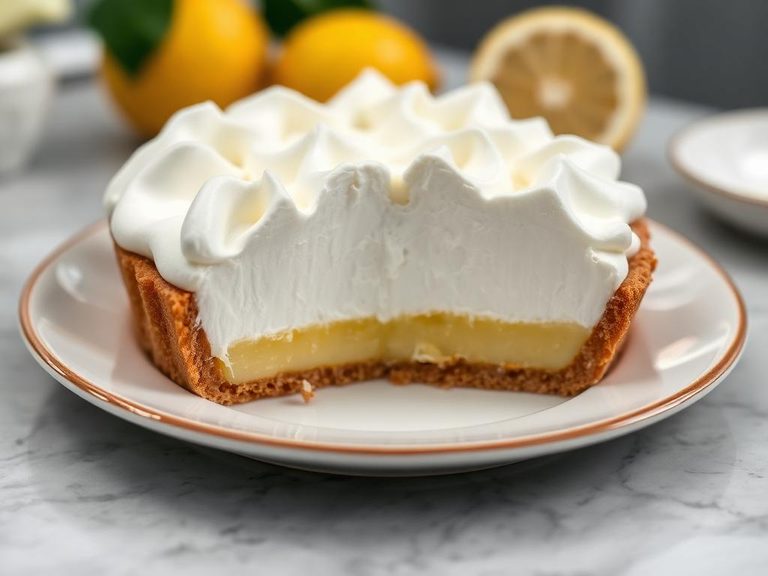


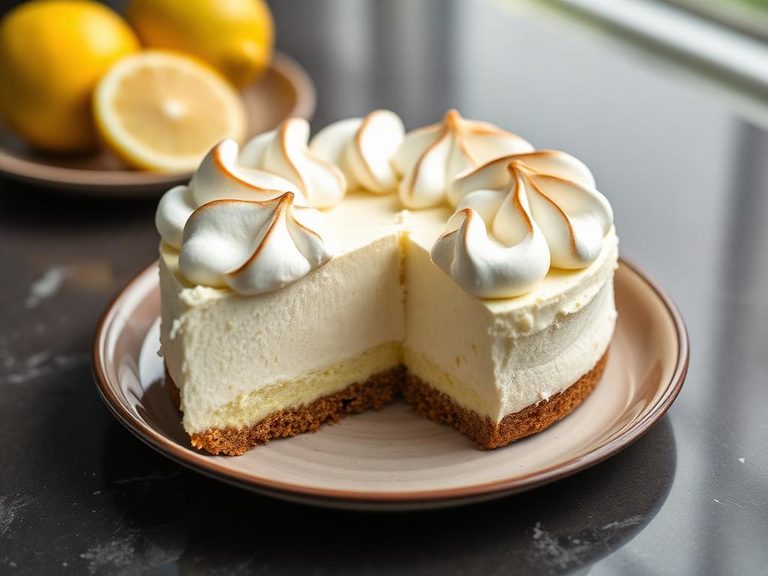
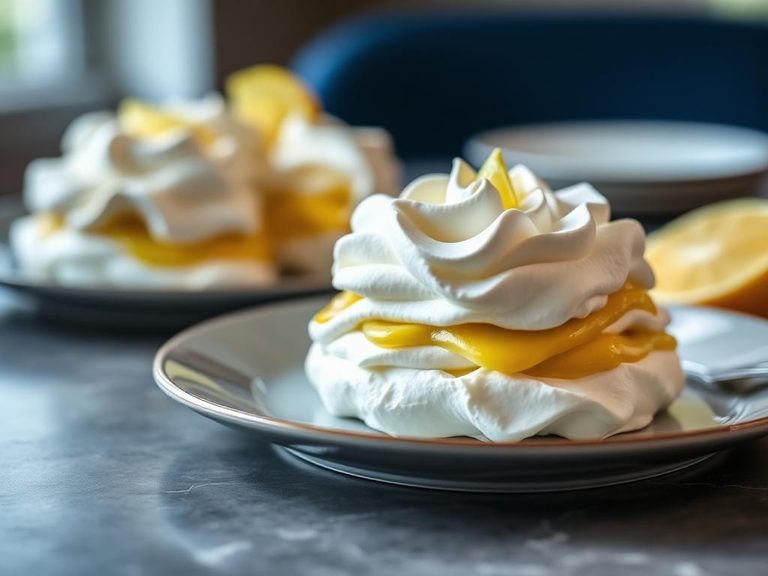
🌍 Where it's eaten
💡 Did you know?
The meringue topping was not always part of the original recipe; it was added in the 19th century as a way to use up leftover egg whites from other recipes.
Full nutrition (USDA data · scales with serving)
| Water | 43.3 g |
| Energy | 285 kcal |
| Energy | 1192 kj |
| Protein | 3.8 g |
| Total lipid (fat) | 12.9 g |
| Ash | 0.90 g |
| Carbohydrate, by difference | 39.1 g |
| Calcium, Ca | 12.0 mg |
| Iron, Fe | 1.0 mg |
| Magnesium, Mg | 6.0 mg |
| Phosphorus, P | 42.0 mg |
| Potassium, K | 65.0 mg |
| Sodium, Na | 242 mg |
| Zinc, Zn | 0.28 mg |
| Copper, Cu | 0.04 mg |
| Manganese, Mn | 0.13 mg |
| Selenium, Se | 11.6 ug |
| Vitamin C, total ascorbic acid | 3.3 mg |
| Thiamin | 0.12 mg |
| Riboflavin | 0.16 mg |
| Niacin | 0.94 mg |
| Pantothenic acid | 0.21 mg |
| Vitamin B-6 | 0.03 mg |
| Folate, total | 25.0 ug |
| Folic acid | 16.0 ug |
| Folate, food | 9.0 ug |
| Folate, DFE | 36.0 ug |
| Vitamin B-12 | 0.12 ug |
| Vitamin A, RAE | 43.0 ug |
| Retinol | 41.0 ug |
| Vitamin A, IU | 160 iu |
Fat & fatty acid profile (per 100g)
| Fatty acids, total saturated | 3.2 g |
| SFA 4:0 | 0.00 g |
| SFA 6:0 | 0.00 g |
| SFA 8:0 | 0.00 g |
| SFA 10:0 | 0.00 g |
| SFA 12:0 | 0.00 g |
| SFA 14:0 | 0.05 g |
| SFA 16:0 | 1.9 g |
| SFA 18:0 | 1.2 g |
| Fatty acids, total monounsaturated | 5.6 g |
| MUFA 16:1 | 0.04 g |
| MUFA 18:1 | 5.5 g |
| MUFA 20:1 | 0.00 g |
| MUFA 22:1 | 0.00 g |
| Fatty acids, total polyunsaturated | 3.3 g |
| PUFA 18:2 | 3.1 g |
| PUFA 18:3 | 0.19 g |
| PUFA 18:4 | 0.00 g |
| PUFA 20:4 | 0.02 g |
| PUFA 20:5 n-3 (EPA) | 0.00 g |
| PUFA 22:5 n-3 (DPA) | 0.00 g |
| PUFA 22:6 n-3 (DHA) | 0.01 g |
| Cholesterol | 53.0 mg |
Amino acid profile (per 100g)
| Tryptophan | 0.05 g |
| Threonine | 0.14 g |
| Isoleucine | 0.17 g |
| Leucine | 0.29 g |
| Lysine | 0.18 g |
| Methionine | 0.09 g |
| Cystine | 0.08 g |
| Phenylalanine | 0.19 g |
| Tyrosine | 0.14 g |
| Valine | 0.19 g |
| Arginine | 0.19 g |
| Histidine | 0.09 g |
| Alanine | 0.17 g |
| Aspartic acid | 0.27 g |
| Glutamic acid | 0.86 g |
| Glycine | 0.13 g |
| Proline | 0.29 g |
| Serine | 0.24 g |
FAQ
Why does my lemon meringue pie filling sometimes become runny?
This is often due to undercooking the filling, which relies on cornstarch and egg yolks for thickening. Ensure the filling boils for a full minute while stirring constantly, and allow it to set completely in the refrigerator for several hours before serving.
Can I make lemon meringue pie ahead of time?
You can bake the crust and prepare the filling a day in advance. However, the meringue should be added and browned just before serving to prevent it from weeping or becoming soggy.
What is the best way to store leftover lemon meringue pie?
Due to the meringue, it's best consumed the same day. If you must store it, keep it uncovered in the refrigerator for up to 2 days, as plastic wrap will cause the meringue to become sticky and weep.
Nutrient density (calculated · NRF9.3)
Nutrient Rich Foods index: beneficial nutrients (protein, fiber, vitamins, minerals) minus saturated fat, added sugar & sodium, per 100 kcal.
NRF9.3 index — Fulgoni, Keast & Drewnowski, 2009. Computed from USDA nutrients.
Weight-loss friendliness (composite index)
Energy density 2.85 kcal/g · 5% calories from protein · 0.0 g fiber · 0.0 g sugar per 100 g.
Composite of energy density (Rolls et al., 1999), protein & fiber satiety, minus sugar. A calculated heuristic — ranks satiety-per-calorie, not a clinical measure.
Dietary load (calculated from USDA values)
Potential renal acid load. Positive = acid-forming, negative = alkaline-forming.
Sodium-to-potassium ratio: 3.72 (lower is better — aim for ≤ 1)
Sodium:potassium per WHO potassium guidance. Computed from USDA nutrients.