

Collards, frozen, chopped, unprepared
Whole food · Vegetables and Vegetable Products

Photo: Wikipedia
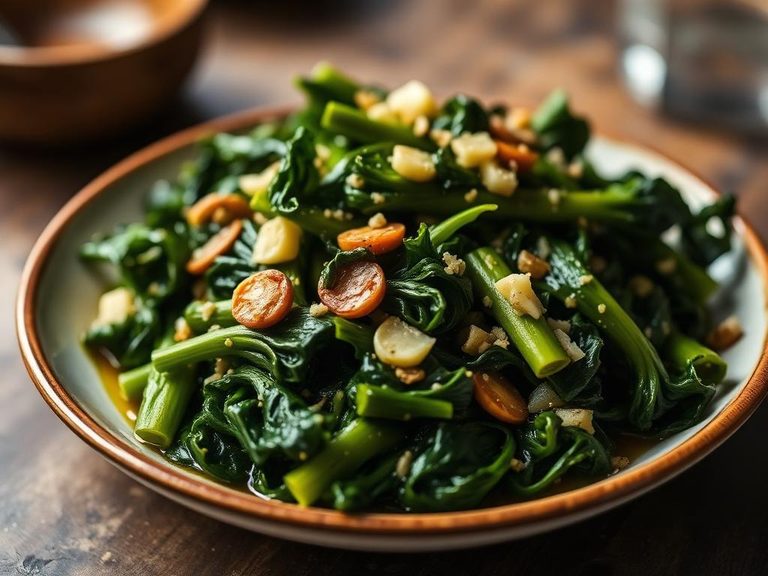
Frozen chopped collards are the sturdy, dark-green leaves of the collard plant, harvested at peak freshness and flash-frozen to lock in a deep, earthy flavor with a tender-crisp texture once cooked. They are a nutritional powerhouse, delivering a remarkable 3.6 grams of fiber per 100g serving for minimal calories, making them a champion for digestive health and satiety.
Calorie split: 27% protein · 65% carbs · 8% fat
↓ Full nutrition💚 Why it's loved
People cherish collards for their robust, savory flavor that acts as a perfect canvas for smoky, spicy, or rich seasonings. Their ability to transform from a tough raw leaf into a silky, soulful dish is a cornerstone of comfort food in many cultures.
⚠️ Watch-outs & how to enjoy it better
The natural bitterness and high vitamin K content can be a concern for individuals on blood-thinning medications like warfarin. To manage this, maintain consistent vitamin K intake and consult a healthcare provider. Their tough texture requires adequate cooking time to become tender, which can be a downside for quick meals.
Key benefits
- Excellent source of dietary fiber (3.6g per 100g)
- Very low in fat and calories
- Good plant-based protein source (2.69g per 100g)
- Rich in vitamins K, A, and C (typical for dark leafy greens)
- Contains antioxidants like lutein and zeaxanthin
🍽️ Popular dishes
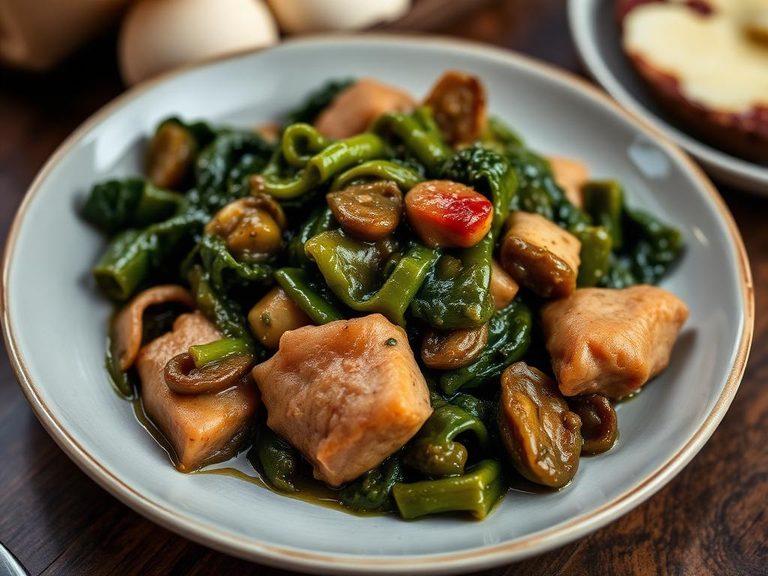
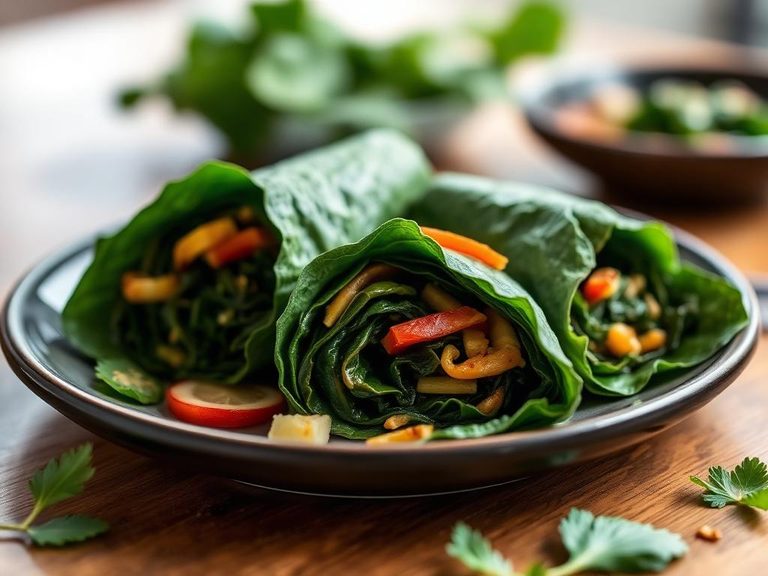
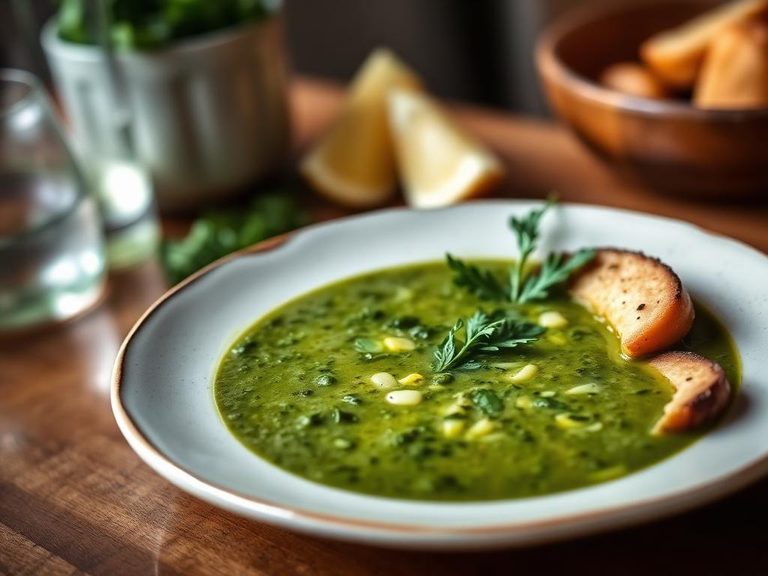
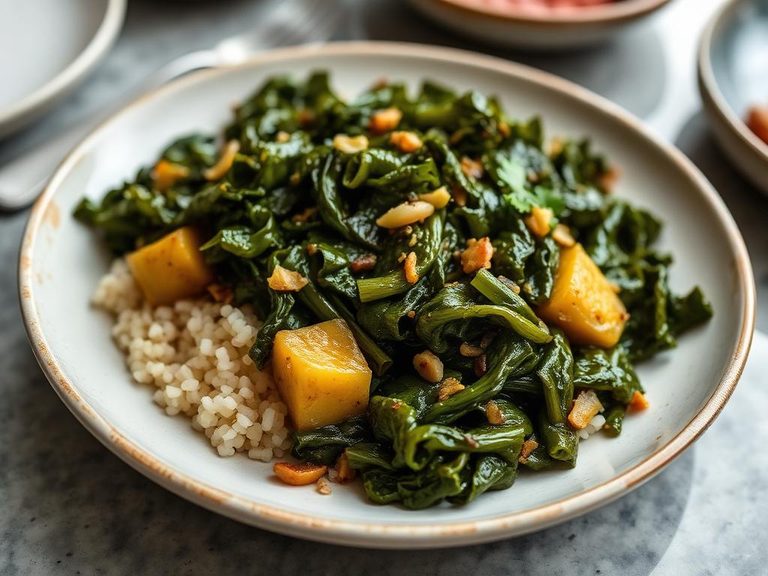
🌍 Where it's eaten
💡 Did you know?
Collards are part of the same species as cabbage, kale, and broccoli (Brassica oleracea), but were cultivated for their leaves rather than their buds or flowers.
Full nutrition (USDA data · scales with serving)
| Water | 89.5 g |
| Energy | 33.0 kcal |
| Energy | 137 kj |
| Protein | 2.7 g |
| Total lipid (fat) | 0.37 g |
| Ash | 0.95 g |
| Carbohydrate, by difference | 6.5 g |
| Fiber, total dietary | 3.6 g |
| Calcium, Ca | 201 mg |
| Iron, Fe | 1.1 mg |
| Magnesium, Mg | 29.0 mg |
| Phosphorus, P | 27.0 mg |
| Potassium, K | 253 mg |
| Sodium, Na | 48.0 mg |
| Zinc, Zn | 0.26 mg |
| Copper, Cu | 0.05 mg |
| Manganese, Mn | 0.63 mg |
| Selenium, Se | 1.4 ug |
| Vitamin C, total ascorbic acid | 40.0 mg |
| Thiamin | 0.05 mg |
| Riboflavin | 0.11 mg |
| Niacin | 0.64 mg |
| Pantothenic acid | 0.11 mg |
| Vitamin B-6 | 0.12 mg |
| Folate, total | 73.0 ug |
| Folic acid | 0.00 ug |
| Folate, food | 73.0 ug |
| Folate, DFE | 73.0 ug |
| Vitamin B-12 | 0.00 ug |
| Vitamin A, RAE | 459 ug |
| Retinol | 0.00 ug |
| Carotene, beta | 5510 ug |
| Vitamin A, IU | 9183 iu |
| Vitamin D (D2 + D3), International Units | 0.00 iu |
| Vitamin D (D2 + D3) | 0.00 ug |
| Alcohol, ethyl | 0.00 g |
Fat & fatty acid profile (per 100g)
| Fatty acids, total saturated | 0.05 g |
| SFA 4:0 | 0.00 g |
| SFA 6:0 | 0.00 g |
| SFA 8:0 | 0.00 g |
| SFA 10:0 | 0.00 g |
| SFA 12:0 | 0.00 g |
| SFA 14:0 | 0.00 g |
| SFA 16:0 | 0.04 g |
| SFA 18:0 | 0.00 g |
| Fatty acids, total monounsaturated | 0.03 g |
| MUFA 16:1 | 0.00 g |
| MUFA 18:1 | 0.03 g |
| MUFA 20:1 | 0.00 g |
| MUFA 22:1 | 0.00 g |
| Fatty acids, total polyunsaturated | 0.18 g |
| PUFA 18:2 | 0.07 g |
| PUFA 18:3 | 0.10 g |
| PUFA 18:4 | 0.00 g |
| PUFA 20:4 | 0.00 g |
| PUFA 20:5 n-3 (EPA) | 0.00 g |
| PUFA 22:5 n-3 (DPA) | 0.00 g |
| PUFA 22:6 n-3 (DHA) | 0.00 g |
| Fatty acids, total trans | 0.00 g |
| Cholesterol | 0.00 mg |
Amino acid profile (per 100g)
| Tryptophan | 0.04 g |
| Threonine | 0.10 g |
| Isoleucine | 0.11 g |
| Leucine | 0.17 g |
| Lysine | 0.13 g |
| Methionine | 0.04 g |
| Cystine | 0.03 g |
| Phenylalanine | 0.10 g |
| Tyrosine | 0.07 g |
| Valine | 0.13 g |
| Arginine | 0.14 g |
| Histidine | 0.05 g |
| Alanine | 0.12 g |
| Aspartic acid | 0.21 g |
| Glutamic acid | 0.23 g |
| Glycine | 0.10 g |
| Proline | 0.12 g |
| Serine | 0.09 g |
FAQ
How do I cook frozen collards without them getting mushy?
Sauté them directly from frozen in a hot pan with a little oil and aromatics like garlic and onion. This flash-steams them, preserving texture. Alternatively, simmer them in a flavorful broth for a shorter time than you would fresh collards.
Are frozen collards as nutritious as fresh?
Yes, often more so. Flash-freezing occurs shortly after harvest, locking in nutrients that can degrade over time in fresh produce. They are an excellent, convenient year-round source of vitamins and fiber.
What's the best way to reduce bitterness in collards?
A common technique is to blanch the collards in boiling water for a few minutes, then drain and discard the water before sautéing or braising. Adding a splash of acid like vinegar or lemon juice during cooking also helps balance the flavor.
Nutrient density (calculated · NRF9.3)
Nutrient Rich Foods index: beneficial nutrients (protein, fiber, vitamins, minerals) minus saturated fat, added sugar & sodium, per 100 kcal.
NRF9.3 index — Fulgoni, Keast & Drewnowski, 2009. Computed from USDA nutrients.
Weight-loss friendliness (composite index)
Energy density 0.33 kcal/g · 33% calories from protein · 3.6 g fiber · 0.0 g sugar per 100 g.
Composite of energy density (Rolls et al., 1999), protein & fiber satiety, minus sugar. A calculated heuristic — ranks satiety-per-calorie, not a clinical measure.
Dietary load (calculated from USDA values)
Potential renal acid load. Positive = acid-forming, negative = alkaline-forming.
Sodium-to-potassium ratio: 0.19 (lower is better — aim for ≤ 1)
Sodium:potassium per WHO potassium guidance. Computed from USDA nutrients.