

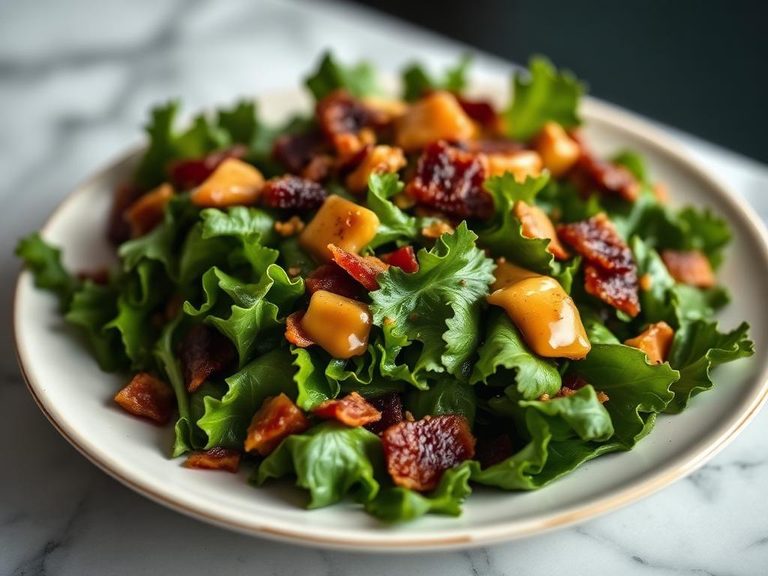
Collards, fresh, cooked with oil
Common food

Photo: Wikipedia
Collard greens cooked with oil transform from tough, bitter leaves into a silky, savory side with a deep, earthy flavor and a satisfyingly tender bite. This preparation highlights the greens' natural richness, enhanced by the oil's smooth texture. Nutritionally, it's a standout for its high fiber and protein relative to its low calorie count, making it a nutrient-dense powerhouse.
Calorie split: 18% protein · 33% carbs · 49% fat
↓ Full nutrition💚 Why it's loved
People love collards cooked with oil for their rich, savory flavor and the way they absorb seasonings like garlic, smoked meat, or vinegar, creating a deeply satisfying dish. Their cultural significance in Southern U.S. cuisine, particularly during holidays, adds a layer of comfort and tradition that many cherish.
⚠️ Watch-outs & how to enjoy it better
The high oxalate content in collards can interfere with calcium absorption and may concern those prone to kidney stones. To counteract this, pair them with calcium-rich foods like cheese or yogurt, and consider cooking them with acidic ingredients like lemon juice or vinegar to reduce oxalate levels. Additionally, if prepared with added salt or smoked meats, the sodium content can be high; opt for low-sodium seasonings or rinse the greens after cooking.
Key benefits
- Excellent source of dietary fiber (4.2g per 100g) for digestive health.
- Provides plant-based protein (3.14g per 100g) for muscle maintenance.
- Rich in vitamins A, C, and K, and minerals like calcium and iron.
- Low in sugar (0.48g per 100g), making it suitable for low-sugar diets.
- Contains antioxidants that support overall cellular health.
🍽️ Popular dishes
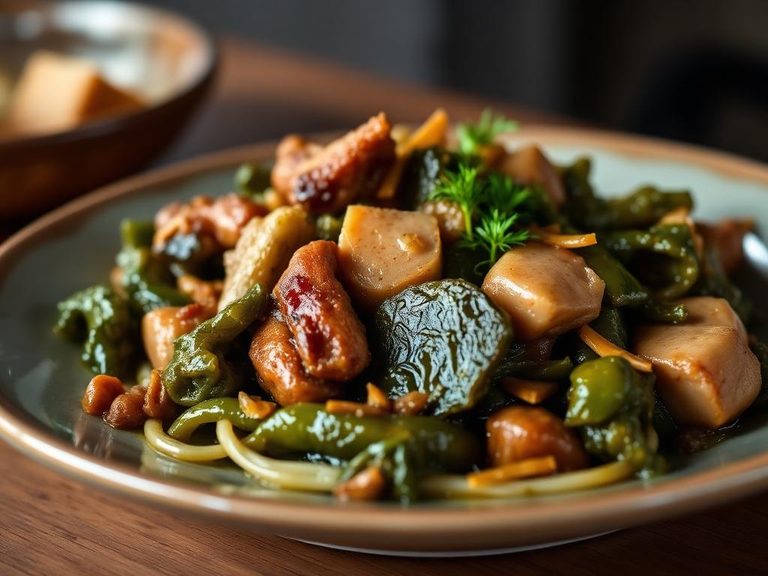
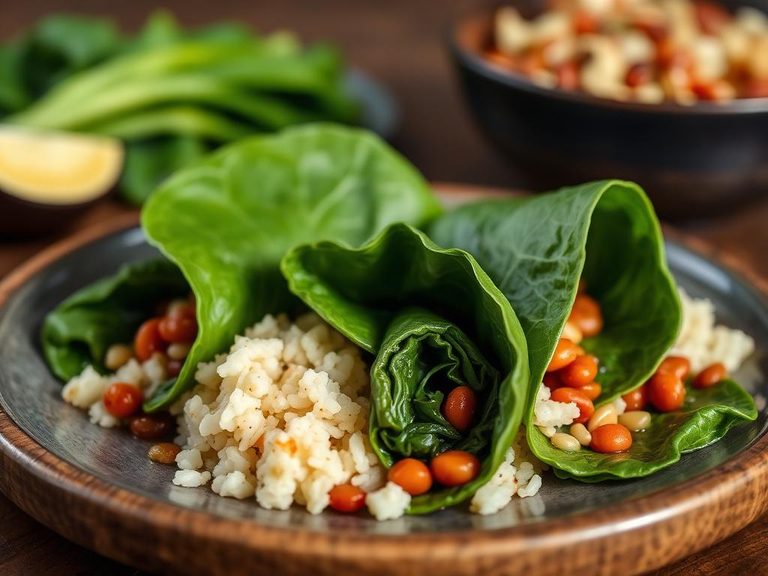
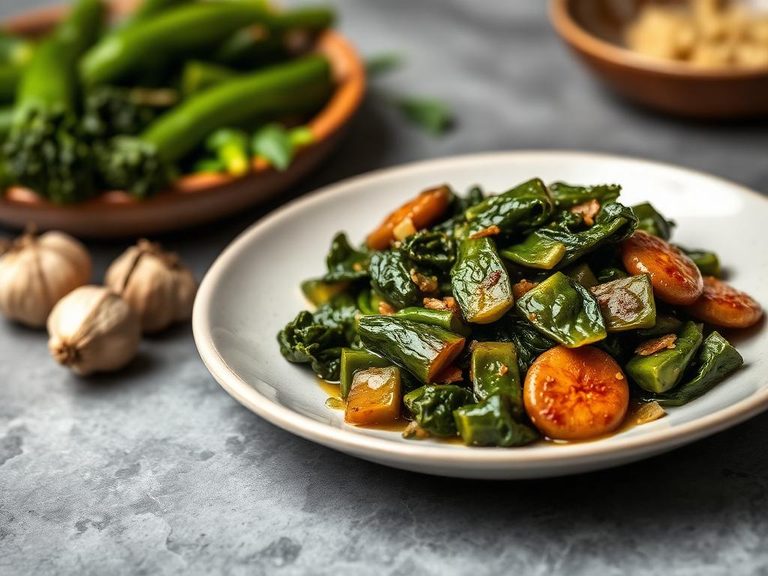
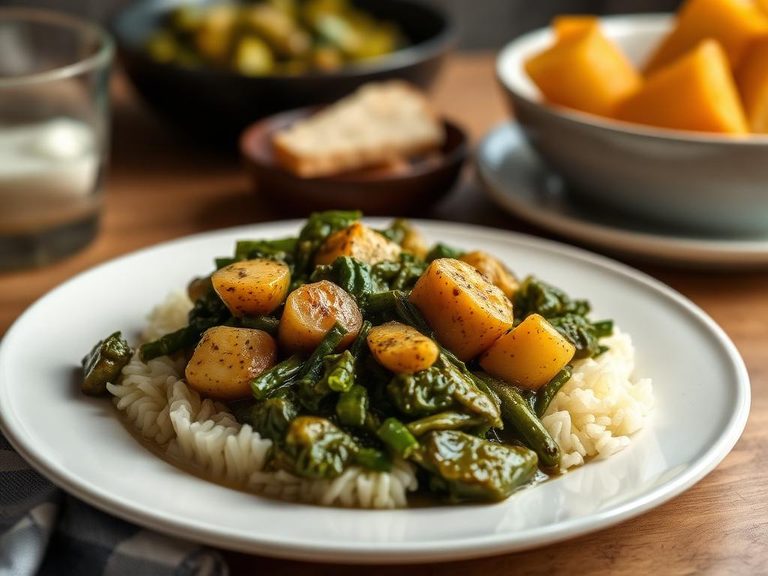
🌍 Where it's eaten
💡 Did you know?
Collard greens are one of the oldest members of the cabbage family, with evidence of their cultivation dating back to ancient Greece and Rome, where they were valued for their hardiness and nutritional benefits.
Full nutrition (USDA data · scales with serving)
| Water | 85.8 g |
| Energy | 61.0 kcal |
| Protein | 3.1 g |
| Total lipid (fat) | 3.8 g |
| Carbohydrate, by difference | 5.6 g |
| Fiber, total dietary | 4.2 g |
| Total Sugars | 0.48 g |
| Calcium, Ca | 242 mg |
| Iron, Fe | 0.49 mg |
| Magnesium, Mg | 28.0 mg |
| Phosphorus, P | 26.0 mg |
| Potassium, K | 222 mg |
| Sodium, Na | 139 mg |
| Zinc, Zn | 0.22 mg |
| Copper, Cu | 0.05 mg |
| Selenium, Se | 1.4 ug |
| Vitamin C, total ascorbic acid | 25.7 mg |
| Thiamin | 0.05 mg |
| Riboflavin | 0.13 mg |
| Niacin | 0.73 mg |
| Vitamin B-6 | 0.16 mg |
| Folate, total | 101 ug |
| Folic acid | 0.00 ug |
| Folate, food | 101 ug |
| Folate, DFE | 101 ug |
| Choline, total | 24.2 mg |
| Vitamin B-12 | 0.00 ug |
| Vitamin B-12, added | 0.00 ug |
| Vitamin A, RAE | 248 ug |
| Retinol | 0.00 ug |
| Carotene, beta | 2958 ug |
| Carotene, alpha | 14.0 ug |
| Cryptoxanthin, beta | 28.0 ug |
| Lycopene | 0.00 ug |
| Lutein + zeaxanthin | 4275 ug |
| Vitamin E (alpha-tocopherol) | 2.9 mg |
| Vitamin E, added | 0.00 mg |
| Vitamin D (D2 + D3) | 0.00 ug |
| Vitamin K (phylloquinone) | 458 ug |
| Alcohol, ethyl | 0.00 g |
| Caffeine | 0.00 mg |
| Theobromine | 0.00 mg |
Fat & fatty acid profile (per 100g)
| Fatty acids, total saturated | 0.47 g |
| SFA 4:0 | 0.00 g |
| SFA 6:0 | 0.00 g |
| SFA 8:0 | 0.00 g |
| SFA 10:0 | 0.00 g |
| SFA 12:0 | 0.00 g |
| SFA 14:0 | 0.00 g |
| SFA 16:0 | 0.35 g |
| SFA 18:0 | 0.09 g |
| Fatty acids, total monounsaturated | 1.4 g |
| MUFA 16:1 | 0.01 g |
| MUFA 18:1 | 1.3 g |
| MUFA 20:1 | 0.02 g |
| MUFA 22:1 | 0.00 g |
| Fatty acids, total polyunsaturated | 1.4 g |
| PUFA 18:2 | 1.1 g |
| PUFA 18:3 | 0.25 g |
| PUFA 18:4 | 0.00 g |
| PUFA 20:4 | 0.00 g |
| PUFA 20:5 n-3 (EPA) | 0.00 g |
| PUFA 22:5 n-3 (DPA) | 0.00 g |
| PUFA 22:6 n-3 (DHA) | 0.00 g |
| Cholesterol | 0.00 mg |
Amino acid profile (per 100g)
Estimated from Collards, cooked, boiled, drained, with salt — USDA does not publish this profile for Collards.
| Tryptophan | 0.03 g |
| Threonine | 0.07 g |
| Isoleucine | 0.09 g |
| Leucine | 0.13 g |
| Lysine | 0.10 g |
| Methionine | 0.03 g |
| Cystine | 0.02 g |
| Phenylalanine | 0.07 g |
| Tyrosine | 0.06 g |
| Valine | 0.10 g |
| Arginine | 0.11 g |
| Histidine | 0.04 g |
| Alanine | 0.09 g |
| Aspartic acid | 0.16 g |
| Glutamic acid | 0.18 g |
| Glycine | 0.08 g |
| Proline | 0.09 g |
| Serine | 0.07 g |
FAQ
Are collard greens cooked with oil healthy?
Yes, they are nutrient-dense, providing fiber, protein, vitamins, and minerals with relatively few calories. The oil adds healthy fats that help absorb fat-soluble vitamins like A and K.
How do I reduce bitterness in collard greens?
Cooking them longer with oil and acidic ingredients like vinegar or lemon juice can mellow their bitterness. Adding a pinch of sugar or using smoked meats can also balance the flavor.
Can I eat collard greens raw?
While collard greens can be eaten raw in salads, they are tougher and more bitter when uncooked. Cooking them with oil softens their texture and enhances their flavor.
Nutrient density (calculated · NRF9.3)
Nutrient Rich Foods index: beneficial nutrients (protein, fiber, vitamins, minerals) minus saturated fat, added sugar & sodium, per 100 kcal.
NRF9.3 index — Fulgoni, Keast & Drewnowski, 2009. Computed from USDA nutrients.
Weight-loss friendliness (composite index)
Energy density 0.61 kcal/g · 21% calories from protein · 4.2 g fiber · 0.5 g sugar per 100 g.
Composite of energy density (Rolls et al., 1999), protein & fiber satiety, minus sugar. A calculated heuristic — ranks satiety-per-calorie, not a clinical measure.
Dietary load (calculated from USDA values)
Potential renal acid load. Positive = acid-forming, negative = alkaline-forming.
Sodium-to-potassium ratio: 0.63 (lower is better — aim for ≤ 1)
Sodium:potassium per WHO potassium guidance. Computed from USDA nutrients.